
A quiet camp can turn noisy fast. Dinner is done, the stove is cooling, and someone remembers a snack bar in a hip belt pocket. That is how many wildlife problems start. Not with a dramatic mistake, but with one small scent source left where it should not be.
Camping food storage is not about protecting groceries alone. It is about keeping wildlife wild, preventing damaged gear, and making sure the campsite does not become a reward site for a bear, raccoon, rodent, or coyote. That matters more now because more people are outdoors. The global dehydrated backpacking and camping food market was valued at USD 3.5 billion in 2023 and is projected to reach USD 6.5 billion by 2033 (Data Horizzon Research). More campers in wildlife habitat means food storage mistakes have wider consequences.
The safest camps run on a system. Food gets secured. Scented items get treated like food. Cooking happens away from sleeping areas. Trash gets packed out. And if prevention fails, a deterrent is ready and accessible. That full system is what keeps a routine overnight from becoming a ranger report.
Table of Contents
Your Campsite is Not Just Your Own
A campground or backcountry site may feel private after dark. It is not. The area belongs to every animal moving through it, and those animals notice scent long before campers notice them.
One cooler left open, one toothpaste tube in a vestibule, or one greasy pan on a table can turn a clean site into a destination. Bears get the attention, but they are not the only problem. Mice chew through soft bags. Raccoons work zippers and lids. Coyotes patrol edges of developed sites. A bad night can start with something much smaller than a bear.
A campsite is a scent zone
Food storage failures usually come from thinking too narrowly. Campers often secure the obvious items and forget the rest.
That means all of these belong in the same mental category:
- Meals and snacks: bars, trail mix, jerky, freeze-dried dinners, pet food.
- Scented toiletries: toothpaste, sunscreen, lip balm, deodorant, soap.
- Trash and residue: wrappers, cans, used wipes, dishwater solids, coffee grounds.
- Cook gear: stoves, pots, utensils, mugs, and anything with food film on it.
A bear canister does not solve a dirty camp. It solves one part of the problem.
Safety starts before the first rustle in the brush
A camp stays calmer when nothing in it offers an easy reward. That is the standard to aim for. Not “good enough.” Not “probably fine.” No visible food, no easy smells, no scraps, and no scented items left loose.
That approach protects people first. It also protects wildlife. Once an animal starts connecting campsites with calories, everyone loses. Rangers deal with the aftermath, future campers inherit the risk, and the animal often pays the price for behavior humans created.
Pre-Trip Planning Your First Line of Defense
The trip usually goes wrong before the cooler is loaded. A family packs burger meat in a soft tote, tosses trash bags in with the chairs, forgets to check whether the campground requires a canister or locker, and arrives after dark. At that point, fixing mistakes is harder, slower, and a lot less safe.
Pre-trip planning sets the whole campsite safety system. Food storage is one part of that system. Clean packing, simple meal prep, controlled trash, and fast access to deterrence all matter. If you camp where bears are active, secure storage and a ready can of Counter Assault bear spray belong in the same plan. One reduces the chance of a problem. The other gives you a non-lethal option if prevention fails.
California gives a clear example of why this matters. Black bear numbers and bear-human contact have pushed many parks and trail corridors to enforce strict food storage rules, including canister requirements in some areas, as the Pacific Crest Trail Association explains.
Check the rules before you pack the car or shoulder the pack
Rules change by agency and by site. One campground may allow food locked in a hard-sided vehicle. The next may require a locker or approved canister for all scented items. Do not guess.
Use a short pre-trip check:
- Confirm the exact storage rule for the area: Look up the current park, forest, or wilderness regulations.
- Check what infrastructure is on site: Lockers, food poles, and parking restrictions change what gear you need to bring.
- Match the storage plan to the trip type: Backpacking, paddling, and car camping each limit your options in different ways.
- Plan water access and kitchen workflow: A simple camp setup creates fewer spills, fewer dirty dishes, and fewer lingering odors.
One bad assumption can shape the whole night.
Pack food that is easy to control
Choose meals that store cleanly, portion cleanly, and leave little residue. Shelf-stable foods, freeze-dried meals, and tightly sealed snacks usually create fewer problems than fresh meat, bulky retail packaging, or loose ingredients rolling around a bin. The point is not convenience for its own sake. The point is reducing scent, grease, crumbs, and handling time.
Practical packing rules hold up in the field:
- Strip excess packaging at home: Cardboard boxes and oversized wrappers waste space and trap crumbs.
- Portion by meal or by day: Shorter searches mean less time with food out in camp.
- Bag odor-heavy items well: Cheese, tuna, jerky, bacon, and seasoned foods spread scent fast.
- Assign trash space before departure: If empty wrappers and used pouches do not have a place, they end up loose.
- Choose storage gear that fits the food you packed: A canister that is too small leads to bad decisions at camp.
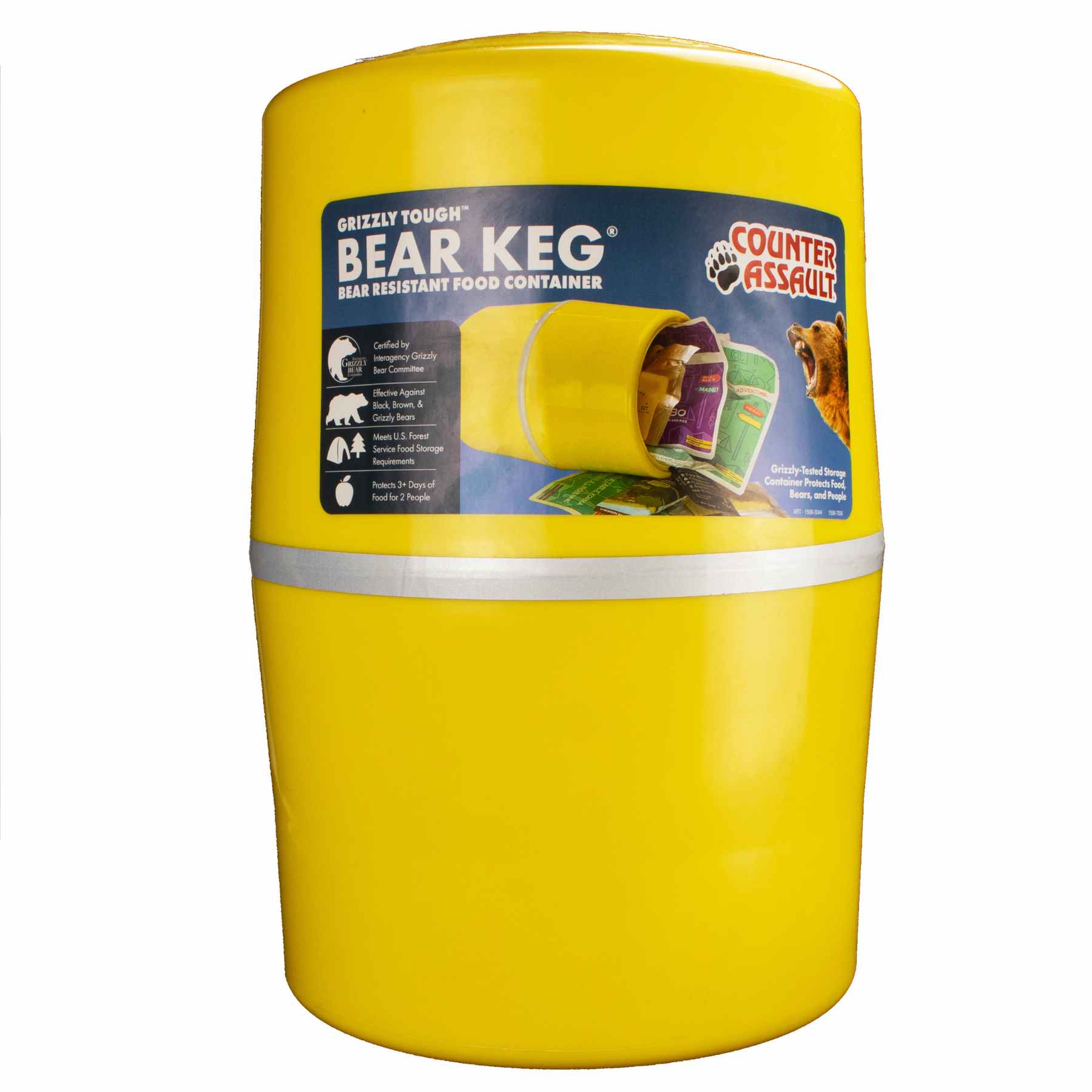
For trips that require or strongly favor hard-sided storage, a bear-resistant food storage container for backcountry travel gives you a dependable way to secure food and scented items before camp is even set.
Build readiness into the packing list
Campers often separate food storage from emergency gear. In bear country, that split does not make sense. Prevention and response work together.
Pack storage gear, cleanup supplies, lighting, first aid, and your deterrent plan as one system. Counter Assault bear spray should be packed where an adult can reach it fast, not buried under sleeping bags or cookware. Read the label before the trip. Check the expiration date. Decide who carries it on the trail and where it stays in camp. Under stress, speed comes from setup, not intention.
Choosing Your Camping Food Storage Method
Not every storage method works equally well, and not every campsite gives the same options. A family in a developed campground has choices a backpacker on a long trail section does not. The right answer depends on regulations, trip style, and how much control the camper has over the site.
What works in the backcountry
The most dependable option for backpackers is the hard-sided, certified canister. Interagency Grizzly Bear Committee certified bear-resistant canisters have near-100% success rates against bears when used correctly, and failures are usually user error such as overfilling the canister so it cannot latch or placing it where a bear can roll it away (REI Expert Advice).

Bear lockers work well when the site provides them. They are simple, roomy, and remove much of the guesswork. The weakness is availability. Lockers are only useful where they already exist, and they can fill up or be shared in busy campgrounds.
Bear hangs still appear in older advice, but they demand the right tree, the right branch, the right rope work, and time. In many popular areas, bears have learned the routine. For that reason, hanging food is often less reliable than people think.
Vehicle storage works for many car campers in the right setting, especially in hard-sided vehicles with doors and windows fully closed and food out of sight. It is not a universal answer, because some parks prohibit or restrict it.
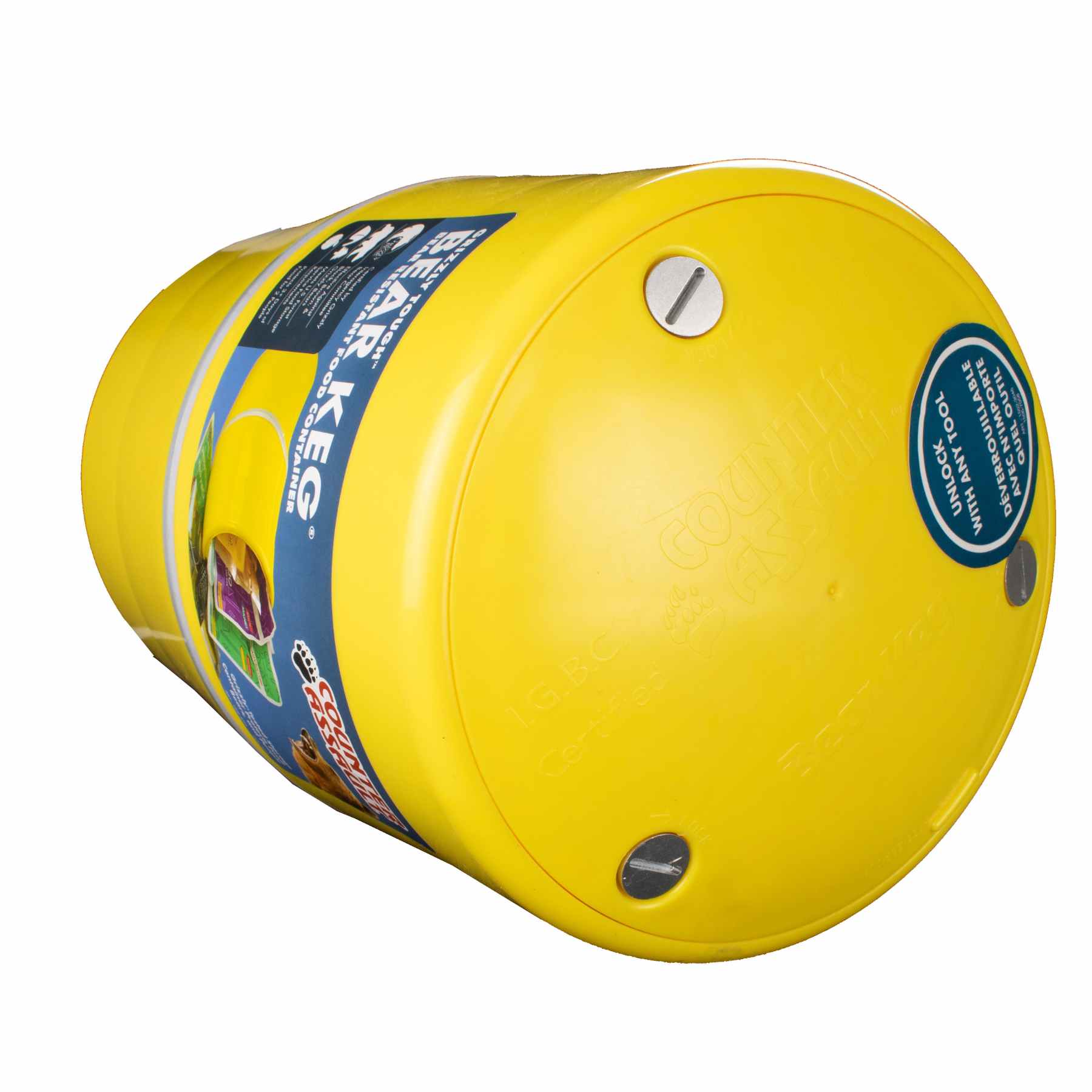
For backpackers comparing canisters, the Bear Keg food storage container is one example of a hard-sided bear-resistant option designed for backcountry food storage.
Camping Food Storage Method Comparison
| Method | Effectiveness | Best For | Key Consideration |
|---|---|---|---|
| Bear canisters | Highly effective when correctly packed and latched | Backpacking in regulated bear country | Must fit the full food load and all scented items |
| Bear lockers | Strong option where provided | Established campgrounds and some backcountry sites | Availability depends on the site |
| Bear hanging | Variable and skill-dependent | Areas where allowed and where suitable trees exist | Often fails when the setup or tree selection is poor |
| Vehicle storage | Good in appropriate frontcountry settings | Car camping and some RV travel | Follow site rules and use only a hard-sided vehicle when allowed |
Food temperature also matters on frontcountry trips. Campers managing coolers, perishables, and meal prep should review basic food safety temperature control so wildlife safety does not come at the expense of foodborne illness prevention.
How to pack a canister without wasting space
Many individuals waste canister space by packing in the wrong order.
A cleaner system looks like this:
- Bottom layer: dense, bulky items like dehydrated meals and oats.
- Middle layer: softer items such as bars, tortillas, and snack bags.
- Top layer: small items needed first, plus trash bag space.
Keep the load organized and do not force the lid. If the canister will not latch smoothly, it is overpacked. That is exactly how “good gear failed” stories begin.
A canister should close easily, sit on flat ground away from camp, and stay locked even during the day when the camper is not using it.
Setting Up a Scent-Free Campsite
A secure container helps, but it does not fix sloppy camp layout. Wildlife follows smell, routine, and opportunity. Camps that keep those three under control draw less attention.

National Park Service logs show 60% of wildlife-related food thefts are from non-bear animals like raccoons, coyotes, and rodents, and standard food storage bags have a 50 to 70% failure rate against mice (Backpacker’s Pantry blog). That is why camping food storage cannot stop at “bear-proof.”
Use the campsite triangle
The basic layout is simple. Separate sleeping, cooking, and food storage areas. Keep those functions apart instead of piled into one compact mess.
A workable field layout includes:
- Sleeping area: tent, sleeping bags, and only unscented essentials.
- Cooking area: stove, meal prep, dishwashing setup.
- Storage area: canister, locker, or site-approved secured food zone.
Keep cooking away from the tent. Keep storage away from both. If the site is cramped, create as much separation as the terrain safely allows and follow local rules.
Treat every scent source seriously
Campers often protect dinners and ignore everything else. That is a mistake.
Items that belong with stored food include:
- Toiletries: toothpaste, deodorant, sunscreen, and cosmetics.
- Pet supplies: kibble, treats, bowls, and waste bags.
- Smell-carrying gear: pots, fry pans, utensils, grills, and coolers.
- Insect products: some repellents and scented wipes should not be left around camp. Products such as Natrapel belong in the same scent-management mindset as toiletries.
For container options suited to different trip styles, campers can compare bear-resistant food containers before heading out.
“Bear resistant” and “rodent resistant” are not the same thing. Soft-sided storage that survives a bear may still get chewed open by mice.
A few support items help keep the site controlled after dark. A compact lantern from LuminAID makes nighttime movement cleaner and reduces fumbling around food or gear. A purifier from RapidPure Water can simplify water collection and reduce repeated trips to places where wildlife activity is common.
Mastering Waste Disposal and Cleanliness
Wildlife does not care whether the smell comes from a full food bag or a dirty spoon. To an animal working by scent, residue is still a reward signal. That makes cleanup a safety job, not a housekeeping job.

Clean camp means fewer problems
A campsite with crumbs on the table, grease on the stove, and wrappers in a side pocket will keep attracting noses long after everyone turns in. That risk carries over to the next party too. One careless group can create a pattern that affects everyone who camps there later.
Good waste control also protects smaller animals from becoming camp scavengers. Once raccoons, mice, or coyotes start succeeding around people, they become bolder and more destructive.
A practical cleanup routine
Use a strict routine every time food comes out:
- Police the eating area: Pick up scraps, twist ties, corners of wrappers, and spilled noodles.
- Wipe surfaces completely: Tables, stoves, and cookware should not smell like dinner.
- Strain dishwater solids: Food particles go in trash, not on the ground.
- Pack out all garbage: Coffee grounds, foil, pouches, and used paper towels count.
- Store dirty gear with food items: A greasy spatula does not belong beside a sleeping bag.
A medical kit should be part of that same preparedness mindset. A compact option from Adventure Medical Kits belongs in camp because cuts, burns, and minor kitchen mishaps happen where food prep happens.
“Pack it in, pack it out” is not just etiquette. It is active wildlife prevention.
Emergency Protocols and Bear Spray Readiness
Even disciplined camps can have an encounter. A bear may wander through. A coyote may circle a site edge. A mountain lion may appear on a trail approach. Prevention lowers the odds. It does not erase them.

What to do during an encounter
The basic rules stay the same.
Do not run. Running can trigger pursuit. Stand your ground, avoid eye contact, speak in a normal voice, and back away slowly if the animal is not charging. Make space without acting like prey.
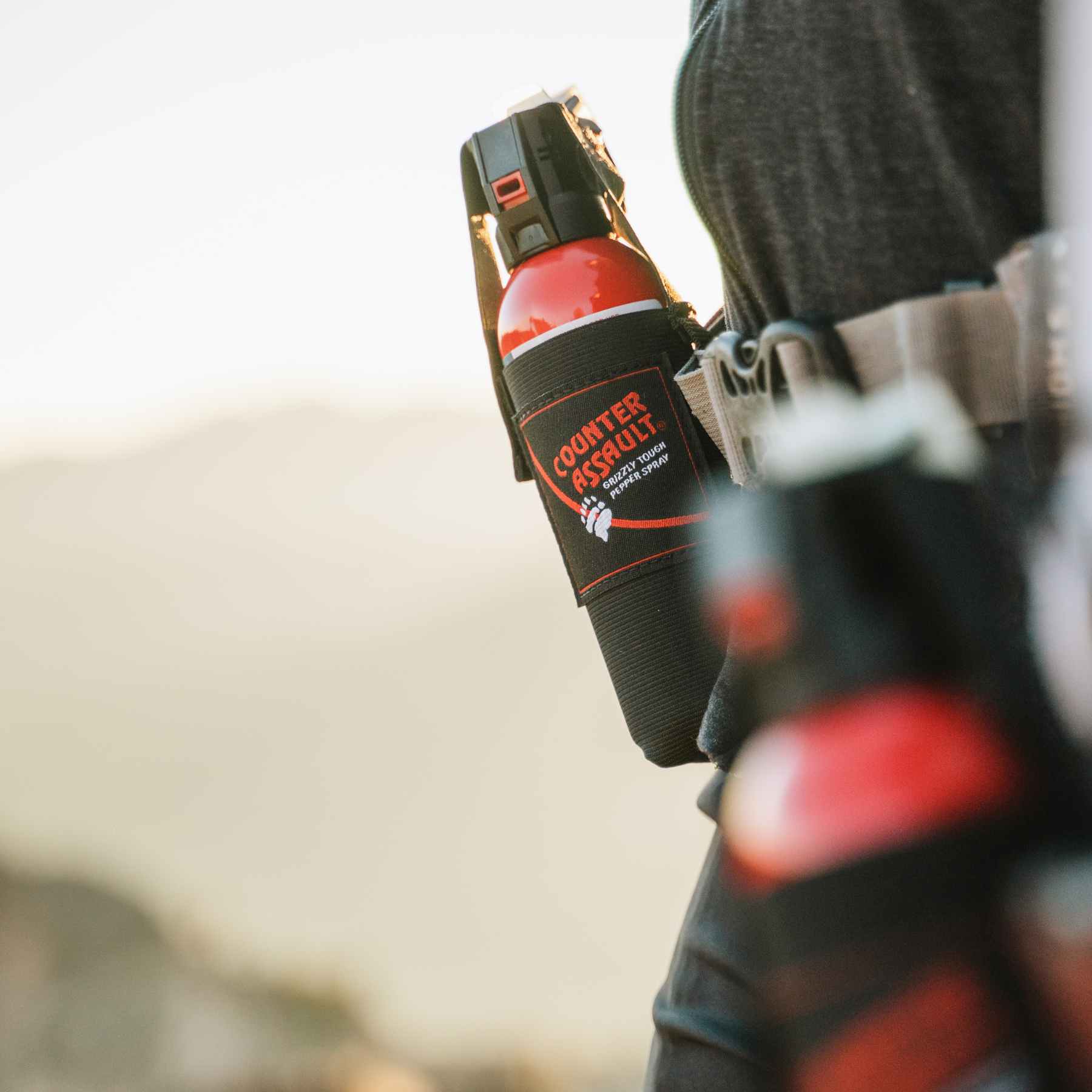
If the animal behaves aggressively or appears ready to charge, get deterrent in hand immediately. It must be accessible on a belt, pack strap, or chest harness. Gear buried in a pack is not emergency gear.
Useful signaling tools can help in camp organization and emergencies too. A whistle from Survive Outdoors Longer gives campers a simple way to alert partners without shouting.
How to deploy bear spray correctly
Bear spray is a reactive tool, not a substitute for food storage. It should never be sprayed on tents, clothing, coolers, or around camp as a preventive scent barrier. It is for an aggressive encounter.
The basic deployment sequence is straightforward:
- Remove the safety clip
- Aim slightly downward toward the animal’s path
- Start spraying when the animal is about 30 to 60 feet away
- Create a cloud the animal has to run into
- Continue until it diverts
- If it keeps coming, direct spray into the face
- Leave the area when there is a safe chance to do so
For a detailed overview of field use, carry position, and limitations, the guidance at what you need to know about bear spray is worth reviewing before any trip.
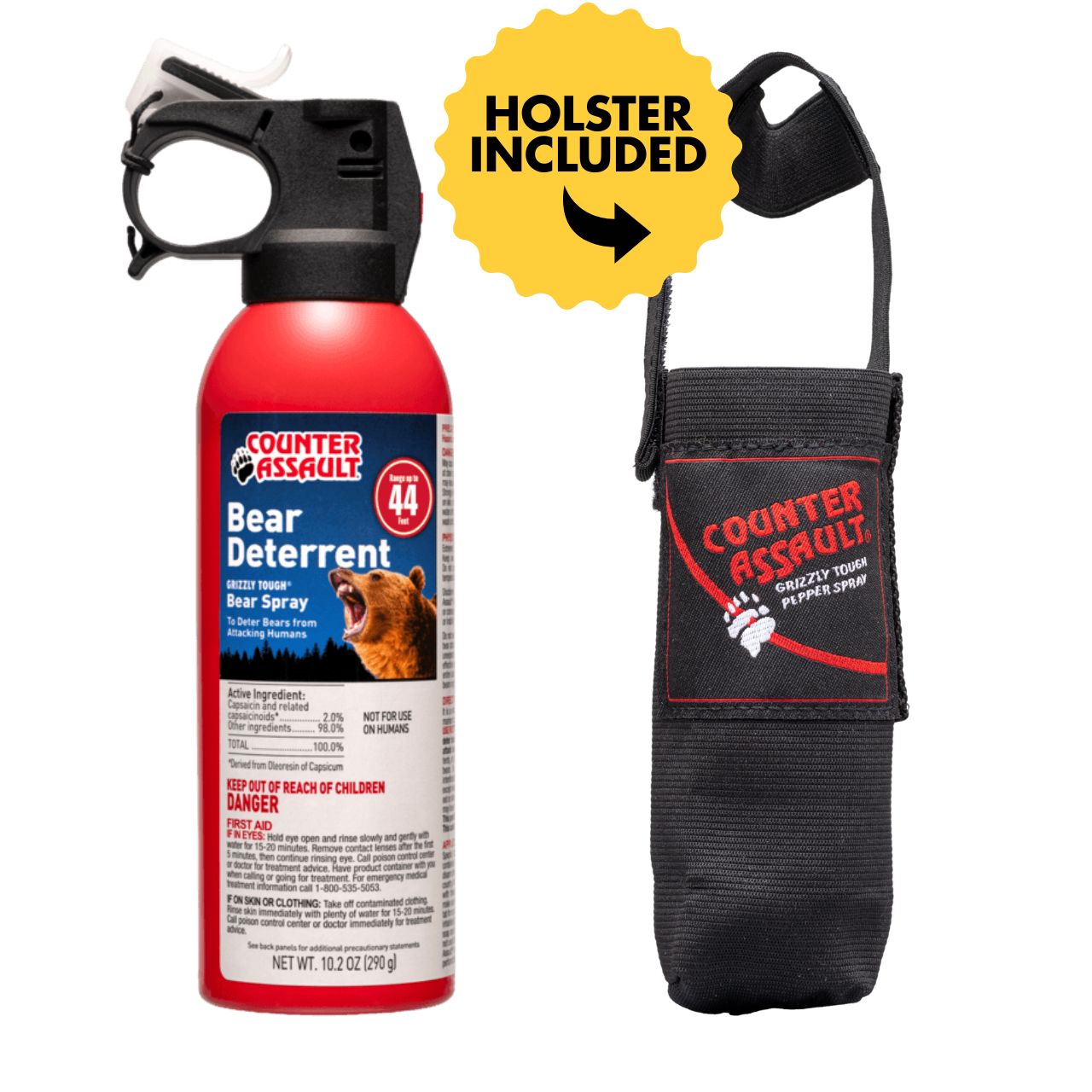
Campers who want a deterrent accessible on the body can carry Counter Assault 10.2 oz bear spray with holster. It is a non-lethal deterrent intended for bears, mountain lions, or coyotes, not for use on people.
This walk-through is worth watching before heading into bear country:
Two mistakes show up often. One is carrying spray inside the pack. The other is assuming wind makes it useless, then leaving it behind. Wind is a factor in any aerosol deployment, but that does not change the need to have a non-lethal deterrent ready when distance closes fast.
Frequently Asked Questions About Food Storage
Does pet food count as food that needs secure storage
Yes. Pet kibble, treats, bowls with residue, and canned food all belong in the same storage system as human food.
Do toothpaste and lip balm matter
Yes. If it smells, store it. Campers often focus on meals and forget small scented items that still attract wildlife.
Can food stay in the tent if it is sealed
No. Food and scented items should stay out of the sleeping area. A sealed package still carries odor.
Is a cooler enough protection
Sometimes, in the right frontcountry setting and only if local rules allow vehicle-based storage. A loose cooler at camp is not reliable protection.
Is hanging food still a good option
It can work where allowed and where the trees and technique are right. It is less forgiving than many campers assume.
What about mice and raccoons
They are a major reason to tighten up camp discipline. Small wildlife causes plenty of food theft and gear damage even where bears never show up.
Should cookware be stored too
If it has food smell or grease on it, yes. Clean it thoroughly and store it with other scented items.
Good camping food storage protects the trip before trouble starts. A solid system includes site-specific planning, secure food containment, disciplined cleanup, and a non-lethal response option if an animal turns aggressive. Campers heading into bear country can review gear and safety resources at Counter Assault.