
A hiker rounds a bend, looks up, and sees a big dark bear feeding above the trail. In that moment, the immediate question is: Is it a black bear or a grizzly? That isn’t trivia. It changes how a person reads the bear’s behavior, how much space to give it, and what to do if the encounter turns bad.
The difference between black bears and grizzly bears matters most when distance is closing and time is short. Fur color won’t save anyone. A quick look at the shoulders, face, ears, movement, and the setting usually tells far more. The useful question isn’t just “what species is that?” It’s “what does that species tend to do next, and what should a person do right now?”
This guide is built for that exact purpose. It focuses on identification for action, early warning signs on the ground, and the practical safety decisions that help hikers, campers, anglers, and families avoid escalating a bear encounter in the first place.
Table of Contents
- Black Bear or Grizzly Knowing the Difference is Key
- How to Tell a Black Bear from a Grizzly Bear Instantly
- Understanding Bear Behavior and Habitat Differences
- Reading the Signs Before an Encounter
- Species-Specific Responses to a Bear Encounter
- Essential Gear for Safety in Bear Country
- Frequently Asked Questions About Bear Safety
Black Bear or Grizzly Knowing the Difference is Key
A lot of bear trouble starts with hesitation. Someone sees a bear at medium distance, decides it’s probably just a black bear because it looks dark, then keeps walking. Or a camper notices fresh sign near a site, assumes the animal has already moved on, and stays put. Those are the kinds of errors that stack up fast in bear country.
The difference between black bears and grizzly bears matters because the two species are built differently, utilize their surroundings differently, and often react differently when surprised. A grizzly’s body shape points to power and digging strength. A black bear’s build points to agility and climbing. Those physical differences aren’t cosmetic. They help explain the choices each bear is more likely to make under pressure.
Practical rule: Identify the bear only to answer the next question. How much distance is needed, and what response gives the safest outcome for both the person and the bear?
For hikers, that means looking beyond color and focusing on the features that hold up under stress. For campers, it means reading the area before settling in. For parents, dog walkers, anglers, and RVers, it means recognizing that prevention starts long before a charge or bluff charge ever happens.
A bear encounter is rarely improved by speed, noise in panic, or a rushed guess. It’s improved by early recognition, calm body language, clean camp habits, and immediate access to a non-lethal deterrent if a bear closes distance aggressively.
How to Tell a Black Bear from a Grizzly Bear Instantly
The fastest way to identify a bear is to ignore color and read shape. According to Bear Aware’s comparison of black bears and grizzlies, adult male grizzly bears typically weigh 400 to 1,000 pounds, while adult male black bears weigh 150 to 600 pounds. The same source notes that grizzlies show a pronounced shoulder hump, a concave facial profile, and longer claws suited for digging, while black bears have a sleeker build, a straighter facial profile, and claws adapted for climbing.

Grizzly vs Black Bear quick ID cheat sheet
| Feature | Grizzly Bear (Ursus arctos horribilis) | Black Bear (Ursus americanus) |
|---|---|---|
| Build | Larger, more robust | Sleeker, lighter-looking |
| Shoulders | Prominent muscular hump | No prominent hump |
| Face | Concave or dished profile | Straight profile |
| Ears | Smaller, rounder ears | Larger, more pointed ears |
| Claws | Longer claws built for digging | Shorter curved claws built for climbing |
| Usual impression at distance | Heavy front end, powerful frame | More even back line, agile frame |
The fastest field marks to trust
Start with the shoulder hump. If the highest point of the body is over the shoulders, that strongly favors grizzly. A black bear usually looks more even-backed.
Next, check the face profile. A grizzly often has a dished look from forehead to nose. A black bear tends to look straighter from the side, a distinction a person can often make before the claws are visible.
Then look at the ears. Black bears usually show ears that appear taller and more pointed in proportion to the head. Grizzlies tend to have smaller, rounder ears on a broader-looking head.
Finally, if the view is close enough and still safe, look at the claws. Long, straighter-looking claws fit grizzly. Shorter, curved claws fit black bear.
If the hump, face, and ears all point in the same direction, trust that pattern more than any single feature on its own.
What not to trust
The most common mistake is relying on coat color.
A black bear can be black, brown, or cinnamon. A grizzly can also appear in overlapping shades. Color is one of the weakest field marks.
That’s why experienced people scan structure first. Body shape keeps working in low light, at a distance, and when the bear is moving. Color doesn’t.
Another mistake is using size alone. Some black bears are large. Some grizzlies, especially at a glance or from poor angles, won’t look as massive as expected. Size supports identification, but it shouldn’t carry the whole decision.
Understanding Bear Behavior and Habitat Differences
Behavior explains why species identification matters in the first place. According to Teton Science Schools’ guide to black bears and grizzlies, grizzly bears are 2 to 4 times more likely to exhibit defensive charges. The same source notes that grizzlies have 1.5 to 2 times greater sprint endurance over 100 meters, while black bears use 100% tree-climbing proficiency for evasion. Those differences help explain why the same human behavior won’t produce the same result with both species.

Why grizzlies often stand their ground
Grizzlies are built to own space. The hump, digging claws, and heavier front end fit a bear that often uses open country, feeds by digging, and responds strongly when surprised at close range. In practical terms, that means a grizzly may hold position, woof, huff, pop its jaws, or rush forward defensively instead of immediately leaving.
That’s part of why grizzly country demands more attention around blind corners, thick streamside brush, carcass areas, and noisy water. Surprise is a major trigger. Distance and advance warning matter more than bravado.
For hikers who want to sharpen that awareness, Counter Assault’s guide to tracking black bear is useful because it trains the eye to notice sign before a visual encounter happens.
Why black bears often choose escape
Black bears often prefer to avoid trouble. Their shorter climbing claws and more agile build fit a species that commonly uses forest cover and vertical escape. When a black bear has room, it often leaves. That doesn’t mean it’s harmless. It means the animal’s first option is frequently retreat rather than a defensive hold.
That difference is easy to misuse. People hear that black bears usually leave and become careless with food, dogs, or close photos. That’s a mistake. A black bear that’s food-conditioned, cornered, or acting predatory is still dangerous.
A better working model is this:
- Grizzly behavior often centers on defense. Close surprise, cubs, carcasses, and personal space matter.
- Black bear behavior often centers on avoidance. Escape is common when a route is open.
- Either species can become dangerous. Species helps guide response, but the bear’s actual behavior in front of the person always matters.
Reading the Signs Before an Encounter
Most safe bear encounters happen before the bear is ever seen. A person notices tracks in damp soil, fresh scat on a trail junction, torn-up ground in a meadow, or clawed bark near camp and changes behavior early. That’s the kind of prevention that works.

Tracks that give an early warning
According to Alaska Explored’s black bear vs grizzly guide, tracks provide up to 95% accurate species identification, citing the Alaska Department of Fish & Game. The same source notes that grizzly prints can be up to 12 inches long with clearly visible long, straight claw marks, while black bear prints are 6 to 8 inches, more oval-shaped, and often lack claw imprints unless the ground is very soft.
That makes tracks one of the best tools for deciding how alert to be before moving into thick cover or choosing a campsite. A large track with long claw marks in mud, sand, or dusty trail surface should slow the group down immediately.
A simple field check helps:
- Look for length first. Bigger print suggests bigger animal, but shape matters more than size alone.
- Check the claw marks. Long and obvious points ahead of the toes fit grizzly better.
- Read the overall shape. Black bear tracks often look more oval.
Fresh tracks don’t mean panic. They do mean the area deserves more noise, more spacing discipline, and quicker access to deterrent tools.
Scat diggings and tree sign
Scat can add context, especially around campsites, fishing access points, berry patches, and creek corridors. Grizzly scat is described in the verified data as larger and often associated with roots, tubers, hair, or bone fragments. Black bear scat is described as smaller and more tubular, often reflecting berries and nuts. A person doesn’t need to get close to inspect it. The point is to note presence, freshness, and location, then move accordingly.
Other sign matters too. Torn-up ground can suggest digging. Tree-climbing sign can point to black bear use of an area. None of these signs should trigger pursuit or curiosity. They should trigger distance, noise, and cleaner decision-making.
Species-Specific Responses to a Bear Encounter
When a bear is visible and aware of a person, the response has to stay disciplined. The first mistakes are usually the same across species. Running. Screaming. Closing distance for a better look. Letting a dog range out and return with a bear behind it.

What to do first with any bear
Start with the basics that hold across the board:
- Don’t run. Running can trigger pursuit.
- Stand your ground at first. Sudden retreat in panic often makes things worse.
- Speak in a normal voice. Let the bear identify the person as human.
- Back away slowly if the bear isn’t charging. Move sideways if needed and keep watching the bear without hard staring.
- Get deterrent spray in hand early. A can buried in a pack is late gear.
People who want a concise field refresher can use Counter Assault’s guide on what to do if you see bear.
If it is a grizzly
A grizzly encounter often has a defensive tone. The bear may be surprised, protecting cubs, or reacting to close-range pressure. In those situations, a person should avoid acting like prey and avoid escalating with panic.
If a grizzly charges or behaves aggressively, standing ground is critical. If contact happens in a defensive attack, standard bear-safety guidance is to play dead. The reasoning is practical. A defensive grizzly may stop once it no longer sees a threat.
That advice is species-specific. It isn’t a universal rule for every bear.
If it is a black bear
Black bear encounters often begin with avoidance, but if a black bear attacks, the response changes sharply. A person should fight back with anything available if physical contact occurs. The goal is to convince the bear that the person is not prey and not an easy target.
Many people often get confused regarding this point. They remember one phrase from bear safety and apply it to every species. That’s dangerous. Playing dead with a black bear attack is not the standard response.
A quick visual demonstration helps lock in the timing and mechanics of deterrent use:
When bear spray enters the picture
Bear spray is the primary non-lethal response when a bear is charging or acting aggressively and a charge appears likely. It should not be used like insect repellent, and it should never be sprayed on clothing, packs, tents, or people.
The field sequence is straightforward:
- Remove the safety clip.
- Aim slightly downward toward the space in front of the charging bear.
- Start spraying when the bear is within effective range, creating a cloud the bear must pass through.
- Continue until the bear diverts.
- If it keeps coming, direct the spray into the face.
- Leave the area as soon as the bear breaks off.
The best spray is the one already in hand before the bear commits to the approach.
Essential Gear for Safety in Bear Country
Good bear-country gear is about access, not just ownership. Plenty of people carry the right items in the wrong place. A deterrent stuffed under spare clothes or clipped inside a pack lid won’t help much during a fast encounter. The same goes for a headlamp buried in cookware or a first-aid kit left in the car.
What belongs in the top layer of the pack
A practical setup usually includes a bear deterrent, a compact trauma-capable first-aid kit, a reliable light, and clean food-storage discipline. For first aid, Adventure Medical Kits offers trail and camp options that make sense for hikers and family campers. For camp and emergency lighting, LuminAID solar lanterns and inflatable lights are easy to pack and useful around tents, trailheads, and RV setups. Water treatment also matters in remote travel, and RapidPure water purification gear fits well in longer backcountry kits.
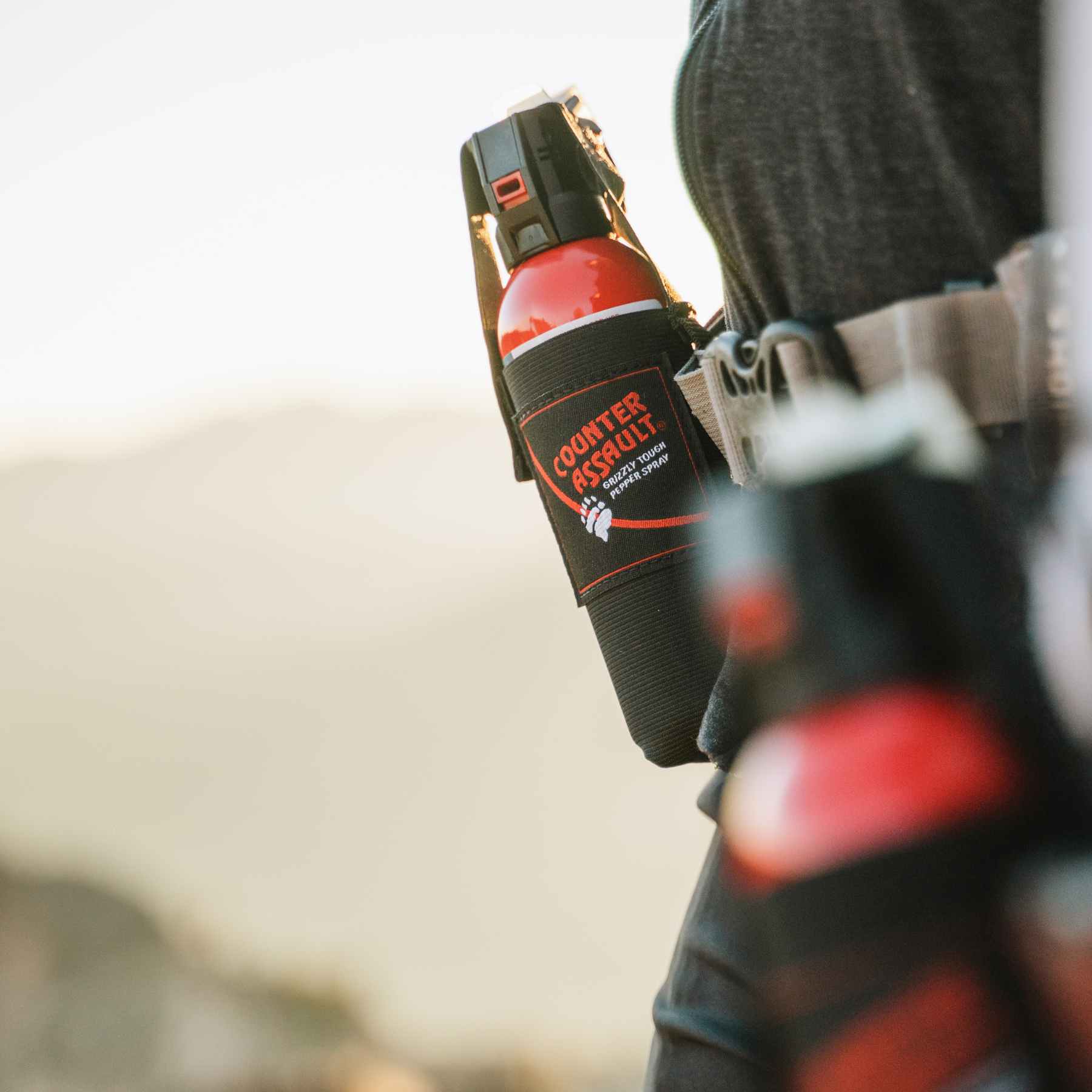
Bear spray belongs on the belt, chest, or pack strap where it can be reached with one hand. For a closer look at carry basics, storage, and handling, Counter Assault’s bear spray guide is worth reviewing before any trip.
What works and what does not
Several habits consistently help prevent trouble:
- Hike in groups. Groups make more noise and are harder for a bear to overlook.
- Make noise in tight terrain. Blind corners, creek bottoms, and thick brush are bad places to move silently.
- Avoid dawn and dusk travel when possible. Those low-light periods can increase the chance of surprise encounters.
- Keep a clean camp. Food, garbage, toiletries, and pet food should never sit out.
A few common mistakes deserve blunt correction.
Bear spray is not a repellent. Spraying gear, clothing, or tents doesn’t create a protective shield.
Another mistake is assuming a firearm is the cleaner answer. In a fast charge, precise shot placement is difficult, and a wounded bear can become even more dangerous. Non-lethal deterrence keeps the emphasis where it belongs: stopping the charge while giving both the person and the animal a better chance to come out unharmed.
Wind is another concern people raise. It can affect any aerosol product, but that doesn’t make spray useless. The practical answer is training, carrying the can where it’s reachable, and deploying it correctly when the bear is committed.
Frequently Asked Questions About Bear Safety
Is bear spray only for bears
No. Counter Assault states that its bear spray is intended for bears, mountain lions, and coyotes, not for use on people.
Should spray ever be applied to clothing or camp gear
No. It shouldn’t be used like bug spray or scent repellent. Applying it to gear or clothing is not the correct use.
What’s the best way to avoid an encounter in the first place
Travel in groups when possible, make noise in dense cover and around blind corners, avoid surprising bears at close range, and keep food and other scented items secured away from sleeping areas.
If a bear is far away, should a person move closer to identify it better
No. Distance is safety. Use binoculars if available, and rely on shape, habitat, and behavior rather than trying to close the gap.
Does species matter more than behavior
Both matter, but behavior is the immediate priority. Species helps guide the right response. The bear’s posture, distance, and actions tell the person whether the situation is calming down or getting worse.
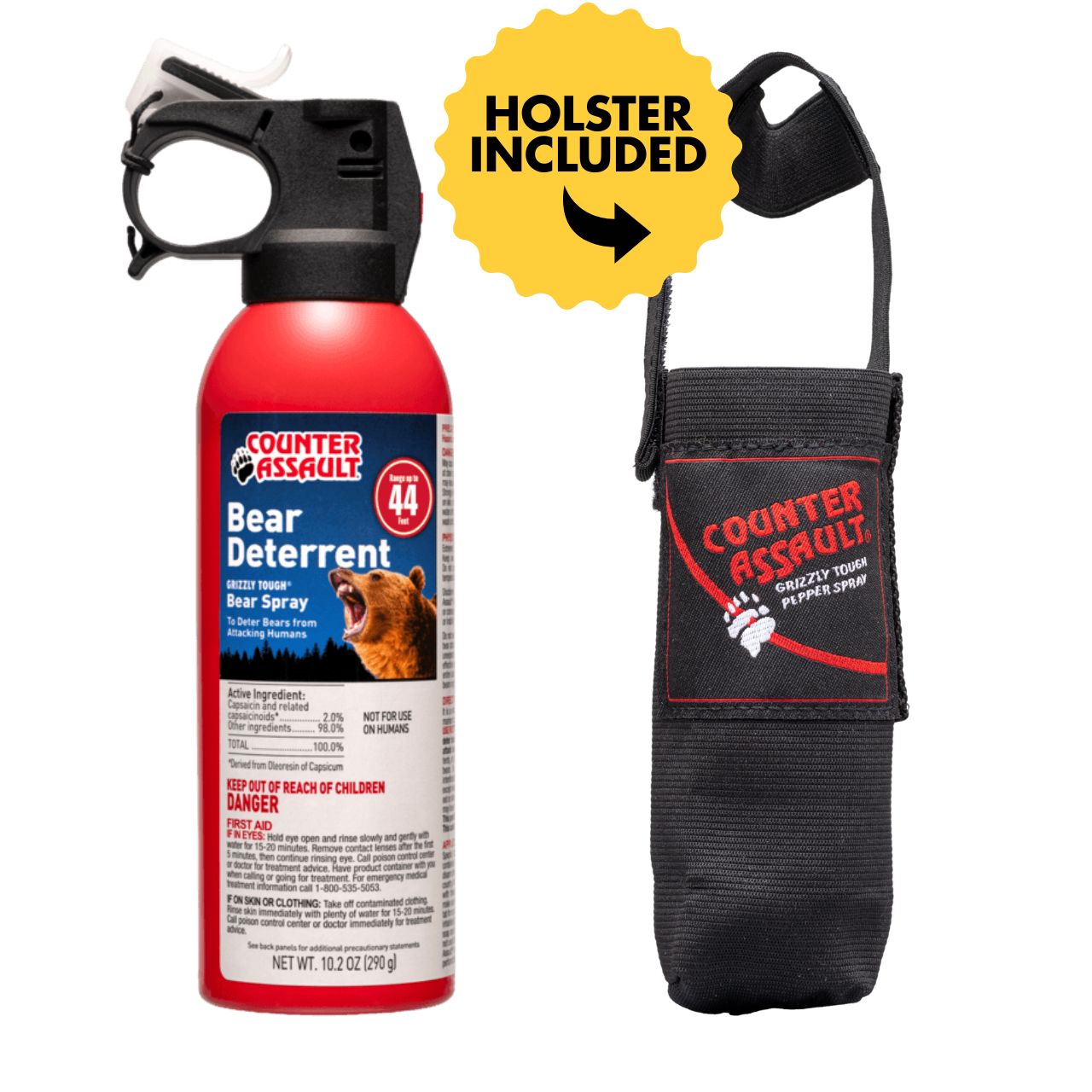
The safest trip plan combines knowledge, clean habits, and gear that can be reached fast. For hikers, campers, anglers, and professionals who want a non-lethal deterrent made for serious bear country, Counter Assault offers bear spray made in Montana, including its 10.2 oz bear spray with included holster, built for immediate access when seconds count.