
A damp trail, a muddy creek crossing, a patch of flattened grass beside a berry thicket. Many individuals notice a bear only when the animal is in view. Good trackers notice the bear long before that.
Tracking black bear is not about chasing wildlife. It is about reading presence, movement, and intent early enough to make better decisions. That matters on remote trails, around camp, and increasingly near neighborhoods where bears now move through yards, greenbelts, and trail systems.
A track in the dirt is useful. A pattern of tracks, scat, claw marks, and travel direction is better. When those signs are interpreted correctly, they help hikers, campers, homeowners, and outdoor professionals avoid surprise encounters and respond calmly when a bear is close.
Table of Contents
The Art and Science of Tracking Black Bears
A black bear track often stops people cold. The print looks wrong for a dog. It shows five toes, a broad heel, and claw marks that do not match a canine’s shape or stride. Once that sign is noticed, the ground starts to read differently.

Tracking black bear is both observation and interpretation. Observation answers a simple question. Was a bear here? Interpretation goes further. Which way was it moving, how recently did it pass, what was it doing, and does its path create a safety concern for the people using the same area?
Why tracking matters in real conditions
A tracker who reads sign well is less likely to blunder into a bear at close range. That is the practical value. The skill slows people down, sharpens route choices, and helps them notice places where visibility is poor, food sources are concentrated, or travel corridors funnel both wildlife and hikers into the same narrow space.
The work is not mysterious. It starts with ground truth.
- Tracks show direction and gait.
- Scat hints at recent feeding.
- Tree marks and rubs reveal repeated use of an area.
- Beds and disturbed vegetation suggest resting or feeding behavior.
What works and what does not
What works is patient scanning. Look ahead, then down, then to the edges of the trail. Check soft ground, dust, sand, creek banks, snow, and places where an animal would duck under a fence or step over a log.
What does not work is fixating on one perfect print. Bears rarely leave a textbook example on command. Most field conditions produce partial sign, overlapping sign, or old sign degraded by weather. Competent tracking comes from linking imperfect clues, not waiting for a flawless one.
Reading the Signs How to Identify Black Bear Presence
A bear does not need to be visible to be obvious. The land usually tells on it.

Tracks that stand apart
Black bear tracks are often the first sign learned, and for good reason. They are distinctive once the eye knows what to look for.
The front foot is generally rounder. The hind foot often looks more elongated, almost like a bare human foot with claws added. Both show five toes, which is the first big separator from many common trail animals.
A useful field comparison:
| Sign feature | Black bear | Large dog or coyote |
|---|---|---|
| Toe count visible | Usually five | Usually four |
| Claw marks | Often visible ahead of toes | Often visible, but pattern differs |
| Heel pad | Broad and substantial | Narrower, more canine-shaped |
| Track feel | Wide, heavy, planted | More compact and linear |
The track line also helps. Canines often move with an efficient, tidy rhythm. Bears can look more pigeon-toed or rolling in their foot placement, especially in soft substrate.
Scat, rubs, and tree damage
Scat is another strong indicator, but it changes with diet. A bear feeding on berries leaves a very different deposit than one digging insects or feeding on other foods. Seeds, berry skins, insect parts, and hair can all appear. The exact look varies a lot, so the better approach is to treat scat as one clue among several, not a standalone verdict.
Tree sign adds another layer.
- Claw marks: Long, parallel scratches can show climbing or marking.
- Rub trees: Repeated rubbing can leave bark smoothed, darkened, or worn.
- Hair snags: Coarse dark hair may catch on rough bark, fences, or wire.
- Beds: Flattened vegetation can indicate a short rest site or day bed.
Some sign is old and some is fresh. Sharp edges on a track, moist scat, recently exposed wood, or fresh hair can suggest recent use. Weather quickly changes all of that, so freshness should be judged cautiously.
Do not kneel down over fresh sign and lose awareness of the surrounding cover. The bear that left it may still be nearby.
Bear sign around homes and subdivisions
This matters far beyond backcountry trails. As bear populations expand eastward, wildlife biologists in Massachusetts are finding adult females successfully raising cubs in human-dominated areas according to Massachusetts black bear research. That changes how homeowners should think about bear sign.
Near homes, black bear sign often looks less dramatic and more routine.
Examples include:
- Tracks in mulch or garden soil
- Scat near fruit trees or compost areas
- Hair on fences
- Disturbed bird feeders, trash areas, or outdoor pet food stations
- Repeated movement along the same edge habitat, drainage, or greenbelt
In suburban settings, the mistake is assuming a single nighttime visit is random. Repeated sign in the same corridor usually means the bear has worked that route before and may return if attractants stay available.
Practical identification habits
A reliable field routine is simple.
First, confirm the print shape. Then widen the search. Look ten to twenty steps ahead and behind for a track sequence, not one isolated mark. After that, scan for feeding sign, scat, disturbed vegetation, and route features like creeks, saddles, trail junctions, and edges of thick cover.
That broader read turns identification into useful awareness. It also keeps people from overcalling every muddy print as a bear track, which is one of the most common beginner mistakes.
From Sign to Story Understanding Bear Movement and Behavior
A single bear track says presence. A trail of sign says behavior.
That distinction matters because safety decisions depend less on whether a bear existed in the area and more on what it was doing there. A bear moving steadily across a slope, a bear feeding in place, and a bear bedding close to a trail leave different patterns and carry different implications.
What spacing and direction reveal
Start with travel line. Bears rarely move in random scribbles for long. The direction of toe points, the depth of tracks on slopes, and the spacing between steps can show whether the animal was climbing, descending, feeding slowly, or traveling with purpose.
A loose pattern of tracks with frequent turns often suggests foraging. Widely spaced, consistent tracks can indicate direct travel. Sign clustered around overturned rocks, berry patches, or logs points to feeding activity rather than transit.
The terrain matters too. Bears favor efficient movement, but they also use cover. A track line that cuts along edges, creek bottoms, benches, or low-resistance travel lanes is often more meaningful than the print itself.
Where bears travel and why it matters
A GPS tracking study in Great Smoky Mountains National Park found that relocated black bears often wander hundreds of miles, with few staying at the release site, showing how mobile these animals can be in real environments, as described in the National Parks Conservation Association story on bear tracking in the Smokies. For people in bear country, that means yesterday’s assumptions about where a bear “belongs” are not very useful.
Bears cross boundaries people treat as fixed. They move through parks, roadsides, neighborhoods, drainages, campgrounds, and back again. A drainage behind a subdivision can function as a wildlife corridor. So can a brushy utility edge or a strip of timber between roads.
That mobility is one reason trackers should think in corridors, not points on a map.
- Food-rich zones hold bears longer.
- Cover routes help bears move with less exposure.
- Human attractants can pull movement toward camp or property.
- Water and terrain breaks often shape the path of travel.
People who want a broader emergency mindset for close encounters should review how to survive a bear attack, especially before traveling in dense cover or low-visibility country.
Season changes the story
Season changes what sign means. In spring, tracks may appear near early forage and lower elevations. Later, bears may spend more time around productive feeding areas. In fall, food drives a lot of movement, and bears can concentrate where calories are available.
That does not mean every berry patch or oak stand is dangerous. It means concentration of food should raise awareness. Fresh sign near a concentrated food source deserves more caution than the same track on an open road crossing where the bear was passing through.
The safest interpretation is usually the simplest one. If sign is fresh, dense, and tied to food or cover, slow down and give the area room.
Essential Tools for Modern Bear Tracking
Skill comes first. Tools support it.
A tracker with expensive electronics and weak field habits still misses obvious sign. A tracker with strong habits and simple gear usually does better. The right kit helps organize observations, preserve orientation, and avoid crowding wildlife while trying to learn from it.

Field tools that matter first
The most useful tracking tools are still basic.
A topographic map shows drainages, saddles, benches, creeks, road crossings, and travel corridors that influence bear movement. A compass keeps the tracker oriented when following sign through timber or around terrain features. A notebook is underrated. Dates, weather, substrate, location, and sign type become valuable over time when patterns start repeating.
Add a few more practical items:
- Binoculars: Useful for glassing openings, slopes, and edges without moving closer.
- GPS unit or mapping app: Good for marking sign locations and noting repeated activity.
- Field guide: Helpful for checking track shape, stride clues, and look-alike species.
- Flagging or temporary markers: Useful in professional or training contexts, but they should be removed when the work is done.
For readers building a fuller gear setup around deterrence and field response, what you need to know about bear spray is worth reviewing before any trip into bear country.
What biologists use and what it teaches the public
Professional bear tracking goes far beyond what most hikers carry. Wildlife biologists use VHF radio telemetry and GPS collars to follow bears across rugged habitat. According to Maryland DNR’s overview of radio telemetry and GPS collars for tracking black bears, a VHF collar costs around $400 and requires triangulation, while a GPS collar costs over $1,500 and can record locations every 1 to 4 hours.
Those tools reveal an important trade-off.
| Tool | Main strength | Main limitation |
|---|---|---|
| VHF collar | Works well in many forested conditions | Requires manual triangulation and time |
| GPS collar | Gives detailed movement data automatically | Higher cost and more battery demand |
That research changes public safety guidance because it confirms how bears use terrain, roads, cover, and human-adjacent spaces over time. It also reinforces a simple lesson. Bears are often nearby without being seen.
Remote observation without crowding bears
Trail cameras can help homeowners, land managers, and researchers confirm timing and direction of movement without adding fresh disturbance. Placement matters. Cameras work best on travel funnels, fence gaps, drainage crossings, game trails, and property edges where bears naturally pass.
For readers comparing setups, Magic Eagle’s guide to Outdoor Camera Wildlife Monitoring offers practical camera-use context that fits well with noninvasive monitoring.
A common mistake is placing cameras directly on bait-like attractants around homes. That may document a problem, but it does not solve it. Better monitoring focuses on routes, then pairs that information with attractant removal and safer property routines.
Staying Safe A Tracker's Code for Bear Country
The point of tracking black bear is not getting closer. It is getting smarter sooner.

A sound safety code starts before an encounter. It continues during the first sighting, and it matters most in the short window when a situation may still calm down without contact.
Prevent problems before they start
Most avoidable bear trouble begins with surprise, food, or poor spacing.
A disciplined routine reduces all three:
- Travel in groups: Groups are noisier and easier for bears to detect.
- Make noise in low-visibility terrain: Blind corners, creek bottoms, brushy bends, and heavy timber deserve extra notice.
- Avoid dawn and dusk travel when possible: Visibility is poorer, and animal movement can be harder to read.
- Keep camp clean: Food, garbage, and scented items should be handled carefully and stored properly.
- Do not crowd a bear for photos or a better look: Distance is safety.
Trackers should also watch the wind, vegetation density, and sound conditions. Running water, rain, and thick brush reduce the warning both people and bears get from each other.
Read the bear before the moment escalates
Not every encounter becomes a charge. One of the biggest gaps in common advice is the decision-making window before spray is needed. As noted in Garia Bay Outfitters’ discussion of tracking black bears and encounter behavior, many bear encounters de-escalate without conflict, and people need to distinguish between a curious, stressed, or predatory bear.
That read affects the response.
A curious bear may pause, scent-check, or angle for a better look. A stressed bear may huff, jaw-pop, or hold tension while trying to decide what the person is. A dangerous situation is one that closes distance with intent, ignores space-making behavior, or escalates despite calm human response.
The baseline response stays consistent:
- Do not run.
- Stand your ground unless a safe retreat is obvious.
- Avoid hard eye contact.
- Speak in a normal voice.
- Back away slowly and sideways if the bear is not charging.
- Get deterrent tools ready early, not late.
People who want a direct refresher should read what to do if you see bear.
A quick visual refresher helps here:
Use bear spray correctly
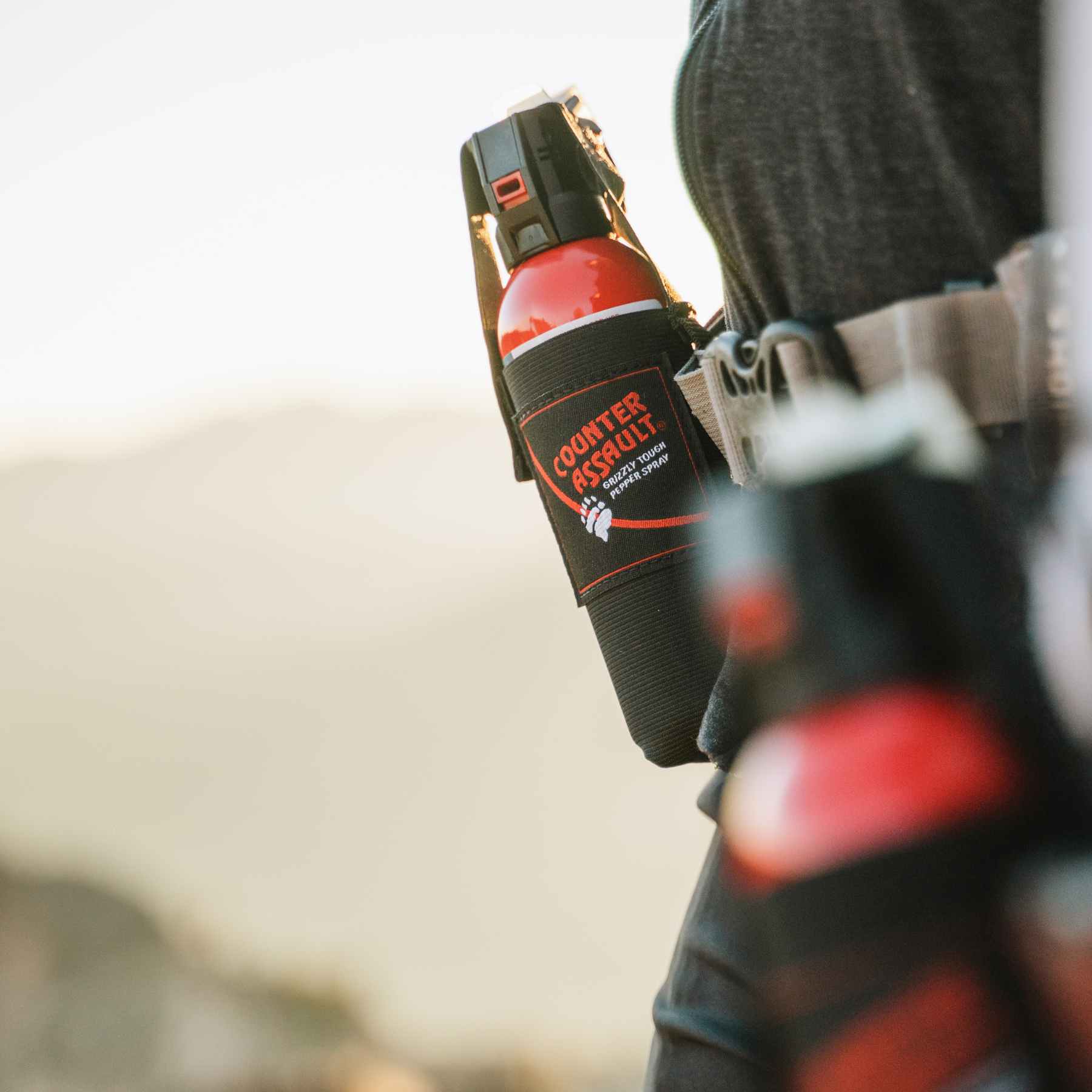
Bear spray is a defensive tool, not a repellent for gear or camp. It should not be sprayed on clothing, tents, packs, or people. It is for the moment when a bear is charging or acting aggressively enough that a charge appears imminent.
The basic deployment sequence is straightforward:
- Remove the safety clip.
- Aim slightly downward toward the front of the charging bear.
- Begin spraying when the bear is about 30 to 60 feet away.
- Create a cloud the bear must run through.
- Continue until the bear diverts.
- If necessary, direct the spray into the face.
- Leave the area as soon as the immediate danger breaks.
What works is carrying spray where it can be reached instantly. What fails is burying it in a pack, forgetting the safety mechanism, or waiting until the bear is too close to build a useful cloud.
Bear spray only helps if it is accessible before panic takes over.
Build a safety kit that supports good decisions
A serious bear-country kit is not complicated, but it should be complete. A practical setup includes deterrence, navigation, communication, first aid, light, and water treatment.
Useful additions include the Mountain Series Hiker from Adventure Medical Kits, a compact backcountry medical option, the LuminAID PackLite for camp lighting and backup charging, and water treatment gear such as RapidPure water purification products. None of those replace judgment, but each supports it when conditions deteriorate.
For homeowners in bear-prone neighborhoods, the same code applies with a different emphasis. Reduce attractants, know the travel routes on the property, supervise pets, and avoid normalizing repeated bear visits.
Conclusion Tracking with Respect and Confidence
Tracking black bear sharpens more than fieldcraft. It sharpens judgment.
A person who can read tracks, scat, rubs, travel lines, and habitat use is less likely to be surprised and more likely to make calm decisions early. That is the primary value of the skill. It builds awareness without pushing for closer contact.
Respect sits at the center of good tracking. Respect for the bear’s space. Respect for changing conditions. Respect for the fact that many encounters can be prevented by noticing sign early and responding well.
Bears are adaptable. People in bear country need to be adaptable too. On wild trails, around camps, and near subdivisions, the pattern stays the same. Observe carefully. Interpret accurately. Give fresh sign the attention it deserves. Carry proper safety tools where they can be used.
The best tracker is not the one who gets nearest to a bear. It is the one who reads the ground well enough to avoid forcing the encounter in the first place.
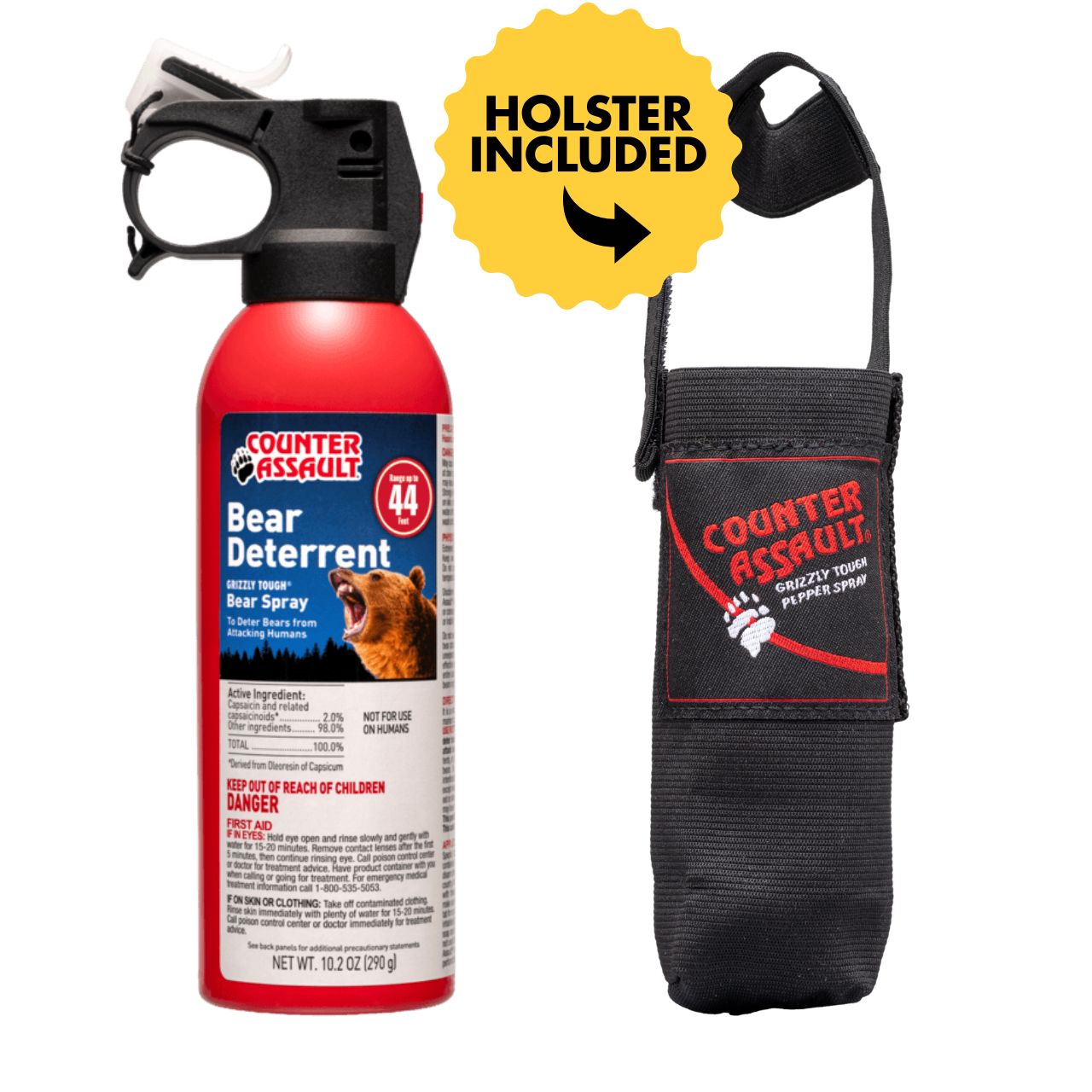
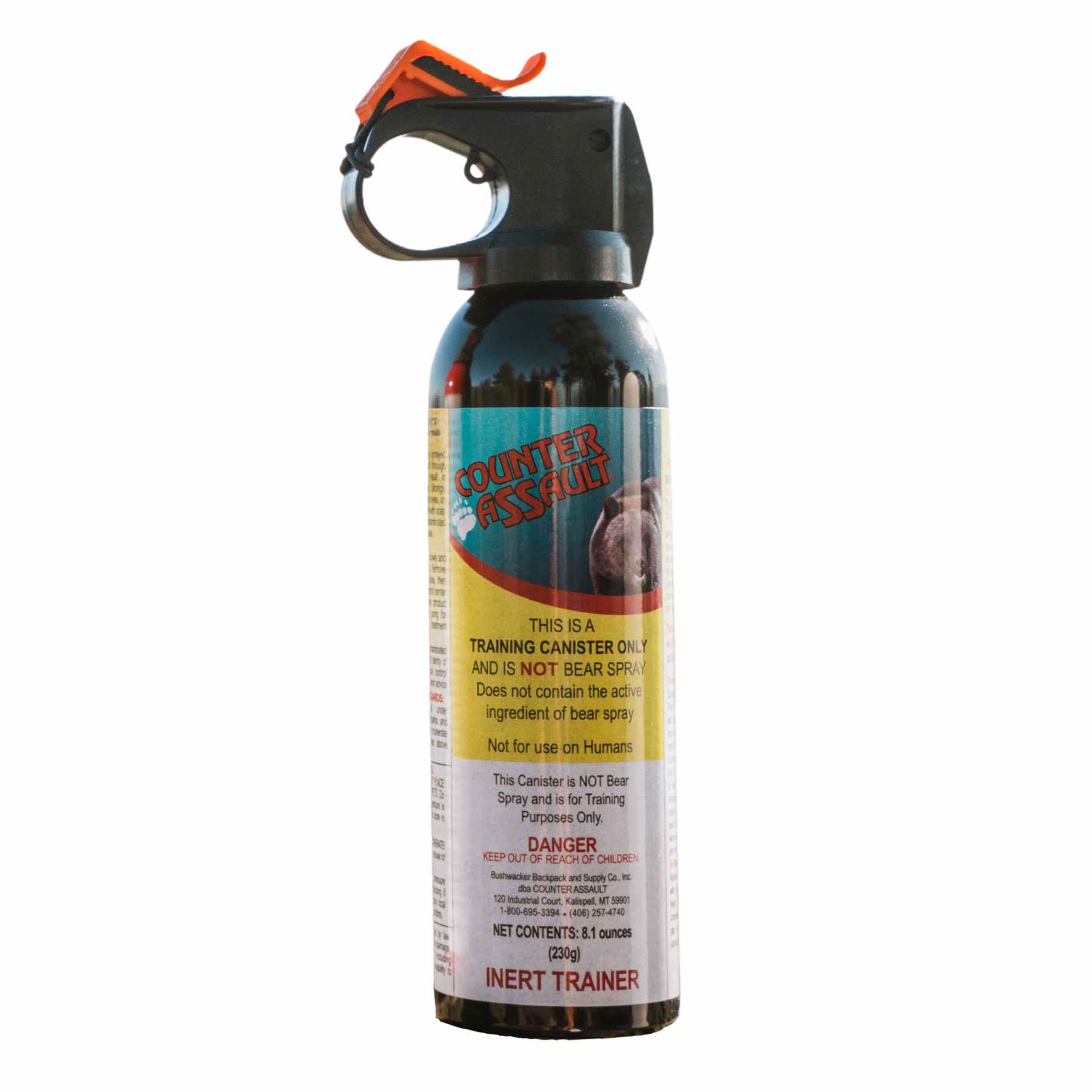
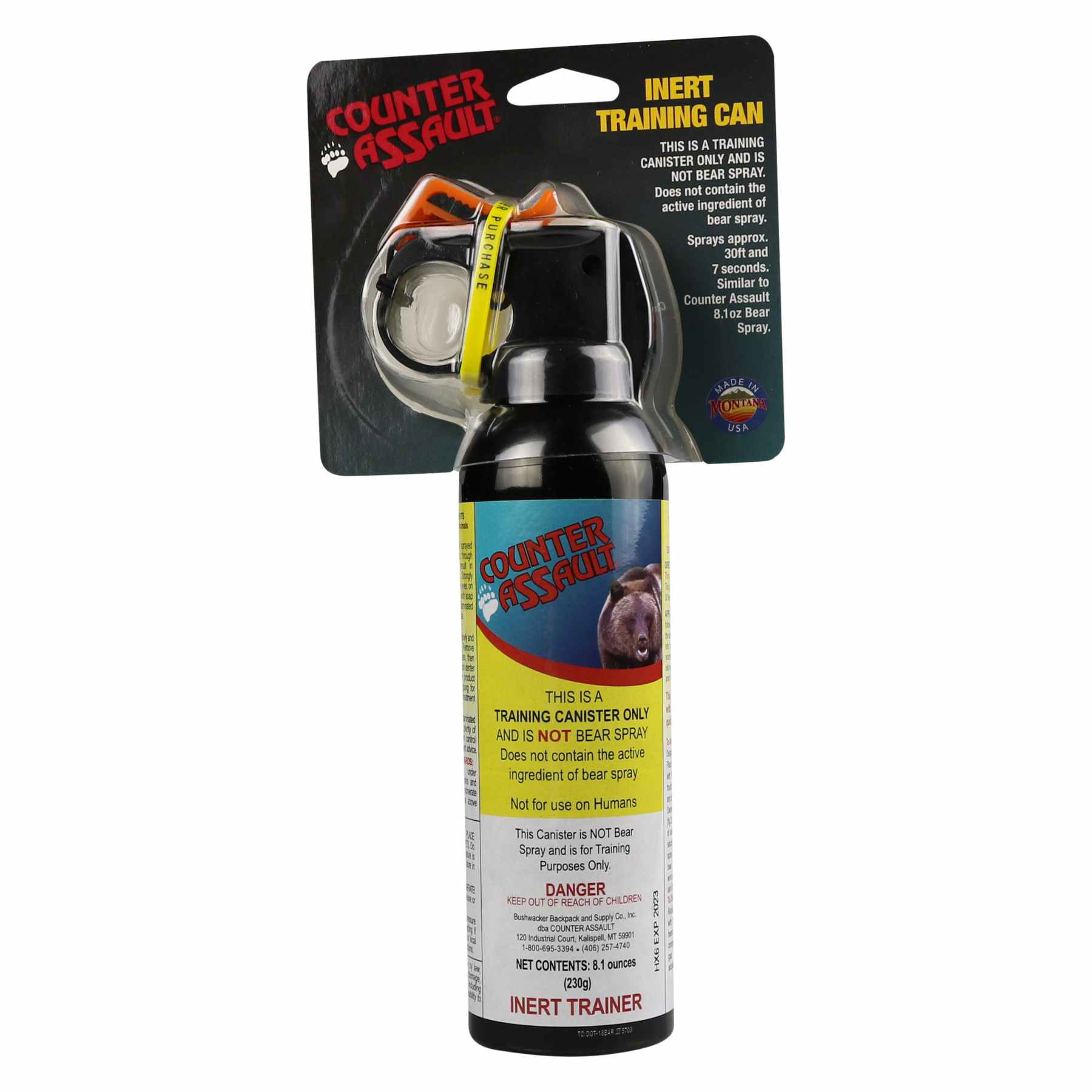
Before the next trip into bear country, carry a deterrent designed for real defensive use. Counter Assault offers bear spray made in Montana for use on bears, mountain lions, and coyotes, including the 10.2 oz option with holster for fast access when seconds matter.