
A hiker rounds a bend, notices dark fur through the brush, and has only a few seconds to answer the question that matters most. Not “What animal is that?” but “What does that animal's shape, movement, and behavior mean right now?”
That's why learning the characteristics of a bear isn't just a wildlife topic. It's a field skill. The useful details are the ones that help a person read distance, body shape, warning behavior, food motivation, and risk. A bear's stocky frame, powerful nose, seasonal feeding patterns, and species-specific features all affect what happens on the trail, around camp, and during a sudden encounter.
Many people learn a simple checklist and stop there. That's where confusion starts. Color can mislead. Size can mislead. Even a “classic” trait can be hard to see through trees, bad light, or nerves. Practical bear knowledge comes from putting anatomy, behavior, and safety decisions together.
Table of Contents
- Why Understanding Bear Characteristics Is a Critical Safety Skill
- The Bear Blueprint Core Physical Traits
- Beyond Size and Color How to Identify Bear Species
- Senses Diet and Behavior What Makes a Bear Tick
- A Bear's Year The Life Cycle and Seasonal Habits
- Staying Safe in Bear Country From Prevention to Encounter
- Frequently Asked Questions About Bear Characteristics and Safety
Why Understanding Bear Characteristics Is a Critical Safety Skill
A bear rarely presents itself like a field guide drawing. It may appear as a moving shape on a hillside, a sound near camp, or a brief silhouette crossing a trail. In those moments, people tend to fixate on one feature, usually color or apparent size, and that's often where judgment goes wrong.
The safer approach is to treat bear characteristics as decision clues. A broad back, rounded ears, the way the animal carries its head, how it reacts to human presence, and whether it's feeding, traveling, or warning all matter more than a fast guess. Good decisions come from stacking clues, not from trusting one trait.
The difference between trivia and usable knowledge
Knowing that bears are strong, furry, and wild doesn't help much under pressure. Knowing how their body shape affects speed, stability, climbing, digging, and bluff behavior is more useful. The same is true for feeding habits. A bear that's searching for food near camp is creating a different safety problem than a bear that has noticed a person at distance and is deciding whether to move off.
Practical rule: The most useful characteristics of a bear are the ones that change what a person does next.
That changes the whole frame. Instead of asking for perfect identification right away, a hiker can ask better questions:
- What is the bear doing: Feeding, traveling, standing still, or reacting to a person?
- What can be seen clearly: Head shape, shoulder profile, ear shape, claw length, tracks?
- What is the setting: Thick brush, open slope, creek bottom, campsite, dawn, dusk?
Why hikers and campers need this skill
Outdoor users don't need to become biologists. They do need enough understanding to avoid common mistakes. A clean camp makes more sense when a person understands how food-motivated bears can be. Making noise on blind corners makes more sense when a person understands how quickly a close surprise can turn into a dangerous encounter.
That practical lens keeps bear country from feeling mysterious. It turns scattered facts into calm, repeatable judgment.
The Bear Blueprint Core Physical Traits
A bear at 60 yards can look slow, heavy, and easy to read. That impression gets people into trouble. The same body shape that looks bulky from a distance lets a bear climb, dig, pivot, and cover ground fast enough to erase a bad decision in seconds.
One wildlife anatomy overview describes bears as plantigrade mammals with stocky bodies, short legs, small rounded ears, short tails, and non-retractile claws. It also notes that brown bears can run about 35 to 40 mph over short distances (bear anatomy overview).

How the basic body plan works
Plantigrade means a bear puts weight on the whole foot, more like a person than a dog. That full-foot contact works like a wide all-terrain tire. It gives traction and balance on loose soil, wet logs, stream banks, and uneven slopes. For a hiker, the safety lesson is simple. Rough ground does not slow a bear the way people often assume it will.
The rest of the frame follows the same pattern. Short legs lower the center of gravity. A heavy torso carries muscle and seasonal fat reserves. Large paws and claws act as built-in tools for digging roots, opening logs, climbing, and moving debris. Put together, those traits create an animal that is stable first and fast enough second.
That combination matters in camp and on trail.
Maine's black bear data gives a useful real-world scale. Adult males average about 250 pounds and 5 to 6 feet in length, while females average about 150 pounds and 4 to 5 feet. Males stand about 40 inches at the shoulder, while females usually stay under 30 inches. The same state profile notes that black bears often live 30 or more years in the wild, about one-third of newborn cubs die before their first birthday, and Maine's population has been estimated at around 25,000 since 2008 (Maine bear species information).
Those numbers help correct a common mistake. People often picture danger as height. Bears are a better reminder that power can sit low to the ground. A bear does not need a tall, leggy build to shove through brush, break down food sources, or close distance quickly.
What those traits mean in the field
Several visible features can help a person read what they are seeing under pressure:
- Rounded ears: These can make the head look smaller and less imposing than it is, especially at a distance.
- Short tail: A bear's rear profile looks blunt compared with deer, cats, or canines.
- Large paws and claws: These signal an animal built to dig, climb, tear, and defend itself at close range.
- Heavy front end and torso: This shape supports force, balance, and the ability to move through rough cover without looking graceful.
A useful habit is to connect each trait to a decision. Large claws and paws mean a tree is not always a safe answer. A low, heavy body means thick brush is poor cover. A stable, full-footed stride means steep or uneven ground should not make you feel protected.
If you want a broader species-by-species comparison before getting into field marks, this overview of kinds of bears in North America helps place these shared traits in context.
One rule is worth keeping in mind. A stocky silhouette does not mean clumsy. In bear country, “solid-looking” often means strong, balanced, and able to move much faster than a person expects.
Beyond Size and Color How to Identify Bear Species
The quickest wrong answer in bear country is often, “It's dark, so it must be a black bear,” or “It looks big, so it must be a grizzly.” The National Park Service warns that color and size alone are misleading for bear identification and advises people to use a combination of features and tracks instead (National Park Service bear identification guidance).

Why color causes mistakes
Black bears aren't always black. Brown bears aren't always easy to judge by shade, especially in low light, wet fur, or brush. A young bear can also look smaller than expected, and distance can flatten the body shape so badly that people miss the features that matter.
That's why experienced rangers teach identification as a pattern of evidence. A hiker should look for several traits at once instead of waiting for one perfect clue.
For a broader overview of regional species, this guide to kinds of bears in North America is a useful companion to trail-side identification basics.
The features that matter more
The National Park Service specifically points people toward structural traits such as the grizzly's shoulder hump and the black bear's flatter facial profile. Those are better clues because they reflect anatomy, not lighting.
A quick comparison helps:
| Feature | Brown or grizzly bear | Black bear |
|---|---|---|
| Shoulder area | Prominent shoulder hump | No prominent hump |
| Facial profile | More dished or concave | Flatter or straighter profile |
| Ears | Shorter, rounder appearance | Taller, more pointed appearance |
| Claws | Longer and straighter looking | Shorter and more curved looking |
No single row in that table should stand alone. Brush can hide the shoulders. Head angle can distort the face. Distance can make ears hard to judge. But when two or three clues line up, identification gets much more reliable.
What to do when the view is poor
Sometimes the correct move isn't to force an identification. It's to act conservatively.
- Keep distance first: Space buys time and better judgment.
- Use optics if available: Binoculars often reveal head and shoulder shape far better than the naked eye.
- Check tracks only if safe: Track patterns can add useful evidence after the animal has left the area.
- Avoid moving closer for certainty: Better identification is never worth creating a closer encounter.
If distance, brush, or stress hides the details, the safe choice is to respond to uncertainty, not to deny it.
That mindset is one of the most important practical lessons tied to the characteristics of a bear. Real encounters are messy. Good judgment accepts that.
Senses Diet and Behavior What Makes a Bear Tick
The trait that explains many bear encounters isn't size. It's smell. One source estimates that bears have a sense of smell roughly seven times more sensitive than a bloodhound's, allowing them to detect food from long distances (bear sense of smell overview).
Smell drives many encounters
That single trait explains a lot of “mysterious” bear behavior around people. A cooler left unsecured, food scraps at camp, scented toiletries, fish remains, or even poorly managed garbage can turn a human site into a strong odor source. From the bear's point of view, that's not a social encounter. It's a feeding opportunity.
This is also why cleanliness in camp isn't cosmetic. It's defensive. Bears are opportunistic feeders, and a powerful nose lets them investigate chances that people thought were hidden well enough.
For a closer look at how scent affects bear decisions around camps and trails, this article on bear sense of smell adds practical context.
Behavior changes with context
Many simple descriptions call bears solitary, omnivorous, and hibernating. Those labels are partly useful, but they're incomplete. Field-oriented guidance emphasizes that bears are often crepuscular, highly opportunistic, and communicative through body language and sounds such as huffing and tooth clacking (brown bear behavior discussion).
That matters because a person can misread normal warning behavior as random aggression. A bear may be telling a hiker that it feels crowded, uncertain, or defensive. The person who understands that is less likely to panic and more likely to create space calmly.
A few behavioral cues deserve special attention:
- Huffing or blowing: Often a sign of agitation or warning.
- Tooth clacking: Another signal that the bear is stressed or wants distance.
- Quick movement in any direction: Bears can move fast uphill, downhill, day or night.
- Food-focused persistence: Once a bear is interested in a scent source, poor food storage can keep drawing it back.
Most troubling bear behavior makes more sense when food, surprise, space, or cubs are part of the picture.
The characteristics of a bear cease to be theoretical. Powerful smell, flexible diet, and context-driven behavior are exactly why prevention matters so much.
A Bear's Year The Life Cycle and Seasonal Habits
A bear in spring doesn't behave exactly like a bear in fall. The same animal has different energy needs, food targets, movement patterns, and risk factors across the year. That seasonal rhythm affects when people are most likely to see sign, notice food-seeking behavior, or create conflict through sloppy camp habits.

Season matters more than many hikers expect
In winter, many bears den and reduce activity. That isn't identical to the deep hibernation pattern people often imagine from smaller mammals, but it is a period of major inactivity. By spring, food becomes the priority again, and newly available vegetation and other natural foods shape movement.
Summer often brings broad feeding and travel. By autumn, the pattern intensifies. Bears focus heavily on eating and building reserves for denning season. That's why food discipline around camp matters all year, but it becomes especially important when bears are feeding hard and covering ground in search of calories.
A simple seasonal read can help:
- Spring: Emerging bears are focused on finding food.
- Summer: Feeding continues and bear movement can overlap heavily with recreation.
- Autumn: Bears may be especially food-motivated and willing to investigate attractants.
- Winter: Activity is reduced, but local conditions still matter.
A wider view from the Arctic
Polar bears show how strongly season, habitat, and food ecology shape bear characteristics. WWF describes polar bears as the world's largest bear species, with adult males typically weighing 800 to 1,300 pounds and females 300 to 700 pounds, and estimates the global population at roughly 22,000 to 31,000 animals (WWF polar bear profile).
The same source notes reported travel distances of more than 3,000 kilometers per month and home ranges exceeding 600,000 square kilometers. Their body fat, water-repellent coat, claws, and teeth are specialized for an Arctic, seal-based life. WWF also notes that polar bears were listed as threatened in the United States under the Endangered Species Act in May 2008.
Those facts belong far from most hikers' daily experience, but they teach an important lesson. A bear's characteristics are always tied to energy use, habitat, and season. Understanding that broader pattern helps outdoor users expect behavior instead of reacting to it as if it were random.
Staying Safe in Bear Country From Prevention to Encounter
A safe bear encounter usually starts minutes, or even hours, before a person ever sees the animal. On the trail, small choices matter. A quiet hiker rounding a blind corner can surprise a bear at close range. A noisy group with clean food storage and good spacing usually gives that same bear room to avoid contact.

Prevention starts before the encounter
The goal is simple. Help the bear know you are there early, and give it no reason to investigate your camp or your path.
That is why standard bear advice works. Groups are easier to notice. Human voices in brush or near running water reduce the chance of a sudden, close encounter. Clean camps remove food reward. Distance lowers stress for both the bear and the person. Bear characteristics matter here in a practical way. A bear's nose can pull it toward odor, and a bear's speed can punish bad decisions made too late.
A useful prevention checklist includes:
- Travel in groups when possible: Several people create more sound and are easier for a bear to detect.
- Make noise in low-visibility areas: Thick brush, creek bottoms, and blind turns are common surprise zones.
- Keep your distance: A bear that feels crowded may react defensively.
- Manage food and scented items carefully: Coolers, trash, cookware, pet food, and toiletries can all attract attention.
- Use extra caution at dawn and dusk: Lower light and active feeding periods can make detection harder.
Dog owners need to plan one step further. A dog can turn a distant wildlife sighting into a fast, messy encounter if it runs ahead and returns with a bear behind it. Routes with heavy cover or poor sightlines deserve extra caution, especially for off-leash dogs. For trip planning ideas, these expert recommendations for Colorado dog hikes can help people think through terrain, visibility, and dog control.
It also helps to build your backcountry kit around what happens after stress hits. Compact lighting such as LuminAID solar lanterns, first aid supplies from Adventure Medical Kits, and emergency fire tools from SOL survival gear support better decisions after dark, in bad weather, or after a difficult encounter.
What to do if a bear is close
The first mistake to avoid is running. Bears can cover ground quickly, and panic tends to create exactly the kind of movement that makes a situation harder to control.
Instead, slow the moment down. The goal is to show the bear that you are human, create space, and keep your actions deliberate.
A calm response usually includes these actions:
- Stop and assess the bear's behavior: A feeding bear, a curious bear, and an agitated bear do not all act the same way.
- Speak in a normal, steady voice: This helps the bear identify you as a person.
- Avoid sudden movements: Fast motion can increase tension.
- Back away slowly if the bear is not charging: Sideways or angled movement can help maintain balance and awareness.
- Get your deterrent ready early: Tools help only if they are accessible before the last second.
For a fuller field guide, review what to do if you see a bear before heading out. Under pressure, people rarely rise to the occasion. They fall back on what they already practiced.
The safest encounter is often the one handled early, while distance and time are still on your side.
A short demonstration can help outdoor users picture timing and body position under stress:
How bear spray fits into the plan
Bear spray is a last line of defense, not a trail accessory meant to sit buried in a pack. It is used for an aggressive bear or a charge that appears likely. It is not a preventive coating for clothing or gear, and it should never be used on people.
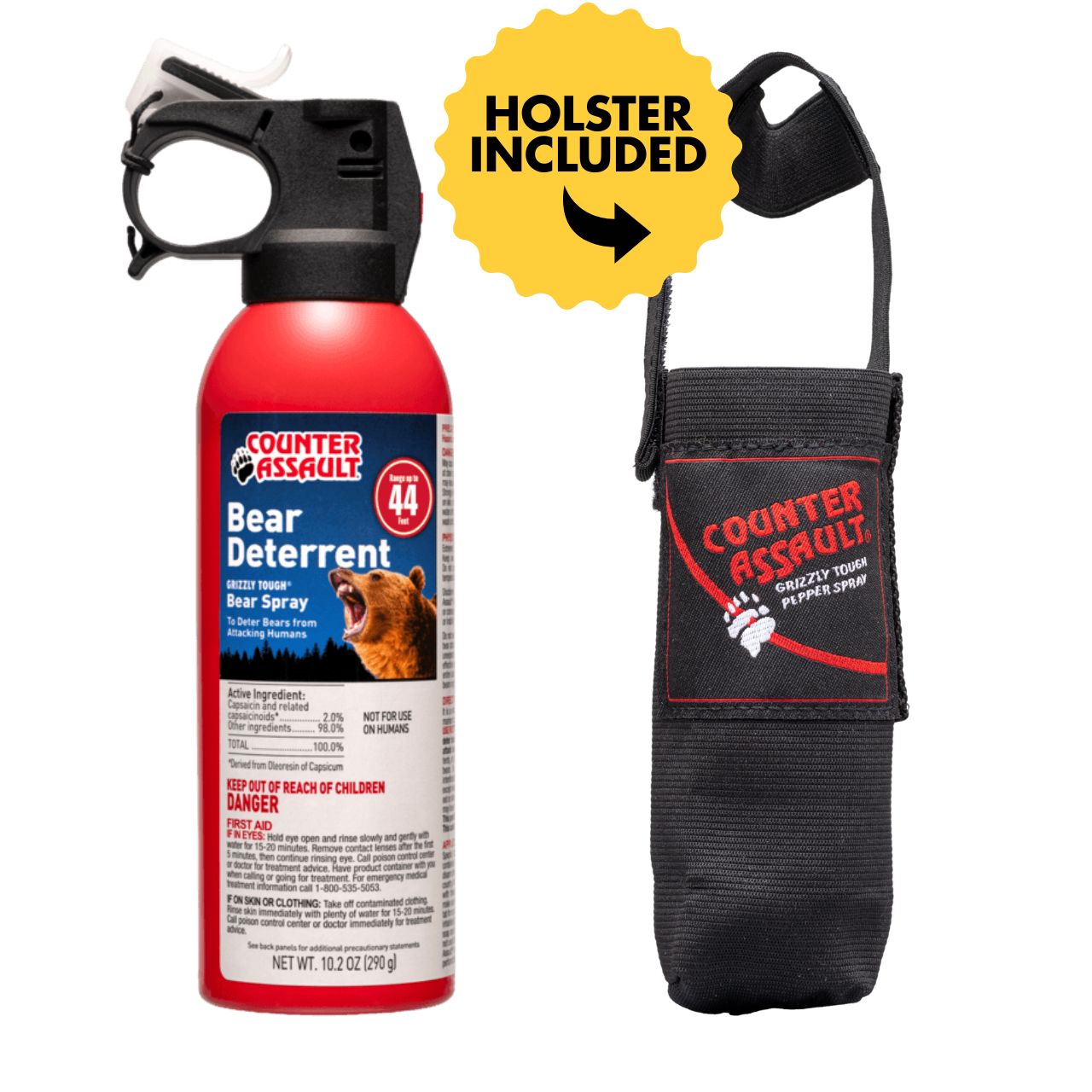
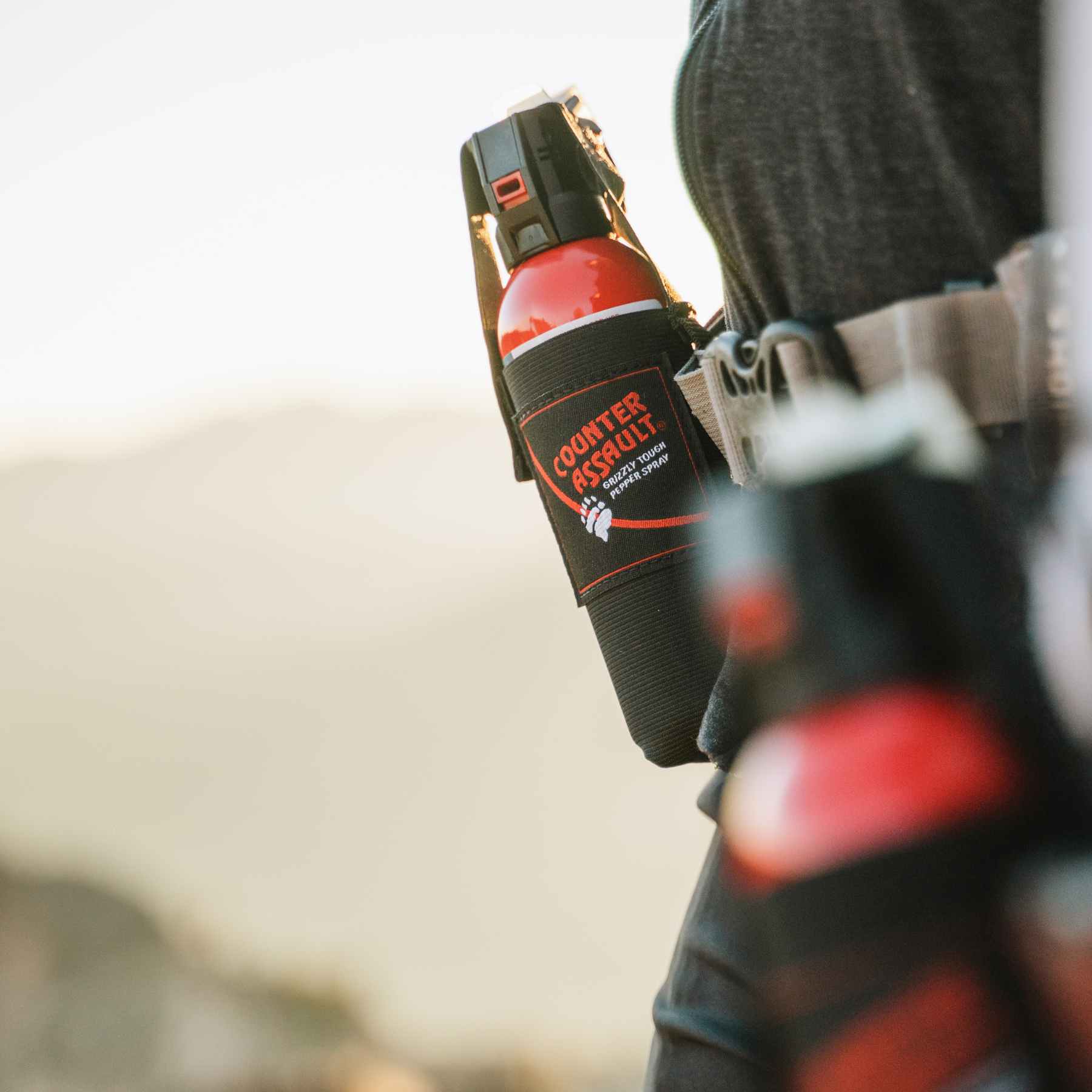
One factual option hikers carry is Counter Assault's 10.2 oz bear spray with holster, which the manufacturer describes as reaching 44 feet and being intended for bears, mountain lions, and coyotes. The holster matters for a simple reason. Access speed is part of safe use.
Basic use follows a clear sequence:
- Remove the safety clip
- Aim slightly downward toward the bear's path
- Start spraying when the bear is within effective range
- Create a cloud the bear must pass through
- Continue until the bear changes direction, then leave the area
Anyone spending time in bear country should carry knowledge they can use under stress, along with deterrent tools they can reach quickly. Counter Assault provides bear safety information and bear deterrent products intended to help people prepare responsibly for encounters with bears, mountain lions, and coyotes while supporting non-lethal wildlife safety.
Frequently Asked Questions About Bear Characteristics and Safety
Can bears climb trees
Some can, and that's why climbing a tree isn't a dependable escape plan. A person shouldn't count on vertical distance as a universal answer.
Are bears slow because they look heavy
No. A heavy, compact build can still produce fast short bursts, as noted earlier in the body-plan section.
Is color enough to identify the species
No. Structural clues matter more than color alone. Shoulder shape, facial profile, ears, claws, and tracks provide better evidence.
Why do bears enter campsites
Food odor is a major reason. Their sense of smell is powerful, and poorly managed attractants can pull them in.
What if a bear approaches camp at night
The response should stay calm and deliberate. Don't run. Create human presence with a normal voice, keep distance if possible, and be ready to use bear spray only if the bear acts aggressively or appears likely to charge.
Does bear spray work only on bears
The product guidance provided for Counter Assault states that it is intended for bears, mountain lions, and coyotes, and not for use on people.
Anyone spending time in bear country should carry real knowledge, not just confidence. Counter Assault offers bear safety information and bear deterrent products designed to help people prepare responsibly for encounters with bears, mountain lions, and coyotes while supporting non-lethal wildlife safety.