
Those preparing for bear country often ask the wrong first question. They ask, “What kind of bear might be out there?” when the better question is, “What kind of encounter risk comes with that bear, and am I ready for it?”
That distinction matters. North America has a small number of native bear species, but the field reality is more complicated because color phases, regional names, and rare hybrids can confuse identification when seconds count. A hiker who mistakes a cinnamon black bear for a grizzly may panic. An angler who treats a coastal brown bear like a casual wildlife-viewing moment may get too close. A traveler who assumes all bears respond the same way may carry the right deterrent but use it too late.
For anyone researching kinds of bears in north america, identification is useful, but practical safety matters more. The key is knowing what bear is most likely in the area, what behavior usually triggers trouble, and what actions lower the odds of a bad encounter. That means clean camps, group travel, making noise, backing away instead of running, and carrying bear spray where it can be reached.
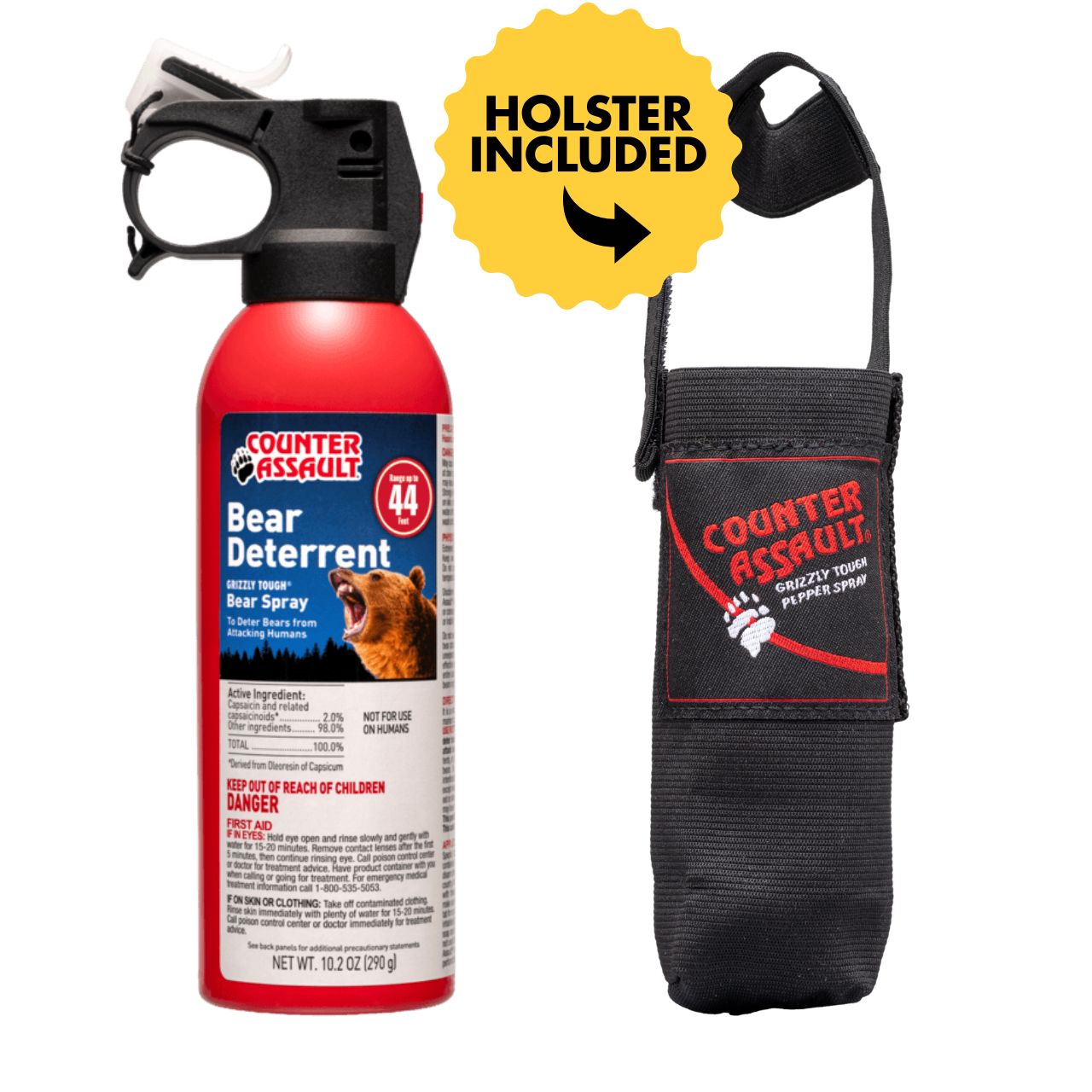
North America's bear country rewards respect, not fear. The people who handle it best usually aren't the ones who know the most trivia. They're the ones who prepare, stay calm, and carry reliable tools such as Counter Assault 10.2 oz Bear Spray with Holster to help keep both people and bears safe.
Table of Contents
- 1. Grizzly Bear (Ursus arctos horribilis) - The Icon of the Wild West
- 2. American Black Bear (Ursus americanus) - The Most Common Bear
- 3. Polar Bear (Ursus maritimus) - The Arctic Marine Hunter
- 4. Alaskan Brown Bear (Ursus arctos) - The Coastal Giant
- 5. Black Bear Subspecies & Color Morphs - A Spectrum of Bears
- 6. Grolar Bear (Pizzly) - The New Arctic Hybrid
- 6-Point Comparison: North American Bears
- Beyond Identification Your Complete Bear Safety Toolkit
- How to Prevent a Bear Encounter
- What to Do in an Encounter
- Your Essential Bear Safety Gear
1. Grizzly Bear (Ursus arctos horribilis) - The Icon of the Wild West
What makes grizzlies one of the most serious encounter risks among the kinds of bears in North America? It is not just their size. It is the way surprise, short distance, and human error can turn a normal day on the trail into a defensive charge.
In the lower 48, grizzlies are tied to a long story of decline, recovery, and tight management. By 1975, grizzly bears in the contiguous United States had fallen to between 700 and 800 animals, leading to their threatened listing under the Endangered Species Act, as noted by Be Bear Aware on North American bears. That history matters for anyone hiking, hunting, fishing, or camping in grizzly range. You are sharing ground with a protected animal that often reacts fast when it feels pressured.
Defensive behavior drives the risk
The primary danger in grizzly country is defensive behavior at close range. Trouble starts when people surprise a bear near cubs, a carcass, thick brush, running water, or a blind bend in the trail. In those conditions, you may have only seconds to respond.
That is why grizzly safety is mostly about prevention and access. Make noise before you enter tight terrain. Travel in a group when you can. Keep distance instead of trying to read the bear at close range.
Practical rule: In grizzly country, bear spray belongs on a belt or chest holster, not inside a backpack.
I see the same mistakes over and over in bear country, and they are usually avoidable:
- Quiet travel in poor visibility: Call out around bends, near streams, and in heavy cover so you do not appear at close range without warning.
- Too much ground covered alone: Groups are easier for bears to detect and generally present less risk of being approached.
- Spray that cannot be reached fast: If you need two hands, a zipper, and a few seconds to get it, you are already behind.
- Attention fixed on tracks instead of terrain: Fresh sign matters, but terrain usually tells you where a surprise encounter is most likely. If you want to sharpen that skill set, study how to identify and interpret black bear tracks and trail sign.
If a grizzly acts aggressively or charges, do not run. Plant your feet, clear the safety clip, aim slightly downward, and fire when the bear enters the canister's working range. The goal is to put a dense cloud between you and the bear, forcing it to pass through the spray before it reaches you.
This section is about function, not mythology. Grizzlies deserve respect because their encounter profile is less forgiving than that of many other bears. If you understand where surprise happens, carry spray where your hand already lives, and give bears room early, you cut the odds of a bad outcome in a meaningful way. For a closer look at what drives these encounters, see this article on when grizzly bears become aggressive.
2. American Black Bear (Ursus americanus) - The Most Common Bear

How does the bear you are most likely to meet also become the one people handle most poorly?
Black bears live across much of North America, and that familiarity creates bad habits. People treat them like a routine sighting instead of a real safety problem with its own pattern. Black bear incidents usually grow out of food conditioning, close-range surprise, or a bear that has learned to work around homes, campgrounds, and trailhead trash.
That risk profile matters because the correct response is different from the one many people picture with larger bears. Black bears are often less likely than grizzlies to hold ground in a defensive encounter, but they are more likely to show up where people have been sloppy for weeks or months. In practical terms, black bear safety starts long before you ever see the animal.
The main problem is access to food
Garbage, coolers, bird seed, pet food, grills, fish remains, and scented items all create repeat traffic. Once a black bear starts finding calories around people, the problem shifts from a simple sighting to a bear that checks the same spots again and again.
The field rule is simple. Remove the reward.
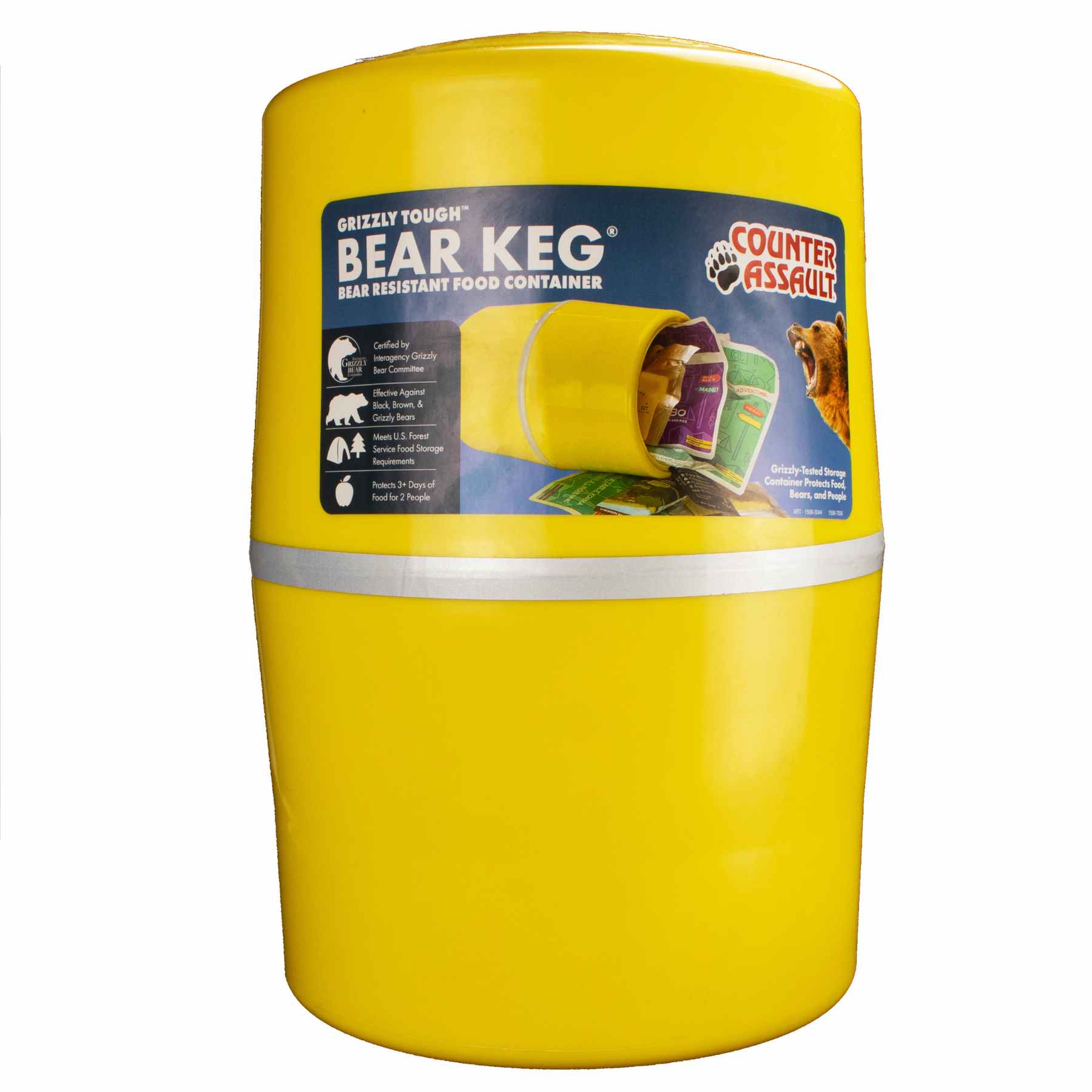
- Lock up food and trash: Use bear-resistant storage where available, and keep scented items out of tents and away from sleeping areas.
- Clean camp like you mean it: Grease on a picnic table and food scraps near a fire ring can matter as much as the cooler.
- Fix problems at home too: Unsecured garbage, feeders, and outdoor pet food are common reasons bears start visiting neighborhoods.
- Give the bear space: If you see a black bear at close range, back away, speak in a firm voice, and prepare your bear spray if the animal closes distance.
I have seen people make the same mistake over and over. They judge the situation by the bear's size or color instead of its behavior and the setting. A smaller black bear that has learned people equal food can create a more immediate management problem than a larger bear that is passing through.
Identification still matters, but mostly because it affects your decision-making under stress. Many black bears are brown, cinnamon, or blond. Color alone is unreliable. Body shape is more useful. Black bears usually lack the pronounced shoulder hump seen on grizzlies, and their face profile and ear shape often look different as well.
Sign matters too. A campground with torn-up trash, fresh scat on the access road, and clawed logs nearby calls for tighter food discipline and faster access to spray than a clean area with no recent activity. If you want to get better at reading that pattern, this guide to tracking black bear sign and movement is worth studying before your next trip.
Because black bears are so common, this section is less about identification and more about avoiding the ordinary mistakes that cause ordinary encounters to turn serious. Keep attractants under control, do not crowd a bear for a photo, and carry your spray where one hand can get it fast. If a black bear approaches with intent and keeps closing distance, use your bear spray the same way you trained to use it. Clear the safety clip, aim slightly downward, and fire within the canister's working range to build a cloud between you and the bear.
3. Polar Bear (Ursus maritimus) - The Arctic Marine Hunter

What changes when the bear may treat you as something worth investigating from a long distance?
That is the practical difference with polar bears. They live in remote Arctic country, spend much of their time around sea ice and shorelines, and create a very different safety problem than the bears people meet on inland trails. Their low numbers in North America do not reduce the seriousness of an encounter. They only limit where those encounters happen.
The first mistake visitors make is treating polar bear country like ordinary backcountry travel. That mindset fails fast. Open ground gives both you and the bear long sightlines, camp routines matter more, and scent discipline matters because a polar bear can locate food, waste, or cooking odors from impressive distances. If you have not read up on a bear's sense of smell and how scent carries in the field, do that before planning Arctic travel.
Polar bear safety starts well before the encounter. Route choice, camp placement, food handling, and watch procedures are part of the same system. In my experience, people do better when they stop asking, "How do I identify a polar bear?" and start asking, "What would draw one toward us, and who is watching while we cook, clean, or break camp?"
A workable protocol looks like this:
- Use local guides and local rules: Communities and outfitters in polar bear country build procedures around current bear activity, terrain, and season.
- Keep constant visual watch: Someone should be scanning while others handle camp tasks, gear, or food.
- Control every attractant: Food, garbage, fish, fuel-contaminated items, and cooking residue all need strict management.
- Carry deterrent tools where they can be reached immediately: Pack storage is too slow if a bear appears on open ground and keeps closing.
Counter Assault makes bear spray intended for use on all bear species. That matters here for one reason. If spray is part of the local legal and operational plan, it needs to be carried for immediate deployment and used with training, not treated like backup gear buried in a sled or pack.
Polar bears are not just another entry on a list of kinds of bears in North America. They require a specialist safety framework built around distance, early detection, clean camp discipline, and practiced response. In Arctic country, sloppy habits get exposed quickly.
4. Alaskan Brown Bear (Ursus arctos) - The Coastal Giant
What changes when the same species gets bigger, bolder around salmon, and more used to people? The safety protocol gets tighter.
In North America, “brown bear” usually refers to the large coastal bears of Alaska. They are the same species as grizzlies, but the encounter setting is different. Rich food sources along the coast produce heavier bears, and people often meet them around salmon streams, tide flats, fishing access points, and bear-viewing areas rather than on long interior trail systems.
That matters because coastal Alaska is often active feeding habitat, not just travel habitat. Visitors are stepping into places where bears return to eat, move, and compete over food.
Fishing country changes the safety equation
A hooked salmon, a stringer in the water, or fish scraps on the bank can pull your attention away at the exact wrong moment. I treat that as a working-risk problem, not an identification problem. The bear does not need to be aggressive for the situation to turn dangerous. It only takes short distance, food odor, and a person who is slow to react.
The groups that handle this well usually do a few things the same way every time:
- Fish with a partner when possible: One person can watch upstream, downstream, and behind while the other lands fish or sorts gear.
- Carry bear spray on your body, not in a pack: Counter Assault bear spray only helps if you can reach it immediately with one hand.
- Process fish fast and keep the site clean: Blood, carcasses, bait, and fish-covered gear all increase the chance of a close approach.
- Give bears the channel, trail, or bank they are already using: Crowding a feeding bear near water creates pressure and removes its easy exit.
Odor control is a bigger factor here than many visitors expect. Coolers, rain gear, nets, and even gloves can hold scent long after the fish are gone. Anyone camping or fishing in brown bear country should understand how a bear's sense of smell affects camp and fish-handling discipline.
One more trade-off shows up fast on the coast. People want the best casting position, the easiest cleaning spot, or a close photo at a salmon stream. Those choices often put them in the exact places bears are already committed to using. Good field judgment means giving up a convenient spot before the bear makes that decision for you.
5. Black Bear Subspecies & Color Morphs - A Spectrum of Bears

Many field guides tend to oversimplify things. People expect clear labels and matching coat colors, but bear identification in the wild often doesn't cooperate. A black bear can be black, brown, cinnamon, or even blond, and some regional forms create even more confusion.
The practical point is simple. Color alone is one of the least reliable ways to identify a bear at distance.
Identification errors happen fast
A cinnamon-phase black bear can look grizzly-like to an inexperienced hiker, especially in flat light or from the side. The fix is to focus on body shape and behavior, not coat color. Grizzlies usually show a more pronounced shoulder hump. Black bears typically lack that hump and often have a different facial profile.
Some black bear variants are especially distinctive, including the Kermode or spirit bear of coastal British Columbia. But from a safety standpoint, novelty doesn't change protocol. A black bear with unusual coloring is still a black bear that deserves distance, calm behavior, and zero food reward.
A few practical reminders work better than overconfident ID:
- Check shape before color: Hump, head profile, and overall build are more useful than coat.
- Use one response standard: If it's a wild bear at close range, create distance and prepare spray if needed.
- Study local bear types before the trip: Regional knowledge reduces hesitation when an animal appears.
The safest field identification is the one that keeps distance first and ego out of it.
This is also where gear discipline helps. Counter Assault's bear spray is intended for all bear species and subspecies, so a person doesn't need a different plan for a black bear color morph than for a typical black bear. The same carry rule applies. Keep it reachable, know the safety clip, and understand the working distance before the encounter.
6. Grolar Bear (Pizzly) - The New Arctic Hybrid
What should you do if the bear in front of you does not fit the usual field guide description?
With a grolar, or pizzly, the safe answer is simple. Stop trying to classify it on the spot and shift to the highest caution standard. These hybrids are rare, but they matter because they can combine traits that make behavior harder to read quickly under stress.
That is the fundamental safety lesson here. In the far north, range overlap can blur the neat categories hikers and hunters rely on. Identification still matters, but survival depends more on distance, group discipline, and having a response you can execute without hesitation.
Treat hybrid uncertainty as a higher-risk encounter
A suspected hybrid bear deserves more space, not a closer look. People get into trouble when curiosity overrides protocol, especially in open country where visibility can create false confidence.
Use a stricter framework:
- Back off early: Do not approach for photos or a better ID.
- Stay tight as a group: Separation creates openings and confusion.
- Have bear spray in hand if the distance is closing: Counter Assault and other bear sprays are carried for exactly this kind of uncertain, fast-changing encounter.
- Report the sighting to wildlife authorities: Field reports help agencies track overlap zones and problem areas.
As noted earlier, northern bear ranges are changing in some areas, and overlap is part of the broader management situation. For the person on the ground, that translates into one practical rule. If you are in grizzly-polar bear country, plan for the more demanding encounter, not the more convenient assumption.
Remote travel also raises the consequences of any mistake. That is why bear safety has to work as a system: deterrent, communication, first aid, route choice, camp discipline, and the judgment to leave an animal alone when the situation is unclear.
6-Point Comparison: North American Bears
| Species | 🔄 Implementation Complexity (encounter behavior) | ⚡ Resource Requirements (preparation & gear) | ⭐ Expected Outcomes (risk / severity) | 📊 Ideal Use Cases (where encountered) | 💡 Key Advantages / Tips |
|---|---|---|---|---|---|
| Grizzly Bear (Ursus arctos horribilis) | High, territorial, defensive, fast bluff charges | High, immediate-access bear spray, group travel, noise-making | ⭐⭐⭐, high injury/fatality risk if surprised or defending cubs | Backcountry in Northern Rockies & Alaska; near carcasses and trails | Keep spray accessible; make noise; stand ground and deploy spray at 30–60 ft |
| American Black Bear (Ursus americanus) | Moderate, adaptable, food-conditioned, climbs trees | Moderate, bear-resistant storage, bear spray, camp hygiene | ⭐⭐, moderate risk; conflicts often food-related | Campsites, suburban–wildland interface across North America | Store food/garbage; make yourself large; do not feed; use spray if threatened |
| Polar Bear (Ursus maritimus) | Very high, often predatory, assesses humans as prey | Very high, experienced guides, group travel, long-range deterrents, strict protocols | ⭐⭐⭐, extreme risk; encounters frequently lethal | Arctic coasts of Alaska, Canada, Greenland; sea-ice edges | Travel with guides; maintain 360° awareness; follow local advisories; use registered deterrents |
| Alaskan Brown Bear (coastal Ursus arctos) | High, enormous size, predictable at salmon runs but dangerous | High, accessible spray, noise, strict distance from rivers/platforms, local guidance | ⭐⭐⭐, high risk due to size and habits | Coastal Alaska rivers and peninsulas during salmon runs; wildlife viewing sites | Fish with partners, store fish waste away, respect viewing distances and guides |
| Black Bear Subspecies & Color Morphs | Low–Moderate, same behavior as black bears; color may mislead ID | Moderate, standard black-bear precautions suffice | ⭐⭐, low–moderate risk; misidentification can change response | Regions within broader black bear range (e.g., cinnamon, Kermode zones) | Don't rely on color for ID; look for lack of shoulder hump; apply standard precautions |
| Grolar Bear (Pizzly), hybrid | Unpredictable, mixed polar/grizzly traits, behavior not well-studied | High, longest-range deterrents preferred, strict protocols for both species | ⭐⭐⭐, potentially high risk due to unpredictability | Arctic overlap zones where grizzly and polar ranges converge | Assume worst-case behavior; maintain maximum distance; report sightings to authorities |
Beyond Identification Your Complete Bear Safety Toolkit
Knowing bear names is useful. It isn't enough. Real preparedness comes from recognizing how encounters happen, reducing the chance of one, and carrying equipment that can be deployed fast under stress.
The most common field mistakes are consistent across species. People move through blind terrain, leave attractants unsecured, separate from their group, or pack deterrents where they can't be reached. Those are preventable errors, and they matter more than memorizing every coat color variation.
How to Prevent a Bear Encounter
How do you keep a bear encounter from starting in the first place? By making your presence obvious, keeping attractants under control, and matching your habits to the kind of bear country you are in.
Prevention starts before the trailhead. Check recent bear activity, know whether you are in black bear, grizzly, brown bear, or polar bear range, and adjust your margin for error. In grizzly and brown bear country, I tell people to be louder, tighter as a group, and quicker to slow down in thick cover. In black bear country, food mistakes and surprise encounters usually cause more trouble than outright aggression.
A few habits do most of the work:
- Travel in a group when possible: Several adults talking and moving together are easier for a bear to identify as human.
- Make noise before you enter blind terrain: Call out near bends, dense brush, berry patches, creek bottoms, and loud rivers where a bear may not hear you coming.
- Slow down at low-visibility times and places: Dawn, dusk, heavy timber, and windy conditions reduce both your awareness and the bear's.
- Control food and scent: Store food, trash, and toiletries correctly. Keep cooking gear and fish-cleaning residue away from where you sleep.
- Keep bear spray accessible, not buried in a pack: Counter Assault or any similar bear spray only helps if you can reach it in seconds with one hand.
Camp discipline matters just as much as trail discipline. Set up a simple routine before dark. Cook away from sleeping areas, clean up immediately, and do one last check for wrappers, spilled drinks, and scented items before bed. Good lighting helps people avoid sloppy mistakes at camp, but the primary safety gain comes from clean habits and a layout that keeps food, cooking, and sleeping separated.
These steps are practical because they address the main ways encounters begin: surprise at close range, food-conditioned behavior, and delayed reaction time. Prevent those three problems, and the odds improve fast.
What to Do in an Encounter
The first rule is simple. Don't run. Running can trigger pursuit, and it often turns a manageable encounter into a dangerous one.
Instead, stand ground, avoid direct eye contact, speak in a calm firm voice, and get the spray ready. If the bear isn't charging, back away slowly and sideways. If the bear charges or continues aggressive behavior, use the spray according to the product directions and leave the area as soon as the bear breaks off.
Calm action beats fast panic. Most people lose time in an encounter by deciding too late, not by moving too slowly.
Your Essential Bear Safety Gear
A bear encounter is usually decided before the animal makes contact. The deciding factors are reach, access, and whether the tool on your kit can be used under stress.
Carry Bear Spray Where Your Hand Already Goes
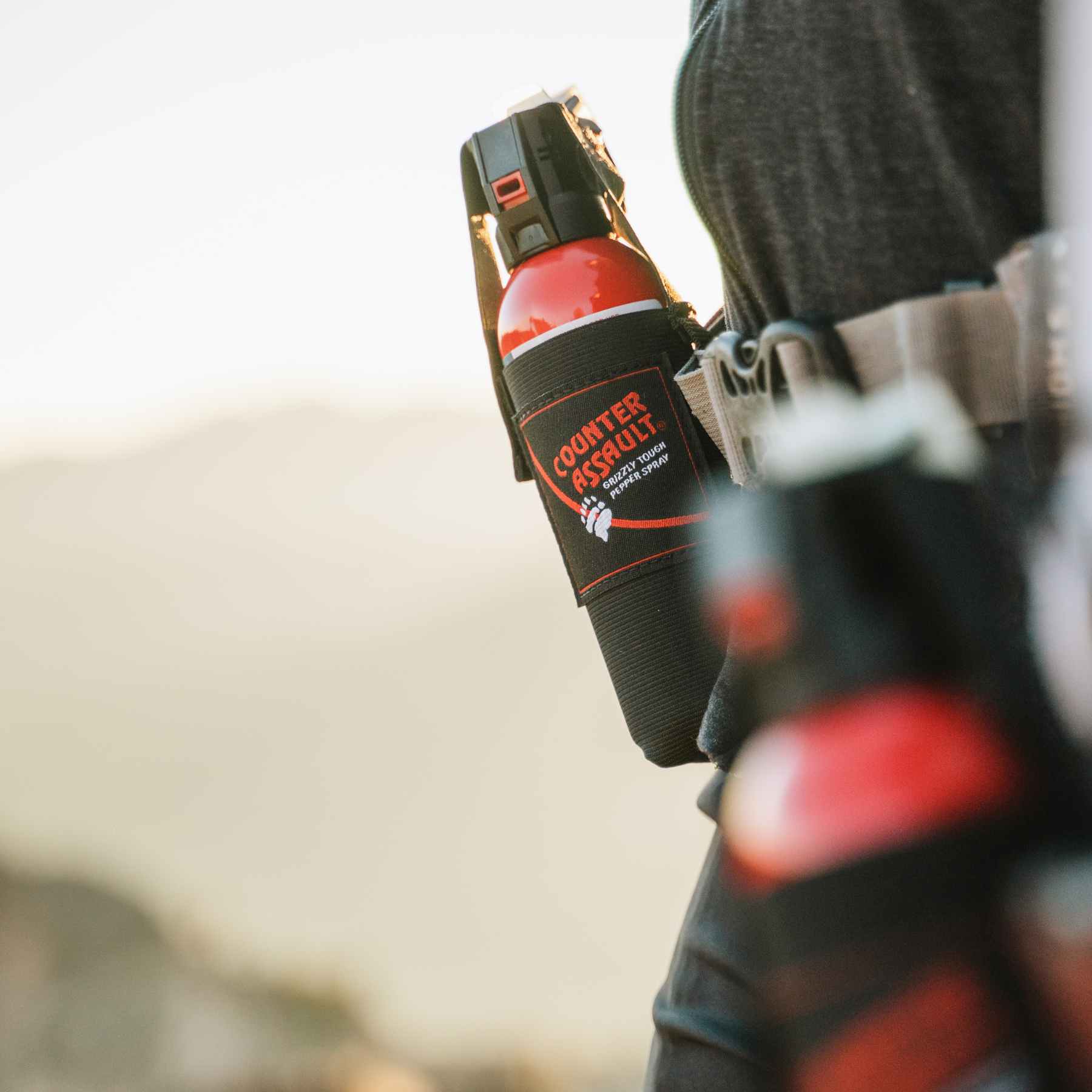
Bear spray belongs on your belt, chest strap, or pack hip belt. If it is buried in a pack, it is late. I tell hikers and anglers to test their draw with gloves on, in the rain, and while wearing a full pack, because that is how problems show up in the field.
Counter Assault bear spray is built for this job, and the holster matters as much as the can. A larger can gives more spray time and better standoff distance, but it also takes up more space on the body. That trade-off is usually worth it in grizzly and brown bear country, where encounters can close fast and the consequences are higher.
How to Use Bear Spray Correctly
Good gear still needs practiced use. Bear spray is a last-ditch defensive tool for an aggressive bear, not something to apply to tents, clothing, or packs.
- Clear the safety. Do it early, before the bear is on top of you.
- Bring the can up with two hands if needed. A stable grip matters more than speed alone.
- Aim low in front of the bear. The goal is to build a barrier the bear has to enter.
- Fire in short bursts when the bear is in effective range. Adjust for crosswind if you have it.
- Move out once the bear breaks off. Leave the area under control and keep the spray ready.
That method works across species, but the context changes. On a black bear encounter near camp, spray may stop a bluff or food-conditioned approach. In grizzly or coastal brown bear country, fast deployment is more important because reaction time shrinks.
Bear Spray Myths That Get People Hurt
Bad advice in bear country often sounds confident. It still fails in the field.
Spray is not a sign of weakness, and firearms are not a simple substitute. Under charge conditions, accurate shooting is difficult, especially for tired, cold, or surprised people. Bear spray creates a wide defensive cloud, works at close range where many encounters happen, and lowers the need for pinpoint accuracy in a few chaotic seconds. That is why many wildlife professionals treat it as a primary deterrent.
Wind does affect spray. It does not make spray useless. The practical answer is to carry it where you can reach it, know your range, and practice drawing and aiming before the trip.
Other Essential Gear for Bear Country
Bear spray is the priority, but support gear helps prevent small mistakes from turning into larger ones.
- Reliable camp lighting: A bright lantern or headlamp helps with cooking, dish cleanup, and food storage after dark, which is when sloppy camp routines attract bears.
- Backcountry first aid: A compact kit covers blisters, cuts, strains, and other common injuries that can slow travel and cloud judgment.
- Insect repellent: Ben's 30% DEET Tick & Insect Repellent helps keep bugs from wearing down attention during long days outside.
The right kit supports the actual risk in front of you. Black bear country usually demands cleaner camp habits and fast access to spray. Grizzly and brown bear country demand more space, more discipline around carcass sites and food, and fewer mistakes. In Arctic travel, where polar bear risk carries a different level of consequence, gear has to be paired with group protocols, visibility, and strict camp management.
Heading into bear country without a plan is avoidable. Counter Assault offers bear safety resources and bear spray built for real backcountry use, including a 10.2 oz option with holster that's designed to be accessible when it matters.