
A common inquiry is whether grizzly bears are aggressive, as if a simple yes or no answer suffices. The field answer is more useful than that. Grizzly attacks occur in less than 1% of interactions, and Yellowstone data from 1991 to 2022 recorded 25 grizzly attacks in 2,189 backcountry interactions, which is about 1 attack per 88 interactions according to research published in Ursus.
That number changes the conversation. Grizzlies aren't roaming the backcountry looking for people. They are powerful wild animals that react hard when they feel surprised, crowded, or forced to defend cubs or food. Safety starts when people stop treating every encounter as a horror story and start reading the bear's behavior for what it is.
Table of Contents
Are Grizzly Bears Truly Aggressive
Grizzlies have a reputation for aggression because when they do react, they react with speed and force. That reputation isn't the same thing as constant hostility. The better answer is that grizzly aggression is contextual, not inherent.
In the Yellowstone data already noted, attacks stayed rare across interactions, and most encounters did not become attacks at all. That matters because it separates risk from myth. A grizzly deserves respect every time. It does not justify panic every time.
People often confuse an animal's capability with its intent. A grizzly can do tremendous damage, but that doesn't mean it wants conflict. In most real encounters, the bear is trying to sort out what is in front of it, create space, or end the situation quickly on its terms.
Practical rule: Fear makes people rush. Respect makes people slow down, create distance, and make better choices.
The safest mindset in bear country is calm, not casual. Casual gets people too close for photos, too quiet on blind corners, or too sloppy with camp food. Panic causes running, screaming, and bad movement. Calm attention does the opposite.
A useful way to think about the question are grizzly bears aggressive is this:
- By nature: They aren't uniformly aggressive toward humans.
- By circumstance: They can become highly defensive fast.
- By outcome: Human behavior often decides whether the moment stays quiet or turns dangerous.
That distinction protects both people and bears. If people understand that most conflict comes from surprise, pressure, and attractants, they stop treating bears like monsters and start acting like responsible backcountry travelers.
Understanding Grizzly Bear Behavior
A grizzly encounter gets safer when people understand what the bear is trying to accomplish. Most problem behavior falls into one of two buckets. The bear is defending itself, or the situation is heading somewhere worse because the person is responding badly.

Defensive behavior is not the same as predatory behavior
A defensive bear is usually trying to stop a threat, not eat one. That distinction matters because the wrong human response can intensify the encounter. A startled sow with cubs, a bear on a carcass, or a bear surprised at close range may lunge, woof, huff, bluff charge, or swat the ground to push the threat away.
Those behaviors make sense when people remember what a grizzly is built to do. The National Park Service notes that grizzlies have a prominent shoulder hump from larger muscle mass for digging, 3 to 4 inch claws for excavation rather than climbing, and a bite force of up to 975 psi, about 2.5 times a black bear's, with defensive reactions often triggered when humans enter their 100-yard personal space according to Yellowstone bear differences guidance from NPS.
That anatomy doesn't mean the bear is hunting people. It means once a grizzly decides it needs to defend itself on the ground, it has the tools to do it efficiently.
What the body tells you
A lot of people miss warning signals because they expect a movie-style charge with no prelude. Real bears often communicate first. The communication may be subtle, blunt, or loud, but it usually means the same thing. Back off and give the bear room.
Watch for these cues:
- Huffing or woofing: The bear is stressed and trying to warn.
- Jaw-popping: Agitation is rising.
- Ground swatting: The bear is showing force.
- Bluff charging: The bear may rush forward to move you off without making contact.
- Direct approach with focus: This needs immediate, calm attention and preparation.
The bear's psychology is simple in these moments. It wants control of space, not a debate.
People get into trouble when they misread curiosity as friendliness or bluffing as harmless theater. A bluff charge is still serious. It means the bear feels pressure and is willing to close distance to fix that problem.
A better mental model is personal space. If a stranger suddenly stepped into arm's reach in a dark hallway, individuals would react hard and fast. Grizzlies do the same thing, except they have claws, speed, and no reason to trust human intentions.
When Are Grizzlies Most Dangerous Key Risk Factors
The dangerous moment usually starts before the bear is even visible. It starts with poor visibility, bad spacing, or human food where it doesn't belong.

The highest risk situations
Certain setups raise the chance of a defensive response:
- Blind corners and dense brush: People and bears can meet at close range with no warning.
- Low light: Dawn and dusk reduce visibility for everyone in the area.
- Food-rich ground: Berry patches, carcasses, gut piles, and poorly managed camps all increase tension.
- Cubs nearby: A sow may react before a person ever sees the cubs.
- Dogs: A dog can provoke a chase and then return to its owner with the bear following.
Some seasons also demand sharper judgment. Late summer and fall can make bears more focused on food and less tolerant of interruption. On the ground, that means hikers and hunters need to pay more attention to sign, fresh tracks, scavenging sites, and heavy cover.
Some bears learn bad lessons from people
Not every grizzly reacts the same way. Temperament matters. History matters too. Bears that have been rewarded by human food or repeatedly stressed by people can behave more boldly and less predictably.
Data highlighted by Eagle Eye Adventures notes that individual temperament and prior encounters influence aggression, and that 15% to 20% of conflicts in major parks involve food-conditioned grizzlies according to their review of grizzly aggression patterns.
That point deserves attention because it changes the old oversimplified question. It isn't enough to ask whether grizzlies are aggressive as a species. The better question is what conditions shaped the specific bear in front of you. A food-conditioned bear, or one that has learned people bring calories or conflict, is operating from a different script than a bear avoiding contact in wild country.
| Risk factor | Why it matters |
|---|---|
| Surprise at close range | Defensive reactions happen fast |
| Human food or garbage | Bears lose caution and become bolder |
| Cubs or carcasses | Bears protect what matters to them |
| Repeated human contact | Some bears become unpredictable |
How to Prevent a Bear Encounter in the First Place
Prevention is where most bear safety work gets done. Historical data shows fatalities track human population growth in bear habitat rather than bears becoming more dangerous, and 93% of Yellowstone grizzly attacks from 1991 to 2022 occurred in the backcountry, which is why avoiding surprise and keeping a clean camp matter so much according to this summary of bear attack patterns.

On the trail
A safe trail routine is simple, but it has to be consistent.
- Hike in groups when possible: Groups make more noise and are harder for a bear to mistake for a single animal.
- Announce presence in thick cover: Talk, call out, or make noise before blind bends, creek bottoms, and brushy sections.
- Don't travel casually at dawn or dusk: Low light increases the odds of a close surprise.
- Keep space if a bear is spotted: A long detour is better than forcing the encounter.
- Carry deterrent accessibly: Gear buried in a pack doesn't help under pressure.
A dependable light also helps around camp and on dark mornings. A compact camp light such as the LuminAID PackLite improves visibility without adding much weight, which helps people avoid stumbling into poor decisions when light is fading.
In camp
Most camp problems begin with smell, not sight. Food, trash, cookware, toothpaste, drink mix packets, and scented wipes all count. If an item has odor, a bear may investigate it.
A clean camp doesn't just protect people. It keeps bears from learning that campsites pay off.
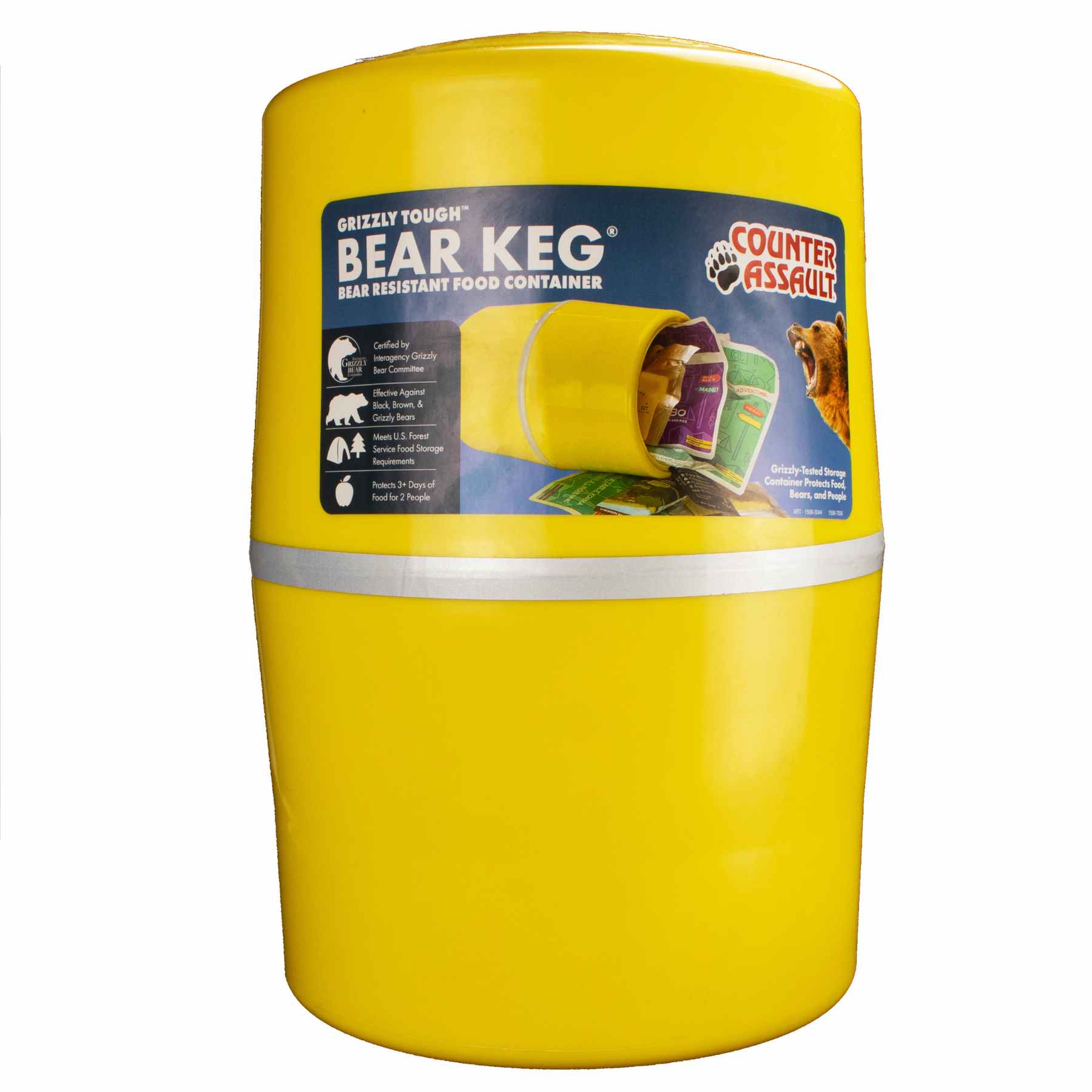
Use bear-resistant storage, manage trash immediately, and never treat the tent as food storage. For backpacking food storage options, bear-resistant food containers are worth reviewing before a trip.
What to Do During a Grizzly Encounter
When a grizzly is on the trail or near camp, the first job is behavioral control. The person's behavior matters as much as the bear's. Fast hands, fast feet, or sudden yelling can make a tense situation worse.

If the bear sees you but isn't charging
Start with the basics. Don't run. Running can trigger pursuit. Stand your ground, keep the bear in view without staring it down, and speak in a calm normal voice so the animal identifies a human presence.
Then create a controlled exit:
- Group up if others are present: People look larger and stay easier to account for.
- Back away slowly: Sideways movement can help maintain footing and awareness.
- Give the bear an escape route: Crowding a bear is one of the fastest ways to escalate.
- Prepare deterrent access: Have it in hand before the situation compresses.
If the bear remains focused, closes distance, or shows clear agitation, the person should be ready to deploy bear spray. The spray should be accessible on a belt or chest, not buried in a pack. More detailed deployment guidance is covered in what you need to know about bear spray.
If the encounter escalates
The response needs to stay mechanical, not emotional.
- Remove the safety clip: This should happen early, not during the last second.
- Aim slightly downward: Build a cloud in front of the bear rather than firing high.
- Spray when the bear is within effective range: Create a barrier the bear has to enter.
- Continue only as needed: The goal is to stop the charge and leave the area.
- Exit once the bear breaks off: Don't stand around after the deterrent works.
Calm beats speed. A controlled spray deployment is more useful than frantic movement.
Packing trauma basics is also part of serious trip planning. A backcountry-oriented Adventure Medical Kits first aid kit belongs in the same conversation as navigation, water, and weather layers. Not because trouble is expected, but because remote travel punishes poor preparation.
If contact occurs during a defensive grizzly attack, standard field guidance distinguishes grizzlies from black bears. But the better outcome is to stop the encounter before physical contact ever happens. That comes down to distance, posture, and early deterrent readiness.
Debunking Common Myths About Grizzly Safety
Bad myths create bad reactions. That's one reason people still ask are grizzly bears aggressive in ways that lead straight to panic.
Myth one: Grizzlies are naturally vicious
The most dangerous version of this myth says every close encounter is a predatory event. It isn't. Grizzly attacks are predominantly defensive, often tied to surprise or resource protection, and may be preceded by warning signs such as huffing or bluff charges. The same source notes that proven protocols such as never running, speaking calmly, and carrying bear spray have produced zero recorded fatalities in high-traffic areas like Yellowstone, while rising human population density explains nearly all variance in fatalities rather than increased bear aggression, according to this summary of grizzly attack statistics.
That changes how people should think. If the bear is usually trying to end the interaction, then the human job is to stop making the situation feel like a threat.
Myth two: A bad response can be fixed with panic
Panic creates the exact cues that make mammals chase, defend, or press harder. Running, screaming, dropping gear, or trying to get a dramatic photo all communicate confusion and weakness. Calm voice, steady retreat, and readiness to use proper deterrent communicate something else. The person isn't prey, and the space is opening.
Another common confusion is treating all sprays as interchangeable. They aren't. Bear spray vs. pepper spray is an important distinction because a bear-country deterrent is built for wildlife encounters, not human self-defense.
A useful myth check:
-
Myth: If a bear approaches, it must want to attack.
Reality: Approach can mean curiosity, stress, or an attempt to move a person off. -
Myth: Noise always makes things worse.
Reality: Calm human voice can help identify the person as human. -
Myth: The right time to think about deterrent is during a charge.
Reality: Access and readiness should happen much earlier.
Your Complete Bear Safety Checklist
The best checklist is short enough to remember and strict enough to work.
Essential gear
- Carry bear spray accessibly: Not in the pack lid. Not buried under layers.
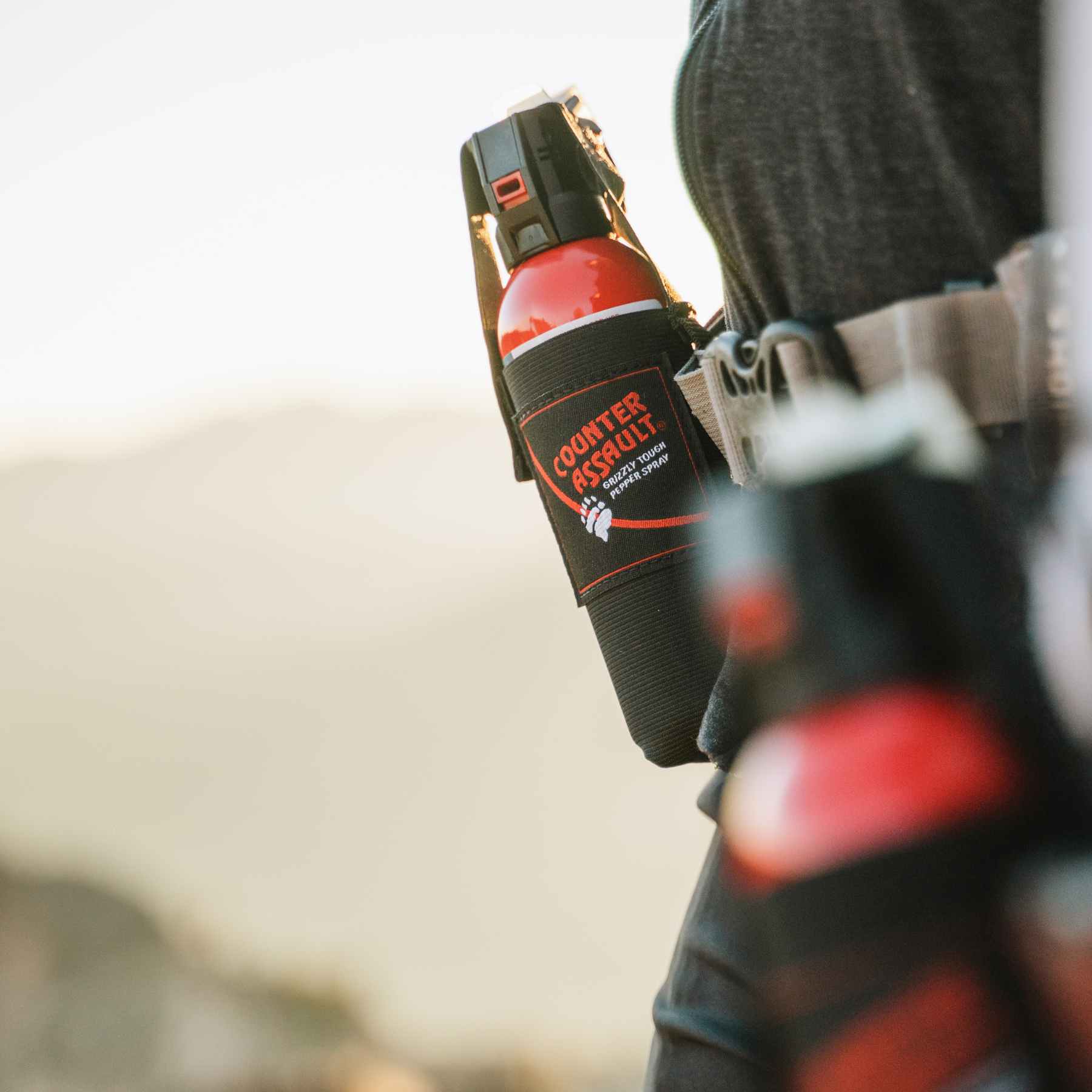
- Use a real holster: Fast access matters when distance collapses.
- Pack a whistle and signaling tools: A compact option from Survive Outdoors Longer fits easily into a shoulder strap or hip belt pocket.
- Add bite and sting care: A small After Bite field option or Natrapel insect protection can help with the smaller problems that still affect judgment and comfort outdoors.
Proactive habits
- Make noise in cover and on blind turns
- Avoid hiking casually in low light
- Keep food, trash, and scented items controlled
- Give every bear more room than feels convenient
- Never approach cubs or a feeding site
Encounter response
If the moment gets tense, slow everything down except access to deterrent.
- Don't run
- Stand together if in a group
- Speak calmly
- Back away slowly
- Deploy bear spray if a charge or aggressive approach develops
- Leave once the bear disengages
For broader trip planning beyond wildlife, this guide on how to stay safe in mountain environments is a useful companion resource because weather, terrain, and fatigue often shape backcountry mistakes long before an animal encounter does.
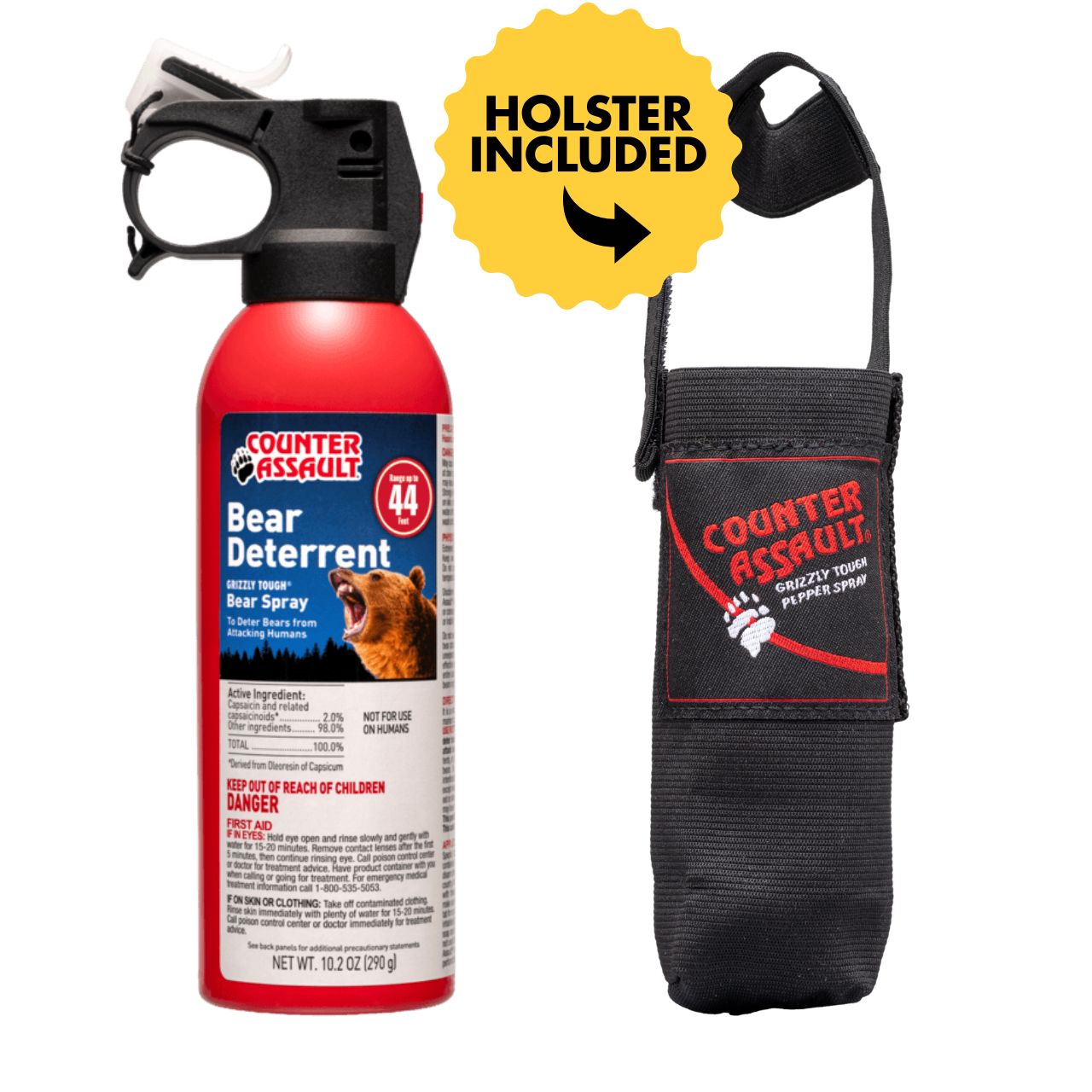
Counter Assault makes bear-country preparation simpler with its 10.2 oz bear spray with holster. It delivers a 44-foot range, uses a maximum 2% capsaicin and related capsaicinoids formula, and is designed as a non-lethal deterrent for bears, mountain lions, and coyotes. For hikers, campers, hunters, and professionals who need fast access when seconds matter, it’s a practical tool built for the demands of the backcountry.