
A lot of hikers buy bear spray the same way they buy snacks at the trailhead. They grab whatever is on the shelf, glance at the label, and assume all canisters do roughly the same job. That’s a mistake in bear country.
The best bear spray for hiking isn’t the one with the flashiest packaging. It’s the one that gives a hiker more space, more usable spray time, and a better chance to stop an aggressive animal without harming wildlife unnecessarily. Those details matter most when distance closes fast and there’s no time to rethink gear choices.
A good bear spray guide has to do more than list specs. It has to explain why those specs matter on an actual trail, with a pack on, lungs working hard, and an animal moving in the wrong direction.
Table of Contents
Why Your Choice of Bear Spray Is a Critical Decision
A hiker entering bear country has one job before the trip starts. Carry gear that works under stress, not gear that merely sounds reassuring in a parking lot. Bear spray falls into that category.
A bear encounter doesn’t leave much room for fiddling with zippers, second-guessing labels, or discovering too late that a smaller canister doesn’t project far enough. In a close encounter, performance matters more than convenience, and consistency matters more than marketing.
Field judgment starts with understanding what bear spray is for. It is a non-lethal deterrent meant to stop an aggressive bear, not a trail accessory and not something to spray on clothing or gear. Used properly, it protects people while reducing the need for violence against wildlife.
Practical rule: In bear country, bear spray belongs in the same mental category as navigation, weather layers, and water. It’s safety gear, not optional gear.
There’s also a reason many hikers begin their search with brands that have deep roots in this category. Counter Assault Bear Spray was founded in 1986 by a grizzly bear encounter survivor in collaboration with the University of Montana, and it produced the first EPA-registered bear spray in the U.S. with a 2% capsaicin and related capsaicinoids formula, which is the EPA maximum.
That history matters because this isn’t gear where “close enough” is good enough. A canister for front-country peace of mind isn’t the same as a canister chosen for remote hiking, backpacking, or guiding. When a group heads into thick timber, blind corners, or berry country, the best bear spray for hiking is the one selected with the same seriousness given to route planning and first-aid prep.
Decoding the Specs What Defines the Best Bear Spray
A bear encounter gives you very little time to interpret a label. The right canister needs to make sense before you leave the trailhead.
The specs that decide whether a spray is field-ready are range, discharge time, capsaicinoid concentration, and canister size. Fancy branding, color, and marketing language do not help once a bear is closing distance.

Range buys time you may not get twice
Range should be the first number you check because distance gives you options. More reach lets you start building a cloud sooner, before the bear is on top of you and before panic pushes people into bad timing.
Bear spray sold for this job has to meet EPA requirements for bear deterrents, including a minimum spray range and an approved concentration range. That is the floor. It is not the target. For real hiking use, longer range matters because it gives a wider safety margin if the bear appears suddenly on a bend, comes in fast, or forces you to spray while stepping backward on uneven ground.
That is why high-output cans set the benchmark. Counter Assault’s full-size canisters are a good example of what to look for because they pair long reach with enough discharge time to keep spraying if the first burst is not perfectly placed.
Duration gives you a second chance
Spray time matters just as much as distance. On a calm day in an open field, a short burst may look fine in a demonstration. On trail, people fumble safeties, aim high, spray into shifting wind, or need to sweep side to side as a bear changes line.
A canister with a longer discharge gives you room to correct. It lets you lay down a thicker barrier instead of betting everything on one quick shot.
Short-duration cans can still look appealing on paper because they are lighter or smaller. The trade-off is simple. Less spray time means less forgiveness under stress.
Strength matters, but only with the rest of the system
Shoppers often fixate on capsaicinoid percentage. That number matters, but it does not work alone. A strong formula still has to leave the can at the right pressure, travel far enough, and stay in the air long enough to create an effective cloud.
Canister size affects that performance. Larger cans are heavier on the belt or chest strap, but they usually give better working time and better coverage. Tiny cans save a few ounces, then ask you to accept shorter duration and less margin for error. That is a poor trade in bear country.
For a practical breakdown of what to check before buying, review what you need to know about bear spray.
A useful shopping checklist is short:
- Check the concentration label: Stay within the approved bear spray range and skip products with vague wording.
- Prioritize real range: Meeting the minimum standard is different from giving yourself working distance on trail.
- Choose usable spray time: More discharge time gives you more control if your first burst is off.
- Match size to carry method: A larger can in a proper holster beats a smaller can buried in a pack.
The best spec sheet is the one that still works when your heart rate spikes, your footing is bad, and the encounter is happening faster than you expected.
The Counter Assault Advantage: A Performance Comparison
Performance claims only matter if the numbers hold up in actual testing. That’s where direct comparison becomes useful.
Backpacker Magazine’s hands-on evaluation measured Counter Assault with a 40-foot spray distance and 8 seconds of continuous discharge, while the UDAP GrizGuard measured 30 feet and 5.4 seconds, giving Counter Assault an edge of 10 feet in range and 2.6 seconds in spray time in that test, according to Backpacker’s tested bear spray comparison.
That gap is meaningful on trail. The question isn’t whether a canister works under ideal conditions. The question is how much margin it gives when things go wrong fast.
Bear Spray Performance Comparison
| Brand/Model | Spray Distance | Spray Duration | Capsaicin % |
|---|---|---|---|
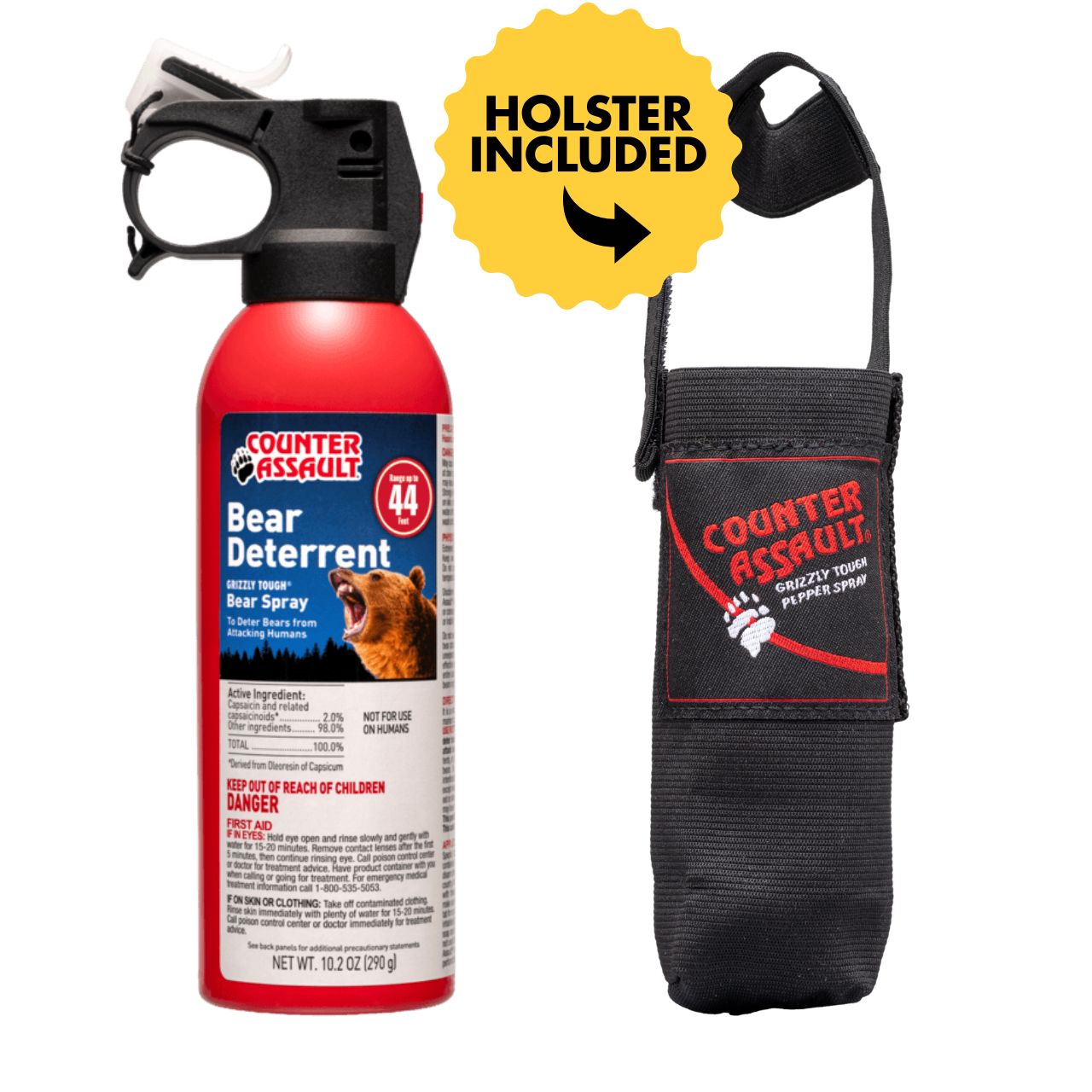
| Counter Assault 10.2 oz bear spray with holster | 44 feet | 10 seconds | 2% CRC |
| UDAP GrizGuard | 30 feet | 5.4 seconds | Qualitatively described |
| Sabre Frontiersman | 30 feet | 5.6 seconds | 1% CRC |
| Mace Guard | 20 feet | 9 seconds | Qualitatively described |
The table points to a significant trade-off. Some sprays last longer but don’t reach as far. Some reach a decent distance but give up duration. A hiker facing a fast-moving animal wants both.
What the numbers mean in the field
The flagship Counter Assault canister stands out because it combines the EPA-maximum 2% CRC with a tested reach of 44 feet and about 10 seconds of discharge, as noted in the earlier SABRE-cited performance overview. That combination gives a hiker more room to build a cloud before the animal closes in.
The practical benefit is simple. More range means earlier deployment. More duration means the user can continue spraying as needed instead of hoping a brief burst was enough.
There are smaller or shorter-reaching options on the market, and some hikers choose them because they look lighter or less bulky. That’s understandable, but it shifts the burden back onto the user. Less distance and less spray time demand better timing, better composure, and less error. Those are bad things to depend on in a high-stress encounter.
A serious buyer should also pay attention to deployment features, not just spray output. The Grizzly Tough Magnum 290 is noted for a glow-in-the-dark safety wedge and finger-loop trigger in the verified data tied to Backpacker’s field test. Those aren’t gimmicks. They support cleaner access in low light and with cold hands.
A canister with better numbers gives the hiker time. Time is what disappears first in a bad encounter.
For anyone choosing the best bear spray for hiking, the benchmark shouldn’t be “good enough to carry.” It should be “forgiving enough to use under pressure.”
How to Carry and Use Bear Spray on the Trail
Owning a canister doesn’t solve the problem. Access does.
A bear spray can buried in a pack might as well be back at the trailhead. It has to ride somewhere a hiker can reach with one hand while standing still, turning, or backing away.

Carry it where a hand can reach it instantly
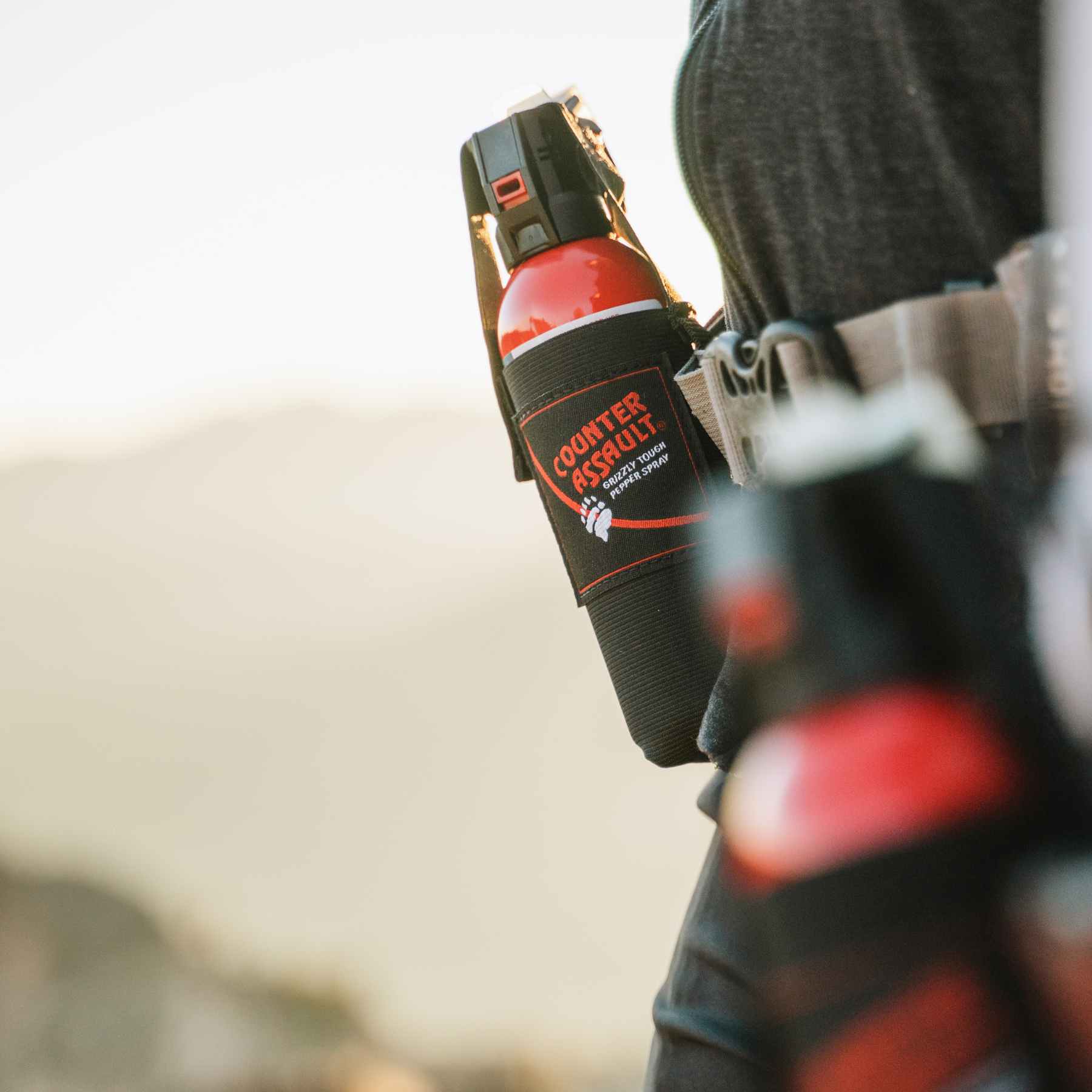
The best locations are a belt holster or a chest-style carry position that doesn’t interfere with pack straps. Accessibility beats neat packing every time.
A large canister can still carry well if the holster is sturdy and the placement is consistent. That consistency matters because the hand needs to find the grip without searching.
A few simple carry rules keep things safer:
- Keep it outside the pack: A backpack pocket is too slow in an emergency.
- Use the same location every trip: Repetition builds a clean draw.
- Check the safety before hiking out: A damaged or loose setup invites mistakes.
- Review expiration guidance: Shelf life matters, and this article on how long pepper spray is good for is useful for understanding storage and replacement timing.
Use a cloud not a warning shot
Bear spray is for an aggressive encounter. It should only be used when a bear is charging or acting aggressively enough that a charge looks imminent. It should never be sprayed on a person, on gear, or around camp as a repellent.
The deployment sequence should stay simple under stress:
- Remove the safety clip.
- Aim toward the space in front of the animal, slightly downward and into its path.
- Begin spraying when the animal is within the effective working distance, creating a cloud it has to pass through.
- Continue as needed until the charge breaks off.
- Leave the area immediately when there is a safe chance to do so.
Practice before the trip
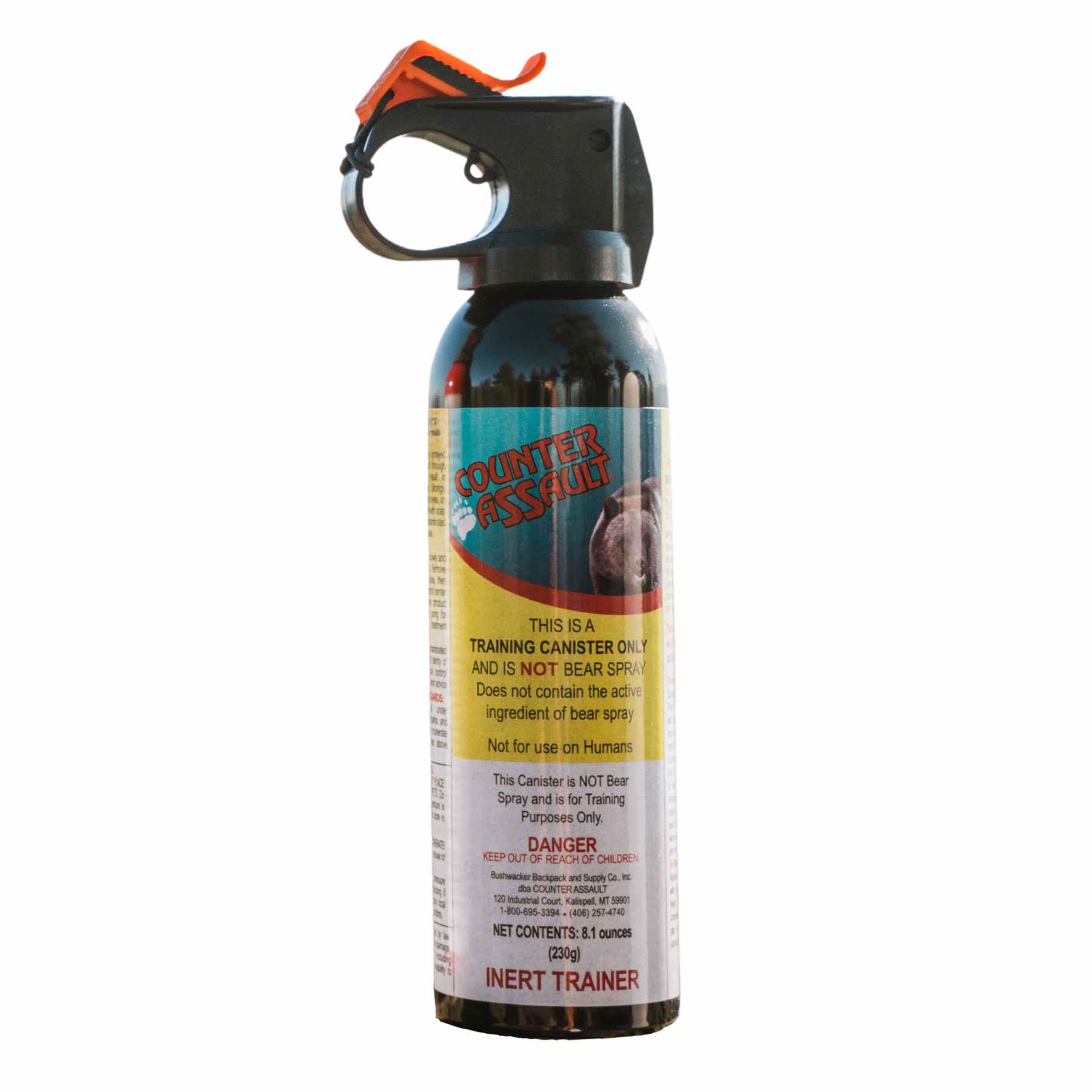
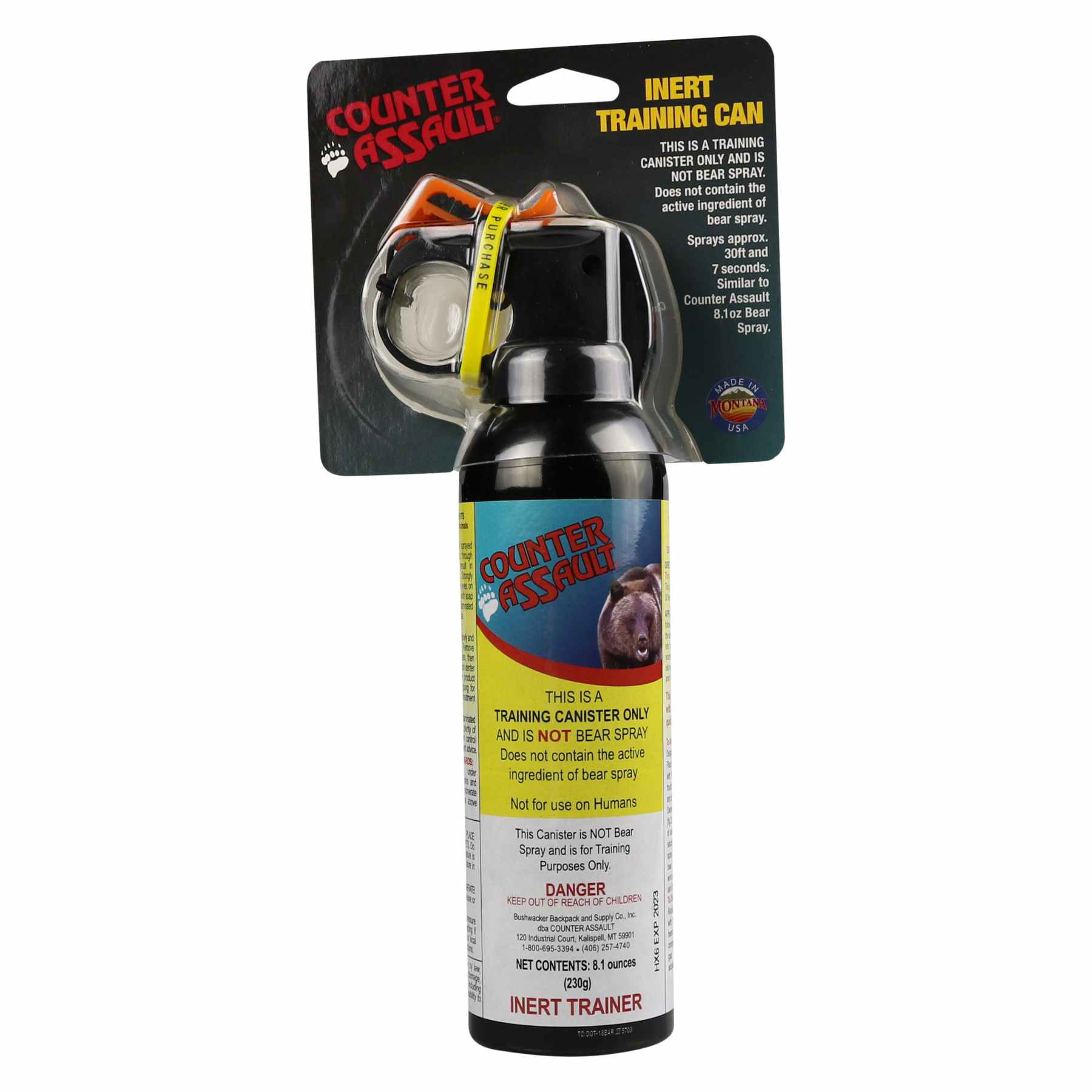
A hiker should never handle a live canister for the first time during an encounter. Muscle memory belongs in the preparation phase.
Practice should cover drawing, orienting the canister correctly, removing the safety, and assuming a stable stance. Training can also include talking through what to do during a non-charging encounter: don’t run, don’t scream, stand ground, and back away slowly if the animal isn’t advancing.
Calm, repeatable motions beat heroic reactions.
The First Line of Defense Avoiding Bear Encounters
The safest bear spray is the one a hiker never has to deploy. Most good bear-country travel is prevention work.
Bears usually respond better to distance, predictability, and clean camps than to human surprise. Hikers who move through the wilderness carelessly create many of their own close calls.
Trail habits that prevent trouble
The basics are simple, and they work because they reduce surprise:
- Hike in groups when possible: Groups make more noise and present a stronger presence.
- Make noise on blind corners and in thick cover: A talking group is easier for wildlife to avoid.
- Avoid dawn and dusk travel when practical: Those low-light periods are active times for many animals.
- Keep distance from wildlife: No photos, no following, no crowding.

That prevention mindset should shape the whole packing list, not just wildlife gear. A solid list of day hike essentials helps newer hikers think beyond snacks and layers toward the systems that keep trips controlled when conditions change.
Camp habits matter just as much
Bad camps attract problems. Food, trash, scented items, and sloppy storage tell wildlife that people equal reward.
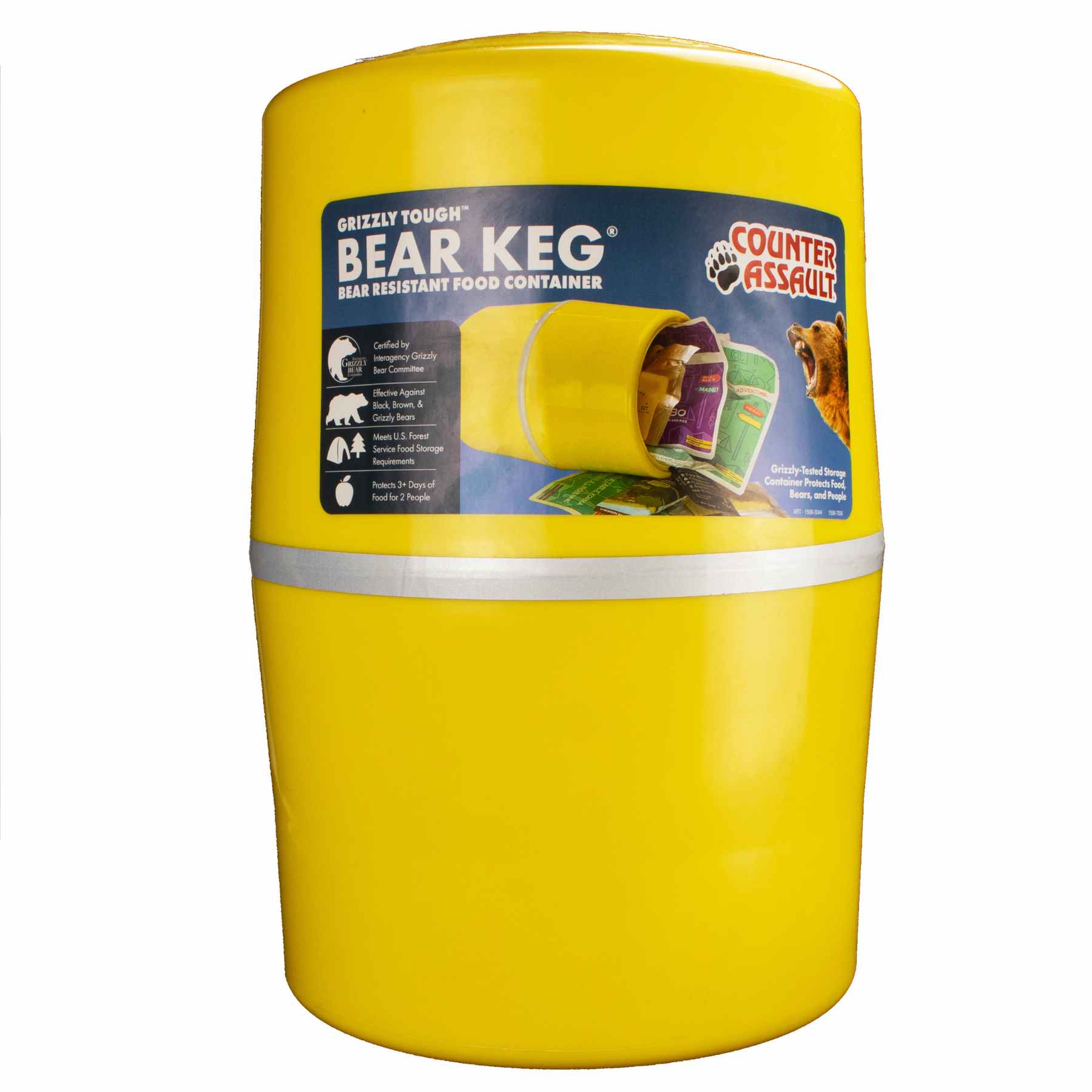
Food storage should follow local regulations and bear-country best practices. For hikers sorting out containers, canisters, and campsite strategy, this guide to bear-resistant food containers is a useful next step.
Other support gear helps keep camps organized and low-chaos:
- Use reliable camp lighting: A LuminAID PackLite Max lantern makes evening camp tasks easier without scrambling in the dark.
- Carry a real medical kit: Adventure Medical Kits offers purpose-built trail kits that belong in any backcountry group.
- Stay disciplined with smellables: Food, toiletries, and other scented items should never be scattered around camp.
Most bear problems start long before the bear appears. They start with surprise on the trail or sloppiness in camp.
Debunking Dangerous Myths About Bear Spray
Bad information gets people hurt in bear country. I hear the same myths from new hikers every season, and each one sounds reasonable until you picture a real encounter on a tight trail with a bear closing distance fast.
Myth one: Guns are the better answer
Firearms demand accuracy, speed, and calm decision-making under extreme stress. Most hikers do not have that level of training, and even trained shooters can miss or wound a bear in a close charge.
Bear spray works on a different principle. It creates a defensive cloud that gives the hiker a margin for error, which matters far more in a chaotic encounter than perfect aim. That is also why spray distance and spray duration matter so much. A canister that reaches farther and stays in the air longer gives the user more room to stop the charge before contact.
Myth two: Bear spray doesn't work
Bear spray works when it is a true bear deterrent, carried where it can be reached, and used at the right moment. Failures usually trace back to the wrong canister, poor access, expired product, or hesitation.
USGS findings cited in the brief behind this article support bear spray as an effective non-lethal deterrent in bear encounters. That should not be twisted into “any spray is fine.” Performance still matters. In the field, stronger options are the ones that put out a wide, forceful cloud with enough range and duration to interrupt a charge, which is why products often get judged against Counter Assault's performance benchmark.
Myth three: Wind makes spray useless
Wind changes how spray behaves. It does not cancel the tool.
Good bear spray is designed to create a dense cloud, not a pinpoint stream, because bears rarely give you a clean, static target. The user should adjust for breeze, aim slightly downward into the bear’s path, and expect some blowback if conditions are poor. That is still a workable problem. No deterrent becomes worthless because conditions are imperfect.
A hiker who understands the trade-off has the right mindset. Wind may reduce comfort and precision. It does not remove the safety value of a canister with strong range, sustained output, and a pattern built for close, fast encounters.
Your Bear Spray Questions Answered
Buying the right canister solves only part of the problem. Hikers still need to handle the practical details before travel day.
How long does bear spray last?
Bear spray has a shelf life, and hikers should check the expiration date on the canister. Verified data in the background materials states that bear sprays in this class commonly have a 3-4 year shelf life. Age, heat exposure, and storage conditions all matter.
Can it go on a plane?
Air travel rules are restrictive around aerosol deterrents. Hikers should assume bear spray needs special planning and should verify transportation rules with the airline and destination before leaving home. Many travelers solve this by purchasing at the destination through local retailers or outfitters.
What should happen after deployment?
The first job is to leave the area safely. Bear spray creates an opportunity to disengage. It doesn’t turn the encounter into something to stand around and watch.
The second job is gear review. If a canister was discharged, it shouldn’t go back on the belt as if nothing happened. The hiker should replace it and inspect holster setup, access, and readiness before the next trip.
Is it legal everywhere?
Laws and park rules vary by location. A hiker should check local regulations, especially before crossing state, provincial, or park boundaries. That’s especially important for multi-stop road trips and guided trips.
Other trail comfort and safety items still matter too. In buggy country, a proven insect repellent like Natrapel 12-Hour Eco-Spray can make it easier to stay focused and avoid the distraction that leads to poor decisions on trail.
A sound final choice is one that matches the conditions, rides accessibly, and gives the hiker the widest margin for a real encounter.
Choosing bear spray should be done with the same seriousness as choosing a map, a first-aid kit, or a weather layer. For hikers who want a bear-country setup built around range, spray time, and field-ready carry, Counter Assault is worth a close look before the next trip.