
A lot of people buying bear spray are in the same spot. A trip is coming up, the route runs through bear country, and the question isn't whether to carry spray. It's which canister gives the most margin for error when things go bad fast.
That's the right question. The best bear deterrent spray isn't the one with the loudest packaging or the broadest claims. It's the one built around the few specifications that matter in a real charge, then carried where it can be reached in one motion.
Table of Contents
What Defines the Best Bear Deterrent Spray
A bear appears at close range on a blind bend, and you have only a few seconds to act. In that moment, the canister in your hand needs to do three jobs well. It needs enough range to create space, enough spray time to build a real barrier, and a bear-specific formula that is legal, proven, and built for this exact use.
That is the standard for "best." It is not a popularity contest, and it is not about the biggest can on the shelf.

Range decides reaction time
Range is the first filter because distance is time. A longer-reaching spray gives you a larger working window to put a fog barrier between you and the bear before contact distance.
A good baseline is the commonly cited minimum benchmark of about 25 feet of spray distance and 7 seconds of duration. Products that only scrape past that line can still work, but they leave less room for error if the bear keeps coming, angles off, or the first burst is early.
That is why top-tier performance stands out fast. A canister that reaches farther than the baseline gives the user more options under stress.
Duration keeps the cloud usable
Range gets the spray out there. Duration keeps it there long enough to matter.
Short discharge times look acceptable on a spec sheet and feel very different in the field. Encounters are messy. Bears shift direction. People overcorrect. Wind changes the shape of the cloud. A canister with more continuous spray time gives you a better chance to correct and maintain coverage instead of emptying the can in one rushed burst.
Use this as a buying filter:
| Specification | What to look for | Why it matters |
|---|---|---|
| Spray distance | At least the commonly cited minimum benchmark | More standoff room before contact |
| Spray duration | At least the commonly cited minimum benchmark | More usable fog for bursts or continuous spray |
| Carry method | Holster access, not pack storage | Faster deployment under stress |
Formula and registration matter
Bear spray is a regulated deterrent. The high end of the U.S. category is 2.0% major capsaicinoids, and that matters because formula strength is part of what separates true bear spray from look-alike self-defense products.
Buyers also need to confirm that the product is EPA registered for bears. If it is not clearly labeled and registered for that purpose, it does not belong in a backcountry safety kit.
Confusion usually starts when people compare bear spray to pocket pepper spray. They are not built for the same job. Bear spray is designed to project a wide fog pattern for an aggressive animal at outdoor distances, while personal defense spray is meant for a different threat profile. The practical differences are explained in this bear spray vs pepper spray comparison.
Viewed through those three criteria, range, duration, and formula, the field gets narrower. Products that meet the baseline are acceptable. Products that exceed it in measurable ways deserve a closer look.
Our Recommendation The Counter Assault 44-Foot Advantage
A bear comes out of the brush inside talking distance. In that kind of encounter, the best spray is the canister that gives the user more room to react, enough discharge to build a fog barrier, and a formula made for bears rather than personal defense.
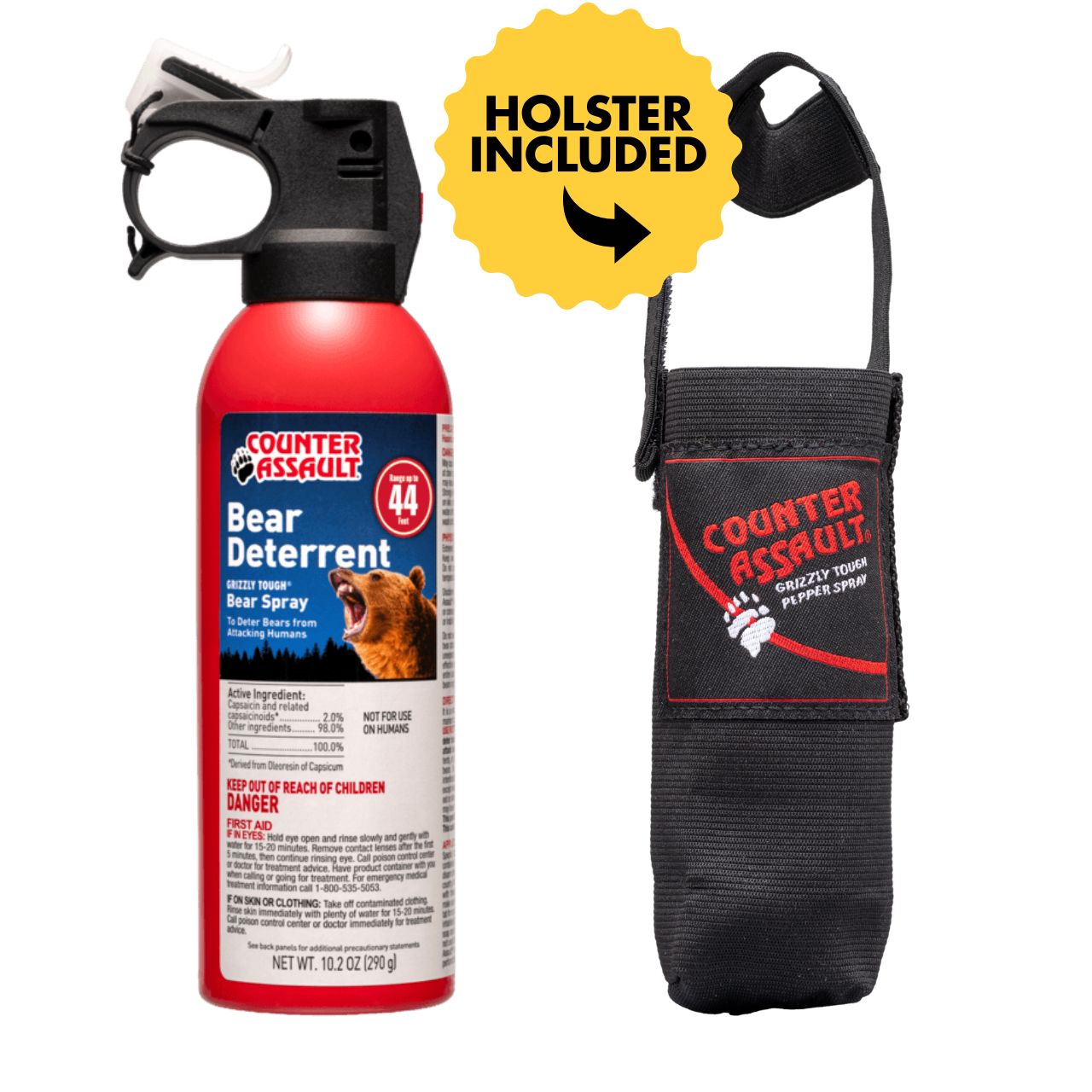
By the criteria laid out earlier, range, spray time, and formula narrow the field quickly. Counter Assault's 10.2 oz canister with holster stands out because it pairs up to 44 feet of reach with about 10 seconds of continuous discharge. That puts it above the commonly cited minimum benchmark of 25 feet and 7 seconds. For someone dealing with a fast, close approach, that extra reach and spray time add working space.
How the specifications line up
One product that fits this standard is the Counter Assault 10.2 oz bear spray with holster. The numbers matter, but so does what they mean in the field. More range gives a little more standoff distance before contact. More discharge gives the user more options if the first burst needs to be extended or corrected.
The formula belongs in the same discussion. A 2% major capsaicinoid formulation sits at the top end of the U.S. bear spray category, as noted earlier. That keeps the recommendation tied to objective criteria instead of branding alone.
Why the included holster matters
Deployment speed decides whether the canister is useful at all.
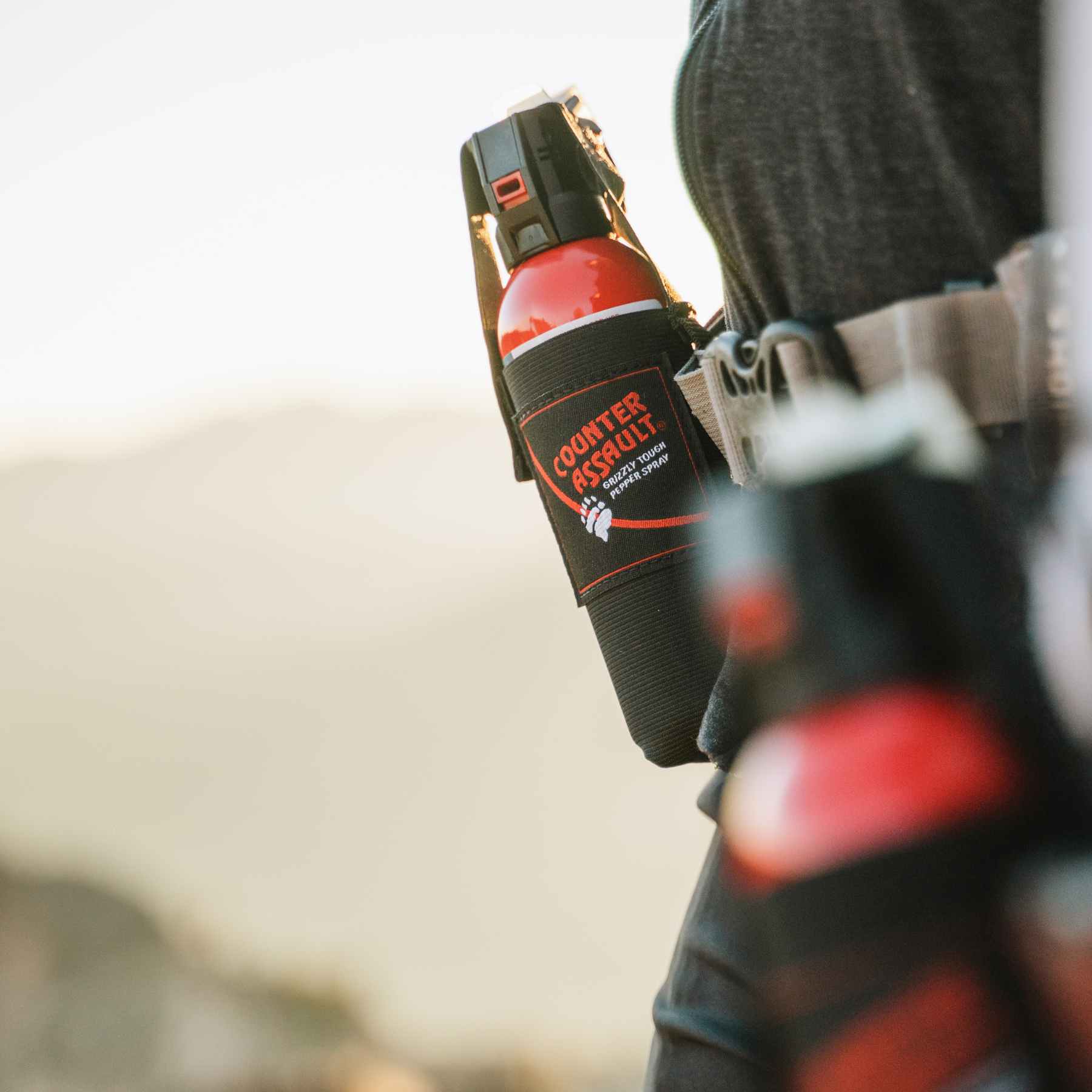
A holster keeps the spray on the body and in the same place every time. That matters under stress, when people lose fine motor control and start fumbling for gear. I have seen hikers carry spray in a pack side pocket and call themselves prepared. In a real charge, that setup usually fails the reach test.
A carry-ready package solves a practical problem many buyers underestimate. The canister and access method need to work together from day one.
The best bear deterrent spray is the one that can be reached before the bear reaches you.
For hikers, anglers, campers, and dog walkers in bear country, long reach and long discharge provide a real margin of safety. That is why this Counter Assault model earns the recommendation. It meets the baseline and exceeds it in the areas that matter most during a close encounter.
How to Use Bear Spray Correctly in an Encounter
A bear appears at close range on a blind bend. You have seconds, not minutes. The outcome depends less on brand names than on whether the spray is accessible, pointed the right way, and used at the right moment.
Bear spray works by putting an irritant cloud between you and the animal. As noted earlier, a suitable canister should provide enough range and discharge time to give you room to react. That technical standard is why range, duration, and formula matter in the first place. They are not marketing details. They determine whether you can build an effective barrier before contact.
Carry it where the hand finds it fast
The canister should ride on a belt, chest harness, or holster where either hand can reach it. A backpack pocket is too slow. In real encounters, people fumble, zip the wrong pocket, or discover the nozzle is turned sideways.
Before every hike, run this check:
- Grip check: Can the canister be drawn with one hand?
- Safety check: Is the safety clip secure but easy to remove?
- Orientation check: Is the nozzle facing the right direction in the holster?
- Partner check: Does everyone in the group know who is carrying spray?
A quick practice draw before leaving the trailhead helps lock in the motion.

What to do when a bear closes distance
Stand your ground. Get the spray up early. Remove the safety clip before the last second, then aim slightly downward so the bear runs into the cloud instead of slipping under it.
Use this sequence:
- Read the behavior. If the bear is approaching with intent or charging, bring the spray up at once.
- Remove the safety clip. Do it while you still have control of your hands and breathing.
- Aim low in front of the animal. Put the cloud where the bear is going.
- Spray in short bursts. Build a barrier first, then adjust.
- Shift to the face if needed. If the bear keeps coming through the cloud, direct the spray at the eyes and nose.
- Back away once the charge breaks. Create distance without running.
For a broader field checklist, review what to do if you see a bear before you head out.
Build the wall first. Direct facial spray is the follow-up if the bear pushes through.
After the bear turns away
Keep the canister in your hand and leave the area calmly. A stopped charge is not permission to move closer, take a photo, or assume the incident is over.
Report the encounter to park staff or local land managers when you can do so safely. If a dog was involved, that detail matters. Off-leash dogs often complicate wildlife encounters, and handlers should review a practical guide to hiking with dogs before traveling in bear country.
The Best Encounter Is the One You Avoid
Bear spray is emergency equipment. Good trail behavior prevents more problems than any canister ever will.
Most dangerous encounters start the same way. A hiker rounds a blind corner unnoticed, a camp is sloppy with food, or someone gets too close for a photo because the bear looks calm until it doesn't.

Trail habits that prevent bad surprises
A solid prevention routine includes a few habits that work together:
- Make noise in tight terrain: Speak, clap, or call out when approaching brushy bends, creek bottoms, and other low-visibility spots.
- Travel in groups when possible: Groups are easier for wildlife to detect and avoid.
- Avoid dawn and dusk in active areas: Those low-light windows often bring more wildlife movement.
- Keep distance: Never approach a bear, never feed one, and never move closer for a better picture.
- Keep camp clean: Store food and scented items away from sleeping areas and manage trash carefully.
Dog owners need extra discipline here. Dogs can trigger or intensify wildlife encounters by running ahead and returning with a bear or lion behind them. Anyone hiking with a pet should review a practical guide to hiking with dogs before heading into predator country.
Build a full backcountry safety kit
Bear country planning should include more than deterrent spray. A first-aid kit, light source, weather layer, and emergency shelter all belong in the same conversation.
Useful additions include an Adventure Medical Kits first aid kit, a compact LuminAID light, and emergency shelter options from SOL survival gear. Those items don't replace bear spray. They round out the response when a trip goes sideways for reasons that have nothing to do with wildlife.
A short refresher on field behavior is also worth saving before the trip. This what to do if you see a bear guide covers the basics clearly.
Common Myths About Bear Spray Debunked
Bad information about bear spray gets people hurt. Most of the myths come from bravado, confusion with human self-defense sprays, or assumptions based on wind instead of field use.

Myth about guns being the better answer
The common claim is that a firearm is automatically more effective. The documented record doesn't support that assumption as cleanly as people think.
A landmark Alaska analysis found that in 72 incidents involving 175 people, 98% of people carrying spray were uninjured, and spray stopped undesirable bear behavior in 92% of brown-bear encounters. The same source also notes a separate study showing firearms stopped a bear 84% of the time, but the injury rates to the person were the same whether they had a gun or not, as reported in the Smith et al. Alaska study.
That doesn't make a firearm irrelevant in every setting. It does show that in sudden close-range encounters, a non-lethal aerosol barrier is often the more forgiving tool.
Myth about spray not working
This myth usually comes from people who have never looked at the field record. The same Alaska data showed repeated performance over multiple decades, with efficacy figures near or above the ninety-percent range in documented encounters.
That matters because it wasn't a one-season fluke. It held up across different periods and product improvements.
Bear spray isn't magic. It is, however, one of the few wildlife safety tools with a strong real-world record in actual encounters.
Myth about wind making spray useless
Wind can affect performance. So can rain, surprise distance, brush, and bad timing. That's a real trade-off, not a reason to dismiss spray altogether.
The practical answer is technique and margin. A canister with longer reach and more discharge time gives the user more room to adjust aim, build a wider cloud, and recover from imperfect conditions. That's why range and duration were treated as essential earlier, not optional extras.
Proper Care and Maintenance of Your Bear Spray
A neglected canister is safety gear in name only. Bear spray needs basic maintenance, sensible storage, and replacement before a trip exposes any weak points.
Storage and replacement basics
Store the canister in a cool, dry place and avoid leaving it in extreme heat or cold for long periods. Vehicles are a common problem because temperatures swing hard and fast.
Check the expiration date before each season and again before major trips. Pressure loss is one of the biggest reasons an old canister becomes a bad bet, which is why replacement matters even when the can still feels full. Counter Assault covers shelf-life basics in this bear spray expiration guide.
A few ownership rules are worth keeping simple:
- Inspect the canister: Look for damage, corrosion, or a compromised safety mechanism.
- Replace expired spray: Don't carry an out-of-date can as primary protection.
- Keep it accessible in the field: Storage at home and carry on trail are two different things.
Travel, practice, and disposal
Real-world spray performance can change with wind and rain, which is one reason maximum range and volume are so valuable. Guidance also notes that while bear spray is designed for bears, Counter Assault is also effective on mountain lions and coyotes, and it must never be used on humans, as noted in BearWise bear spray guidance.
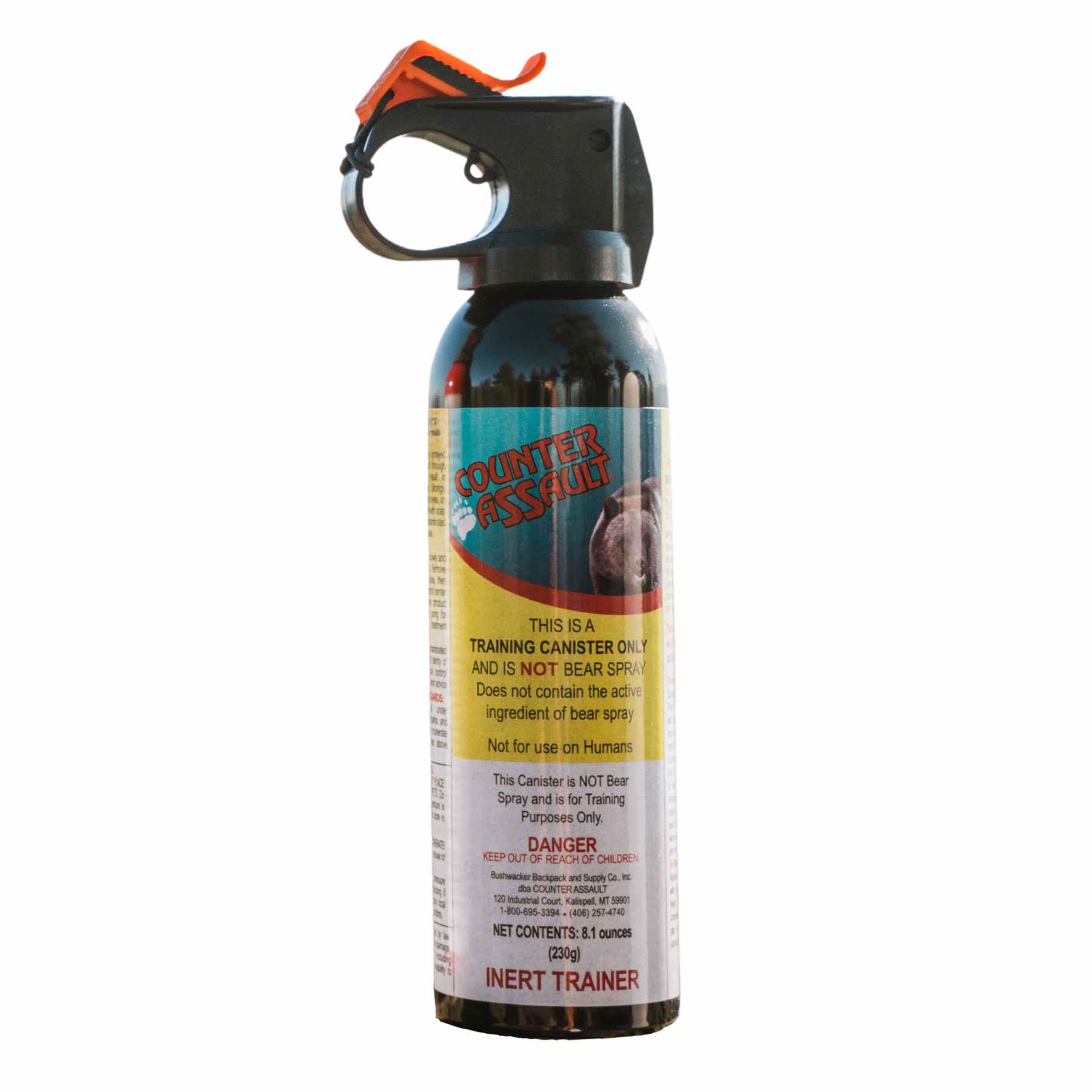
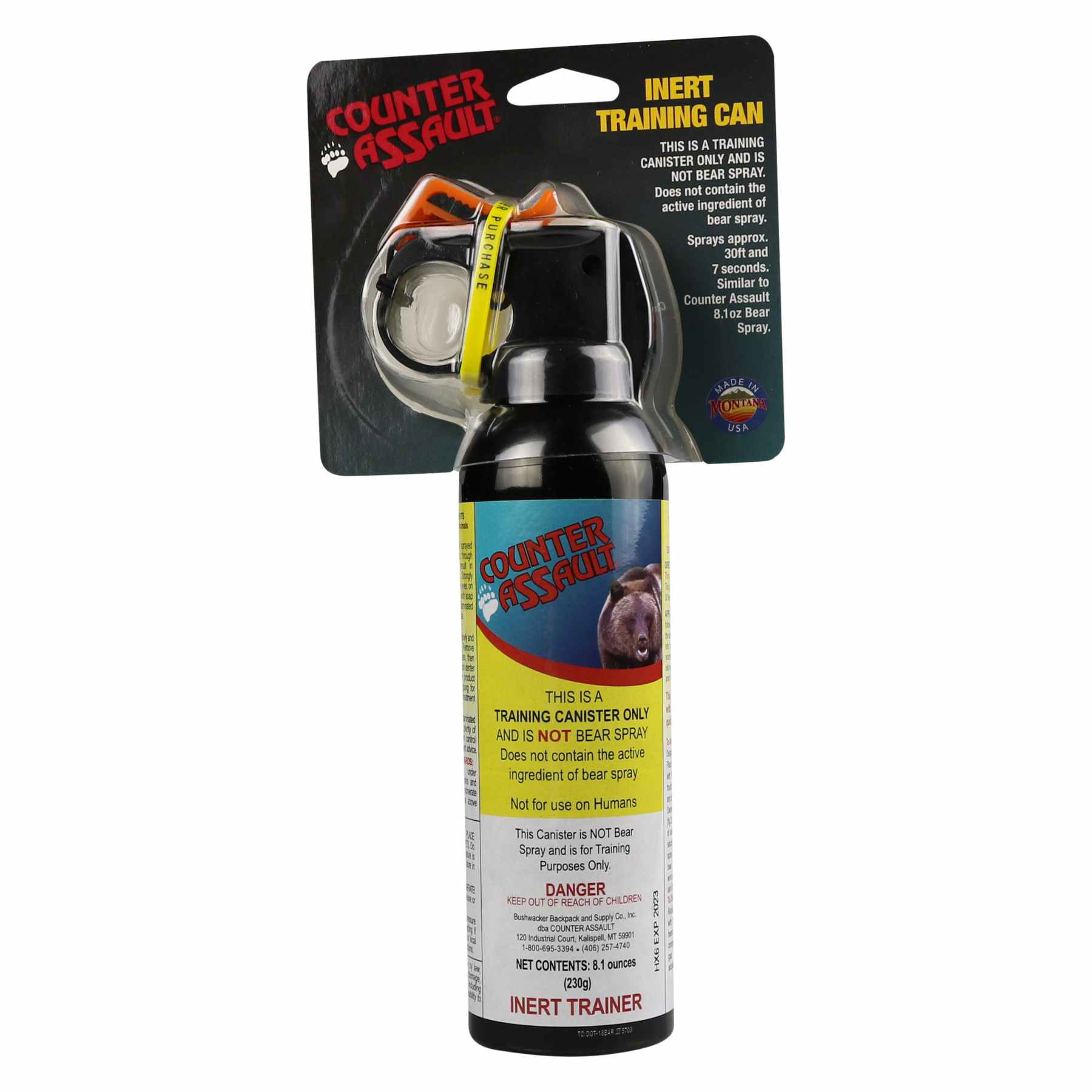
For practice, a live canister isn't the right tool. Use an inert training can if available so the user can rehearse the draw, safety removal, and aiming motion without wasting active spray.
If a canister has been discharged, expired, or damaged, dispose of it according to local hazardous-waste or manufacturer guidance. Don't toss it carelessly into standard trash if local rules prohibit that.
Frequently Asked Questions About Bear Deterrent Spray
Is bear spray the same as pepper spray
No. Bear spray is an animal deterrent regulated for wildlife defense. Personal defense pepper spray is built for human self-defense and uses a different intended application. In practical terms, bear spray throws a larger fog pattern meant to create a barrier, not a narrow close-quarters burst for use on people.
Can it go on a plane
Travel rules can change by carrier and jurisdiction, so the smart move is to check the airline and current transport regulations before travel day. In general, travelers shouldn't assume a canister can be packed casually without reviewing the latest requirements. Many hikers often buy bear spray near the destination to avoid airport problems altogether.
Should a live canister be test-fired
No. A live bear spray canister is emergency equipment, not a practice tool. Test-firing wastes product, affects readiness, and can contaminate gear or clothing. Practice the draw and grip with an inert trainer instead.
Where should it be carried on the trail
On the body, not in a backpack. A belt holster or chest carry setup is the standard because it keeps the canister reachable when seconds matter.
Can it be used on animals other than bears
Some bear deterrent sprays are also intended for other large predators such as mountain lions and coyotes. Users should follow the product label exactly and keep the use limited to animal-defense situations. It is not a tool for use on people.
Is spraying gear or clothing a good preventive tactic
No. Bear spray is not a repellent for boots, tents, packs, or clothing. It's a last-resort deterrent used only during an aggressive encounter.
Bear country doesn't require panic. It requires preparation, sound habits, and equipment that works when there's no time to improvise. For hikers, campers, anglers, and dog walkers looking for proven wildlife defense gear, Counter Assault offers bear safety equipment built for real outdoor use.