
National Park Service guidance has long pointed to poor preparation as a common factor in preventable trail incidents. In plain terms, hikers get into trouble when they start with too little water, the wrong layers, no light, no way to treat injuries, or no plan for wildlife.
Good hiking safety gear is part of the trip plan, not extra weight you hope to avoid using. The right kit buys time, keeps small mistakes from stacking up, and gives you a workable response when weather shifts, daylight fades, someone gets hurt, or an animal comes in too close.
That last part deserves a clearer standard.
Bear safety should sit in the same category as first aid, navigation, and insulation. It is not a specialty item reserved for remote Alaska or a rare add-on for marked bear habitat. On many trails, carrying bear spray is sound field practice, and a canister with strong range and spray duration, such as Counter Assault, belongs in the conversation early, before boots hit dirt.
Table of Contents
Why Hiking Safety Gear Is Non-Negotiable
A large share of trail rescues start with something ordinary. A wrong turn, a wet rock, fading light, a temperature drop. The problem is rarely one big event. It is a short chain of small failures, and missing gear is what lets that chain tighten.
I have seen the same pattern for years on busy day-hike trails and deep backcountry routes alike. A minor slip is manageable. A minor slip plus no first aid, no headlamp, no extra layer, and no way to stay found can turn into a night out, a search, or a medical call.
Good gear protects options. It helps stop a problem early, keeps a manageable problem from growing, and buys time when self-rescue is slow or outside help is hours away.
That applies to wildlife too. Bear safety is not a separate topic reserved for remote Alaska trips or a trail sign labeled bear country. If a route has food, water, cover, and people, wildlife is part of the safety picture. Bear spray belongs in that picture the same way a first-aid kit does. It is safety gear, not specialty gear.
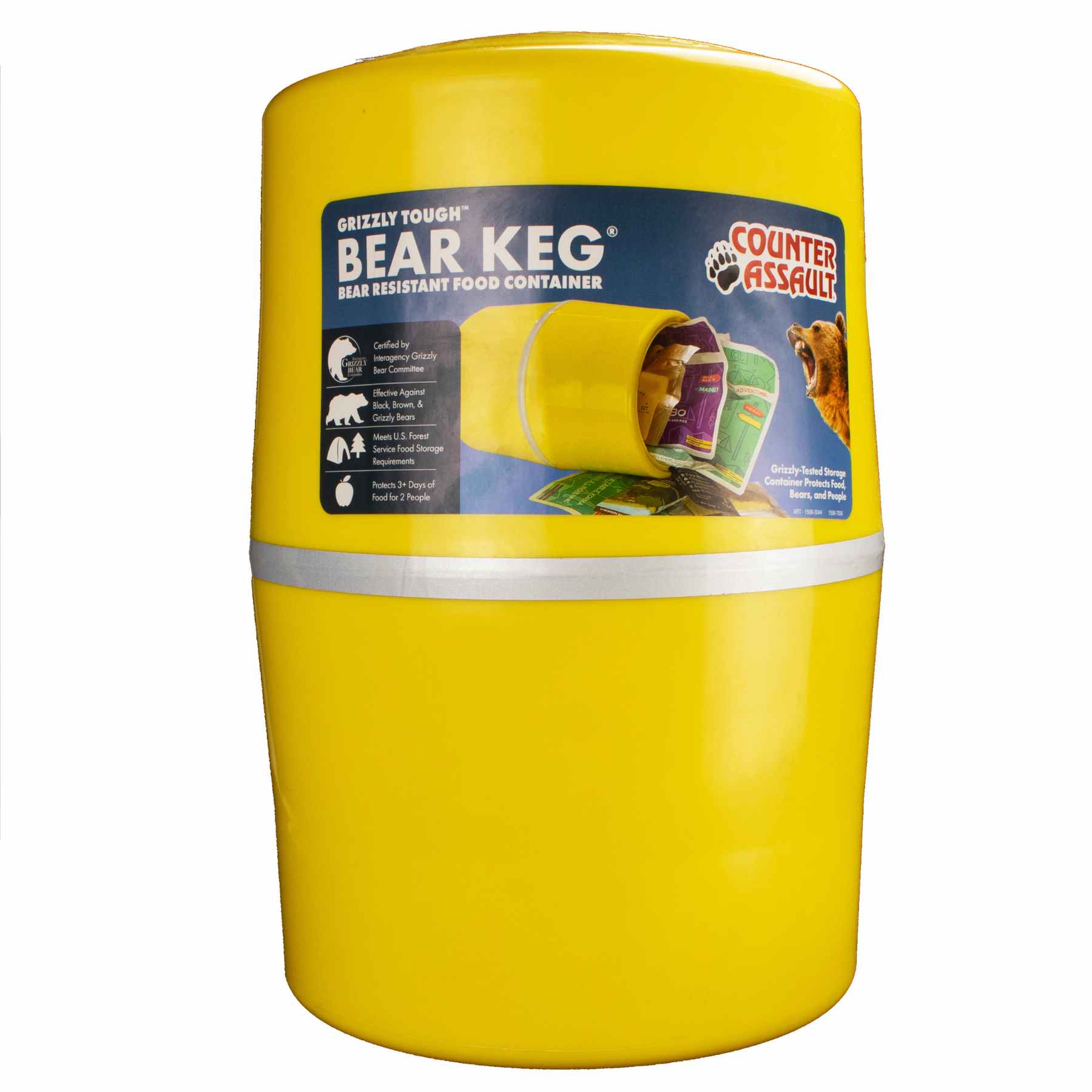
That point matters in popular parks as much as remote terrain. People often plan trips around scenery and access, using resources like Global Pet Sitter's national park guide, but park popularity does not reduce the need to carry deterrence, store food properly, and keep safety tools within reach. Proper bear-resistant food storage on the trail lowers the chance of an encounter. Bear spray covers the moment prevention fails.
What failure looks like on the trail
A hiker can miss one switchback and recover. A hiker who misses that turn late in the day, burns phone battery trying to relocate, then walks into dusk without light has a different problem. Add cold rain or a sore ankle and the margin disappears fast.
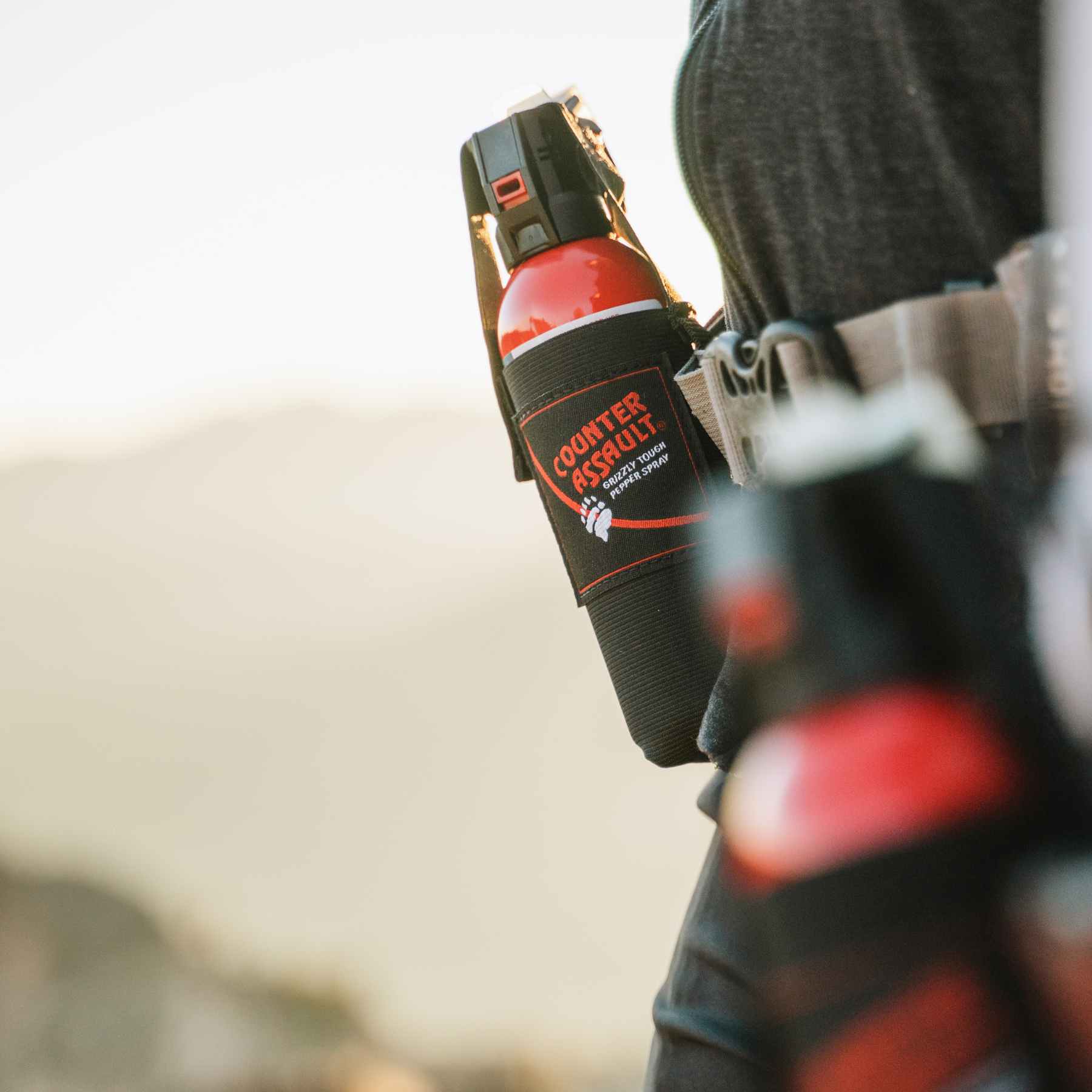
Wildlife incidents work the same way. Trouble usually builds from distance mistakes, surprise encounters, poor food handling, or gear packed where it cannot be reached in time. Spray buried in a pack is close to useless. Spray on a belt or shoulder strap can end an encounter before it becomes an injury.
This is why I treat bear spray as standard field gear, not an optional extra. A dependable canister with strong range, consistent output, and a secure holster earns its place on every hike where wildlife overlap is possible. Counter Assault has built a strong reputation for that kind of performance, which is why experienced hikers and guides keep coming back to it.
The trail does not care whether the original mistake was small. Preparation is what keeps a small mistake from becoming a rescue.
The Ten Essentials and Your Wildlife Plus One
The National Park Service's Ten Essentials remain the right baseline because they solve the problems hikers face. They aren't old advice. They're durable advice.

What belongs in every pack
A practical version of the Ten Essentials looks like this:
- Navigation tools: Carry a map, compass, and, if preferred, a digital aid. Batteries die. Reception drops. Paper still works.
- Headlamp or other illumination: A phone flashlight isn't a substitute for dedicated light.
- Sun protection: Sunglasses, sunscreen, and protective clothing matter more as exposure stretches out.
- First aid kit: A compact, trail-ready kit such as an Adventure Medical Kits hiking first aid kit covers the basics for cuts, blisters, and minor trauma.
- Knife or multitool: Useful for repairs, food prep, and small trail fixes.
- Fire starter: Kept dry and packed where it can be found quickly.
- Emergency shelter: A bivvy, tarp, or emergency blanket can turn an unplanned stop into a survivable wait.
- Extra food: Enough to cover delays, not just the planned route.
- Extra water: Plus a way to treat more if the route or conditions change.
- Extra clothing: Layers suitable for weather shifts, sweat management, and wind.
In high country, temperature drops become a gear problem quickly. A verified 6°C temperature drop per 1,000 meters of elevation gain is a useful reminder that clothing systems need to account for more than the parking lot forecast, and this alpine equipment guide also notes that a 50g survival blanket can be life-saving in hypothermia situations.
The best gear list is the one built around what happens when the day stops going according to plan.
For trip planning, route ideas, and park selection, Global Pet Sitter's national park guide is useful because it helps hikers think about terrain, remoteness, and travel style before packing starts.
Why wildlife deterrence belongs with the essentials
The missing piece for many hikers is wildlife readiness. In country where food storage matters, deterrence matters too.
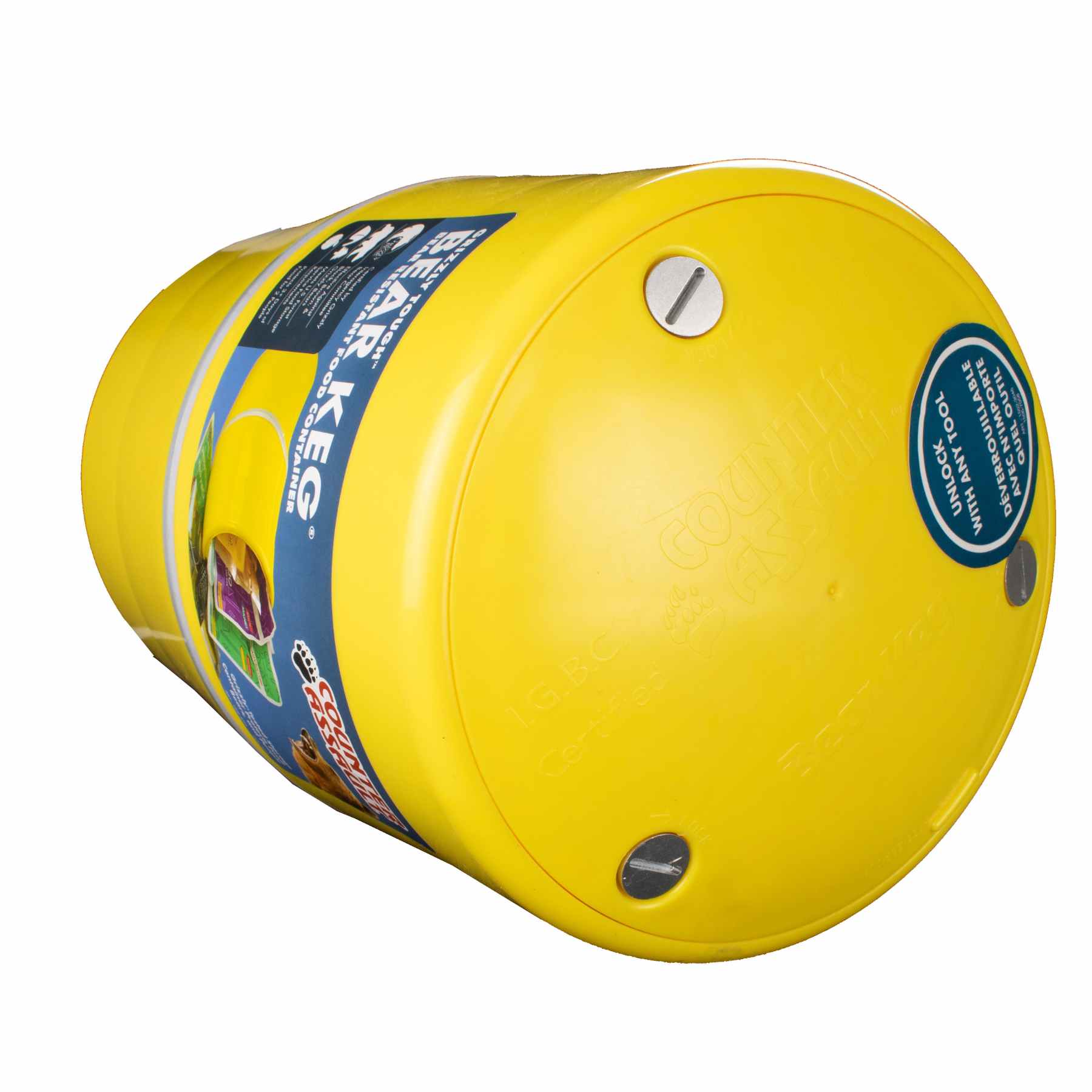
That starts long before an encounter. Food handling should be part of the same safety conversation as first aid and weather layers. Hikers who camp or stop for extended breaks should understand how and when to use bear-resistant food containers so smells don't create the problem in the first place.
Then comes the plus one. Bear spray belongs in the same category as the other essentials because it addresses a low-frequency, high-consequence risk with a dedicated tool designed for the job. It should be accessible, not buried in a pack. A deterrent that can't be reached under stress doesn't count as carried.
Choosing the Right Bear Spray A Definitive Guide
Choosing bear spray starts with one question. Is it built and labeled for stopping a charging bear, or is it just a small personal-defense spray that happens to mention peppers on the can?

A trail can feel routine right up to the second it does not. That is why I treat bear spray the same way I treat a first-aid kit or extra insulation. It is standard safety gear, not a specialty item for a few remote trips.
What the label needs to tell you
Start with the label and the registration. The NPS bear spray guidance page explains that bear spray should be EPA-registered and sold specifically for bears, with the active ingredient listed in the accepted range for bear deterrent products. If the can does not clearly say it is bear spray, leave it on the shelf.
Size matters for the same reason fire extinguishers do. You need enough agent and enough spray time to build a defensive cloud under stress. This bear spray equipment review summarizes the common benchmark for full-size canisters, including minimum size and discharge duration. Pocket-size options are easier to forget about on your belt, but they also give away margin when margin is what keeps people safe.
Use a simple filter:
- EPA registration: Required.
- Clear bear-spray labeling: No substitutes, no vague wording.
- Full-size canister: Enough volume and spray time to matter.
- Reachable holster: Belt or chest carry beats pack storage every time.
For hikers sorting through real field considerations, this guide to the best bear spray for hiking is a useful comparison.
Why range and spray time matter on the trail
Range buys reaction time. Spray duration gives you a better chance of placing a thick cloud between you and the animal.
Those two specs are where weak products show their limits. A short-range can forces the encounter to get closer before the spray is effective. A brief discharge leaves little room for error if the wind shifts, footing is poor, or the first burst is off line.
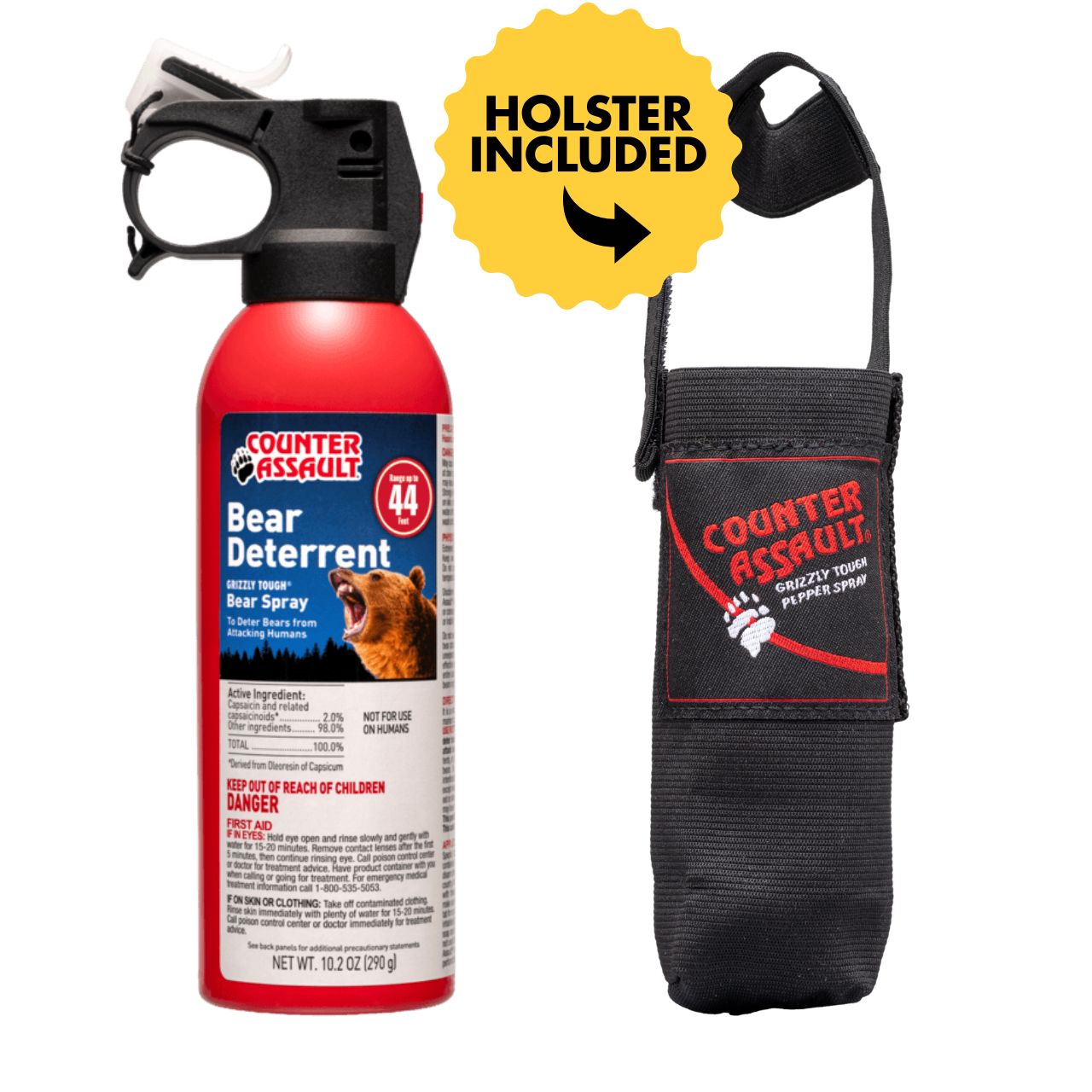
Counter Assault earns attention here because the canister specs are built for real use, not just easy carry. This trail safety and technology review notes a 2% capsaicin and capsaicinoid formulation, reach out to 44 feet, and about 10 seconds of continuous discharge for Counter Assault's 10.2 oz can. Those numbers give a hiker more working room and more spray in the air during a fast, messy encounter.
One example that matches those field priorities is the Counter Assault 10.2 oz bear spray with holster. It is made for bears and is also used as a deterrent for mountain lions and coyotes. The holster is part of the package for a reason. If the can is not on your body and ready to draw, the rest of the specs matter less.
A short demonstration helps make the handling and deployment principles easier to visualize.
What works and what does not
What works in the field is straightforward:
- A full-size, EPA-registered bear spray canister
- A carry position you can reach with one hand
- Enough range and spray time to create a real barrier
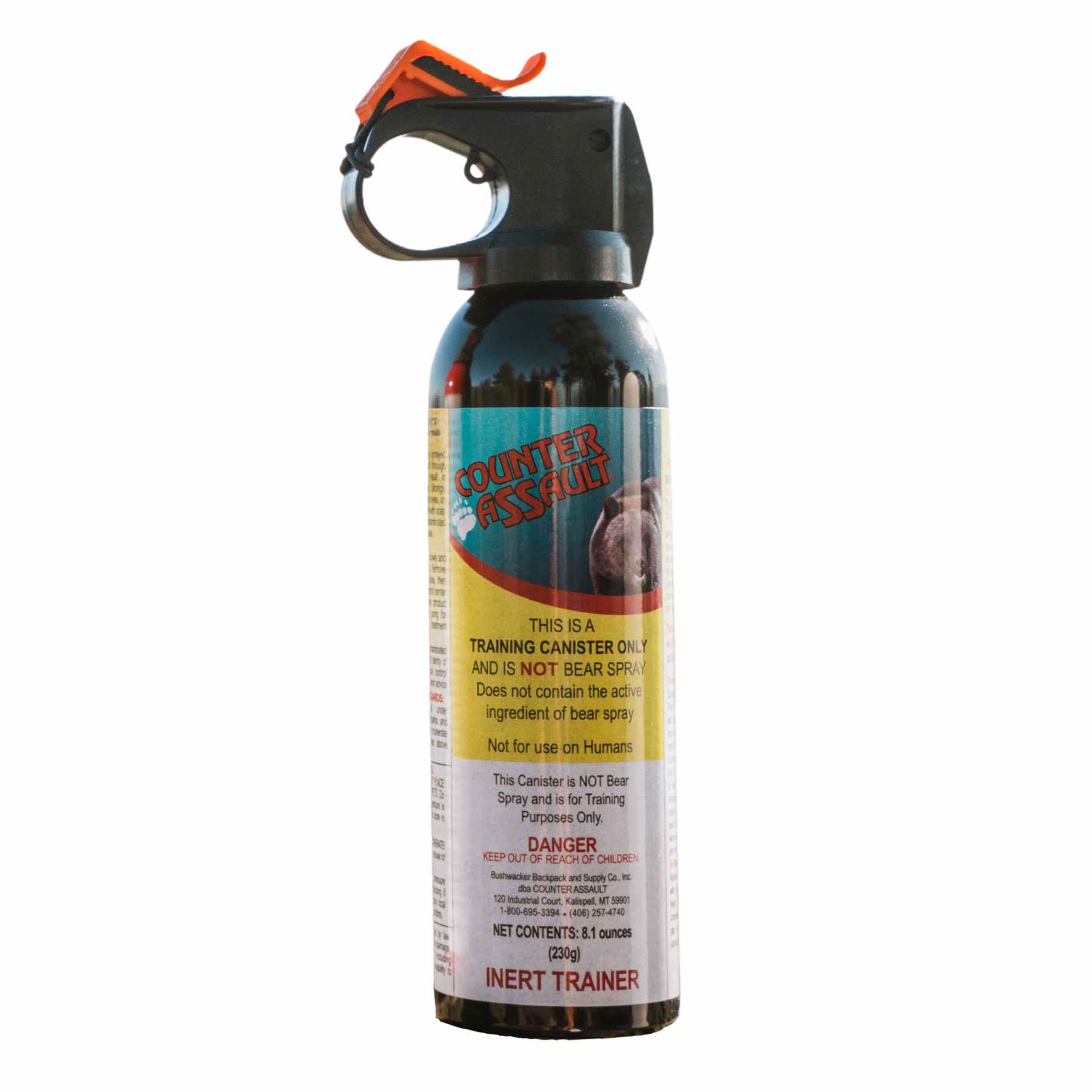
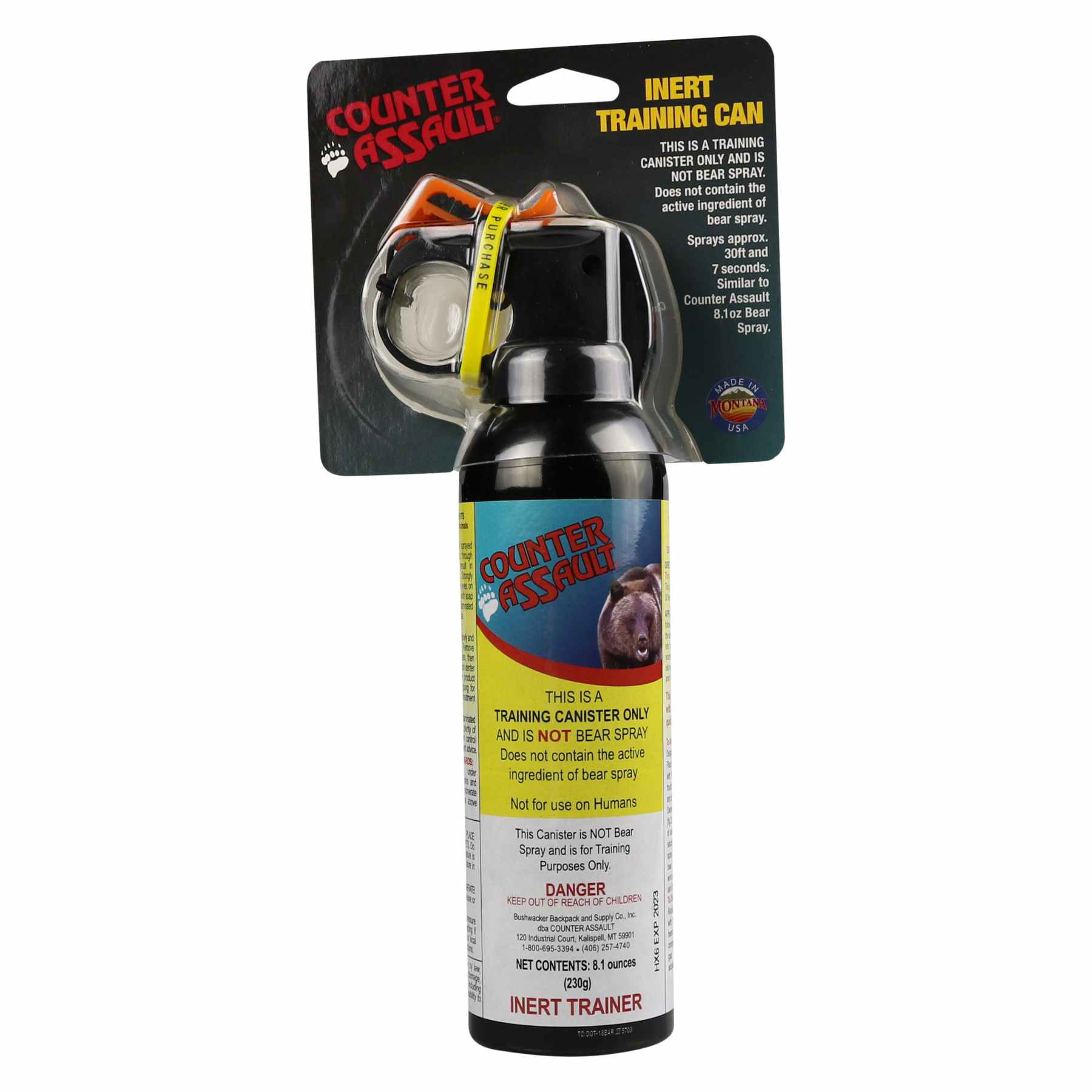
- A quick practice draw before the trip starts
Problems usually come from bad carry habits and the wrong product choice:
- Bottom-of-pack storage: Too slow under pressure.
- Small novelty canisters: Easy to carry, limited performance.
- Unfamiliar safety clip or grip: Fine at home, clumsy on trail.
- Human defense spray sold as a substitute: Wrong tool for the job.
The hard truth is simple. Wildlife safety is general hiking safety. Bear spray belongs in the same category as first aid, water treatment, and weather protection, and a full-performance canister like Counter Assault is the standard to measure against.
How to Use Bear Spray and Avoid Encounters
Wildlife encounters usually start with one mistake. A hiker enters thick cover without warning, rounds a blind corner, or reaches for spray that is buried instead of worn. Good habits prevent many of those moments. Fast access to bear spray covers the rest.

How to lower the chance of a close encounter
Start with behavior, not gear. Then make sure the gear is ready anyway.
Groups are easier for wildlife to detect, so solo hikers need to be more deliberate about noise and visibility. Call out before blind corners. Talk when moving through brush, near running water, or in windy terrain where animals may not hear your approach. Dawn and dusk also call for extra caution because animal movement often increases in low light.
Camp habits matter just as much as trail habits. Keep food, trash, toiletries, and anything scented out of sleeping areas. Do not leave scraps behind. Do not approach wildlife for photos. Distance is what keeps a routine sighting from turning into a defensive response.
Pay attention to fresh sign. Tracks, scat, a carcass, overturned logs, or a strong animal odor change the situation immediately. Slow down, get your spray in hand if needed, and decide whether continuing makes sense.
Before any trip, review this field guide on what to do if you see a bear. It gives the basic responses worth memorizing before you need them under stress.
What to do during an encounter
A calm response buys time. Sudden movement burns it.
If you see a bear or mountain lion at a distance, stay upright, keep the animal in view, speak in a steady voice, and back away slowly. Do not run. Running can trigger pursuit. Give the animal space to leave, especially if it is feeding, traveling with young, or focused on something nearby.
If the animal closes distance, shows aggression, or charges, use your bear spray. This is why bear spray belongs with your standard hiking safety gear, not in a separate mental category for special trips. The same canister you carry for a bear encounter is also a practical deterrent for other trail predators. In the field, I treat it the same way I treat a first-aid kit. It needs to be on the body, accessible, and ready.
Use it with a simple sequence:
- Draw the canister and remove the safety clip.
- Square up and aim slightly downward.
- Fire when the animal is close enough that the spray forms a barrier in its path.
- Sweep side to side to build a cloud between you and the animal.
- If it keeps coming, direct the spray toward the face.
- Move out of the area as soon as the animal breaks off.
Wind still matters, but hesitation causes more problems than imperfect conditions. A short burst delivered early and in control is usually better than waiting too long and spraying in panic. Counter Assault and other full-size bear sprays are built for that brief window when distance disappears fast.
One rule needs to stay clear. Bear spray is not a repellent. Do not spray it on clothing, packs, tents, or skin. It is an emergency tool for an aggressive encounter.
Debunking Common Bear Safety Myths
Bad wildlife advice spreads fast because it sounds decisive. The trail punishes that kind of confidence.
Myth one guns work better
This idea persists because firearms sound more forceful. In practice, a charging bear creates distance, speed, stress, and poor aiming conditions all at once.
Bear spray works differently. It creates a cloud barrier, doesn't require precision comparable to a bullet, and is designed to stop the charge without killing the animal. That makes it a safety tool, not a weapon system.
Myth two bear spray does not work
This claim doesn't hold up against the Alaska incident data cited by the Interagency Grizzly Bear Committee. In a study of 72 bear spray incidents involving 175 people, the spray deterred undesirable bear behavior more than 90% of the time, with only three minor injuries and no serious harm to humans or bears, according to the IGBC bear spray summary.
That result aligns with what experienced field crews already understand. Spray is built to interrupt the animal's charge by overwhelming the eyes, nose, and respiratory system long enough for the person to create distance.
Myth three wind makes spray useless
Wind can affect any aerosol product. That's true. It doesn't make bear spray useless.
The practical answer is good deployment technique. Draw early. Orient quickly. Aim slightly downward and build a cloud in front of the charging animal. Most encounters happen at close range and fast, often in terrain where vegetation and natural features reduce open wind exposure.
Wind is a factor to account for. It isn't a reason to leave deterrence behind.
The larger mistake is carrying spray but never learning when to use it, how to access it, or what distance gives the best chance of stopping the charge.
Your Hiking Safety Gear Checklist for Any Trip
A useful checklist should match the trip, not just the category. A short front-country day hike doesn't require the same load as an overnight route, and a bear-country trip needs gear that reflects animal risk as well as weather and terrain.
Hiking Gear Checklist by Trip Type
| Gear Item | Day Hike | Backpacking | Bear Country |
|---|---|---|---|
| Map and compass | Yes | Yes | Yes |
| Headlamp | Yes | Yes | Yes |
| Sunglasses and sun protection | Yes | Yes | Yes |
| First aid kit | Yes | Yes | Yes |
| Knife or multitool | Yes | Yes | Yes |
| Fire starter | Yes | Yes | Yes |
| Emergency shelter | Yes | Yes | Yes |
| Extra food | Yes | Yes | Yes |
| Extra water and treatment | Yes | Yes | Yes |
| Extra clothing layers | Yes | Yes | Yes |
| Bear-resistant food storage | As needed | Yes where required or prudent | Yes |
| Bear spray carried on body | Optional by location | Strongly considered by location | Yes |
| Insect protection | Seasonal | Seasonal | Seasonal |
| Camp light or lantern | Not usually needed | Yes | As needed |
Day hike checklist
The most common mistake on short hikes is underpacking because the route looks easy.
- Carry the full essentials set: Short mileage doesn't protect against injury, delays, or wrong turns.
- Bring a compact first aid kit: Small kits still need blister care, wound care, and basic support items.
- Pack a weather layer even on fair days: Conditions change faster than plans do.
- Add insect protection when needed: Natrapel insect repellent is a practical add-on for bug-heavy seasons.
Backpacking checklist
Overnight travel raises the penalty for small gear failures. Water treatment, shelter, camp lighting, and food storage matter more because the hiker can't walk back to the car before dark.
A few useful additions:
- Reliable camp lighting: A compact solar light from LuminAID works well for camp tasks and backup illumination.
- Emergency shelter backup: Even with a tent, a compact emergency bivvy or blanket from Survive Outdoors Longer adds insurance if someone gets separated from core gear.
- Expanded medical kit: Backpackers should step up from a minimalist pouch to a more complete trail kit.
Bear country checklist
In bear country, the checklist changes in one important way. Deterrence becomes part of the standard kit, not an optional accessory.
- Carry bear spray where it can be reached immediately: Belt, chest, or shoulder strap access is the standard to aim for.
- Store food and scented items correctly: Camp discipline matters as much as what's in the canister.
- Keep the group close in thick cover: Spread-out travel increases surprise encounters.
- Review encounter behavior before hiking: Everyone in the group should know the same plan.
Hike Confidently with the Right Preparation
Confidence on the trail doesn't come from hoping the day stays easy. It comes from carrying tools that match the actual failure points of hiking.
That means dependable navigation, light, shelter, water, extra layers, and first aid. It also means recognizing that wildlife safety belongs inside the larger category of hiking safety gear, not off to the side as a specialty concern.
Hikers planning routes beyond familiar local trails can also borrow ideas from broader mountain travel resources. This expert checklist for Slovenia adventures is a useful example of how experienced outdoor travelers think in systems, not single items.
Preparation doesn't remove uncertainty from the outdoors. It restores options. And on a trail, options are what keep a problem small.
Before the next trip, review the kit, check access to critical items, and make sure wildlife deterrence is part of the plan where it belongs. For bear-country travel, Counter Assault offers bear safety tools and field-focused resources built around non-lethal protection for hikers, campers, and backcountry travelers.