
A bend in the trail is often all it takes. One second, the woods are quiet. The next, a bear is feeding ahead, lifting its head, trying to figure out what just appeared in its space.
That moment feels longer than it is. Heart rate jumps, hands get clumsy, and people either freeze or want to bolt. The right response is neither panic nor bravado. It’s a short sequence of calm decisions that gives the bear a clear message and gives the person room to leave safely.
Most bear encounters end without aggression. Still, anyone traveling in bear country needs a mental script ready before the first sighting. When people ask what to do if you see a bear, the useful answer isn’t a slogan. It’s knowing what action fits the bear’s behavior, the distance, the terrain, and the gear already on the body, not buried in a pack.
Table of Contents
Your First Seconds Seeing a Bear Matter Most
A common trail encounter starts the same way. A hiker rounds a bend, spots a bear feeding off the trail, and suddenly has to make decisions under stress. The bear may not be aggressive at all. But a surprise at close range can turn a routine sighting into a dangerous one if the person reacts badly.
The first seconds matter because they set the tone. Fast movement, shouting in panic, or turning to run can shift the encounter from uncertain to unstable. Calm body language, a steady voice, and deliberate movement tell the bear that a human is present and trying to leave.
Read the moment before acting
A bear standing up isn’t automatically preparing to attack. Often, it’s trying to identify scent or movement. A bear that keeps feeding, looks briefly, or drifts away is giving off a very different signal than one that huffs, paws the ground, or closes distance.
That’s why the first job isn’t to dominate the situation. It’s to assess it. People who slow down enough to read behavior usually make better choices than people who react to the sight of a bear as if every encounter is an immediate charge.
The goal is simple. Don’t surprise the bear further, don’t trigger pursuit, and don’t lose access to the one tool meant for a close encounter.
Panic causes more problems than the bear does
The dangerous mistake is often human speed. People drop packs, stumble while backpedaling, or fumble with gear they packed too deep. Good bear safety starts before the encounter, but it becomes visible in those first few seconds when access, posture, and judgment all matter at once.
How to Prevent a Bear Encounter Before You Hit the Trail
The cleanest bear encounter is the one that never gets close. Bears usually want space, food, and a route away from people. Prevention works because it reduces surprise and removes rewards that keep bears near camps, roads, and trails.
Human behavior plays a major role in negative encounters. BearWise notes that 83% of bear attacks involved solo hikers or pairs, and that not running can de-escalate 80% of bluff charges. That’s a useful reminder that what happens before a sighting often matters more than what happens after.
Travel in a way bears can detect
A quiet person moving fast through brush, around blind corners, or near running water can appear at close range before a bear has time to leave. That’s how people end up in the kind of surprise encounter no one wants.
A better routine looks like this:
- Hike in a larger group when possible. More voices, more scent, and more noise give bears more warning and usually give people more composure.
- Make noise where visibility is poor. Talk normally, call out before bends, and be especially alert in thick cover.
- Stay extra aware near food sources and water. If sign is fresh, slow down and scan ahead instead of pushing through.
- Avoid low-light travel when possible. Bears are often harder to spot, and people are slower to read body language in dim conditions.
Keep a clean camp and remove attractants
Camp discipline matters because bears learn quickly. A sloppy site teaches them that tents, coolers, vehicles, and campsites are worth investigating. That creates repeat problems for the next group too.
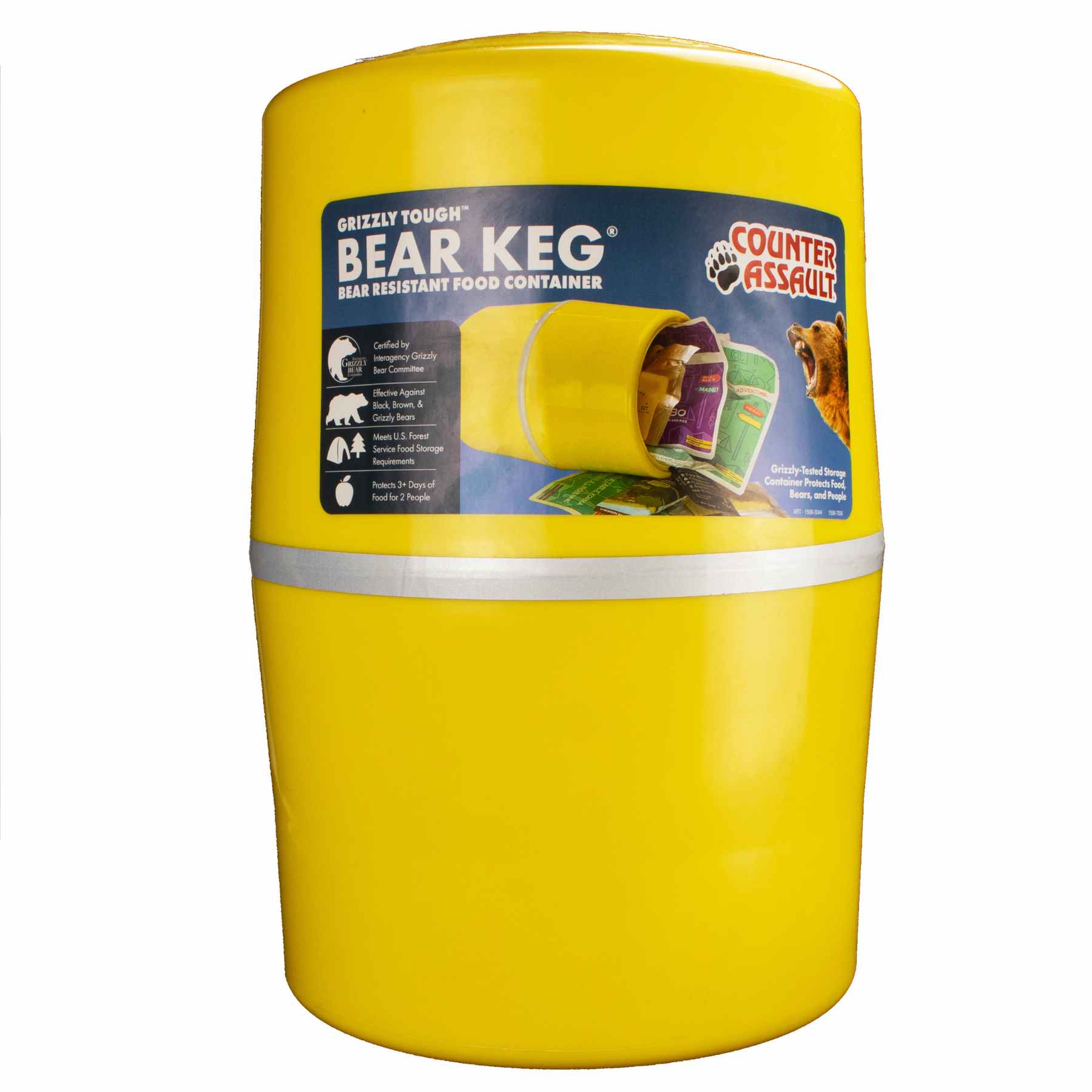
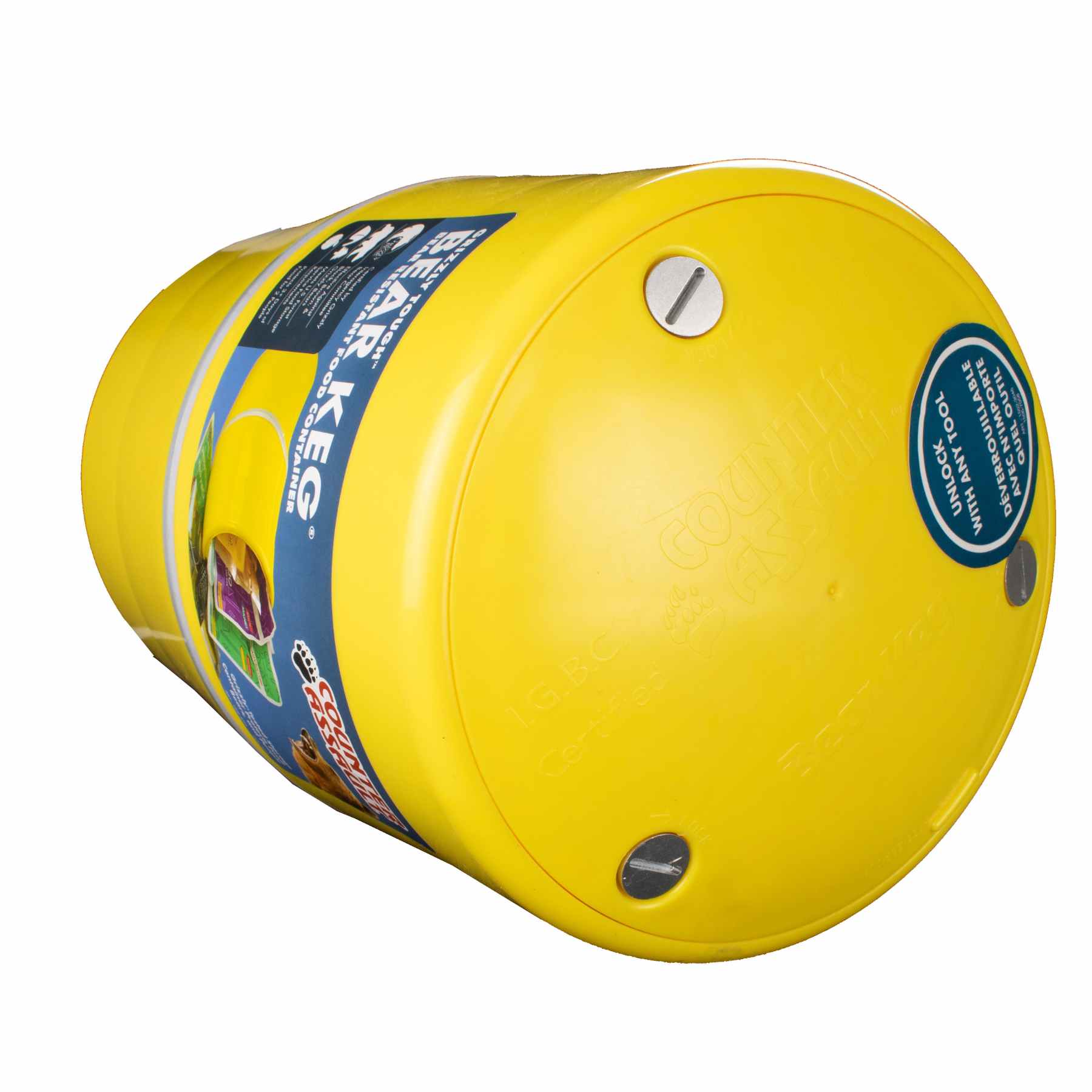
Use bear-resistant food storage, store trash properly, and treat anything scented as an attractant. That includes food, cookware, pet food, toothpaste, sunscreen, and empty wrappers. For a detailed breakdown of storage options and setup, see this guide to bear-resistant food containers.
A clean camp checklist should include:
- Cook away from sleeping areas. Don’t make the tent area smell like dinner.
- Pack out trash promptly. Don’t leave food scraps or packaging sitting around.
- Store scented items with the same care as food. Bears don’t sort by label.
- Check the area before settling in. Tracks, scat, torn logs, and dug-up ground all tell a story.
Distance is part of prevention
People create trouble when they close distance for a better photo or stay put because the bear seems calm. A feeding bear can become a defensive bear if the person keeps advancing. Back off early and the encounter often ends there.
The best prevention habits aren’t dramatic. They’re ordinary, repeatable, and effective because they reduce surprise.
What to Do the Moment You See a Bear
You round a bend, look up, and there it is. The next few seconds are about making good decisions in the right order.
Start with one rule.
Never run.
Running can trigger pursuit, even from a bear that was only trying to figure out what you are. Stop, face the bear, and get control of your hands, feet, and breathing. A calm person can still make choices. A panicked person usually gives the bear mixed signals.

First response at sighting distance
If the bear sees you and is not coming in, keep the encounter simple and readable.
- Stop moving toward it. Distance is your friend, and every step forward spends it.
- Face the bear. Stay oriented so you can watch what it does and move with purpose if needed.
- Talk in a calm, steady voice. The goal is to help the bear identify you as a person, not prey.
- Keep movements slow. Sudden gestures can look threatening or trigger a chase response.
- Back away slowly at an angle. That creates space without turning your back or walking into poor footing.
Watch the bear without fixing it with a hard stare. In the field, people get into trouble when they focus so tightly on the animal that they stop noticing cliffs, brush, deadfall, or the cub off to one side.
Read behavior before choosing the next step
The right response depends on what the bear is doing, not on a memorized script. A bear that is curious, feeding, or trying to identify you calls for space and steady behavior. A bear that feels cornered, surprised, or protective can switch from uncertainty to aggression fast.
Look for signals. Head lifting, scenting the air, and standing briefly often mean the bear is trying to understand you. Huffing, jaw popping, swatting the ground, or direct, fast movement mean the pressure is rising. At that point, stop giving ground blindly and get ready to defend yourself if the bear closes.
Use this quick decision check:
- If the bear is staying put or moving off: keep talking and back away.
- If the bear is focused on you and closing slowly: hold your ground sooner, look bigger, and prepare your spray.
- If cubs are nearby: create space without getting between the sow and the cubs.
- If terrain is bad: choose footing early. A controlled stop on solid ground is better than tripping downhill while retreating.
Defensive versus predatory behavior
The reason this matters is simple. Defensive behavior usually comes from a bear that wants space. Predatory behavior comes from a bear treating you as a target. Those are different problems, and they require different responses.
Hold position during a bluff charge. Breaking into a run is one of the fastest ways to turn a bluff into contact.
Make spray access part of the decision
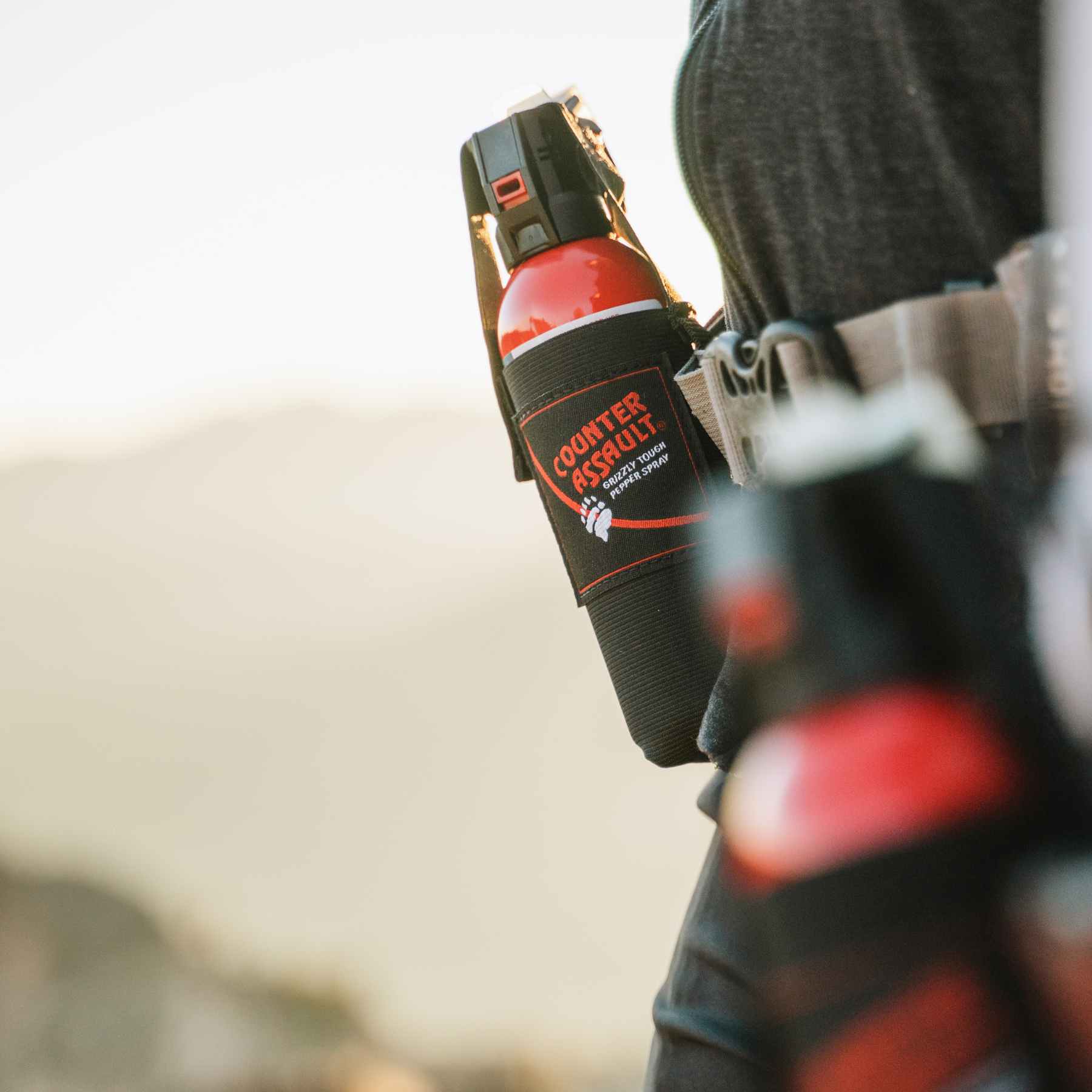
If you carry bear spray, bring it into your hand early enough to matter. Spray buried in a pack is dead weight during an encounter. A holstered canister on your belt or chest lets you respond while you still have time to think, assess distance, and keep your feet under you. For a clear breakdown of carry methods, range, and deployment basics, review this guide on what you need to know about bear spray.
Keep backing away if the bear gives you that option. If it does not, hold your ground, get the spray unholstered, and remove the safety clip only when you may need to fire. The goal is not to rush. The goal is to stay ahead of the encounter instead of reacting late.
Good bear response is disciplined. Stay readable to the bear, protect your footing, and match your next move to the bear’s behavior.
How to Use Bear Spray Effectively and Safely
You spot the bear at close range, your heart rate spikes, and now every second matters. This is the point where gear placement, distance, wind, and timing decide whether spray helps or stays dead weight on your belt.
Bear spray is a close-range emergency tool for a bear that is approaching, charging, or making contact likely. It is not for clothing, tents, packs, or camp perimeter. Used well, it creates enough pain and confusion to stop the bear’s advance and give you space to leave.

What effective deployment looks like
The job is simple. Put a dense cloud between you and the bear at the moment that cloud can still stop forward movement.
That means making decisions in order. First, get the canister into your hand. If the spray rides in a pack, it does not count in a real encounter. A belt or chest holster gives you one clean draw with either hand and keeps the can where stress will not beat you to it.
Then assess distance and direction. If the bear is still far enough away to break off on its own, keep the spray ready and hold the safety clip in place. If the bear keeps closing, remove the safety clip only when you are prepared to fire.
Use the spray to build a barrier, not to thread a needle. Aim slightly downward so the cloud rises into the bear’s face and chest. Fire when the bear is close enough that the spray will reach it with force, then sweep across its line of travel. If it keeps coming, continue in short bursts and walk backward only if you can do it without tripping.
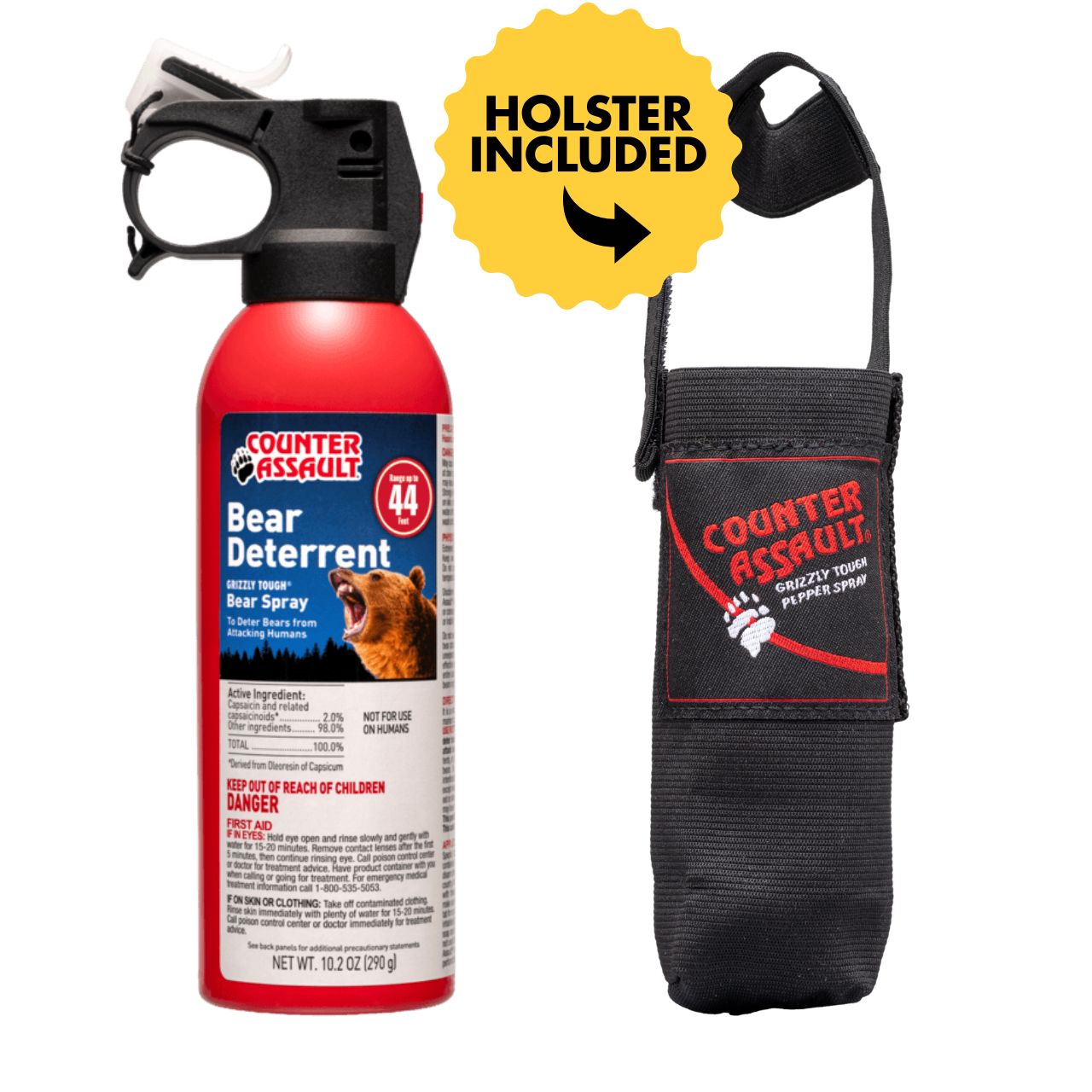
A factual example in this category is Counter Assault’s 10.2 oz bear spray with holster, which uses a 2% capsaicin and related capsaicinoids formula and projects up to 44 feet, according to the product information.
Bear spray versus firearms
People often assume a gun is the more decisive answer. In the field, the trade-off is speed and margin for error.
Bear spray asks you to place a cloud in front of a fast-moving animal. A firearm asks you to hit a small target under pressure, often at bad angles, with very little time. Spray also lowers the chance that a wounded bear keeps coming.
| Feature | Counter Assault Bear Spray | Firearms |
|---|---|---|
| Primary purpose | Non-lethal deterrent for aggressive wildlife | Lethal force tool |
| Accuracy needed under stress | Lower, creates a cloud in the animal’s path | Higher, requires precise shot placement |
| Effectiveness cited earlier | 92% in the study cited above | 70% in the same study |
| Injury outcome | Fewer and less severe injuries, as noted above | More severe injuries in the same study |
| Outcome for the bear | Designed to stop the encounter without killing the animal | Can escalate to lethal injury |
For more on carry position, storage, range, and deployment, review what you need to know about bear spray before your trip.
If you hike with a dog, set up your dog’s gear so you can still reach your spray cleanly. A tangled leash, loose strap, or poor harness fit can cost you the draw. It helps to review how to properly harness your dog before heading into bear country.
A quick demonstration helps make the mechanics stick:
Mistakes that make spray less useful
Failure usually starts before the encounter gets serious. The can is buried in a pack. The user has never practiced the draw. The safety clip stays on too long, or comes off too early and creates a fumble.
Keep these rules fixed in your head:
- Carry it where one hand can reach it immediately.
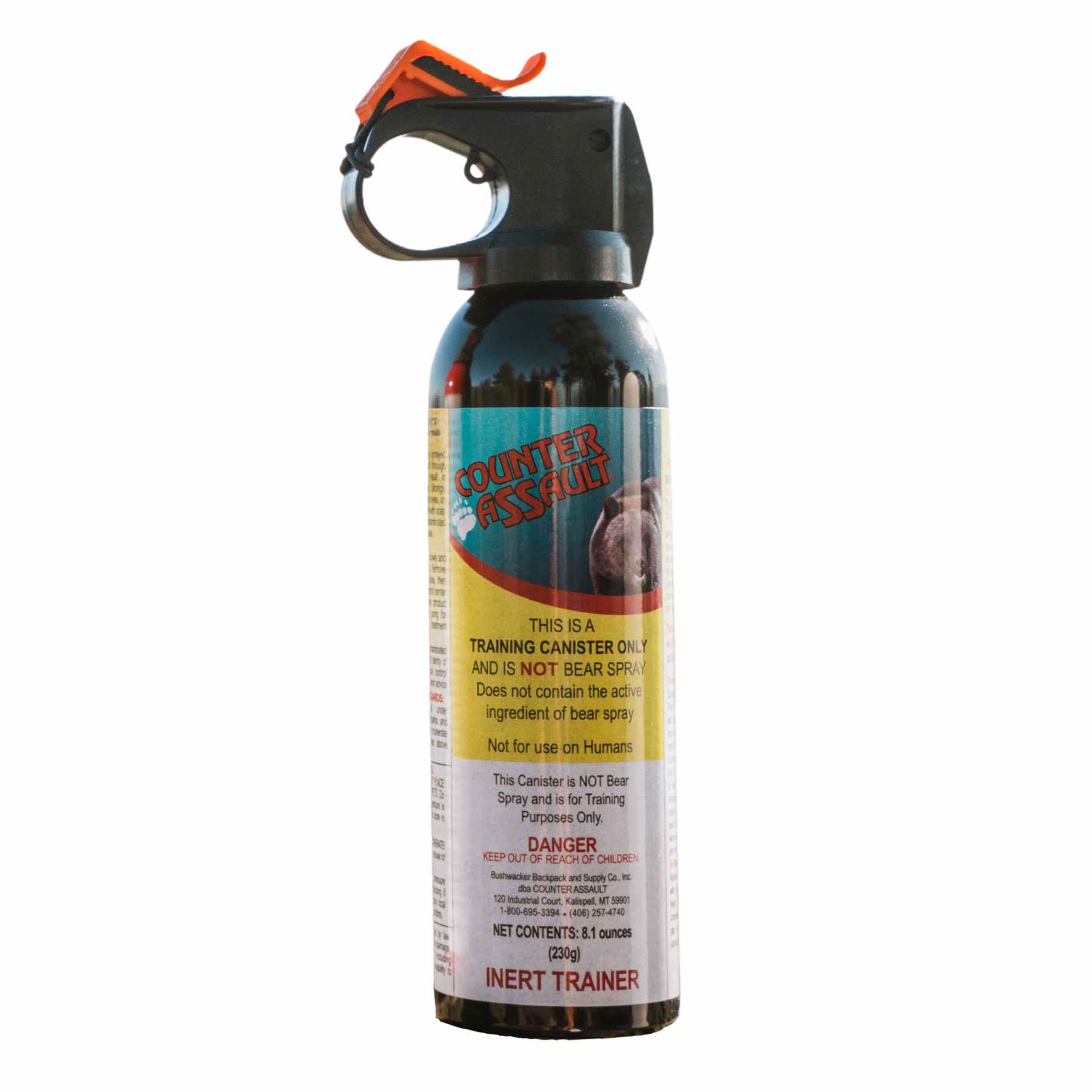
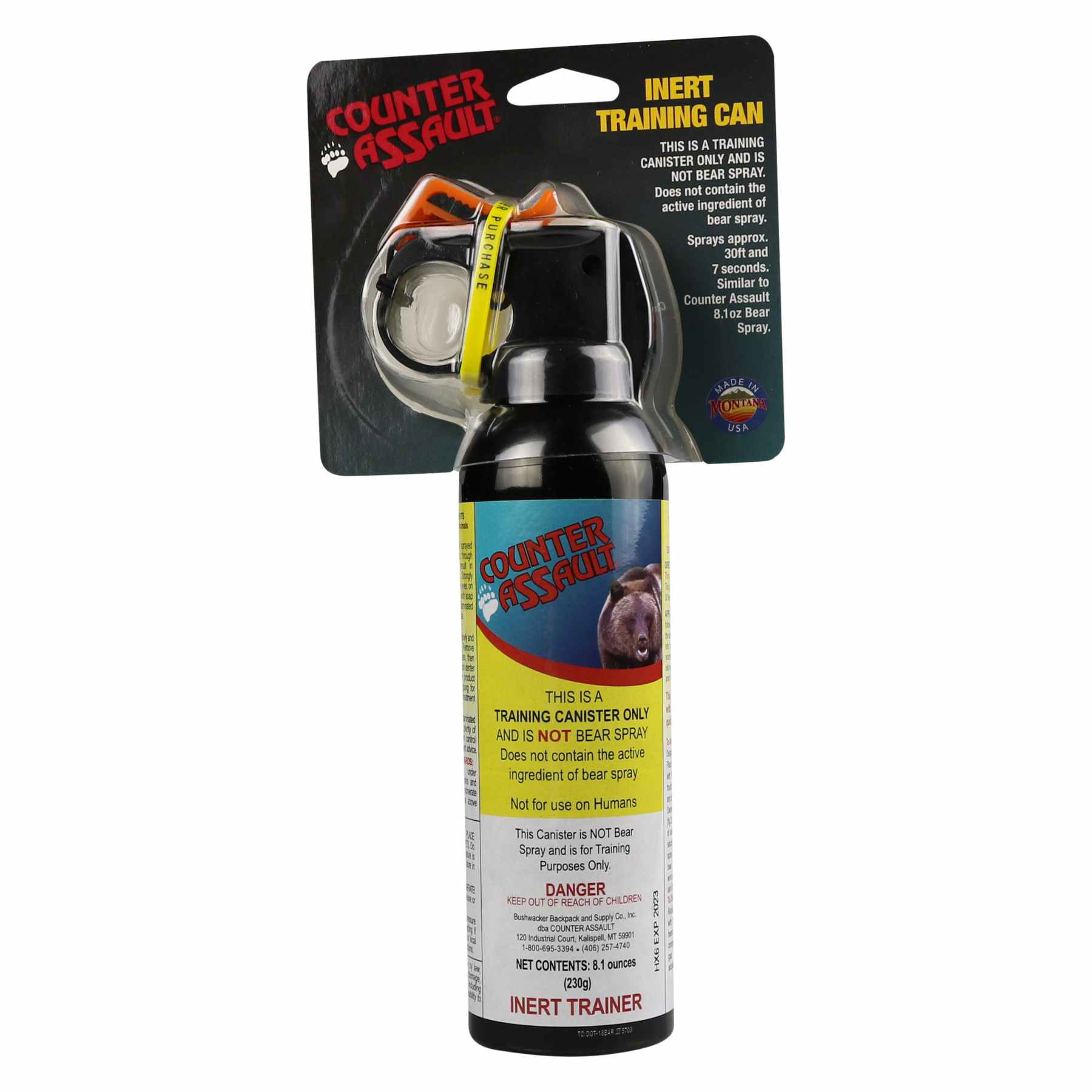
- Practice drawing and gripping the can before the trip.
- Keep the safety clip on until you may need to fire.
- Do not test-fire it casually.
- Do not spray gear, tents, or camp as a repellent.
- Once the bear breaks off, leave the area and do not follow it.
Used correctly, bear spray gives you a wider margin for error in the worst few seconds of an encounter. That is why trained backcountry staff carry it where they can reach it fast, not where it feels convenient.
Bear Encounter Scenarios At Home With Dogs and On the Trail
The same safety principles apply across most encounters, but the details change fast when a campsite, a neighborhood, or a dog adds another moving part. The challenge isn’t just the bear. It’s managing the environment without creating more confusion.
If a bear enters camp
A bear nosing around camp is often investigating smell, not hunting people. That doesn’t make it harmless. Campers should create distance, group together, and make firm noise from a position that still leaves the bear an escape route.
Clean camp habits pay off. If food, trash, and scented items were managed well, there’s less to attract the bear and less reason for it to stay.
Useful camp responses include:
- Gather people together. Scattered campers are harder to account for.
- Use strong voice commands and noise from a safe distance. Don’t corner the bear.
- Keep children close and controlled. Chaos attracts bad decisions.
- Do not approach to haze at close range. Space is part of control.
If the bear is near home or in the yard
Most residential bear problems start with easy food. Garbage, grills, pet food, bird seed, and unsecured fruit turn yards into repeat stops. The right response is usually attractant removal first, not confrontation first.
If a bear is already present, people should stay inside or maintain solid separation, secure pets, and give the animal room to move off. The long-term fix is making the property uninteresting.
A bear that finds food once may come back. A bear that finds nothing usually keeps moving.
If a dog is with the person
Dogs complicate bear encounters because barking, lunging, and circling can trigger the bear or bring it back toward the owner. The U.S. Forest Service guidance in the verified material notes that encounters involving dog walks are a growing concern, including a projected 15% increase in western states, and recommends keeping the dog leashed and behind the person while prioritizing one-handed deployment of bear spray rather than dropping the leash.
That protocol works because it reduces one of the worst outcomes. The dog rushes out, then returns to the owner with the bear following.
A good dog-walking setup starts before leaving the trailhead or neighborhood edge. A secure harness gives better control than a loose collar when a dog surges unexpectedly. For pet owners who need a fit check before heading into wildlife country, this guide on how to properly harness your dog is useful.
Key dog-handling rules:
- Keep the leash short. Long leashes create tangles and distance problems.
- Move the dog behind the body if possible. The person becomes the visual barrier.
- Do not let the dog chase. Even a small dog can escalate the encounter.
- Restrain first, then prepare the deterrent. Dropping the leash can create a second emergency.
If the encounter happens on the trail
On a trail, the main job is space management. Stop forward movement, assess whether the bear is defensive or aware, and use the terrain wisely. If there’s room to back away, take it slowly. If there isn’t, hold ground and prepare.
People remember bear safety better when they tie it to setting. At camp, control attractants. At home, remove rewards. With dogs, control the leash before anything else.
Your Essential Bear Country Gear Checklist
Preparation doesn’t remove risk, but it cuts down hesitation. People handle wildlife encounters better when the right gear is available without digging, guessing, or improvising.
The core principle is accessibility. Gear that lives at the bottom of a pack is backup for later, not a tool for the moment.
What belongs on the short list
The table below keeps the checklist practical.
| Item | Why It's Essential | Recommended Product/Link |
|---|---|---|
| Bear spray in a belt or chest holster | It needs to be reachable with one hand during a sudden encounter | Holstered bear spray carried on-body |
| Headlamp or compact area light | Helps with camp awareness and moving safely in low light | LuminAID solar lanterns and lights |
| First aid kit | Treats cuts, sprains, and other common field injuries after an incident or evacuation | Adventure Medical Kits first aid kits |
| Emergency shelter or heat-reflective gear | Supports safety if weather, injury, or route changes delay exit | SOL emergency shelters and survival gear |
| Water purification | Lets people stay flexible if they need to reroute or extend time out | RapidPure water purification gear |
Check condition before every trip
Gear only helps if it’s current and functional. Inspect canisters, straps, batteries, seals, and packaging before leaving home. Replace damaged or expired safety gear instead of promising to “make it work.”
Expiration dates matter for deterrents and medical supplies. Anyone who carries pepper-based wildlife deterrent should review shelf life and replacement timing before the season starts. This guide on how long pepper spray is good for explains the basic considerations.
Pack for control, not convenience
A few placement rules matter more than brand labels:
- Carry deterrent on the body, not in the pack.
- Keep the first aid kit where another person can find it quickly.
- Store food and scented items separately from sleeping gear.
- Use a leash and harness setup that can be controlled under stress.
What to do if you see a bear is easier to answer when preparation already solved half the problem. Good gear doesn’t make a person fearless. It makes the response faster, cleaner, and more deliberate.
Counter Assault makes bear safety tools built for people who spend time where bear encounters are possible. For readers who want to review bear spray options, storage, and field-use guidance before the next trip, the main Counter Assault site is the place to start.