
The campsite is quiet, dinner is done, and the headlamp beam catches only trees and drifting smoke. Then a cooler lid slams at the site down the loop, or something heavy brushes through the brush behind camp. That’s usually when people realize bear safety isn’t one decision. It’s a system.
Knowing how to keep bears away from campsite starts long before a bear shows up. Clean food handling, smart site layout, odor control, and a non-lethal response plan all work together. If one layer fails, the next one needs to hold.
Table of Contents
A Bear-Free Camp Starts with a Smart Strategy
At 2 a.m., camp problems usually look small at first. A candy bar wrapper in a jacket pocket. A pan that still smells like sausage. Kibble left in a dog bowl. Then a bear makes one easy find, and the whole campsite has a problem.
That is why bear safety has to be built as a system. Site choice, camp layout, food storage, cleanup, and your response plan all have to support each other. One weak point can undo three good decisions. Tidy camps can get into trouble because one person kept lip balm in the tent, while average camps stay quiet because everyone followed the same routine from setup to bedtime.
Practical rule: Bears repeat what works. If a campsite offers food, odor, or easy access once, a bear has a reason to come back.
The consequences affect both people and bears. Once a bear starts connecting campsites with rewards, that animal becomes harder to discourage and more dangerous to everyone sharing the area.
A stronger approach works in layers:
- Choose a low-risk site. Look for signs of repeated animal activity, poor trash control, or campers who have treated the area carelessly.
- Build camp in zones. Sleeping, cooking, and food storage should serve different purposes, not blur together.
- Control every smellable item. Food gets attention first, but toiletries, trash, pet gear, and dirty cookware drive plenty of bear visits.
- Prepare for the moment prevention fails. Keep a bear spray plan built around range, carry method, and deployment basics, not a can buried in a pack.
That last point gets missed. Good prevention lowers the odds of a close encounter. It does not remove them. Weather shifts. Bears travel through camp corridors. People make mistakes when they are tired. A smart campsite accounts for all of that before the first meal is cooked.
Proactive Prevention Before You Leave Home
Bear problems often start before the truck leaves the driveway. A group shows up late, realizes the campground requires canisters, then starts improvising with grocery bags, a crowded cooler, and food stuffed into the tent vestibule. That is how a preventable mistake turns into a midnight problem.
Know the local rules before packing
Bear country is managed by place, not by one universal rule. One campground may have metal food lockers at every site. Another may require you to bring approved canisters. In some backcountry areas, hanging food is allowed only if no fixed storage exists. If you do not check those details before the trip, you end up making tired decisions in the dark.
Check recent notices from the park, forest, or land manager and treat them as trip-planning information, not fine print. If a campground has recent bear activity, change the plan before you leave home. Pack the storage the area requires. Cut down loose snacks in the vehicle. Decide who handles food storage each night so the job does not get skipped.

Pets need planning too. Dogs can trigger bad encounters by barking, chasing, or drawing a bear back toward camp, especially at dawn, dusk, or during a nighttime bathroom break. If a dog is coming, pack a short leash, a secure food container, and a clear routine for where the dog sleeps, eats, and walks.
Build a layered gear system
A safe camp runs better when the gear supports a system instead of a pile of separate tasks. Each item should solve one problem and back up the others.
| Gear type | What it does | What it does not do |
|---|---|---|
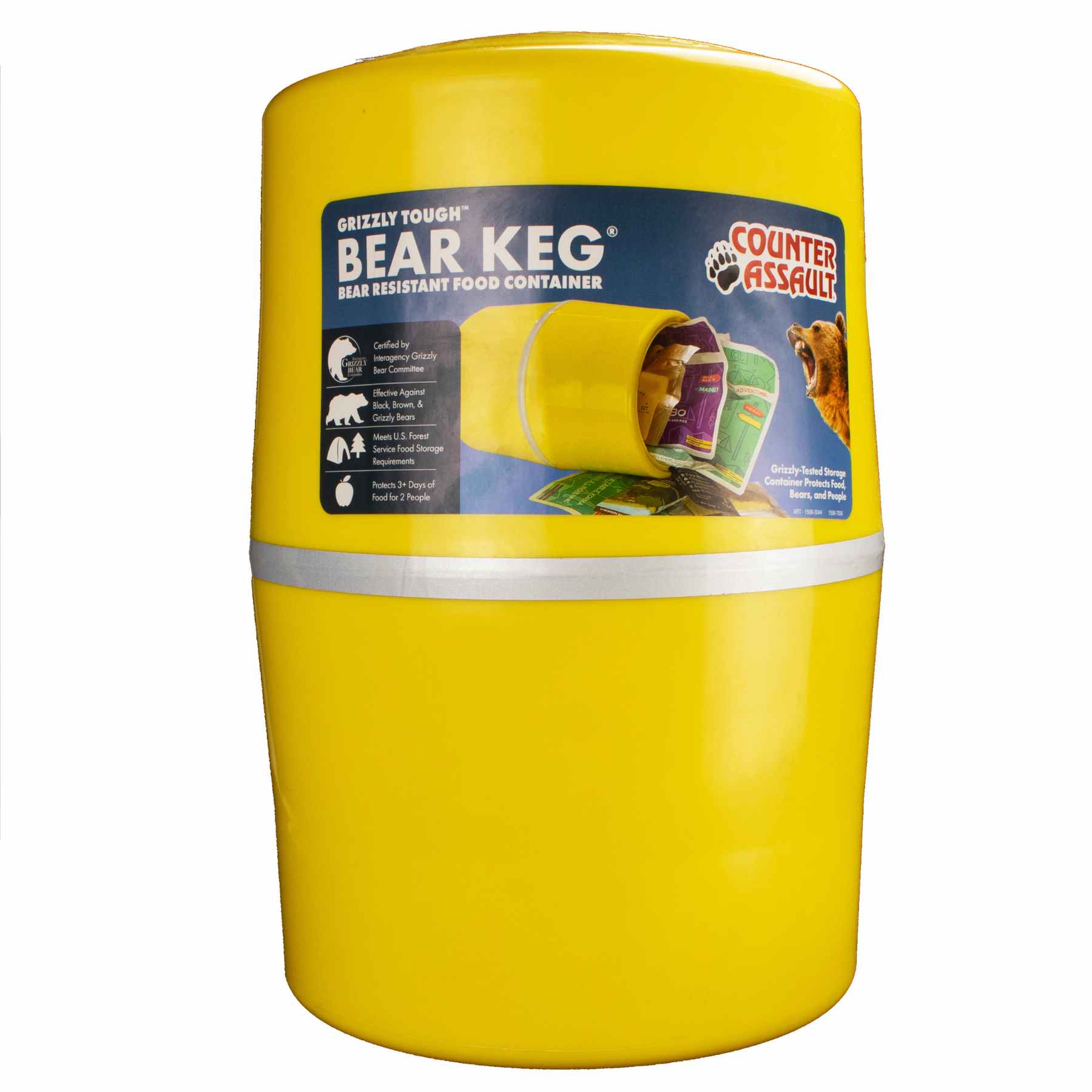
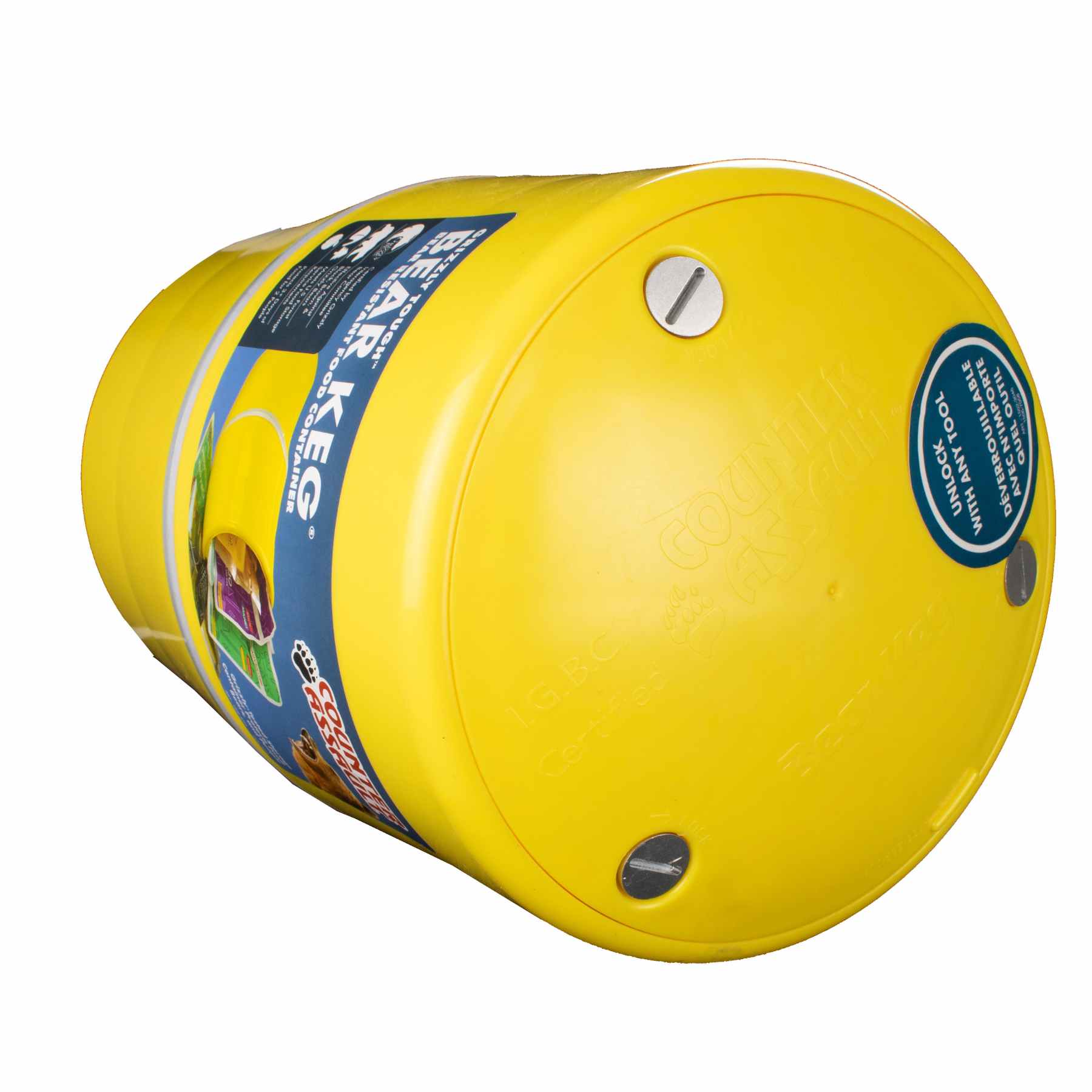
| Bear-resistant storage | Secures food and smellables when you are asleep or away | Does not protect you during a close encounter |
| Trash and cleanup supplies | Limits food residue on hands, clothes, cookware, and camp surfaces | Does not fix a poor campsite layout |
| Lighting | Helps the group move to storage areas safely after dark | Does not make late food handling safe |
| First-aid and repair basics | Keeps minor problems from turning into rushed, sloppy camp decisions | Does not deter wildlife |
| Bear spray | Provides a non-lethal response if a bear closes distance and will not disengage | Does not replace prevention |
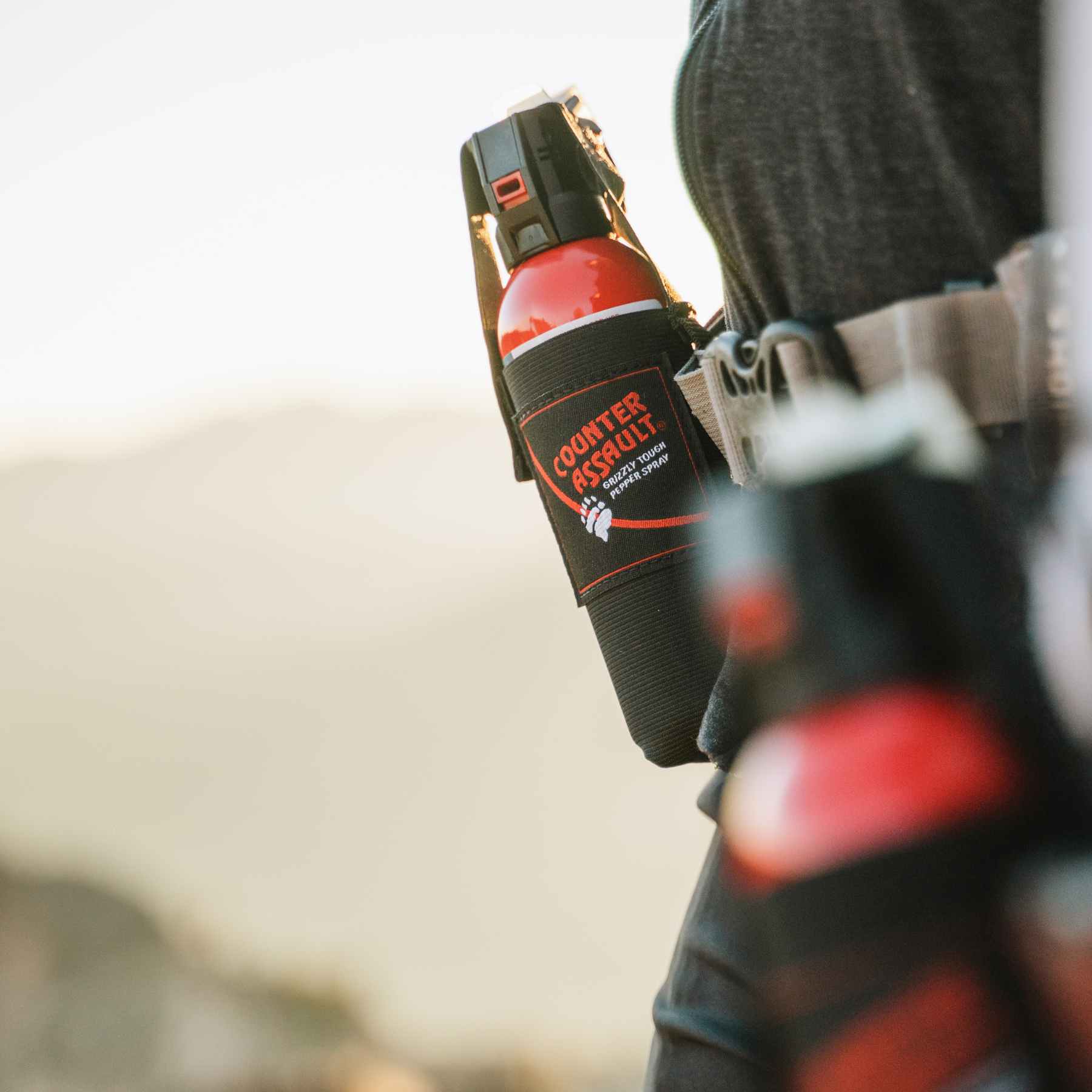
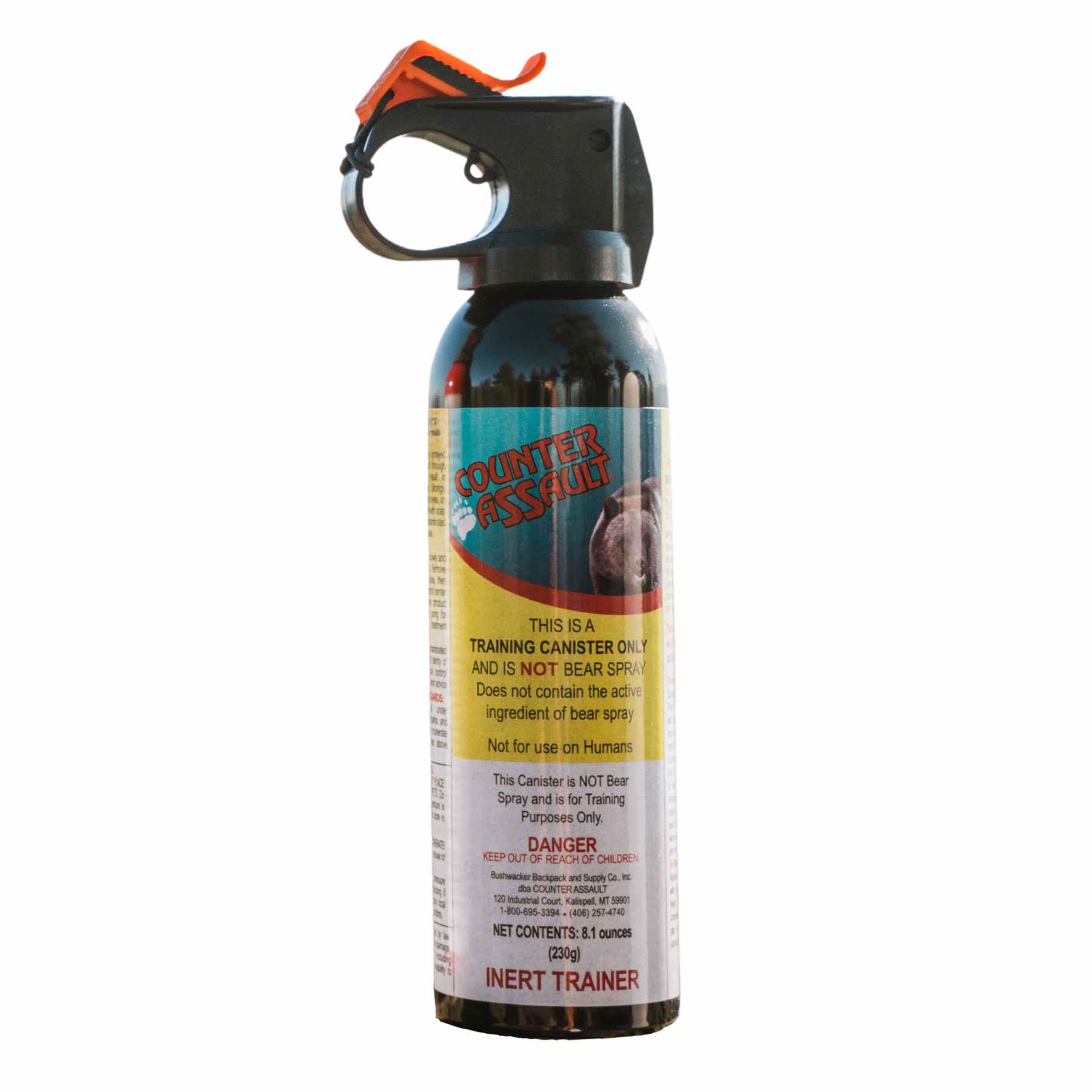
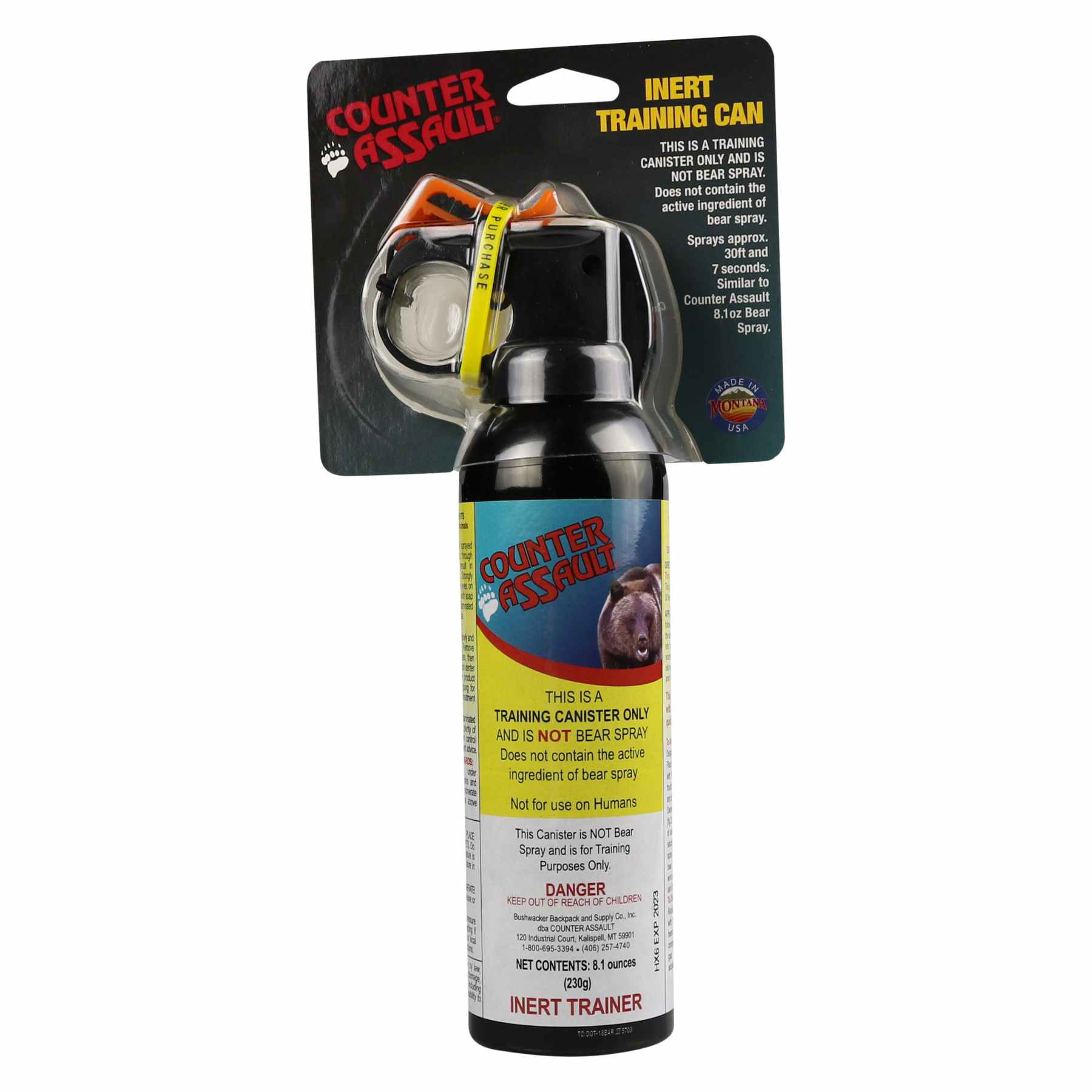
Bear spray belongs in the plan before the trip starts. Carry it where it can be reached in seconds, not buried under rain gear or clipped somewhere decorative. If anyone in the group has never used it, review what to know about bear spray before heading out so range, wind, and deployment are not a surprise.
The support gear matters because fatigue causes mistakes. A simple headlamp or camp light makes the walk to a food locker cleaner and safer after dark. Campers setting up around rigs often use RV awning lights to keep the storage area visible, but light only helps if the group still follows the routine. Pack a basic first-aid kit, a few trash bags, and enough storage capacity for every smellable item, not just meals.

Good bear safety starts at home, with fewer loose variables and a clearer plan.
Master the Art of Odor Management
A bear can ignore a quiet campsite all evening, then swing in after dark because someone left a toothpaste tube in a jacket pocket or grease on the picnic table. Odor control decides whether your camp smells like a dead end or a reward.

What belongs in storage every night
Store every smellable item in the same secured system. Bears investigate scent, not labels, so “not food” is not a useful category.
That means more than dinner supplies. It includes anything that carries sugar, salt, grease, fruit scent, or body odor that picked up food during the day.
- Food and trash: Meals, snacks, wrappers, drink mixes, grease, and scraps
- Toiletries: Toothpaste, toothbrush, deodorant, lotion, lip balm, sunscreen, soap, and hand sanitizer
- Cookware: Pots, utensils, mugs, stoves with residue, and sponges
- Personal items: Used sanitary products and clothing or gear contaminated with food smell
- Pet gear: Dog food, bowls, treat pouches, and anything slobbered on after feeding
If your plan uses a canister or hard-sided locker, put all of those items in it, every night, without exceptions. Campers sorting through options before a trip should review bear-resistant food containers for camping.
Failures are usually small. A protein bar in a hip belt pocket. Fish scent on pliers. A cooler latch left loose because everyone assumed somebody else handled it. Bears find the weak link.
Cook, wash, and dump water the right way
A clean camp is a camp with no payoff. The job is to remove odor, not just make the site look tidy.
Start with dishwater. Strain out every food bit and pack those scraps out with trash. Wash in the cooking area, well away from sleeping gear, and wipe down the table, stove knobs, cooler handles, and chair arms after meals. Those are high-contact spots, and they hold grease longer than people expect.
Grey water deserves the same attention. If local rules allow dispersal, scatter it broadly away from camp after straining solids first. Do not dump a concentrated puddle beside the picnic table or at the edge of the tent pad. That leaves a scent patch a bear can follow straight back to where your group spends the night.
RV campers face a different problem. Food odors spread into cabinets, outdoor kitchens, mini fridges, and trash compartments, then linger. This guide to mastering RV food storage gives a practical overview of keeping smells contained instead of letting them spread through the whole setup.
Build one cleanup routine and run it the same way every night. Cook. Eat. Strain. Wash. Wipe. Store. Final pocket check. That system matters because odor management is not a single tip. It is the layer that makes every other bear precaution hold together.
Your Last Line of Defense When a Bear Approaches
Even a disciplined camp can have a bear walk through. At that point, the job changes from prevention to response.
What to do before spraying
The first move is not to run. Running can trigger pursuit, and it also destroys the few seconds needed to think clearly.
If the bear hasn’t committed to an aggressive approach, the right response is to back away slowly, keep eyes on the animal without crowding it, and speak calmly so it knows a person is there. If others are nearby, they should group up rather than scatter.
Useful body language is simple:
- Stand ground if the bear is evaluating. Don’t sprint off.
- Create space slowly. Move sideways or backward without tripping hazards.
- Keep the deterrent accessible. Hands should not be digging through a pack.
- Watch for escalation. Lunging, jaw popping, or continued approach changes the situation.
Campers who want a fuller encounter overview can read what to do if you see a bear.
When bear spray becomes the right tool
Bear spray is for a charging or aggressive bear, not for a distant sighting and not like insect repellent on gear or tents. A large study summarized by The Trek reviewed 2,738 bear spray incidents from 1985 to 2012 and found spray deterred bears in 91.9% of cases, while users had only 5.7% minor injuries. The same source notes that firearms produced far more harm, including 66 human injuries and 51 fatalities in 363 firearm cases.
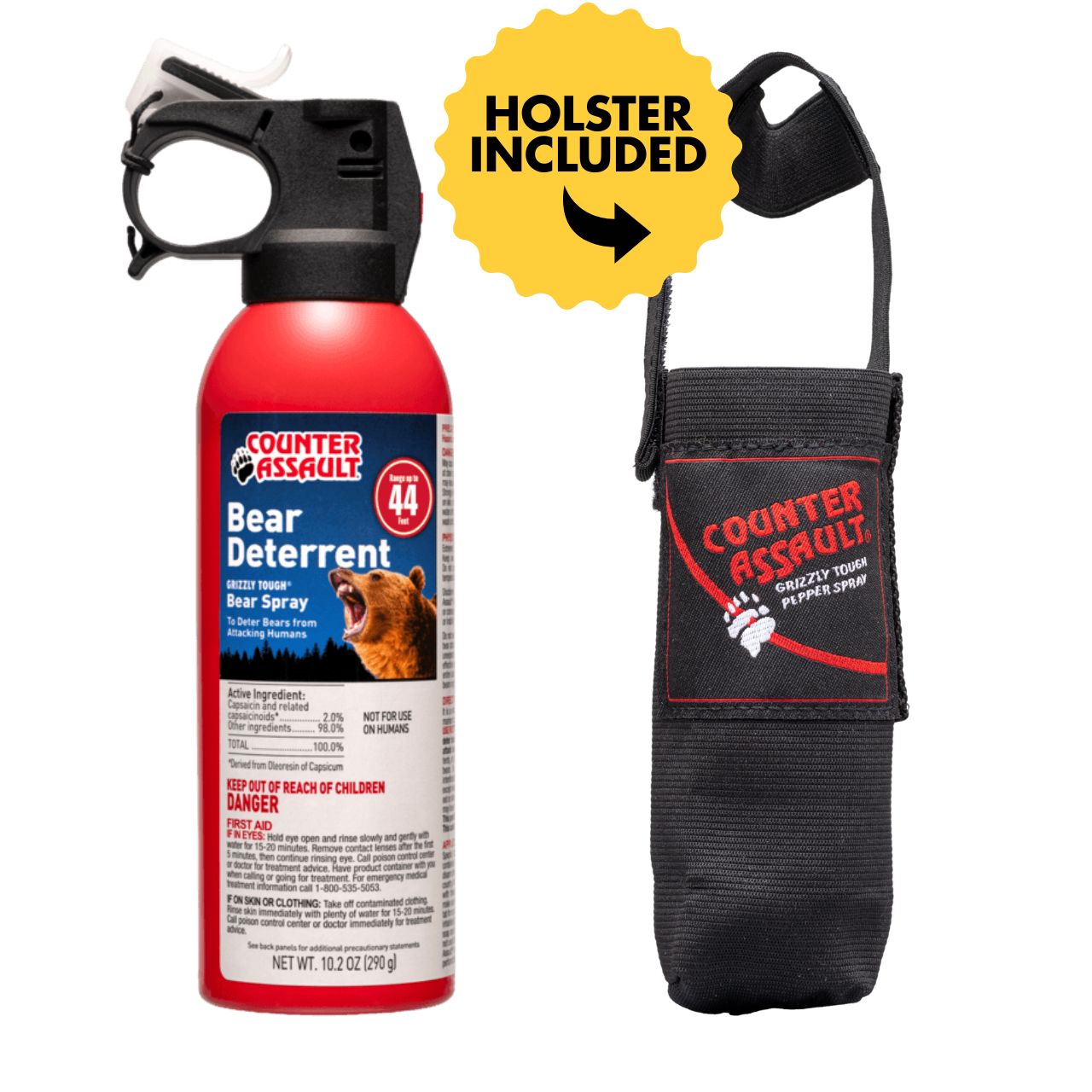
One available option is Counter Assault’s 10.2 oz bear spray with holster. Its verified specifications include a 2% capsaicin formulation, a range of up to 44 feet, and about 10 seconds of discharge, with use intended only for bears, mountain lions, or coyotes.
The timing matters as much as the product. Outside’s bear safety guidance says the spray should be aimed 20 to 30 feet ahead of a charging bear so the animal runs into the cloud. That same analysis says bear spray halted aggressive charges in 93% of cases, and it warns that delayed access or waiting until the bear is under 10 feet can push success below 50%.
A short demonstration helps make the motion stick.
The biggest mistakes are predictable. People bury the can in a pack, fumble with the safety clip, or fire too late. A deterrent only works when it can be reached and used under stress.
Common Questions About Campsite Bear Safety
Questions usually come up after the system breaks down. A dog gets loose at dusk. Someone assumes the RV solves the food-storage problem. A bear spray canister gets used, and then nobody knows whether to stay put or leave. These are the moments that matter, because small mistakes stack up fast in bear country.
How should dogs be handled in bear country
Dogs add unpredictability to a camp that should stay quiet and controlled. A barking dog can pull a bear's attention toward camp. A dog that chases a bear can come straight back to you with the bear behind it.
Keep dogs leashed or under tight voice control at all times. Do not let them roam between the cooking area, food storage area, and tent. That spacing matters for pets too, because a dog bowl full of kibble or a bag of treats creates the same problem as human food.
At night, pick up bowls, seal food, and store pet items with the rest of your smellables. If a dog cannot stay settled in camp, that is a safety issue, not just a training issue.
What changes for RV camping
RV walls give people a false sense of security. Bears still follow odor, and RV camps often produce more of it than a tent site.
The usual problem areas are outside. Grills, coolers, trash bins, fish-cleaning gear, camp stoves, and the ground under the awning all hold scent. If grease spatters on the picnic table or bacon drips onto the mat, that part of camp becomes an attractant even if everyone sleeps inside.
Use the same campsite system you would use in a tent camp. Cook in one area. Store food and smellables with intention. Clean the outside living space before dark, especially the awning side and any compartment used for trash or cooking gear.
A quick RV check helps:
- Close and secure food storage when not in use.
- Wipe down tables, handles, and outdoor kitchens after every meal.
- Remove trash before bedtime, or lock it in approved storage.
- Treat toiletries, pet food, and dishwater as bear attractants.
What should happen after bear spray is used
Once the bear turns away, the job is not over. People get hurt after the charge stops because they relax too soon, split up, or start inspecting the area.
Create distance as a group. Leave the immediate area if you can do it safely. Keep the spray accessible in case the bear circles back, and do not follow the animal for photos, tracks, or gear it passed near.
After a spray deployment:
- Move out together.
- Watch the bear's direction of travel without approaching.
- Check people for injuries once you are in a safer spot.
- Report the encounter to the local land manager as soon as practical.
Expect some confusion after the adrenaline drop. Assign simple jobs. One person watches the surroundings, one gathers people, one handles communication. A clean response after the incident is part of the same bear-safety system as site selection, food storage, and odor control.
Fast access and a practiced plan beat good gear packed out of reach.
A strong campsite system keeps bears wild and gives people more room to respond well under stress. Clean camp habits reduce attraction. Smart layout keeps risk away from the tent. Ready access to a deterrent gives campers one more layer when prevention fails. For bear safety tools and field guidance, visit Counter Assault.