
You leave the trailhead under a clear sky, expecting an easy day. Two hours later, the route is slick with runoff, daylight is shorter than you planned for, and a bend in the trail hides whatever is ahead. Beginners rarely get into trouble because they meant to take risks. Trouble usually starts with small mistakes that stack up fast.
Preparation prevents a long list of avoidable problems. On most hikes, the biggest threats are ordinary ones: bad footing, poor pacing, losing the trail, underestimating weather, and making the wrong call around wildlife. Those are judgment problems first, gear problems second.
Foot placement and terrain choices matter more than expensive equipment. A twisted knee on wet rock or loose gravel can end a trip just as quickly as a storm. Wildlife safety follows the same rule. Calm habits, early awareness, and the right tools do more to protect people than confidence alone.
That is also the Counter Assault view of trail safety. Prevention comes first. Keep your group alert, know how wildlife behaves in the area, and carry a non-lethal deterrent you can reach in seconds, not one buried in a pack. Bear spray is not a last-minute accessory or a substitute for judgment. It is one part of a safety system, and it only works when hikers know when to carry it, where to carry it, and how to use it under stress.
For anyone building a kit, reliable clothing also matters. This guide pairs trail judgment with practical gear choices, including best American outdoor clothing.
Table of Contents
-
4. Maintain a Clean Camp and Use Bear-Resistant Food Storage
-
5. Maintain Safe Distance and Never Feed or Photograph Bears
-
8. Use Proper Navigation and Avoid Hiking Alone in Remote Areas
- 9. Understand and Prepare for Specific Regional Wildlife Threats
-
10. Get Trained in Bear Spray Use and Wildlife Safety Before Your Trip
- Top 10 Beginner Hiking Safety Tips Comparison
- Hike with Confidence Your Pre-Trail Safety Checklist
1. Hike in Groups and Make Noise to Prevent Bear Encounters

Silence isn't a virtue in bear country. For beginners, one of the simplest safety habits is hiking with other people and letting wildlife know the group is coming. Groups are naturally louder, easier for bears to detect, and less likely to surprise an animal at close range.
That matters most on narrow trails, in thick brush, near running water, and around blind corners where sound and sight lines disappear. A quiet hiker can move fast enough to create a bad surprise. A talking group usually gives a bear time to leave first.
Why group presence matters
A beginner doesn't need to yell the whole day. Normal conversation works. So does calling out before a switchback, clapping near a creek, or speaking up when crossing berry patches, dense timber, or ridge breaks.
Practical rule: If a hiker can't see far ahead, that's the moment to make more noise, not less.
A few habits work well on real trails:
- Talk naturally: Keep a steady conversation instead of hiking in silence.
- Increase noise at problem spots: Speak louder near water, brush, or blind corners.
- Avoid peak wildlife movement when possible: Dusk and dawn deserve extra caution.
- Solo hikers should compensate: If someone must hike alone, talking aloud or using a whistle now and then is better than moving without making noise.
Group hiking also helps with more than bears. If someone twists an ankle, feels faint, or loses the trail, another person can help assess the situation instead of letting panic make the next decision.
2. Carry Proper Bear Spray Protection

A beginner rounds a brushy corner, sees a bear at close range, and gets one clean chance to respond. In that moment, bear spray only helps if it is on the body, immediately accessible, and familiar in the hand.
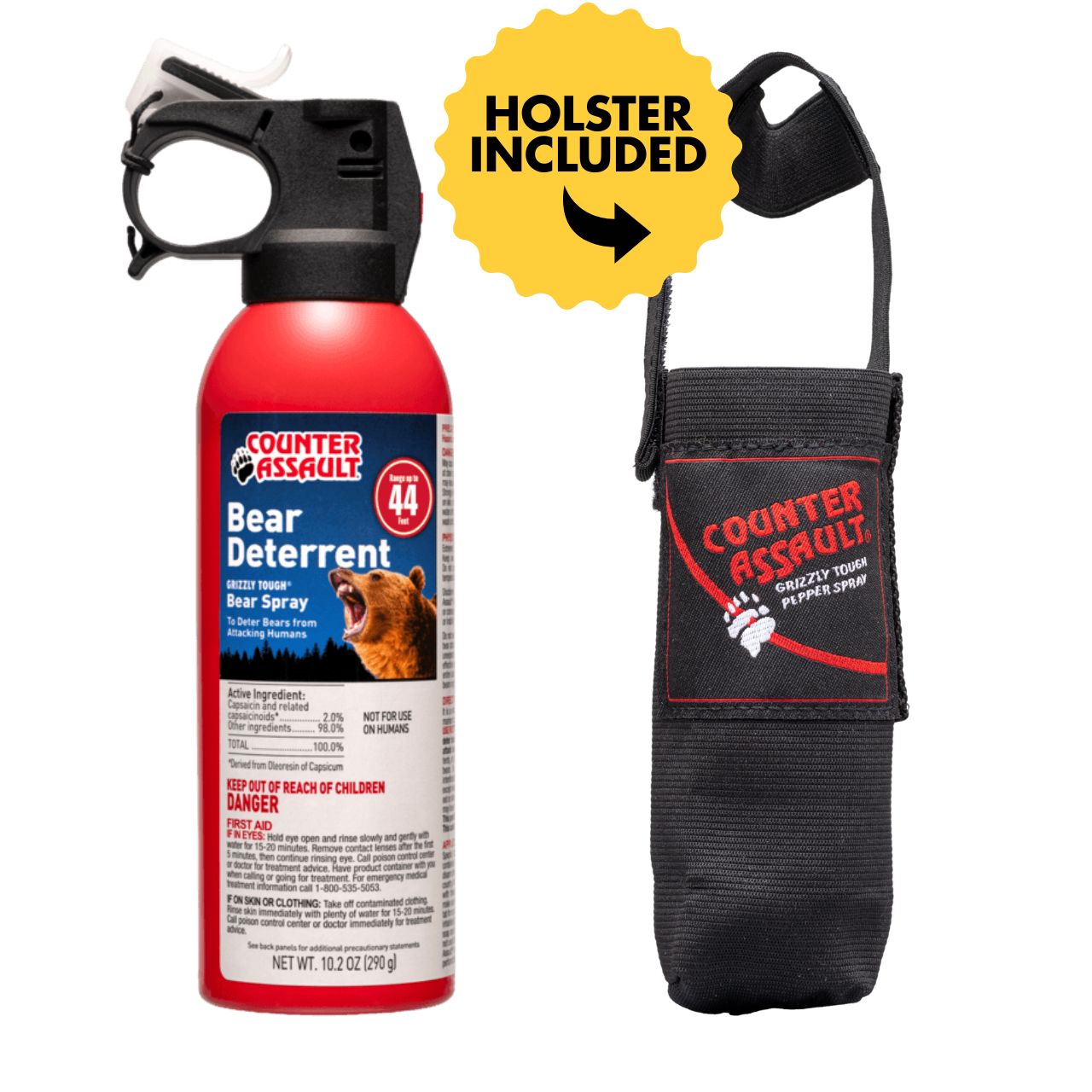
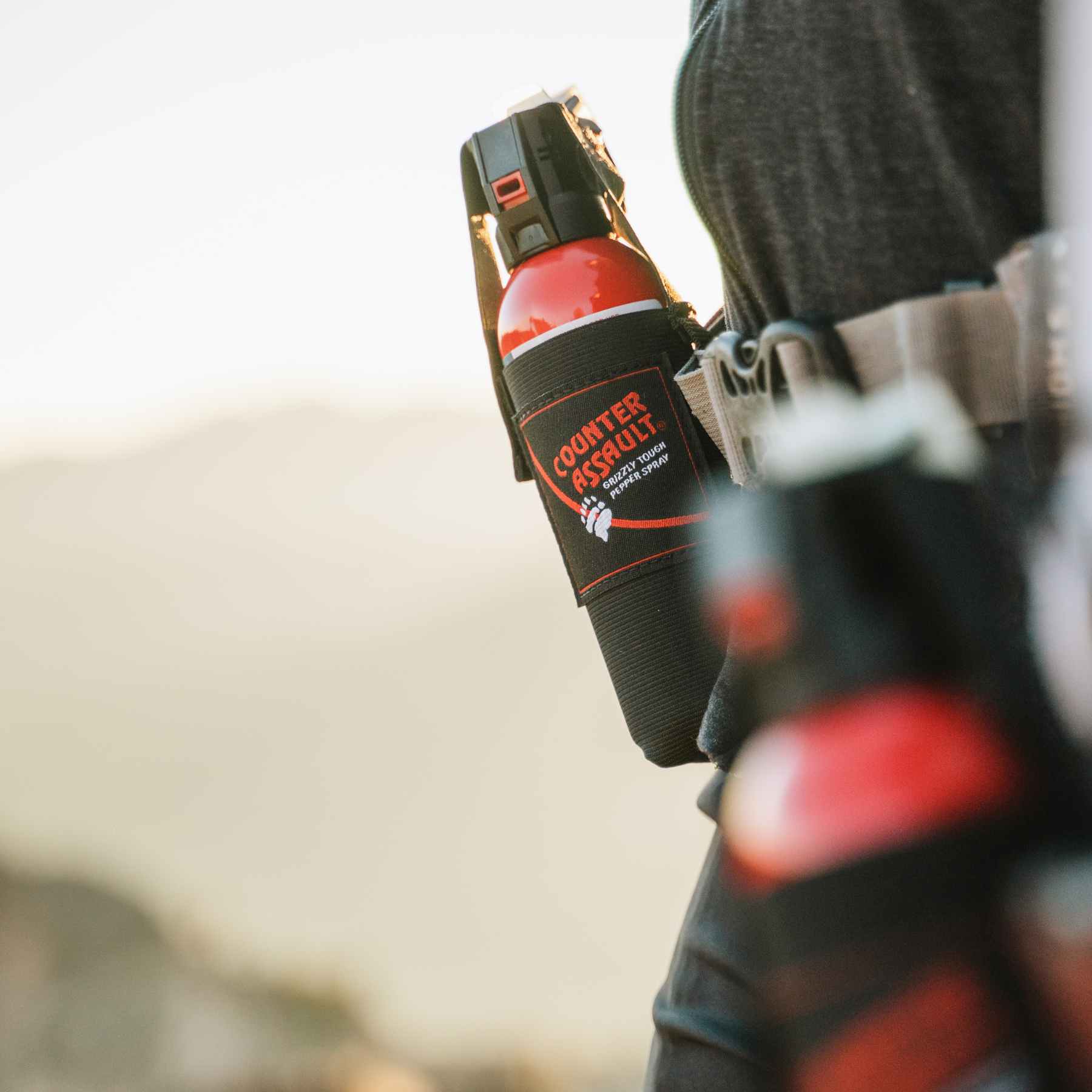
Carry bear spray on a belt or chest holster. A can buried in a pack is too slow to matter. I have seen new hikers treat spray like backup gear, packed under food and layers. That is a training problem, not a gear problem.
Counter Assault builds bear spray for that exact use case. The company's guidance on what you need to know about bear spray addresses a mistake beginners make all the time. Spray is a deterrent for bears, mountain lions, and coyotes. It is not a repellent for clothing, tents, or packs, and it is not meant for use on people.
Reach matters too. More spray distance gives a hiker more room to put a fog barrier between the animal and the body, which is the whole point.
What proper protection looks like on the trail
A good setup is simple, but it has to be done right:
- Wear it where either hand can get to it fast: Belt and chest holsters work. Backpack storage does not.
- Learn the draw before the trip: Release the safety, present the can, and keep the nozzle pointed away from your face and partners.
- Aim low so the spray rises into the animal's path: Bear spray is meant to create a cloud, not a narrow stream.
- Use it only when needed: Curious wildlife at a distance does not justify spraying. A close, escalating encounter does.
- Protect the rest of your attractants too: Food, trash, and scented items still need proper storage. Counter Assault's guide to camping food storage in bear country covers that side of prevention.
One trade-off is worth stating clearly. A larger can usually gives more spray time and better range, but it is also heavier and bulkier. Beginners still need to carry a size they will keep on their body for the whole hike.
Bear spray works best as a practiced, fast-access deterrent. It is not a charm, and it does not replace distance, awareness, or clean food handling.
3. Avoid Hiking During Dawn and Dusk
You round a bend at first light, the trail is still gray, and a bear feeding near the corridor hears you at the same moment you see it. That is the problem with dawn and dusk. Both people and wildlife have less time to react.
Low light changes more than visibility. It hides movement in brush, makes roots and loose rock harder to read, and shortens the distance at which you can identify an animal, a trail sign, or a bad footing choice. Many species also move and feed more actively during these hours, so beginners are more likely to surprise wildlife when margins are already thin.
From a wildlife-safety standpoint, timing is prevention. Counter Assault focuses heavily on deterrence and response, but good timing reduces the chance that you will need bear spray at all. Bear spray is for a close, escalating encounter. It is not a substitute for planning a hike that starts and ends in full daylight.
Plan your hike around usable light
A safe schedule is built backward from sunset, not from optimism at the trailhead. Leave room for slower climbing, wrong turns, photo stops, and the simple fact that beginners often move slower on the way out than they expected on the way in.
A few habits prevent most low-light problems:
- Start early enough to finish well before dusk: Give yourself a buffer, not a razor-thin finish.
- Set a firm turnaround time before you leave the trailhead: If you hit that time, turn around.
- Treat uphill mileage realistically: Climbs take longer than they look on a map.
- Carry a headlamp even for short day hikes: It is backup, not permission to push into darkness.
One trade-off matters here. Midday hiking often means more heat and sun exposure, especially in open country. For many beginners, that is still the safer choice than traveling in the low-light windows when wildlife activity rises and visibility drops. Start earlier, carry enough water, and manage heat so you can stay off the trail at dawn and dusk without turning the day into a rushed finish.
If your route could run long, tighten the plan or choose a shorter objective. If an unplanned overnight becomes a possibility, review Counter Assault's food storage guidance for bear country before the trip, because late finishes and poor camp decisions often stack the risk instead of solving it.
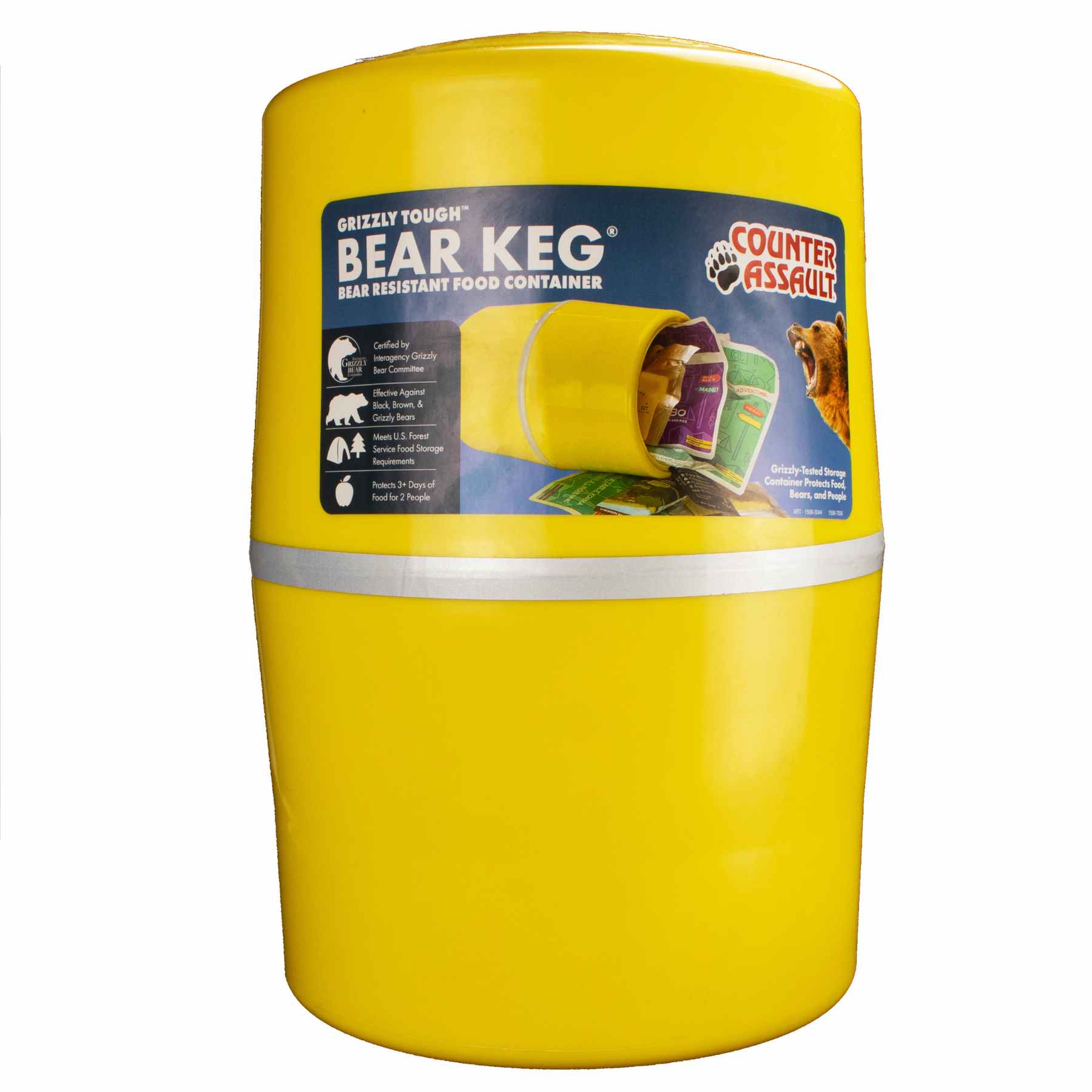
4. Maintain a Clean Camp and Use Bear-Resistant Food Storage
A messy camp teaches wildlife the wrong lesson. Food, wrappers, toothpaste, cookware, and trash all create scent problems. Once a bear connects human camps with easy calories, the risk doesn't stay with one campsite. It carries forward to the next people who use that area.
Clean camp discipline is basic wilderness ethics and basic self-protection. Store food and scented items away from where people sleep. Don't leave meals unattended. Don't cook and then toss scraps into the brush and assume the smell is gone.
Clean camp habits that actually matter
Unexpected overnight stays create extra risk because tired beginners often throw together a poor shelter in the first flat spot they see. Emerging 2026 data cited in a beginner hiking analysis note that 25% of beginner injuries occur during unexpected overnight stays where hikers set up camp in high-risk zones due to poor route planning. In bear country, that can mean brushy game trails, dense cover, or areas with obvious wildlife traffic.
A few practical rules carry most of the load:
- Separate sleeping and food areas: Keep scented items away from the tent.
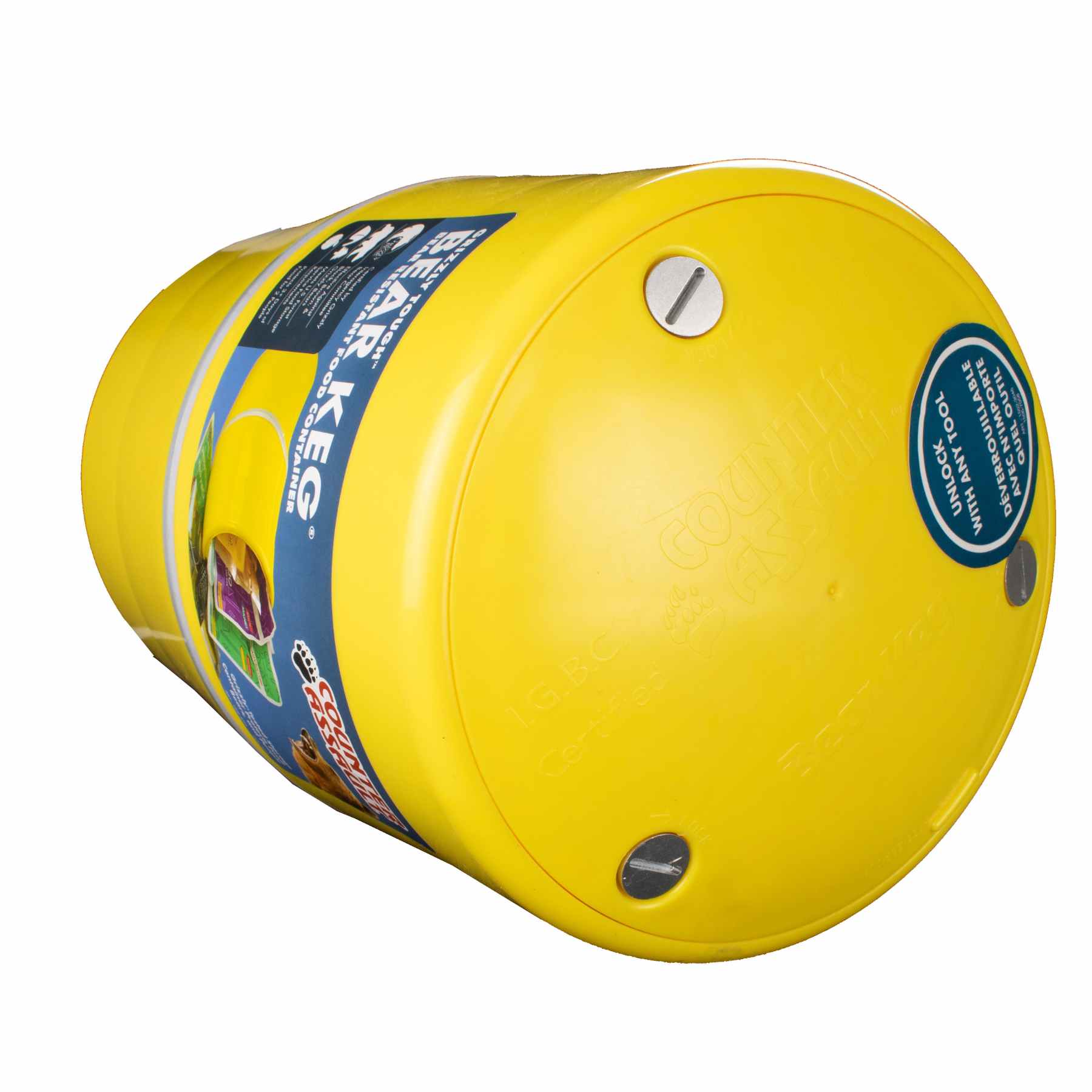
- Use proper storage: Canisters, bear-resistant containers, or site-approved systems are better than improvising.
- Pack out every bit of trash: Don't bury it. Don't burn it and assume that solved the problem.
- Choose emergency shelter sites carefully: Avoid dense brush, animal corridors, and spots with poor visibility.
Counter Assault also publishes practical guidance on camping food storage that fits this exact problem. Clean camp habits prevent the encounter no one wants to manage at night.
5. Maintain Safe Distance and Never Feed or Photograph Bears
A bear on a hillside can look calm, slow, and almost manageable through a phone screen. That's where beginners get into trouble. Distance creates safety. Closing that distance for a better photo destroys it fast.
Feeding is worse. Once wildlife starts connecting people with food, the animal changes its behavior. That puts every later visitor at risk and often ends badly for the animal too.
Distance protects both sides
The right move is simple. See the bear, stop, assess, and stay far enough away that the bear never has to react to human pressure. If the bear changes posture, starts watching closely, or shifts direction because of people, the group is already too close.
Respectful distance is not passive. It is an active safety decision.
For beginners, the practical standard is straightforward:
- Don't approach for photos: Use zoom and keep moving decisions conservative.
- Never leave food to attract wildlife: That is unsafe and irresponsible.
- Back away early if needed: Distance is easiest to regain before the bear feels crowded.
- Warn others on the trail: A calm heads-up helps prevent the next group from walking into the same situation.
This is one of the most important hiking safety tips for beginners because it counters a common instinct. Curiosity pulls people forward. Good judgment keeps them back.
6. Know How to Respond During a Bear Encounter
Prevention is the goal, but every hiker in bear country should know what to do when prevention fails. Panic creates bad movement. Bad movement creates worse outcomes. The first priority is to stop acting like prey.
If a bear is not charging, the hiker should stand ground, avoid running, avoid screaming, speak in a normal voice, and back away slowly and sideways. If the bear is acting aggressively or appears ready to charge, it's time to prepare the spray.
What to do in the moment
Counter Assault's wildlife guidance on what to do if you see a bear lays out the basics clearly. Don't run. Avoid direct eye contact with a non-charging bear. Make the body look larger and get the spray ready.
This short demonstration is worth reviewing before any trip:
There's one technique detail beginners often miss. Bear spray should be held low and directed downward at the front of the bear's face to create a fog barrier at nose level, as demonstrated in this bear spray technique video with Wes Siler. That low cloud matters because it hits the nose, eyes, throat, and lungs where the deterrent does its work.
- Stand ground: Running can trigger pursuit.
- Talk normally: The goal is recognition, not escalation.
- Make the body appear larger: Raise arms or hold gear overhead.
- Deploy correctly: Aim low, slightly downward, into the bear's path.
After the bear diverts or retreats, leave the area immediately. Don't linger to watch what happens next.
7. Carry First Aid and Emergency Supplies
Beginners often overpack comfort items and underpack problem-solving gear. A good safety kit treats the injuries and delays that happen on trails: blisters, cuts, strains, rain exposure, fading light, and an unplanned night out.
That matters because about 60% of hiking-related injuries occur in beginners due to inadequate preparation. Falls and musculoskeletal strains are the most common issues in that same data, which is exactly why basic first aid, proper footwear, and realistic pacing matter so much.
Pack for injury, delay, and darkness
A smart beginner kit doesn't need to be huge. It needs to be targeted.
- Carry a real first aid kit: A wilderness-ready option like an Adventure Medical Kits day hiking kit beats a random handful of bandages.
- Pack emergency light: A rechargeable inflatable light such as a LuminAID emergency lantern adds backup light for camps, breakdowns, or signaling.
- Include bug protection: In tick and mosquito country, Ben's 30 insect repellent or Natrapel insect protection helps reduce another avoidable trail problem.
- Add emergency shelter: A compact bivy from Survive Outdoors Longer earns its weight if the hike turns into a night out.
Most hiking emergencies don't begin as dramatic emergencies. They begin as small problems that went untreated for too long.
Plenty of water belongs in this section too. Beginners should drink regularly even on cool or wet days because fatigue and poor decisions often arrive before obvious thirst does.
8. Use Proper Navigation and Avoid Hiking Alone in Remote Areas
A lot of trail incidents start the same way. A beginner misses one junction, keeps going to save time, and only realizes the mistake when the trail fades, the phone battery drops, and daylight starts to go. By then, the problem is no longer route-finding alone. It is exposure, fatigue, and poor judgment stacked together.
For beginners, good navigation is part of wildlife safety too. People who drift off trail often end up in thick cover, drainages, game paths, or dead-end terrain where visibility drops and surprise encounters become more likely. Staying found helps you stay out of trouble.
Navigation is a safety skill
Digital maps are useful. They are also easy to trust too much. According to West Bend's summary of hiking safety data, many hikers rely on digital trail tools, while far fewer consistently carry paper maps and a compass. That gap matters anywhere batteries die, screens break, or cold weather drains power faster than expected.
Keep your route downloaded on your phone or GPS. Carry a paper map that matches the area and know how to orient it. A compass does not help if it stays buried in the pack and no one knows how to use it.
A safer beginner plan looks like this:
- Carry a primary and backup navigation system: Phone or GPS for speed, map and compass for failure points.
- Share a specific trip plan: Trailhead, route, turnaround time, expected return, vehicle description, and who to call if you do not check in.
- Stay on the established trail: Shortcuts and social trails cause more problems than they solve.
- Set a hard turnaround time: If you are behind schedule, turn back while you still have daylight and margin.
- Avoid remote solo hikes early on: Start with busy, well-marked trails until route-finding and trail judgment improve.
Solo hiking is not automatically reckless, but remote solo hiking raises the cost of every small mistake. There is no partner to confirm a junction, catch a weak decision, help after a fall, or respond during a wildlife encounter. In bear country, that matters. Counter Assault spends a lot of time correcting one common misconception. Bear spray is an emergency tool, not a substitute for conservative trip planning. If you hike alone in remote country, your margin for error is necessarily smaller.
If you do end up off route, stop early. Check your last known point, your map, the terrain around you, and the time left. Wandering in hopes of finding the trail usually pushes people farther from it. Calm, deliberate decisions get people out. Panic burns daylight.
9. Understand and Prepare for Specific Regional Wildlife Threats
A beginner can hike the same mileage on two different trails and face two very different wildlife problems. In black bear country, the usual challenge is avoiding food-conditioned animals and surprise encounters at close range. In grizzly country, the consequences of a bad surprise are higher, and your margin for error is smaller. In parts of the West, mountain lions and coyotes also belong in the plan, especially on quieter trails, in brushy drainages, or where kids and dogs are part of the group.
That is why regional research matters before the drive to the trailhead, not after you arrive.
Counter Assault makes spray labeled for all bear species and also for mountain lions and coyotes. That broad coverage matters in mixed wildlife habitat because beginners often prepare for one headline animal and ignore the rest. A deterrent only helps if it matches the animals you may encounter.
Local information beats generic advice every time. Call the ranger station, visitor center, or land manager and ask what is happening now. Ask about recent sightings, food-storage problems, trail closures, carcass reports, and seasonal attractants such as berries, calves, or spawning fish. Those details shape real risk on a given week.
Use that information to adjust your plan:
- Research the specific trail corridor: Wildlife use changes by drainage, elevation, and season.
- Watch for habitat that limits visibility: Thick timber, creek bottoms, brushy corners, and noisy water increase the odds of a close encounter.
- Treat carcass sites seriously: If you smell a dead animal or see scavenger activity, leave the area the way you came.
- Plan carefully if children or dogs are coming: Fast, erratic movement can trigger attention from predators and can complicate a bear encounter.
- Carry a deterrent suited to local species: In areas with overlapping threats, one properly labeled spray is simpler and more realistic than piecing together a plan on the fly.
Regional preparation also includes terrain and conditions. Loose rock, deadfall, heat, snow patches, and creek crossings often create problems long before wildlife does. Good judgment means preparing for the whole setting, not just the animal on the warning sign.
The safest beginners are rarely the strongest hikers. They are the ones who show up knowing what lives there, what has been active lately, and what they will do if conditions change.
10. Get Trained in Bear Spray Use and Wildlife Safety Before Your Trip
A close wildlife encounter unfolds fast. If your bear spray is still in the package, buried in a pack pocket, or unfamiliar in your hand, you have already lost time you may not get back.
Practice before the trip. Counter Assault and other wildlife safety professionals have spent years teaching the same lesson: spray works best when the user can reach it quickly, remove the safety without fumbling, and fire a controlled burst while moving with purpose. Beginners do not need complicated drills. They need a few simple repetitions done correctly.
Build a repeatable response
Use a short training routine that matches what you may need to do on the trail:
- Read the canister label and instructions: Know range, spray duration, storage limits, and expiration date.
- Wear it where you can reach it fast: A holster on your belt or pack waist strap is usually faster than a backpack pocket.
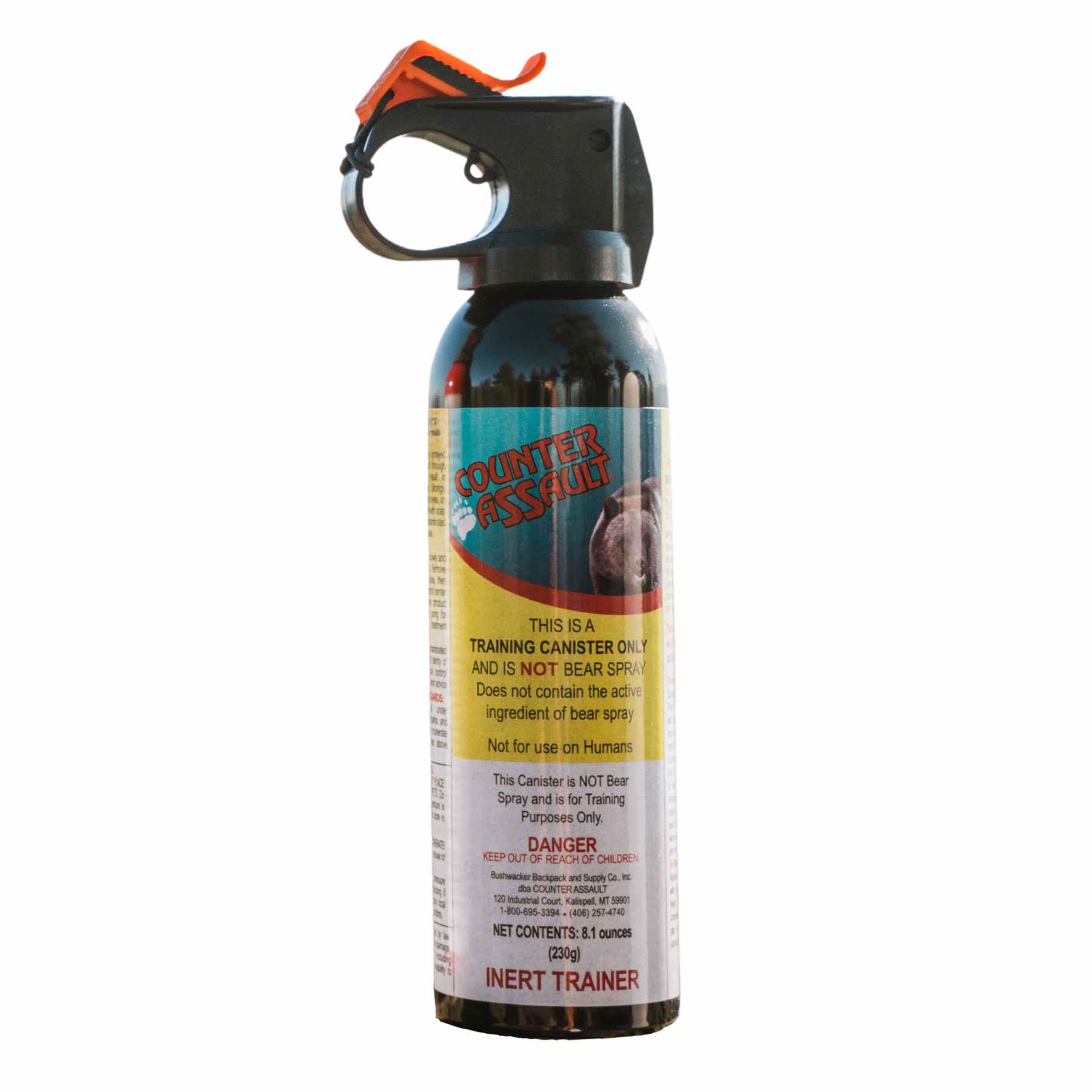
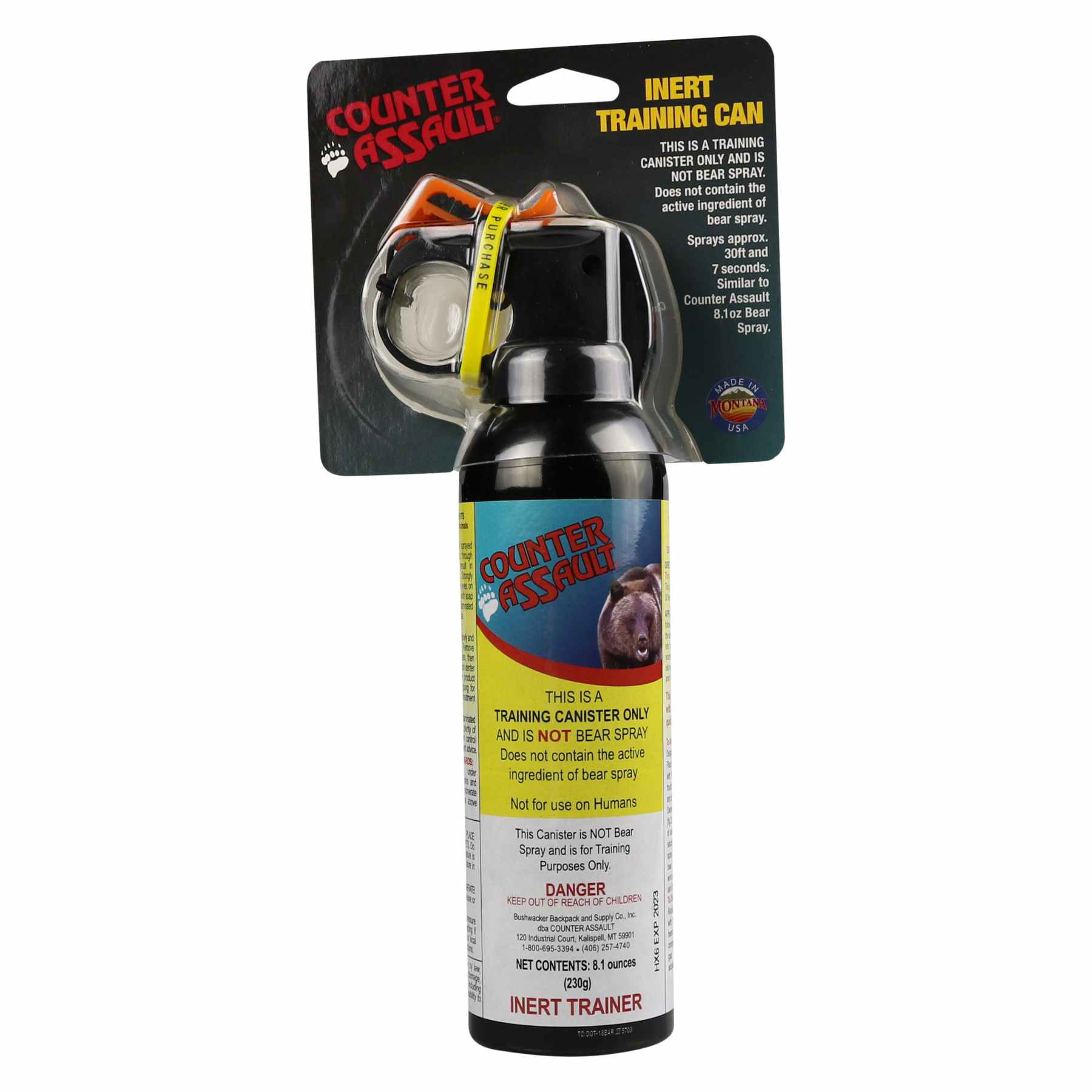
- Practice the draw with an inert canister if possible: Work on grip, thumb position, and removing the safety cleanly.
- Rehearse your stance and movement: Face the animal, speak in a steady voice, and move backward without turning to run.
- Know what spray can and cannot do: Bear spray is a non-lethal deterrent for aggressive wildlife at close range. It is not a general-purpose tool for people, and it does not replace distance, awareness, or good judgment.
Repetition matters because stress narrows attention and strips away fine motor skill. Training should also cover decision-making. Learn the difference between seeing wildlife at a distance, dealing with a curious animal, and responding to a charge. That judgment keeps people from spraying too early, too late, or in the wrong direction. It also reduces one of the most common mistakes with bear spray: treating it like a last-second panic button instead of a tool that requires timing, distance, and control.
Physical preparation belongs here too. As noted earlier, gradual conditioning lowers the odds of fatigue-related mistakes. Tired hikers stumble, rush, and make poor choices. Safe wildlife response starts before the encounter, with enough fitness and practice to stay steady when the moment gets loud.
Top 10 Beginner Hiking Safety Tips Comparison
| Strategy | Implementation Complexity 🔄 | Resource Requirements ⚡ | Expected Outcomes ⭐📊 | Ideal Use Cases 💡 | Key Advantages ⭐ |
|---|---|---|---|---|---|
| Hike in Groups and Make Noise to Prevent Bear Encounters | Low, routine behavior change; minimal planning | Very low, people, voice; optional bear bells | High reduction in surprise encounters (⭐️⭐️⭐️) | Dense vegetation, blind corners, popular trails | Social safety, proven deterrent, low cost |
| Carry Proper Bear Spray Protection | Moderate, requires familiarity and practice | Moderate, purchase, holster, periodic replacement | Very high non-lethal stopping power (⭐️⭐️⭐️⭐️) | Backcountry, high-risk bear regions, solo hikes | Effective at distance, quick deployment, widely recommended |
| Avoid Hiking During Dawn and Dusk | Low, schedule adjustment | None, free to implement | Significant reduction in crepuscular encounters (⭐️⭐️⭐️) | Day hikes, flexible itineraries, park trails | Improves visibility, simple risk reduction |
| Maintain a Clean Camp and Use Bear-Resistant Food Storage | Moderate, consistent protocols and time | Moderate, bear canister/containers; extra weight/cost | Major reduction in attractants and habituation (⭐️⭐️⭐️⭐️) | Overnight camping, multi-day trips, established campsites | Prevents food loss, legally required in many parks |
| Maintain Safe Distance and Never Feed or Photograph Bears | Low, discipline and awareness | Minimal, telephoto lens optional | Prevents habituation and legal issues (⭐️⭐️⭐️) | Wildlife viewing, trails with sightings | Protects bears and future visitors; avoids fines |
| Know How to Respond During a Bear Encounter | Moderate, requires mental rehearsal and practice | Low, training materials; bear spray if available | Can prevent injury when encounters occur (⭐️⭐️⭐️) | Unexpected close encounters, charging or defensive bears | Behavioral response reduces risk without extra gear |
| Carry First Aid and Emergency Supplies | Moderate, pack selection and training | Moderate, first aid kit, PLB/satcom, shelter, lights | Mitigates injury severity; enables rescue (⭐️⭐️) | Remote/backcountry, long hikes, multi-day trips | Treats injuries, improves survival and signaling |
| Use Proper Navigation and Avoid Hiking Alone in Remote Areas | Moderate, planning and navigation skills | Moderate, maps, GPS, compass, PLB, companions | Reduces getting lost and accidental encounters (⭐️⭐️⭐️) | Remote/backcountry, poor cell-service areas | Prevents disorientation; improves rescue likelihood |
| Understand and Prepare for Specific Regional Wildlife Threats | Low–Moderate, research before trip | Low, time investment; possible region-specific gear | Targeted preparedness and appropriate gear choice (⭐️⭐️⭐️) | New regions, areas with grizzlies, mountain lions, coyotes | Tailors precautions; avoids over/under-preparation |
| Get Trained in Bear Spray Use and Wildlife Safety Before Your Trip | Moderate, courses and practice time | Low–Moderate, training cost/time, ranger talks | Large increase in effectiveness and confidence (⭐️⭐️⭐️⭐️) | Any trip in bear country, first-time bear-spray users | Builds muscle memory, reduces panic, improves outcomes |
Hike with Confidence Your Pre-Trail Safety Checklist
You leave the trailhead under blue skies, planning a short hike. Two hours later, the light is dropping, your phone battery is low, and a wrong turn has turned a simple outing into a long walk out. That pattern is common because problems usually start before the hike, with poor planning, weak gear choices, or the decision to treat a wild place like a city park.
A beginner does not need expensive equipment to hike safely. A beginner needs judgment. Know the route. Set a turnaround time and stick to it. Tell a reliable person exactly where you are going and when you plan to return. Carry paper navigation tools even if you also use a phone or GPS app, because batteries fail, screens break, and cell service disappears fast.
Check the basics at the trailhead before you start. Water. Weather layer. Light source. First aid kit. Food. Map and compass. If you are traveling in bear country, carry bear spray where your hand can reach it in seconds, not buried in a pack. That point matters. In close wildlife encounters, access time is often the difference between a controlled response and a missed chance to use a non-lethal deterrent.
Footing deserves the same attention as wildlife. Many beginner injuries come from slips, rolled ankles, and hard falls on the way down, especially late in the day when people are tired and rushing. Wear footwear with traction that matches the terrain. Slow down on wet rock, loose gravel, snow patches, and steep descents. Shorter steps and a lower center of gravity give better control than trying to move fast and catch yourself later.
The goal is simple. Stack the odds in your favor before the hike starts.
If you want one final check before leaving the car, ask a few direct questions. Do I have the right route and a bailout option. Do I have enough layers and water for a delayed return. Do I have a way to signal for help. Do I have the tools and training to handle the wildlife risks in this area. Counter Assault builds non-lethal deterrents and training resources around that last question because the safest outcome is the one that protects both people and wildlife.
For hikers refining comfort as well as safety, supportive footwear choices matter too, especially on longer days. This guide to insoles for hiking is a useful companion read before the next trip.
A smart trip starts with proven tools and clear habits. Counter Assault offers non-lethal wildlife deterrents, training resources, and field-ready gear built for hikers, campers, and anyone traveling in bear country who wants to protect both people and wildlife.