
The last light is fading, dinner is packed away, and the woods finally go quiet enough that every snapped twig sounds important. That's the moment when a lot of campers start thinking about bears. Not because a bear is necessarily nearby, but because uncertainty gets louder when camp settles down.
Good camping bear safety starts long before that moment. It starts with planning, camp layout, scent discipline, and carrying a deterrent that is accessible. Across North America, fatal bear attacks have been statistically rare over nearly 240 years, and non-fatal attacks are still uncommon, but a study of over 700 large carnivore incidents found that roughly 50% were preceded by preventable human behavior such as unsecured food, off-leash dogs, or recreating at dawn or dusk, as noted by BearVault's bear attack statistics overview.
This is the proper mindset for bear country. This isn't about panic. It's about managing risk the same way a ranger, guide, or experienced backcountry traveler does. At home, people apply the same principle around sheds, trash, and wildlife attractants. For urban and suburban readers dealing with raccoons, skunks, or other animals around the property, this practical guide to wildlife control for Toronto homeowners shows the same core lesson. Wildlife problems often start with human habits, not animal malice.
Table of Contents
An Introduction to Proactive Bear Safety
People often talk about bear safety as if it starts when a bear appears. In the field, that's already late. The safer approach is to treat bear country as a continuous system of choices. Where the tent goes. Where dinner gets cooked. Whether the spray is buried in a pack or riding on a belt. Whether the group rounds a blind corner silently or talks its way through dense cover.
That shift matters because most bear conflicts aren't random explosions of aggression. They usually build from surprise, food attraction, or a human decision that seemed small at the time. A cooler left out. A dog ranging ahead on trail. A camp tucked into thick brush beside a game trail because it looked sheltered.
Practical rule: Bear safety works best when it's boring. Clean camp, smart spacing, accessible spray, steady awareness.
A calm, procedural mindset also keeps the response non-lethal and responsible. The point isn't to dominate wildlife. It's to avoid teaching bears that people mean food, and to keep enough distance and structure in camp that both sides can go their separate ways.
Good camping bear safety allows confidence to replace fear. A prepared camper doesn't need to improvise much. The routines are already decided before boots hit dirt.
Before You Go Planning for Bear Country
A good bear-country trip starts before the truck leaves the driveway. The goal is not to memorize a few rules. It is to build a system you can follow when you are tired, distracted, cold, or in a hurry. That system starts with the area, the season, the group, and the gear check.

Start with current conditions and likely bear behavior
Check land-manager alerts before you pack. Look for recent bear activity, temporary closures, food-storage orders, and species present. A black bear area with established campgrounds asks different things of a group than grizzly country with thick brush, scattered camps, and active feeding areas.
Then study the ground you plan to use. River bottoms, berry patches, carcass sites, salmon streams, dense creek corridors, and game trails all raise the chance of a close encounter. So do routes with poor sightlines. If a campsite looks sheltered but sits in heavy cover with fresh sign nearby, pass it and keep looking.
The planning checklist is short:
- Read current advisories: Confirm closures, food-storage rules, and recent bear activity.
- Study the habitat: Mark thick cover, feeding areas, drainages, and narrow trail sections with poor visibility.
- Match gear to regulations: Pack a canister, hang system, or other approved storage method required for that area.
- Choose deterrent access now: If you still need to sort out carry options, review how to choose the best bear spray for hiking before the trip, not at the trailhead.
Build habits before the first mile
Good outcomes usually come from routine, not reaction. Decide in advance how the group will travel, who sets the pace, who watches for sign, and how often everyone stops to reassess terrain and visibility. That matters on long days, because people get quiet when they are climbing, and quiet groups surprise bears.
Group size also matters. National Park Service guidance for Yellowstone has long advised hiking in groups of three or more and making human presence obvious in dense cover. The practical takeaway is simple. Solo travel and scattered groups carry more risk than a tight, audible group that stays aware.
Timing changes the equation too. Dawn and dusk often bring more wildlife movement. If the route forces travel through brushy creek bottoms or around blind corners, plan to hit those sections in full daylight when you can see farther and make noise that carries.
Noise should be deliberate. Normal conversation, a clear call before blind turns, and periodic shouting in loud water or wind work better than depending on a small bell. Leave the headphones packed. Ears catch warning signs before eyes do.
The strongest plan is the one your group can still follow after a hard climb, a late setup, or a weather change.
Use a simple pre-trip decision check
Before departure, run four questions.
If we see fresh scat, tracks, digging, or a carcass near our intended camp, do we have a second site picked out? If the answer is no, you are not finished planning.
If the group gets spread out on trail, who calls the stop and regroups everyone? If nobody owns that decision, the group will drift.
If someone has bear spray but cannot reach it with one hand while wearing a pack, is the carry setup fixed before hiking starts? It should be.
If the area has strict food-storage rules, has everyone agreed to follow them every time, including during short stops and after dark? That is where trips often go soft.
A few supporting items still earn their place. A compact camp light such as the PackLite solar light from LuminAID helps with after-dark chores without draining a phone, and a stocked Adventure Medical Kits first aid kit belongs in any bear-country loadout because injuries, cuts, burns, and weather problems are more common than wildlife contact.
Essential Gear for Coexisting with Bears
The most important bear-safety gear is the item that can be reached under stress. That's why carry method matters as much as product choice. A deterrent buried under rain gear, snacks, and spare layers is functionally absent.
What belongs on the body
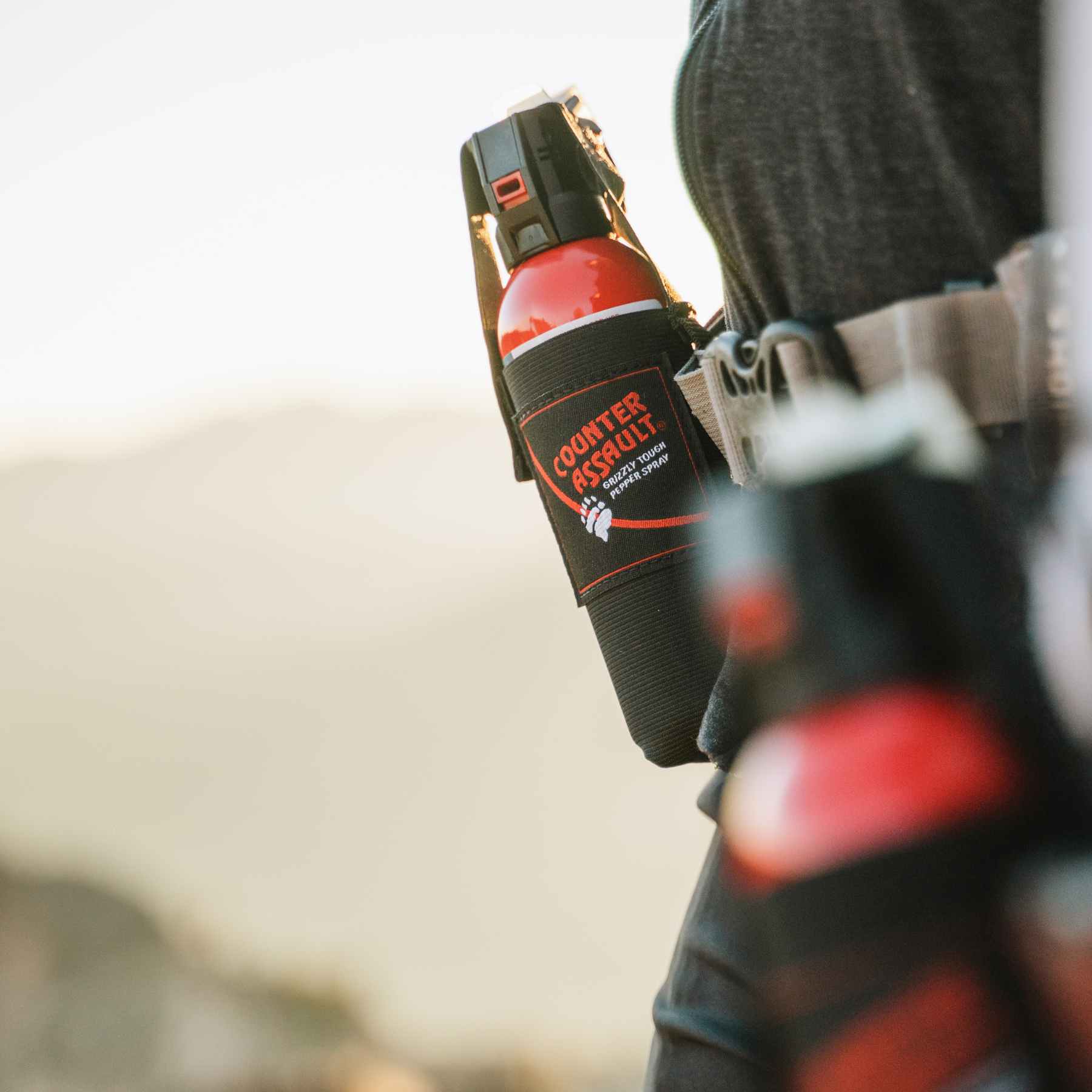
For active travel in bear country, bear spray belongs on the hip, chest, or pack strap where one hand can grab it immediately. It doesn't belong inside the main pack body. It also shouldn't be treated like a passive charm. Campers need to know how to pull the safety clip, orient the can, and deploy without fumbling.
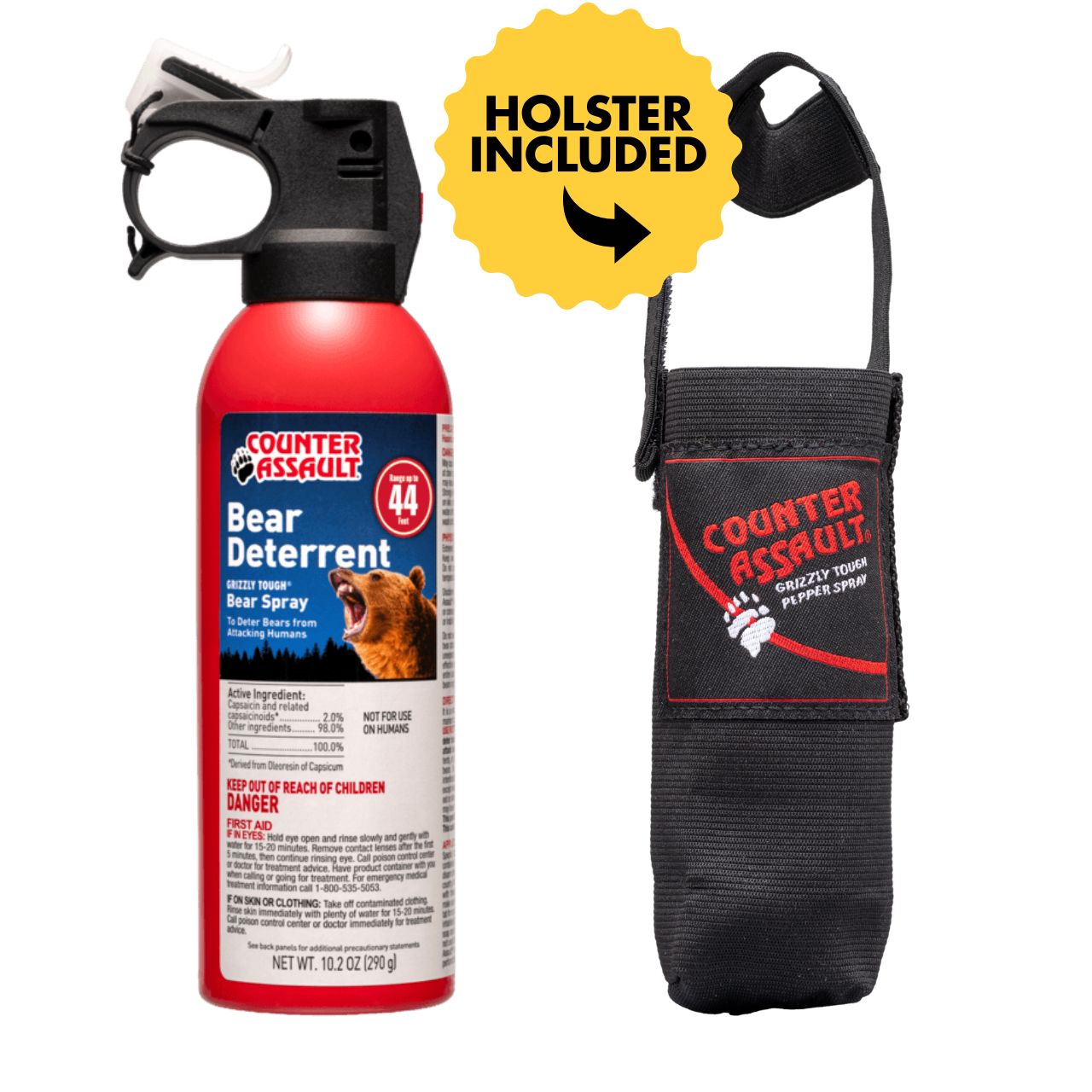
Counter Assault's 10.2oz 44-foot bear spray with included holster is built for that role. The product is EPA-registered, complies with the Clean Air Act, and is illegal to deploy against humans. It is specifically designed only to deter aggressive bears, mountain lions, and coyotes, causing temporary but intense irritation to the eyes, nose, and lungs so the animal retreats, as explained in Counter Assault's bear spray safety resource.
The carry rule is simple. If a camper can't reach the spray in one motion while wearing a pack, the setup needs to change.
For readers comparing carry options and field use, Counter Assault also has a useful guide on the best bear spray for hiking.
What supports camp discipline
Spray is the emergency tool. Most of the rest of the gear exists to keep the emergency from happening.
A practical setup usually includes:
| Gear | Why it matters |
|---|---|
| Bear-resistant food storage | Keeps food and scented items from conditioning bears to human camps |
| Durable trash system | Prevents scraps, wrappers, and grease from becoming attractants |
| Headlamp or camp light | Helps maintain clean camp routines after dark |
| First aid kit | Supports response after any incident, wildlife-related or not |
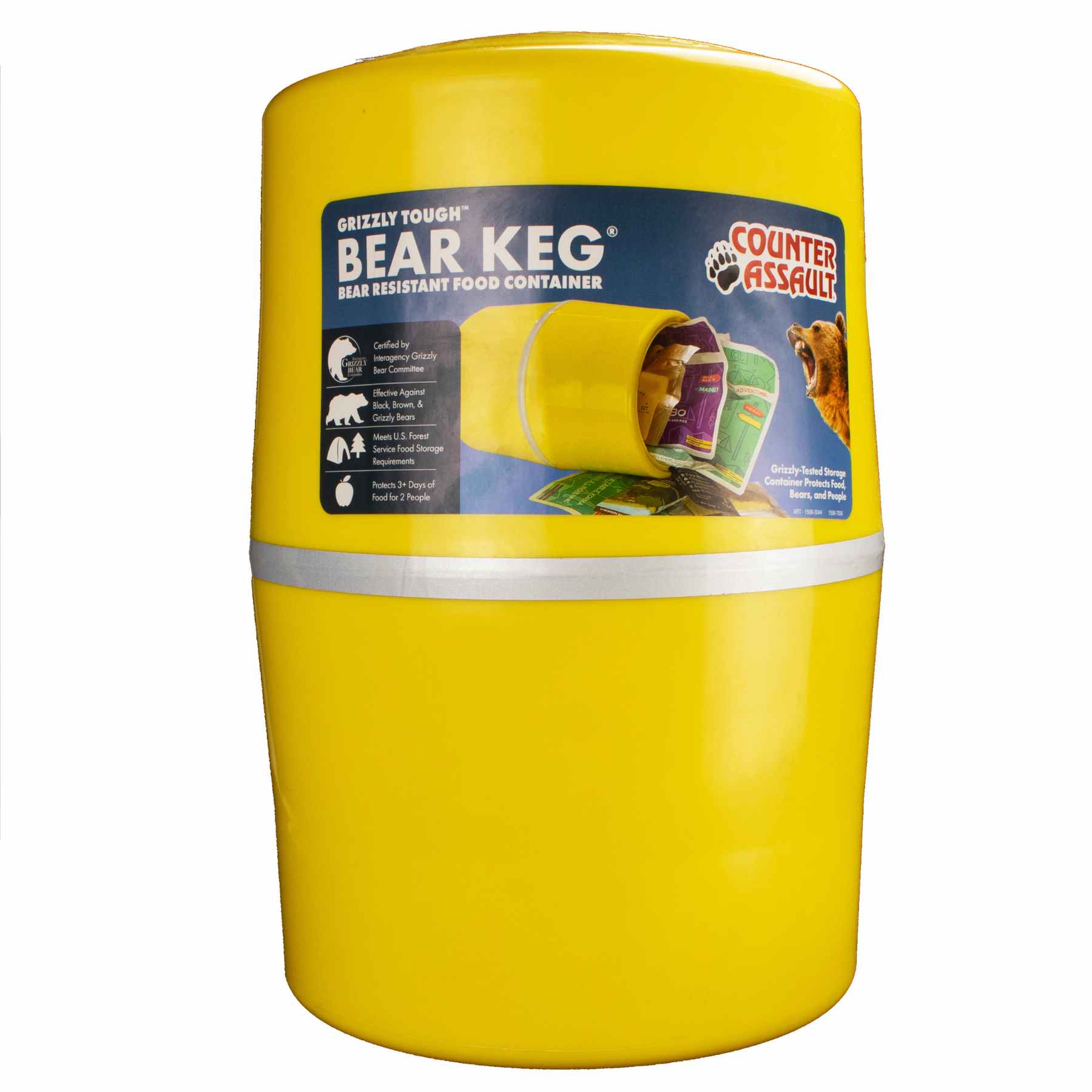
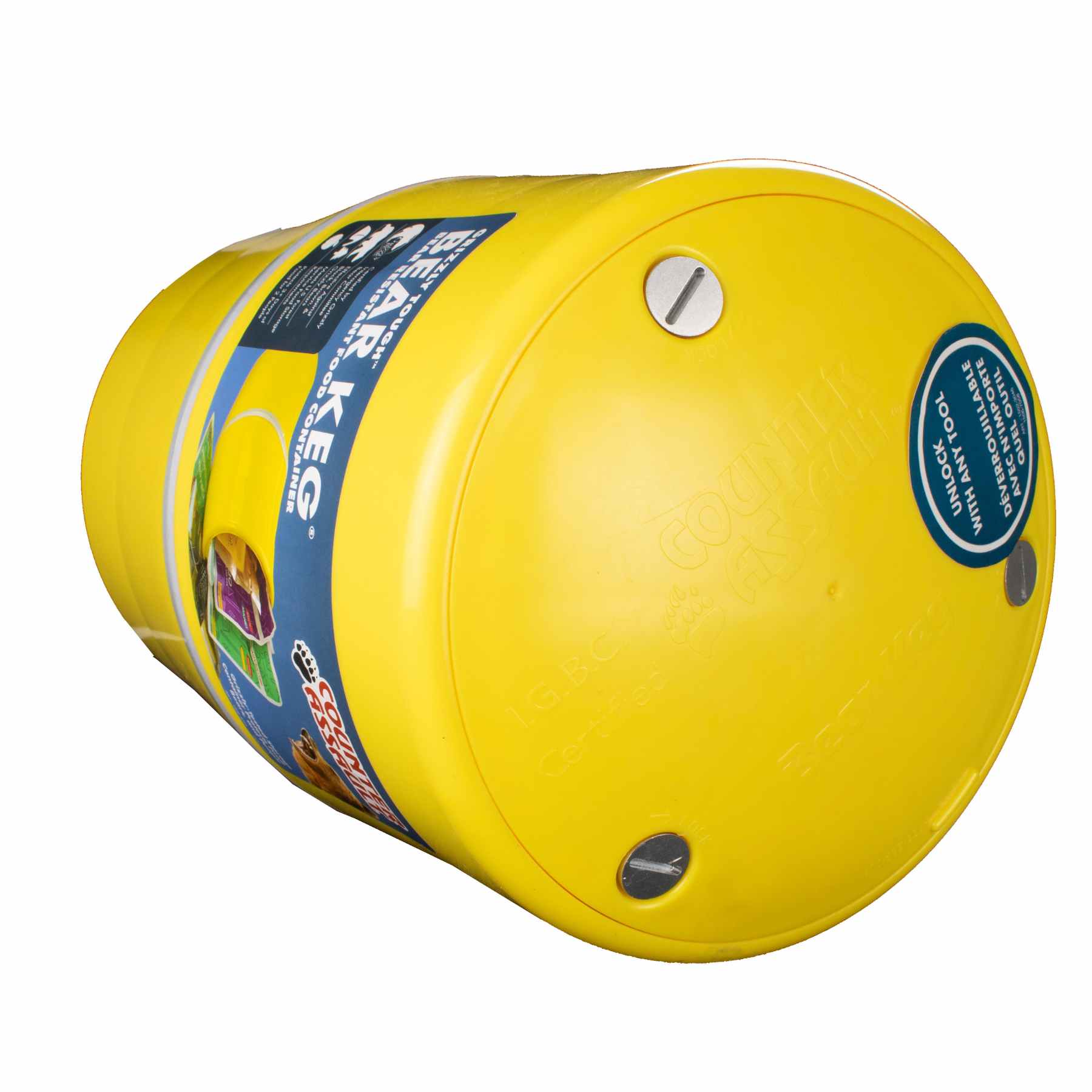
Food storage deserves special emphasis. A canister or approved storage method isn't a nice extra. It's part of the system. Campers looking at storage options can review bear-resistant food containers before the trip.
For additional support gear, SOL survival tools and Adventure Ready Outdoor equipment both offer practical camp and emergency items that fit bear-country travel without adding gimmicks.
How to Set Up a Bear-Safe Campsite
You get back to camp at dusk, hungry and tired. That is when people cut corners, cook beside the tent, leave the stove out, and promise themselves they will clean up in a minute. In bear country, camp safety is decided by those small choices.

Set one area for sleeping, one for cooking and eating, and one for food and scent storage. Keep real distance between them. As noted earlier, standard bear-country guidance calls for wide separation between where you sleep and where food odors collect.
If the area requires food hangs, do them correctly. If it requires canisters or lockers, use them. Improvised storage is where good intentions usually fail. Campers comparing storage methods should review bear-resistant food containers for camping in bear country.
This matters for car campers and overlanders too. A truck, trailer, or RV does not cancel scent discipline. If you fry bacon at the tailgate and sleep a few feet away, you have combined the two zones that should stay separate.
Pick the site with the same mindset.
- Choose visibility: Favor open ground where you can see around camp and avoid thick brush tight to your sleeping area.
- Avoid natural attractant zones: Don't camp on game trails, near carcasses, beside berry patches, or close to spawning streams.
- Protect the downwind side: If wind is steady, expect cooking odor to travel and keep sleeping space out of that scent path when possible.
- Keep routes clean: Make the walk between cooking, storage, and sleeping areas obvious so nobody shortcuts the system after dark.
Good camp layout reduces the chance that a bear investigating food odor ends up in your sleeping area.
Treat every scented item like an attractant
Food is only part of the problem. Toothpaste, sunscreen, trash, dishwater, canned drinks, pet food, lip balm, coffee grounds, and greasy clothes all belong in the same risk category once you are in camp.
That changes routine. Cook, eat, clean, store. Do it in that order every time.
Wash dishes soon after the meal. Pack out or secure garbage right away. Do not leave a cooler, stove, fish stringer, or snack bag out while you take a short walk or turn in early. If you cooked in a jacket that now smells like grease or smoke, do not wear it into the tent.
Vehicle storage follows the same rule. If local regulations prohibit storing food in vehicles, follow them exactly. If vehicles are allowed for storage, use them as storage, not as a mixed kitchen, pantry, and bedroom.
A bear-safe campsite is not a single trick. It is a system of spacing, scent control, and repeatable habits. Set it up before you are tired, then keep the routine tight until morning.
Your Guide to Bear Encounter Protocol
A bear encounter gets safer when the response is simple, visible, and disciplined. People get into trouble when they rush the moment, run, or misread behavior.
The quick visual below helps establish the sequence of response before finer detail matters.

Read the moment before it escalates
If a bear is visible at distance and hasn't noticed the group, the cleanest option is usually to leave unobtrusively and give it room. Don't move closer for photos. Don't test whether it cares. Distance is the win.
If the bear has noticed people but isn't charging, the response is controlled and calm. Stand together, don't run, avoid direct eye contact, and speak in a normal voice while backing away slowly and sideways. Get the spray in hand early, not at the last possible second.
This walkthrough shows proper movement and spray readiness in real time:
Use a simple field decision matrix
The most important nuance in black bear country is the difference between intimidation and predation. American Bear Association hiking and camping guidance notes that a bluff charge is a sudden rush to intimidate, often with ears forward, while a predatory stalk is a silent, focused approach. The response differs sharply. Hold ground during a bluff. Fight back aggressively if a black bear attacks, especially if it stalks or enters a tent.
That distinction gives campers a usable field matrix:
| Situation | Best immediate response |
|---|---|
| Bear at distance, unaware | Back out quietly and create space |
| Bear sees people, calm or curious | Stand together, speak normally, back away slowly |
| Bluff charge by black bear | Hold ground, prepare spray, keep backing away when possible |
| Predatory stalk or black bear attack | Deploy spray and fight back if contact occurs |
A few encounter rules should stay fixed under pressure:
- Don't run: Running can trigger pursuit.
- Don't scream blindly: Use a steady voice so the bear reads a human presence, not prey behavior.
- Do stand your ground: Ground loss at the wrong moment can invite a closer approach.
- Do get spray ready early: Waiting too long is one of the most common handling errors.
For a companion read focused on immediate field response, Counter Assault's guide on what to do if you see a bear is worth reviewing before a trip.
Debunking Dangerous Bear Safety Myths
Bad bear advice sticks around because it sounds bold. Field-tested advice sounds less dramatic, but it keeps people safer.

Myth versus field reality
Myth: Guns work better than bear spray.
The data cited from research discussed in the Journal of Wildlife Management found that bear spray had a 98% success rate in preventing injury during aggressive encounters, while firearms showed a 76% to 84% success rate in diffusing attacks, as summarized in this research discussion on camping bear safety. Separate guidance from the Grizzly & Wolf Discovery Center bear country safety page also notes that people defending themselves with guns were injured about 50% of the time, whereas those using bear spray usually escaped injury entirely.
Myth: Bear spray doesn't really work.
It does. Field and Stream's summary of a long-term study reports bear spray was at least 90% effective in deterring undesirable bear behavior, with some sources citing success up to 98%, and it notes humans are injured in roughly 50% of confrontations where a firearm is used, according to Field & Stream's bear spray review.
Myth: Wind makes spray useless.
Wind can affect any aerosol, but that doesn't make bear spray unreliable. Proper use still matters most. The can should be aimed in a downward arc toward the bear's front so the animal runs into the cloud. In most wooded settings, campers are dealing with variable but not impossible conditions. The answer isn't abandoning spray. The answer is practicing deployment and carrying it where it can be used.
Fear-based folklore tells people to rely on force. Good camping bear safety relies on distance, discipline, and a non-lethal tool that works under stress.
After an Encounter and The Path Forward
Once the bear breaks off, the job isn't over. Leave the area calmly and create distance. Then check everyone for injuries, account for children and pets, and make sure the group is together before doing anything else.
If bear spray was deployed, treat it as a real incident even if nobody was hurt. Report the encounter to park staff, rangers, campground managers, or local wildlife authorities as soon as possible. That helps protect the next group on the trail and gives land managers a chance to respond if a bear is becoming food-conditioned or repeatedly approaching camps.
The larger lesson is simple. Camping bear safety isn't a trick and it isn't a one-line rule. It's a chain of decisions. The route chosen, the hour of travel, the way dinner is handled, where the trash goes, how the camp is spaced, and whether the deterrent is accessible all matter.
Bears don't need perfect people around them. They need predictable, responsible human behavior. When campers move through bear country with that mindset, the wild stays wild and the trip stays what it should be: demanding, memorable, and safe.
A reliable bear-country plan starts before the trip and stays in place until camp is broken down. For campers who want a non-lethal deterrent designed specifically for aggressive bears, mountain lions, and coyotes, Counter Assault offers bear safety tools and field resources built around responsible outdoor travel.