
Many believe that bears “sleep all winter,” and that idea causes trouble in the backcountry. A winter bear isn't a furry rock tucked away until spring. In many cases, it's an animal in torpor, a reduced metabolic state that still allows it to wake fast, react to disturbance, and defend itself if pushed too far.
That difference matters more now than it used to. Anyone asking what do bears do in the winter needs more than a schoolbook answer. Winter behavior changes by species, region, weather, food supply, and whether a female has cubs. Add warming winters and more human activity in cold months, and the old assumption that “there are no bears out now” is no longer safe thinking.
Table of Contents
- Winter in Bear Country What You Need to Know
- Hibernation vs Torpor Unpacking the Big Sleep
- Winter Habits of Different Bear Species
- Inside the Den Birthing and Survival
- The Science of Survival A Bear's Winter Body
- When Bears Don't Sleep Winter Encounters and Safety
- Your Bear Safety Toolkit Be Prepared Not Scared
Winter in Bear Country What You Need to Know
Winter changes bear behavior, but it doesn't erase it. A bear in cold weather may den up, slow down, or stay active depending on the species and local conditions. That's why hikers, snowshoers, hunters, anglers, and winter campers need a more precise answer than “they hibernate.”
The most important correction is simple. Bears aren't usually in the same deep, hard-to-wake condition as small true hibernators. They enter a winter state that conserves energy while still leaving room for awareness and rapid response. In practical terms, a den isn't a place to approach, investigate, or photograph at close range.
People also get tripped up by the word “winter.” In one region, a bear may spend months denned. In another, it may move in and out of activity, especially where weather stays milder or food remains available. Pregnant females often follow the longest denning pattern because the den becomes a birth site and nursery.
Practical rule: Winter is not a bear-free season. It's a season that demands quieter assumptions and sharper judgment.
A second source of confusion is species. Black bears, grizzlies, and polar bears don't all use the same winter strategy. Some dig or select protected dens. Some rely on snow cover and terrain. Polar bears are the major exception in public imagination, because many remain active rather than denning for the whole season.
Climate adds another layer. Traditional denning patterns are shifting in some places, and outdoor travelers can no longer rely on the calendar alone. Tracks in snow, carcasses, unsecured food, dog activity, and thaw periods can all raise the odds of an encounter.
For safe travel, the working mindset is straightforward:
- Assume bears may be present: Snow on the ground doesn't guarantee dens are occupied or that all bears are inactive.
- Treat dens as sensitive space: A winter bear that's disturbed may defend itself.
- Plan for surprise encounters: Cold weather can reduce visibility, muffle sound, and shorten reaction time.
- Keep camps disciplined: Food, trash, and scented items still matter in winter.
Hibernation vs Torpor Unpacking the Big Sleep
The biggest mistake in bear country is assuming winter puts bears fully out of play. It does not. Bears usually enter torpor, a lighter energy-saving state than true hibernation, and that difference matters to anyone traveling on snow.
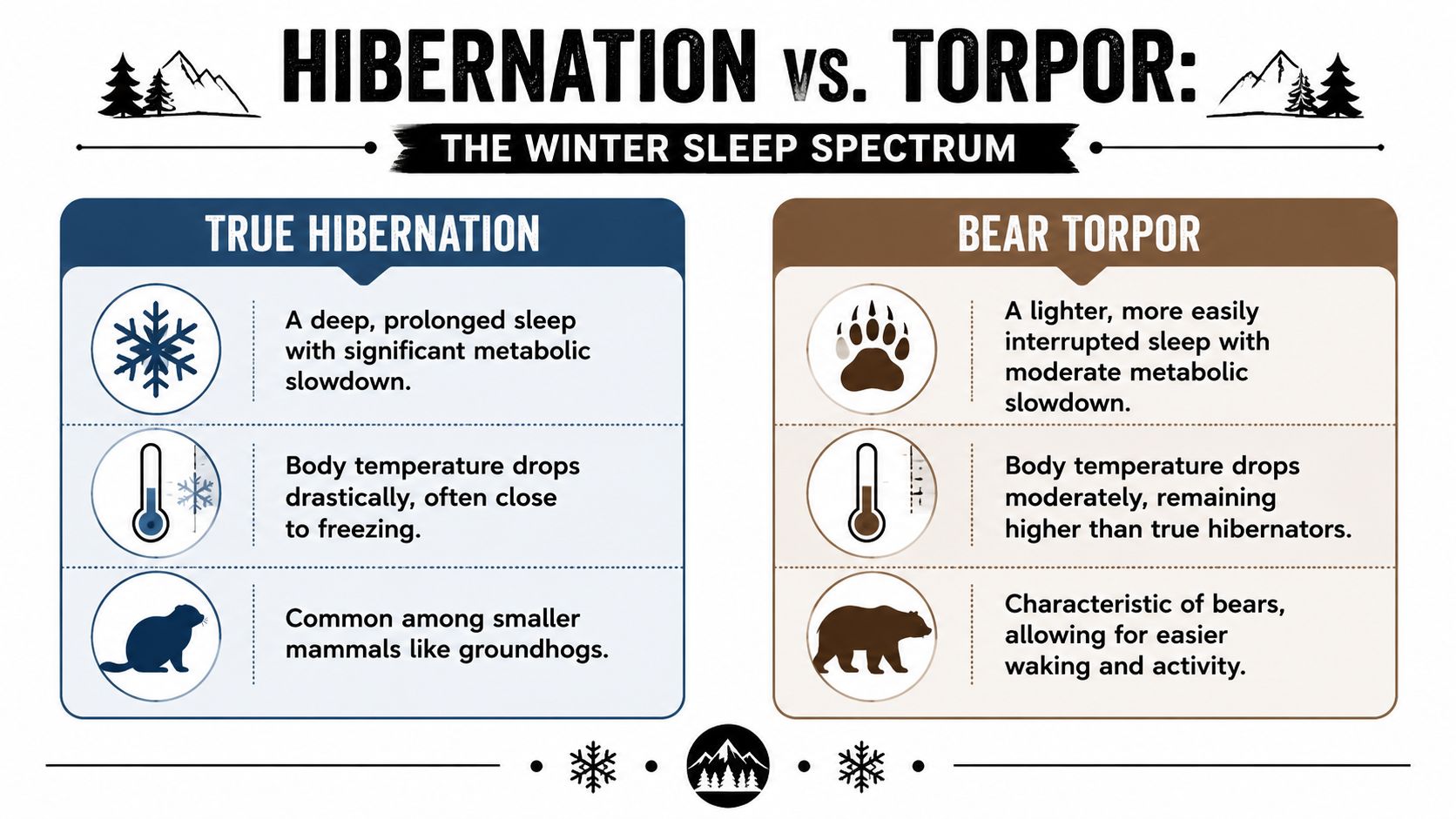
A small mammal in true hibernation drops much deeper. A bear works more like a cabin set to low heat instead of shut off completely. It burns less fuel, slows many body functions, and stays able to wake far faster than people expect. According to the National Forest Foundation's explanation of bear torpor, bears do not “sleep through winter.” They remain in a reduced metabolic state and can wake intermittently, which helps explain why a disturbed bear may respond defensively.
What changes in a bear during torpor
During torpor, a bear's heart rate and breathing slow sharply, but its body temperature does not crash the way it does in a true hibernator. That warmer core temperature is a big reason bears can rouse and move with surprising speed. For a reader sorting out the different kinds of bears in North America, this is one winter trait many species share even though denning length and timing vary.
That detail clears up a common point of confusion. “Denning” does not mean “unconscious for months.” A bear in a den is conserving energy under tight biological control. It is still an animal that can hear, smell, shift position, and defend itself if pressured.
Why the distinction matters outside the den
This is practical field knowledge, not trivia.
A skier cutting through timber, a hunter checking a drainage, or a snowmobiler crossing drifted slopes may see winter terrain and assume the risk is low. That assumption is less reliable now. Warmer spells, inconsistent snowpack, and changing food conditions can disrupt older denning patterns, so the calendar alone is a poor safety tool.
A bear in torpor is conserving energy, not giving up awareness.
Use that fact to guide your decisions in winter bear country:
- Give den-like sites wide space. Openings in snowbanks, root wads, rock cavities, and brush-choked pockets can hold bears.
- Keep dogs under tight control. A dog that charges into a hidden bedding or den area can bring a defensive bear straight back.
- Treat thaw periods seriously. Midwinter warmups can increase bear movement and raise the odds of an unexpected encounter.
- Back out calmly if you spot a bear. Create distance slowly, speak in a steady voice, and avoid crowding the animal.
Park rangers repeat the same lesson for good reason. Winter quiet does not equal winter safety. In a changing climate, that old myth gets people into trouble.
Winter Habits of Different Bear Species
Winter does not put every bear on the same schedule. Species, region, food supply, and weather all shape what happens once snow arrives. Confusion often arises when asking what do bears do in the winter, because a black bear in coastal forest, a grizzly in mountain country, and a polar bear on sea ice are solving three different survival problems.
A useful way to read the differences is to ask one practical question: should you assume reduced bear activity, or should you expect movement and stay ready for an encounter? In many places, especially during warm spells and inconsistent winters, the safer answer is to stay ready.
Bear Winter Behavior Comparison
| Species | Winter State | Typical Duration | Den/Habitat | Key Winter Behavior |
|---|---|---|---|---|
| Black bear | Torpor or denning, with variation by region | Longer in colder northern regions and shorter in warmer coastal regions, according to the Alaska Department of Fish and Game | Natural cavities, sheltered sites, or dug dens depending on terrain | Duration changes with geography, weather, and food |
| Grizzly bear | Winter denning in torpor | Varies by place and conditions | Often uses protected den sites in remote terrain | Remains capable of waking and defending itself |
| Polar bear | Usually remains active, except denning females | No single winter denning pattern for most individuals | Sea ice and Arctic habitat, with maternity dens used by pregnant females | Most continue traveling and hunting through winter |
Black bears
Black bears show the widest winter variation that hikers, hunters, and winter campers are likely to notice. In colder northern areas they may stay denned much longer. In milder coastal areas, their winter shutdown can be shorter and less predictable, as noted by the Alaska Department of Fish and Game.
That matters on the ground. A person who learned bear habits in one region can make bad assumptions in another. Low elevations, coastal habitat, human food sources, and midwinter thaws can all increase the chance of seeing a black bear when the calendar says you should not.
If you need a quick refresher on which species live in your travel area, this guide to kinds of bears in North America helps sort out the range and identifying traits.
Grizzly bears
Grizzlies usually den in sheltered places that conserve heat and reduce disturbance. South-facing slopes, remote timber, and snow-covered mountain terrain can all hold den sites. Those features are not invitations to investigate. They are exactly the kind of cover a bear selects to get through winter with as little energy loss as possible.
A grizzly in torpor works more like a phone in low-power mode than an animal switched fully off. Body functions slow. Awareness does not disappear. If a skier, snowshoer, or loose dog presses too close, that bear can rouse and react fast.
Treat winter sign in grizzly country with the same respect you would give fresh sign in spring or fall.
Polar bears
Polar bears break the pattern that people often expect from bears in winter. Most do not den away the season. They remain active, moving across sea ice and hunting when conditions allow. The main exception is pregnant females, which use maternity dens before giving birth.
For travelers in Arctic country, the safety lesson is blunt. Snow cover and long darkness do not mean lower risk. Climate-driven shifts in sea ice and weather can also change where polar bears travel and hunt, which makes old seasonal assumptions less dependable.
Species differences matter, but the field lesson is simple. Winter changes bear behavior. It does not erase it.
Inside the Den Birthing and Survival
A winter den is one of the most protected spaces in bear country. It's shelter, insulation, and, for some females, a nursery.
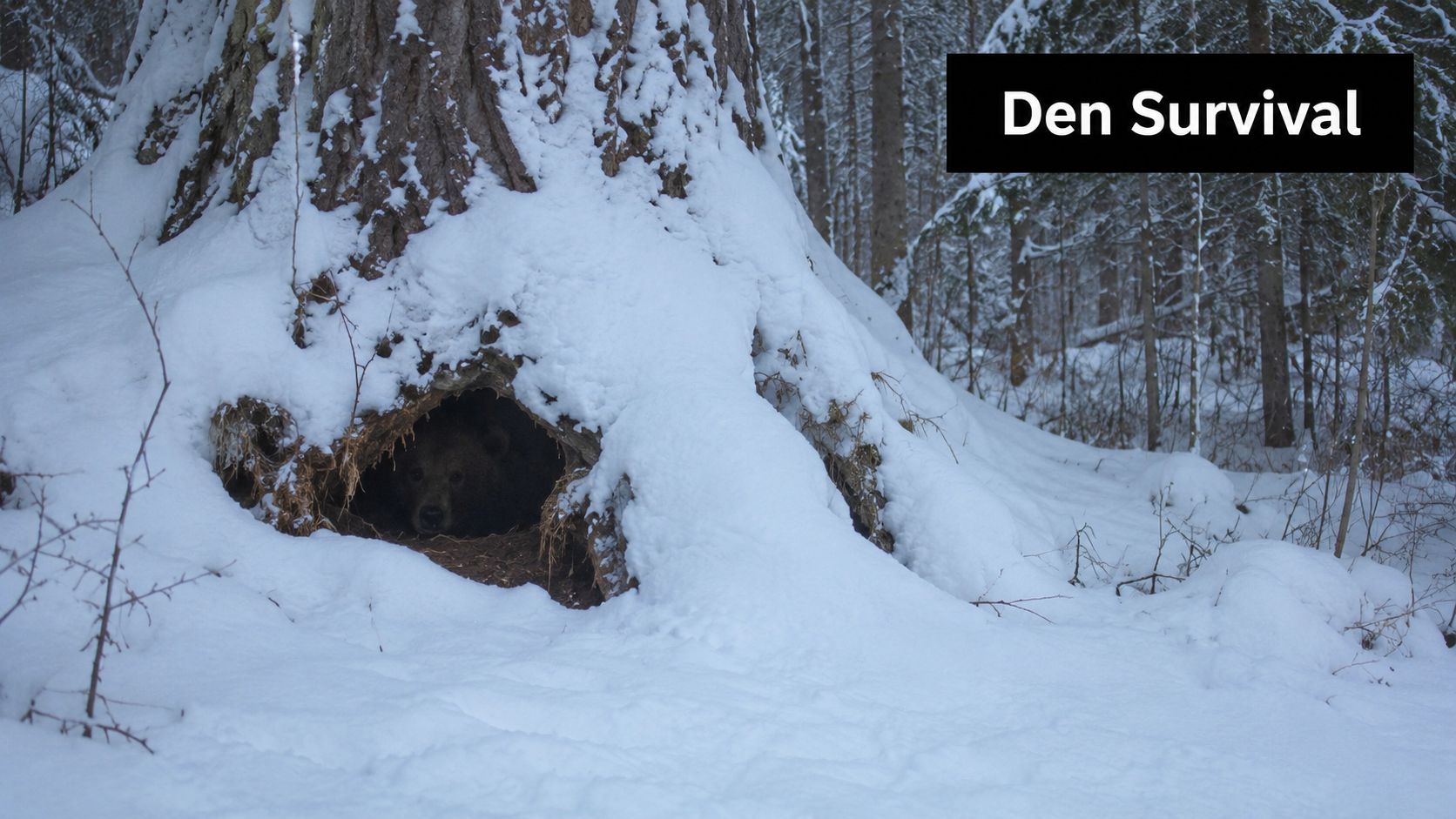
A den is a nursery, not a hideout
Female bears can do something that sounds almost impossible until the biology is understood. During torpor, they can give birth to cubs weighing 0.5 to 1 lb and nurse them for months while fasting. They manage it by recycling urea back into protein to maintain muscle and organ integrity, according to Lions Tigers & Bears' explanation of bear hibernation.
That changes how a den should be viewed. It isn't just a place where a bear waits out bad weather. It can hold a mother with newborn cubs, and that mother has every reason to react hard to disturbance.
Pregnant females also time reproduction with winter survival. Fertilized eggs undergo delayed implantation until fall, and development proceeds only if the female has built enough fat reserves, according to that same source. Winter denning isn't passive. It's tightly tied to reproductive success.
A short visual helps show how confined and serious den life can be:
Why den disturbance is so risky
A mother in a den has limited room, vulnerable cubs, and reduced options. That's a setup for defensive behavior if people, dogs, or machines push too close. Snowmobile routes, winter photography, off-trail travel, and dog recreation can all create den problems when people assume nothing is alive under the snow.
A few field cues deserve caution:
- Openings in drifted slopes: These may look like harmless voids.
- Root wads and hollow pockets: Shelter like this can conceal a den entrance.
- Fresh tracks near sheltered terrain: Activity near a den area shouldn't be ignored.
- Dog agitation: Dogs often detect bears before people do.
Leave any suspected den area immediately and quietly. Curiosity is the wrong instinct there.
The Science of Survival A Bear's Winter Body
A winter bear is not a furry rock lying there asleep. Its body stays regulated, responsive, and ready to act if conditions change. That distinction matters in the field, because a bear in torpor can wake far faster than many hikers, skiers, and snowmobile riders expect.
The central fuel source is body fat. Over months without eating, a bear runs on stored energy the way a well-managed backup generator runs on reserve fuel, slowly and with tight control. That fat supports heartbeat, breathing, heat production, and, for females with cubs, milk.
What makes bears unusual is not just that they fast. Deer, rodents, and many other animals face long periods of winter stress. Bears do something harder. They conserve energy without falling apart.
In most mammals, extended inactivity causes a predictable chain of problems. Muscle shrinks. Bones weaken. Waste products build up. Bears avoid much of that damage through a set of metabolic adaptations that wildlife biologists still study closely.
One of the most important is urea recycling. Instead of losing large amounts of nitrogen as waste, a bear can reuse it to help maintain protein and protect muscle and organs during torpor. In plain terms, the animal is living off fat while holding onto more of the body hardware it will need in spring.
That helps explain a point that often surprises people. A bear coming out of the den is not automatically feeble or slow. It has lost fat, but it can still move, defend itself, and cover ground quickly if disturbed.
Its circulation and temperature control also stay far more stable than in small true hibernators. Ground squirrels drop into a much deeper shutdown. Bears idle low, but they do not power off. A truck left running in low gear is closer to the picture than a machine with the engine completely cold.
That biology connects directly to safety. If food odors drift into winter habitat, an animal in torpor may still detect them and respond. The nose never stopped mattering. For a better sense of how powerful that system is, see this explanation of a bear's extraordinary sense of smell.
Climate change makes this science more than an interesting footnote. As winters grow less predictable, denning periods can become less consistent too. That means more overlap between people seeking quiet winter recreation and bears whose bodies were never designed for deep, uninterrupted sleep in the first place.
When Bears Don't Sleep Winter Encounters and Safety
Winter used to give many people a false sense of clearance. That assumption now causes real risk.
Why winter no longer means low risk
Climate variation is interrupting traditional hibernation patterns. As hibernation windows shorten, bears are more likely to be active near human settlements during winter months, increasing encounter risks beyond traditional seasonal expectations, as described in this overview of climate-related hibernation disruption.
That change matters on trails, around cabins, at trailheads, and in shoulder-season camps. If winter weather is mild, snow cover is inconsistent, or human food is accessible, bears may stay active longer or emerge earlier than expected. People who travel only by calendar often miss that shift.
Practical safety in cold-weather bear country
Winter bear safety starts with the same fundamentals that work in summer, but cold conditions make discipline more important.
- Hike in groups: Groups are noisier and more intimidating to bears.
- Make noise on purpose: Blind corners, creek bottoms, dense timber, and windy ridges all reduce a bear's warning time.
- Skip dawn and dusk travel when possible: Those are common activity periods for grizzlies.
- Keep a clean camp: Food, trash, toiletries, and cooking residue still attract animals in winter.
- Keep distance: No photos, no feeding, no pushing closer for a better look.
Encounter behavior should stay simple and controlled. Don't run. Avoid direct eye contact. If the bear isn't charging, walk away slowly and sideways. Stand ground if needed, speak in a normal voice, make the body look larger, and get deterrent spray ready.
A few winter-specific habits help:
- Watch snow for fresh sign: Tracks and digs can reset a route choice fast.
- Control pets closely: Loose dogs can turn a calm situation into a defensive one.
- Give carcasses wide berth: A food source can hold a bear even in cold weather.
- Treat thaw periods seriously: Mild spells can increase movement.
Cold weather reduces complacency only if people let it. The bear may still be active, alert, and close.
Your Bear Safety Toolkit Be Prepared Not Scared
Prepared people don't need dramatic tricks. They need sound habits, the right gear, and a clear plan for bad minutes.
When bear spray belongs in hand
Bear spray is for a charging bear, or for an aggressive bear that appears likely to charge. It is not something to spray on clothing, skin, boots, packs, or camp gear like insect repellent. It should only be used on bears, mountain lions, or coyotes, not on people.
The field sequence is straightforward:
- Remove the safety clip.
- Aim slightly downward toward the area in front of the animal and into the direction of the charge.
- Start spraying when the animal is 30 to 60 feet away, creating a cloud it must pass through.
- Continue spraying until the charge diverts.
- If the animal keeps coming, spray directly into the face.
- Leave the area immediately.
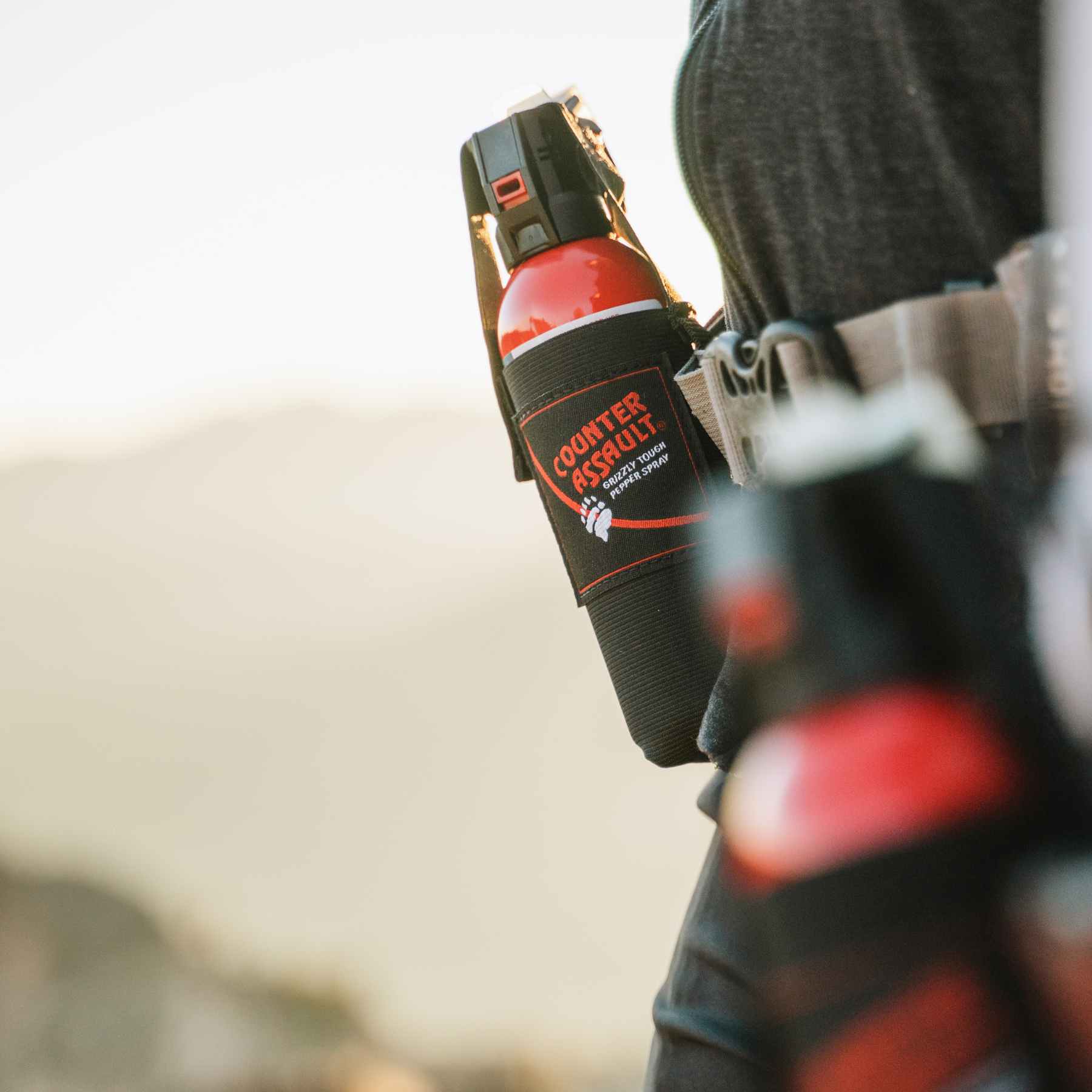
For a refresher on carry, access, and deployment, Counter Assault's guide on what you need to know about bear spray is a solid field reference.
Common mistakes that get people in trouble
Several myths stick around because they sound tough or convenient.
Bear spray isn't a weapon for people, and it isn't a magic perimeter spray for gear. It's an emergency deterrent for an aggressive animal at close range.
One bad idea is waiting until winter is over to carry deterrent spray. Another is burying it in a pack where it can't be reached quickly. A third is assuming wind makes it useless in every situation. Field conditions vary, but that myth causes people to leave behind one of the most practical safety tools available.
Good preparedness is broader than spray alone. A winter party also benefits from dependable emergency gear such as a SOL emergency bivvy from Survive Outdoors Longer, a compact LuminAID light for camp and emergency use, and a well-stocked Adventure Medical Kits first aid kit. Those tools don't replace bear awareness. They support it when travel runs long, weather shifts, or an incident forces an unplanned night out.
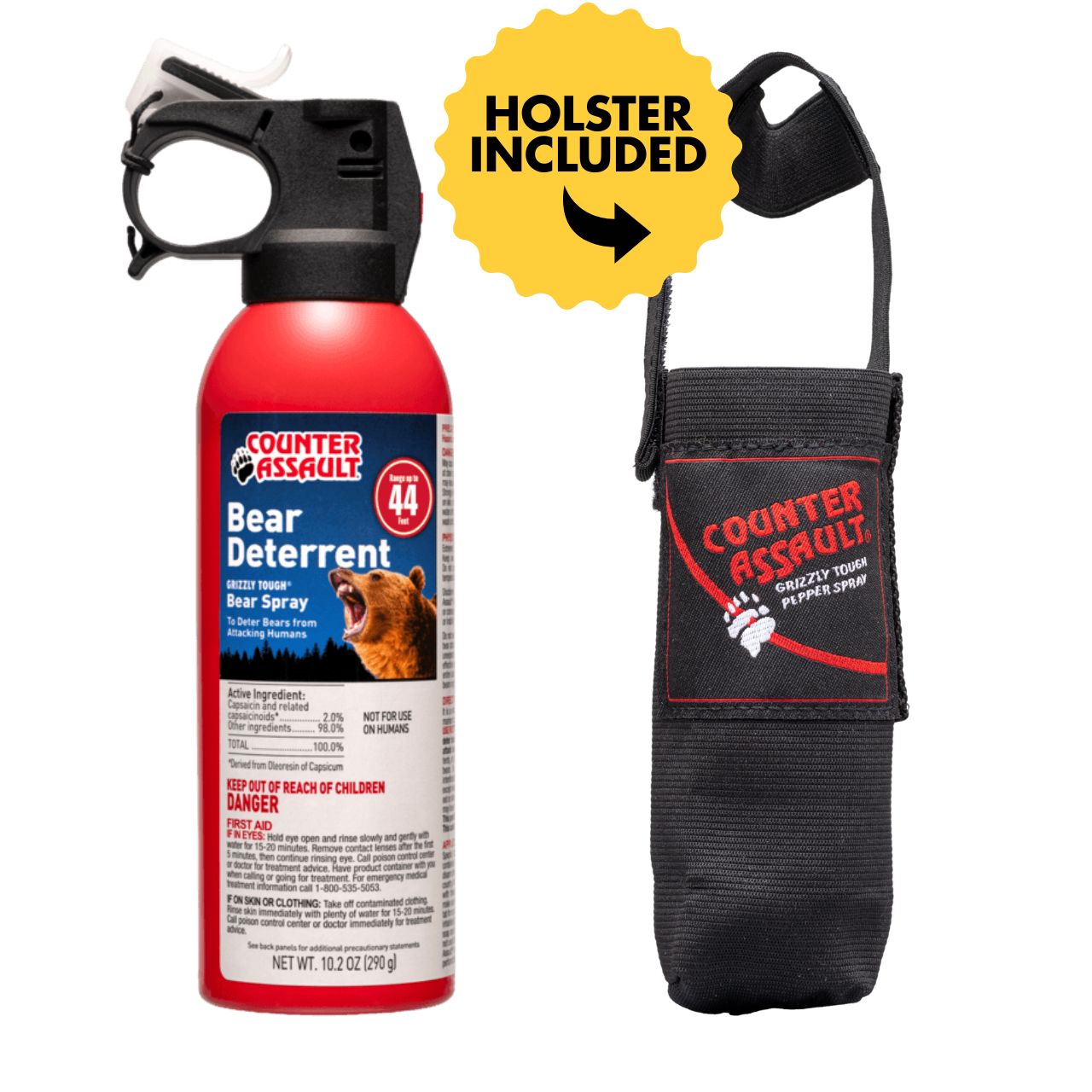
Counter Assault stands out in this category for practical reasons. Its flagship 10.2 oz spray is made in Montana, reaches 44 feet, uses the maximum 2% capsaicin strength noted in the product information, and is built as a non-lethal deterrent for all bear species as well as mountain lions and coyotes. The goal stays the same in every season. Keep distance, avoid conflict, and give both people and wildlife a way out.
For anyone traveling in bear country, Counter Assault offers a strong place to start. The 10.2 oz bear spray with included holster is the brand's flagship option, made in Montana and designed to project up to 44 feet with a maximum 2% capsaicin formula. It's built to help keep both people and wildlife safe as a non-lethal deterrent for bears, mountain lions, and coyotes. Combined with good judgment, clean camp habits, and year-round awareness, it gives backcountry travelers a practical margin of safety when winter doesn't mean bears are gone.