
A lot of people reading this are already doing the right things. They're hiking a familiar trail, walking a dog near open space, or taking kids out for an afternoon on public land. Then the question shows up in the back of the mind: what happens if a mountain lion steps onto the trail?
The right answer starts with perspective. The U.S. Forest Service says the chances of a negative mountain lion encounter are small, but those encounters aren't nonexistent. A USGS review of 386 human-cougar encounters in Canada and the United States included 29 fatal attacks, which is why preparation matters even though the overall risk is low (U.S. Forest Service mountain lion safety guidance). Knowing what to do if you encounter a mountain lion makes people calmer, more decisive, and less likely to make the one mistake that turns a tense sighting into a dangerous event.
Table of Contents
- Your Guide to Mountain Lion Encounters
- Prevention How to Avoid a Mountain Lion Encounter
- Recognizing a Lion and What to Do Immediately
- Using Deterrents and Fighting Back if Attacked
- Protecting Children and Dogs During an Encounter
- After an Encounter First Aid and Reporting
Your Guide to Mountain Lion Encounters
Mountain lion safety is mostly about behavior under stress. People rarely get into trouble because they lacked courage. They get into trouble because surprise pushes them into prey-like movement, bad posture, or rushed decisions.
That's why this kind of briefing matters. A mountain lion encounter can unfold fast, but the human response should stay structured. Stand up, stay facing the animal, control dependents, create space, and be ready to escalate if the lion doesn't back off.
Preparation matters most before the animal appears. In the moment, there's no time to invent a plan.
A second point often gets missed. This isn't only a solo-hiker issue. The hardest encounters often involve a child who wants to run, a small dog pulling at the leash, or a trail user who bends down at exactly the wrong moment. Those situations need different handling than the standard advice given to an adult on an empty trail.
The goal isn't fear. It's competence. People who know what to do if they encounter a mountain lion usually move better, communicate better, and keep a stressful sighting from turning into a close confrontation.
Prevention How to Avoid a Mountain Lion Encounter

The safest mountain lion encounter is the one that never starts. Most prevention comes down to avoiding surprise, reducing prey-like signals, and keeping enough awareness to spot trouble early.
Start before the trailhead
Some habits matter before boots hit dirt.
- Choose good timing: Low light creates problems for people and advantages for predators. If a hike starts early, ends late, or runs into changing weather, reliable lighting helps keep footing and awareness under control. A compact light such as the LuminAID PackLite Max 2-in-1 phone charger lantern is useful around camp and on dark approaches.
- Leave one ear free: Headphones cut down awareness. On narrow trails, in brushy drainages, and around bends, hearing movement matters.
- Think about pace: Trail runners and riders cover ground fast, which leaves less time to notice wildlife before they're close.
Habits that reduce surprise
A mountain lion that hears people coming has more opportunity to avoid them. A lion that gets surprised at close range has fewer options, and that's where encounters become more complicated.
A practical trail routine looks like this:
- Make human noise in tight terrain. Talk, call out before blind corners, and be more audible in dense cover.
- Travel in groups when possible. Groups present a larger, less approachable profile.
- Keep sightlines in mind. Slow down in areas with brush, rock outcrops, creek bottoms, or game trails crossing the route.
- Keep camps and breaks orderly. Don't let children or pets range far from adults, especially near cover.
Field rule: Most bad wildlife encounters begin with surprise at short distance.
Prevention also changes for families and dog walkers. Kids drift. Dogs pull toward movement and scent. Adults often focus on the trail underfoot instead of the edges of the trail where an animal may be bedded or watching. That means the best prevention step isn't a gadget. It's active supervision and spacing.
For hikers who carry emergency gear, a small trauma-oriented first aid setup is worth packing before any trip into predator habitat. A kit such as the Adventure Medical Kits Ultralight and Watertight series fits that role without adding much bulk.
Recognizing a Lion and What to Do Immediately
A lion steps out of cover 30 yards ahead. If you are alone, the job is straightforward. If you have a child beside you or a dog on leash, the first three seconds matter more, because small, fast movement can change the animal's interest.

Read the moment correctly
Start by judging the lion's behavior, not just its presence. A lion crossing the trail and continuing away calls for space and a calm retreat. A lion that stops, faces you, follows your movement, crouches, or closes distance needs an immediate, assertive response.
Standard trail guidance from the Mountain Lion Foundation is consistent. Face the animal, do not run, make yourself look larger, speak in a loud firm voice, and back away slowly while keeping it in view.
Most important rule: Don't run.
Earlier in the article, the USGS encounter analysis showed a higher attack and fatality risk for people moving quickly or erratically during encounters. In the field, that tracks with what responders see. Running, biking away, or spinning around can trigger pursuit.
Children and dogs complicate this step. A child may bolt to a parent. A dog may lunge, bark, or try to hide behind your legs. Control those movements fast. Bring children to your side or into your arms if they are small enough. Shorten the dog's leash immediately and keep it close, with the dog behind or beside you rather than out front.
The response sequence that works
Use a simple sequence and stick to it:
- Stop and plant your feet: Fast retreat creates confusion and can invite pursuit.
- Turn to face the lion squarely: Keep your chest and eyes on the animal.
- Get big: Raise your arms, lift a jacket, or hold trekking poles wide.
- Use your voice: Speak sharply and firmly so the lion reads you as a threat, not prey.
- Gather your group tight: Put children behind you or pick them up. Keep dogs close and controlled.
- Back away in small steps: Create space without turning around.
- Get a deterrent ready if you have one: Do it while the lion is still outside close range.
The goal is clear communication. You want the lion to see an alert adult that will not yield, not a scattered group with small animals or children exposed at the edges.
A short visual review can help fix the sequence before a trip.
People often lump lion and bear encounters together, but the body language and spacing decisions are not identical. This guide on what to do if you see a bear is a useful comparison if you spend time in country where both are present.
Mountain Lion Encounter Response
| DO THIS | NOT THIS |
|---|---|
| Face the lion and stay upright | Turn your back |
| Speak loudly and firmly | Stay silent and crouch |
| Make yourself look larger | Bend over or shrink down |
| Back away slowly | Run |
| Pull children in close immediately | Let children drift to the side or behind you |
| Keep a dog tight on a short leash | Allow a dog to lunge, circle, or run ahead |
| Ready a deterrent if carried | Wait until the animal is already at close range |
Using Deterrents and Fighting Back if Attacked
A mountain lion that keeps advancing after you have stood tall, faced it, and given it space has moved into a more serious phase of the encounter. At that point, clear action matters. Adults with children or dogs need to think the same way solo hikers do. Use distance, noise, and tools to stop the approach before the animal gets close enough to make contact.

When to bring a deterrent into play
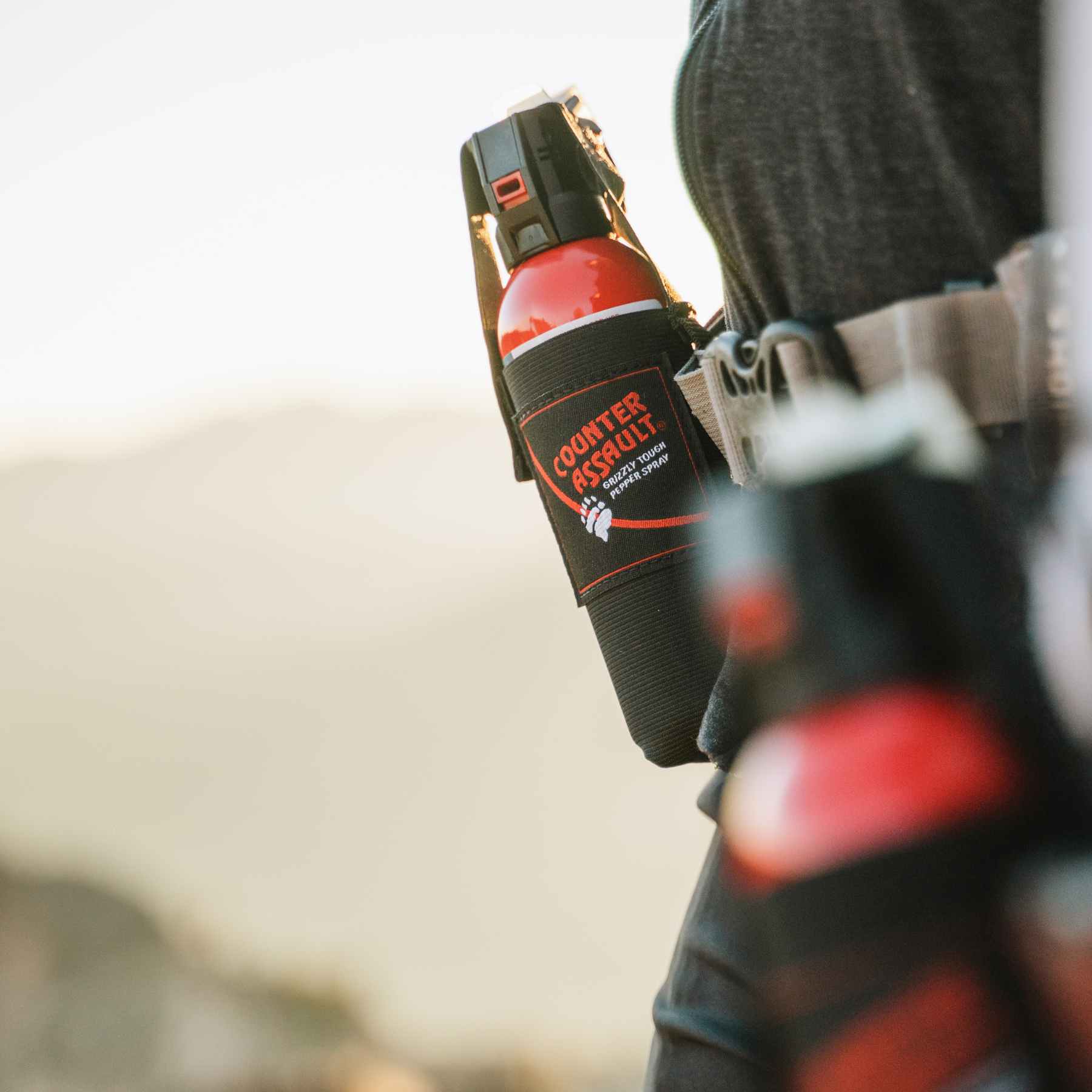
A deterrent needs to be on your body and ready to use. It does no good in the top lid of a pack or buried under a jacket. I tell families this before they leave the trailhead. If you are also managing a child, a leash, or uneven ground, you may only get one clean chance to draw and deploy.
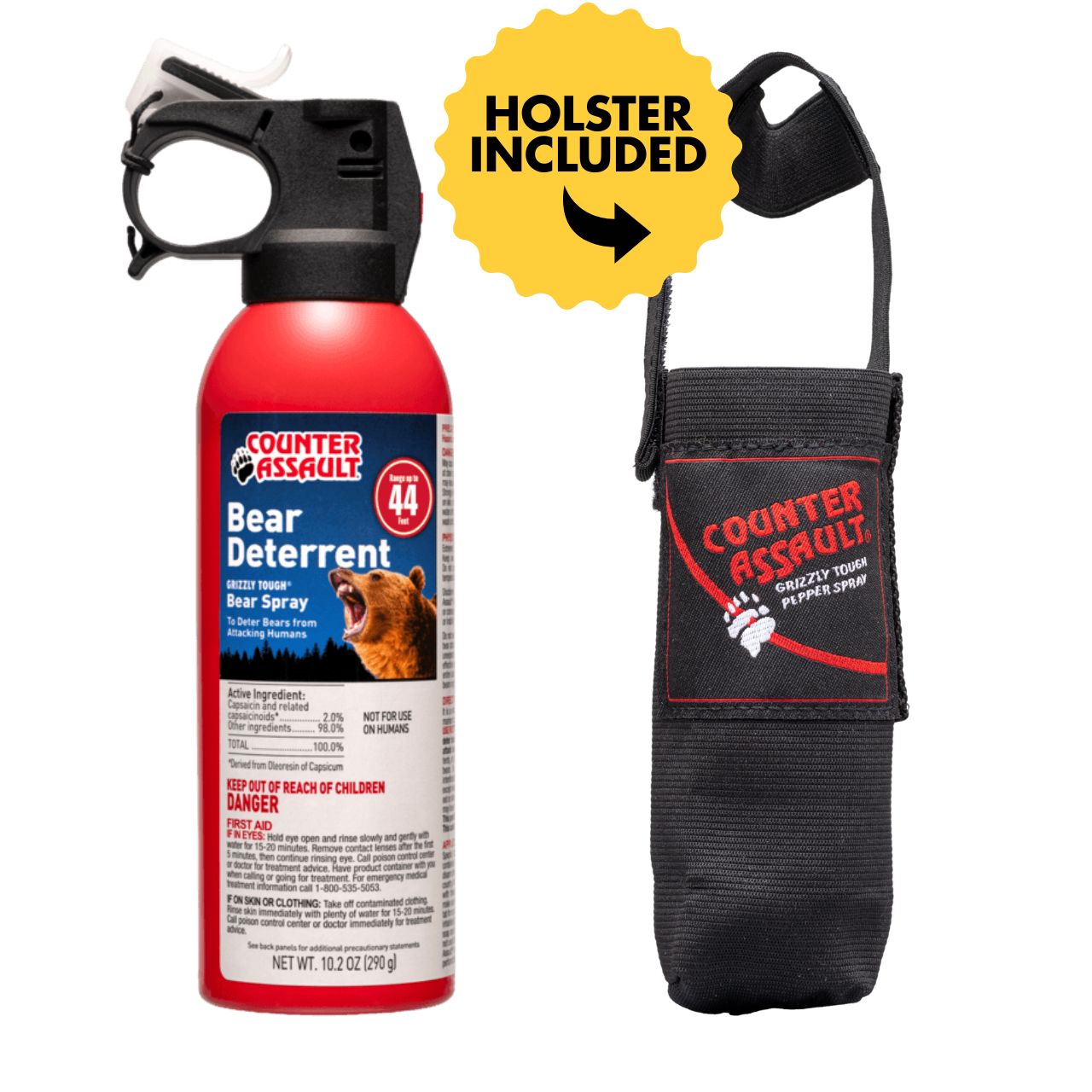
One option is Counter Assault's 10.2 oz bear spray with holster, which the manufacturer states is suitable for mountain lions as well as bears and coyotes. The value is not the label alone. The value is fast access from a chest, belt, or pack-strap holster when your hands are already busy.
Use a simple sequence under stress:
- Draw early while the lion is still outside contact range.
- Take off the safety.
- Keep the canister pointed slightly downward toward the animal's line of travel.
- Fire if it continues closing. Build a cloud between you and the lion.
- Adjust aim and spray again if it pushes through.
- Leave only when you have space to do it without turning into a fleeing target.
Low light changes the problem, especially for dog walkers at dawn or dusk. A powerful flashlight can help you identify eyeshine, keep visual contact, and support your verbal response, but light is not a substitute for spray or a hard defensive tool. Gear from the SOL emergency and survival line can round out a day kit. It still has to be reachable and practiced with.
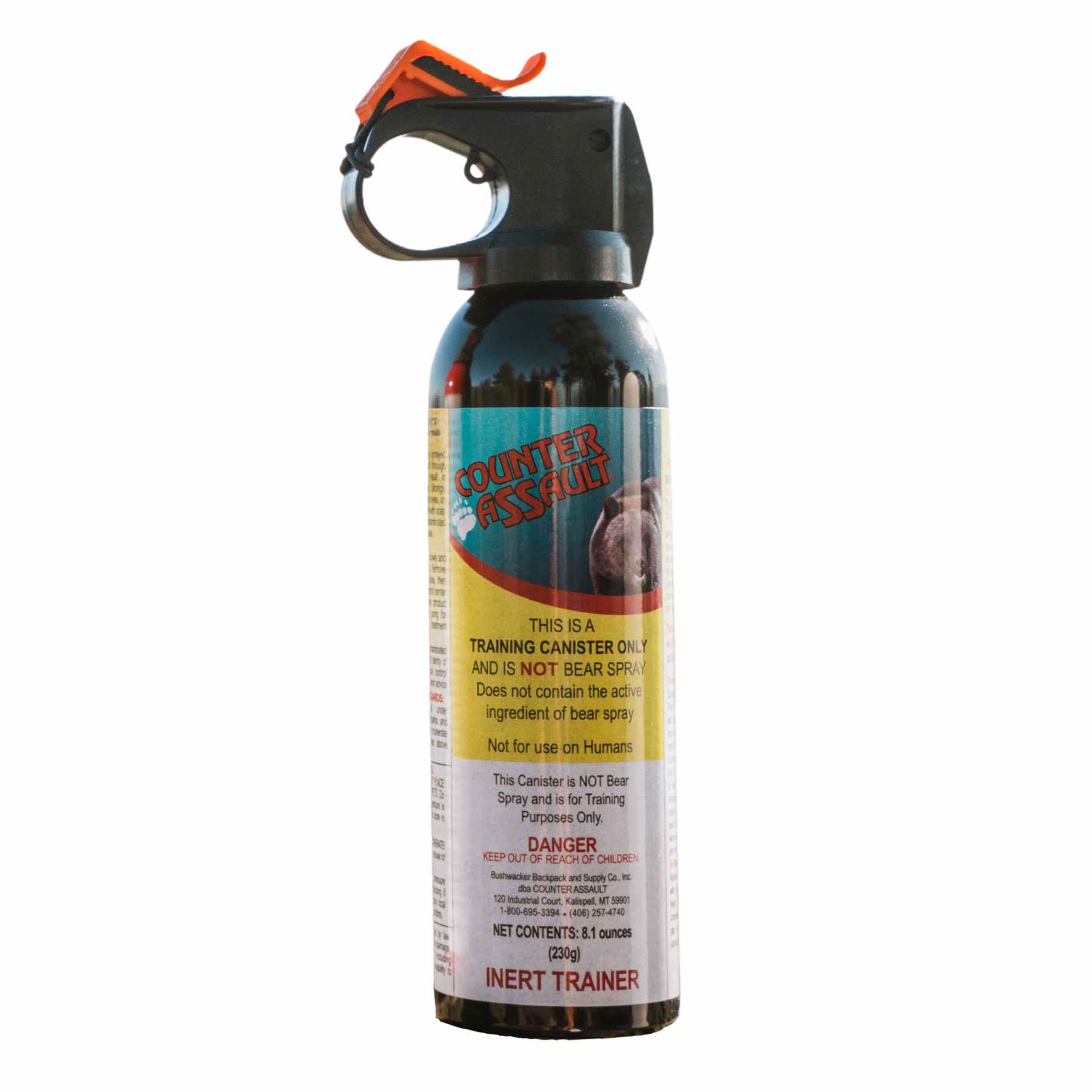
If you are deciding what to carry, understand the difference between bear spray and personal pepper spray for wildlife defense. They are not the same tool, and that matters when the target is a large predator instead of a person.
If contact happens
If the lion makes contact, fight back at once. Do not play dead. Do not curl up if you can stay on your feet. The goal is to break the attack, protect your head and neck, and convince the animal that this will cost it.
Colorado Parks and Wildlife guidance, summarized by Colorado Outdoors on mountain lion attack response, notes that people have fought off lions with rocks, sticks, jackets, tools, and bare hands. That matches field reality. In close quarters, perfect technique matters less than speed, balance, and commitment.
Target the face. Hit the eyes and nose with rocks, trekking poles, a sturdy flashlight, the handle of a leash, or your fists. If a dog is attached to you, keep hold only if doing so does not pull you off balance or drag you down. If a child is with you, the adult in the best position to strike needs to engage the lion while the other adult secures the child and stays upright. As noted earlier in the article, determined intervention can change the outcome in attacks on children.
Stay in the fight until the lion breaks off and creates real distance. Then get people together, control the dog, treat injuries, and get out.
Protecting Children and Dogs During an Encounter
A mountain lion encounter gets harder the moment a child freezes or a dog starts pulling. The adult's job is to control that first impulse to bend down, turn away, or chase after movement. Stay tall, face the lion, and bring the vulnerable member of the group into control without giving up your posture.

Children change the decision-making
The National Park Service mountain lion safety guidance advises adults to pick up small children without bending over or turning away from the lion, and to keep the group together. That is sound field advice. Small children can panic, run, or collapse in place, and all three create problems fast.
As noted earlier in the article, children face higher risk in serious encounters, and quick intervention by nearby people can change the outcome. Families should plan for that before the hike, not in the middle of the moment.
Use a simple family response:
- Lift small children while facing the lion: Squat as little as possible. Use one arm if needed, then stand upright at once.
- Place older children behind an adult: If two adults are present, put the child between you.
- Use short commands only: “Come here.” “Behind me.” “Do not run.”
- Leave dropped items on the ground: Water bottles, toys, and snacks are not worth breaking posture for.
I tell parents to practice this on the trail before they need it. A child who already knows “behind me” is easier to place and keep still under stress.
Dogs need close control
Dogs add noise, speed, and unpredictability. A barking dog may hold a lion's attention, but it can also pull the handler off balance or run back with the animal following. Control matters more than intimidation.
Keep dogs on a short, fixed leash in lion country. Retractable leashes create too much distance and too little control. Do not send a dog toward the lion, and do not let it circle behind you where it can tangle your legs.
If the dog is small and you can lift it without turning away from the lion, bring it up high against your body. If the dog is too large to carry, shorten the leash, pin the dog to your side, and keep your feet under you. With two adults, one person manages the dog and the other watches the lion and directs the children.
People who hike and walk dogs in mixed predator habitat can also review Counter Assault's guidance on protecting yourself from coyotes while walking with a dog. Some handling habits carry over well, especially leash discipline and keeping the animal close instead of letting it range ahead.
After an Encounter First Aid and Reporting
Once the animal leaves, the job isn't finished. The next steps protect the injured person, help other trail users, and give wildlife staff information they can act on.
Take care of injuries first
Even minor scratches or punctures need attention. Clean wounds as well as possible, control bleeding, protect the injured area, and seek professional medical evaluation. Bites and claw injuries carry infection risk, and head or neck trauma needs urgent assessment.
A well-stocked field kit makes those first minutes easier. Products like the Adventure Ready outdoor first aid collection are built for the kinds of cuts, punctures, and evacuation delays that happen outdoors.
Report what happened
Every close encounter should be reported to the local park unit, ranger station, or state wildlife agency. That includes sightings that felt threatening even if no physical contact occurred.
A good report includes location, time, number of people present, whether children or pets were involved, what the lion did, and how it responded to human behavior. That information helps land managers warn others, monitor patterns, and decide whether a particular animal needs closer attention.
Preparedness is simple. Know the response sequence, keep children and dogs under control, and carry tools that can be reached under stress. For people traveling in predator country, Counter Assault offers wildlife deterrent gear designed for encounters where fast access and clear decision-making matter.