
A camper rolls into a forested site at dusk, tired, hungry, and a little rushed. The tent space looks flat enough, the cooking area seems obvious, and the cooler is already open before the sleeping pad is even out. That's where camping guidelines stop being a list and start becoming a system, because the next choices shape bear risk, food safety, fire safety, and whether the site gets cleaner or more damaged by morning.
Table of Contents
- Why Modern Camping Guidelines Go Beyond Comfort
- Choosing a Campsite That Works With Wildlife
- Food, Scent, and Storage Rules for Bear Country
- Bear Spray Use, Deployment, and Legal Notes
- Fire Safety, Cooking Hygiene, and Leave No Trace Numbers
- Emergency Response, First Aid, and Trip Planning
- Common Misconceptions About Bear Spray and Bear Safety
- Your Pre-Trip Checklist and Park-Specific Considerations
Why Modern Camping Guidelines Go Beyond Comfort
A site that feels “good enough” at sunset can turn into a bad setup by midnight. One camper chooses the first flat patch beside the drive, another puts the cooler next to the tent, and a third assumes the fire ring means everything else is automatically safe. Modern camping guidelines exist to stop those small choices from becoming wildlife encounters, sanitation problems, or avoidable damage to the ground beneath the camp.
Camping rules are really stewardship rules
A U.S. Forest Service review explains that managers try to reduce the total area of camping impact by limiting both campsite numbers and campsite size, and it notes that some areas use reservation systems or assigned sites to control demand. The same review also says that restoring closed or non-selected sites helps sustain that approach, which is why the goal is not just comfort, it's concentrating use on durable places instead of opening new scars. That idea shows up in ordinary advice like staying on trail, using designated pads, and not expanding fire rings or kitchen areas beyond their existing footprint. The full review is useful background for anyone comparing campsite rules across public lands, because it frames campsite choice as a land-management decision, not just a personal preference, and it can be read in the U.S. Forest Service review on campsite impact management.
Food safety and wildlife safety now sit in the same category
Camping participation is high enough that guidance around food, hygiene, and wildlife can't stay optional. One industry analysis reports 92 million U.S. households identified as campers in 2022, 7.2 million were first-time campers that year, and $52 billion was spent in local communities. Those numbers help explain why agencies keep pushing practical rules about handwashing, safe water, and food storage, because more people in more places means more chances for sloppy camp habits to attract animals or spoil a trip.
Practical rule: If a guideline does not help protect soil, food, water, or sleep, it is probably only half a guideline.
The strongest camping advice usually comes from agencies and land managers that deal with the same problems every season. That's why ranger-style guidance tends to be more dependable than crowd-sourced shortcuts, especially when the advice concerns bears, fire restrictions, or campsite layout. The four pillars that keep showing up are site selection, food and scent control, wildlife response tools, and Leave No Trace habits.
Choosing a Campsite That Works With Wildlife
A good campsite makes a bear's job harder, a camper's sleep easier, and the morning cleanup simpler. The first mistake beginners make is choosing a spot for convenience alone, like the nearest flat patch or the prettiest overlook, without checking where water runs after rain or where animals already move through the area. A wiser approach is to read the site like a route, not like a living room.
Start with slope, drainage, and daylight
Engineering guidance used in public recreation settings recommends accessible tent pads or platforms with a slope no steeper than 1:50, or 2%, and it calls for a firm, stable surface that can hold tent stakes or similar anchors. That matters even on ordinary backcountry ground, because a pad that drains well is less likely to pool water under the tent or collect mud around the door. Arriving with enough daylight to inspect the whole site is just as important, and U.S. Air Force safety guidance specifically says campers should reach camp with enough daylight left to check the entire site and set up camp, which gives time to spot dead branches, animal sign, and awkward wind exposure before dark.
Separate sleep, cook, and storage zones
A campsite works better when the sleeping area, cooking area, and food storage area are clearly separated. That triangle reduces scent drifting into the tent and keeps a surprise animal encounter from becoming a food problem at the same time. It also helps if the sleeping zone is away from obvious travel lines such as game paths, stream crossings, and narrow funnels between trees, because animals tend to move through those spaces without warning.
A remote trip adds one more planning layer. The same U.S. Air Force guide recommends a minimum of four people in a remote group so one person can stay with an injured camper while two go for help, and it also advises layered clothing because mountain weather can shift fast even in fair seasons. A good site is not just flat, it gives the group options if the weather turns, if the first pitch fails, or if somebody needs to move quickly.

Camp where the ground can shed water, where the group can see fresh sign, and where the tent is not the first thing wildlife walks past.
Food, Scent, and Storage Rules for Bear Country
Bear country travel goes better when scent is treated like a carrying system, not a single item. Food is the obvious problem, but so are toothpaste, cookware, trash, sunscreen, cooking grease, and anything else that smells like a reward to a curious animal. The habit that prevents most trouble is simple, keep all of it in one controlled place, then keep that place far from where people sleep.
Build a layered storage system
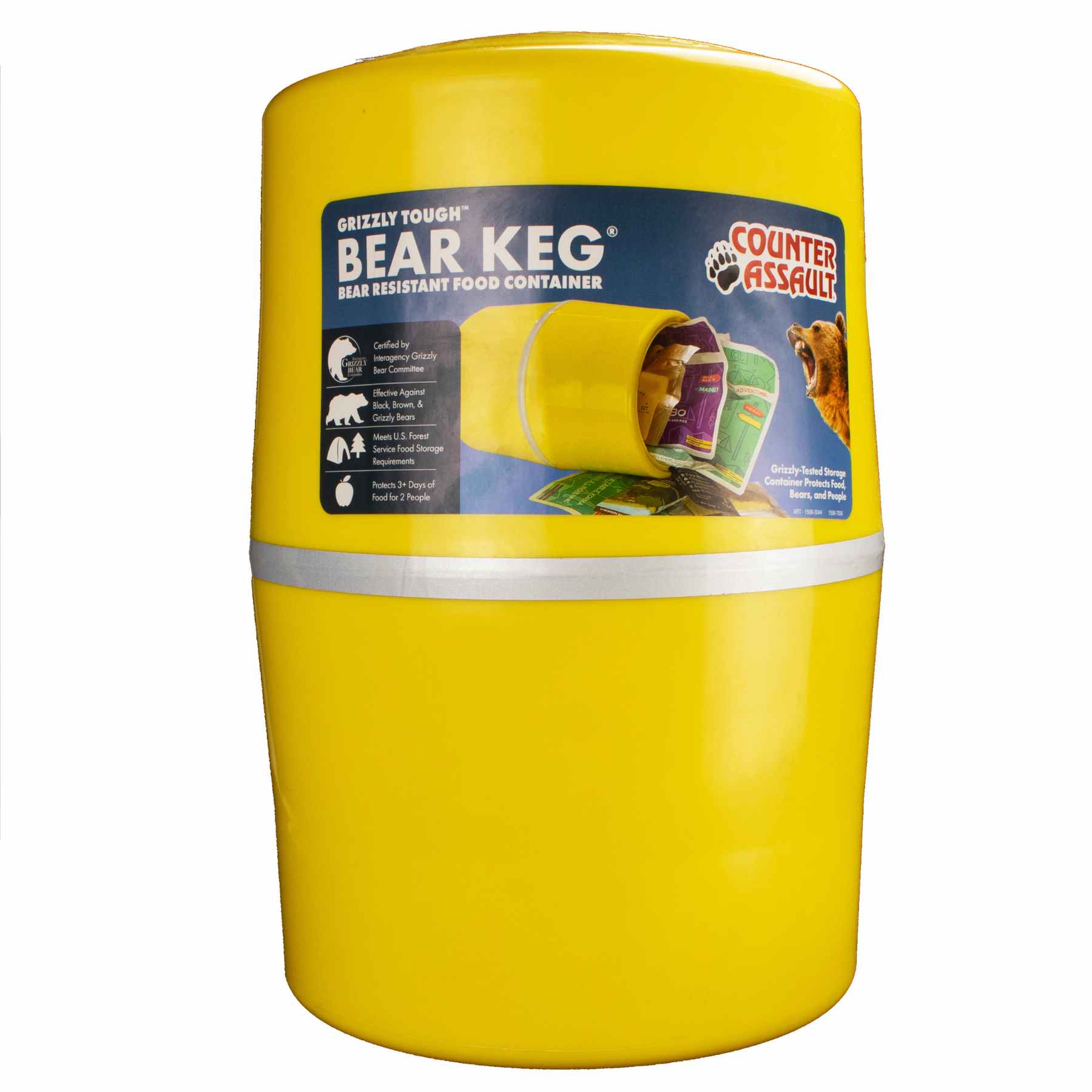
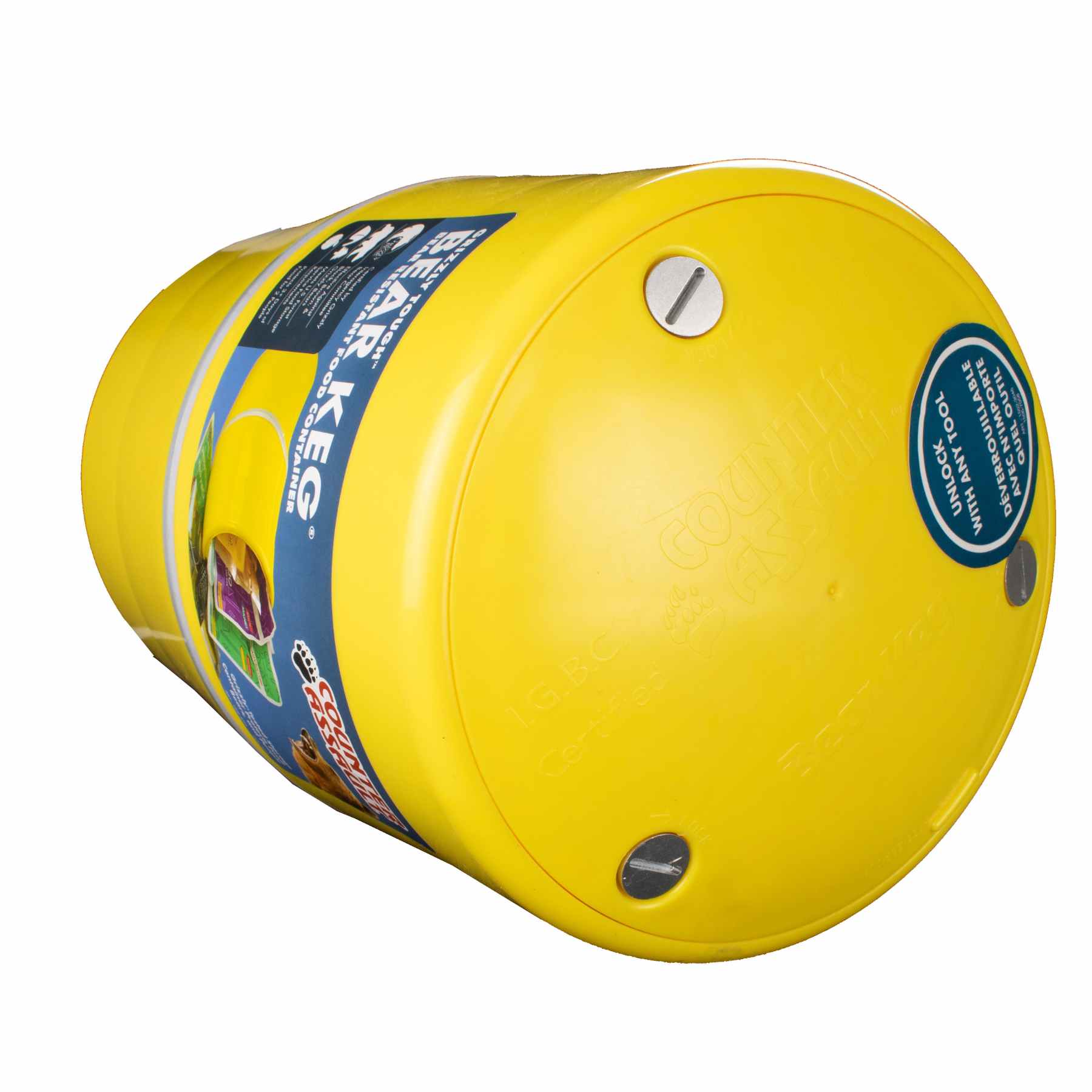
The cleanest setup starts with a bear-resistant canister or locker when the site provides one, then moves to vehicle storage only where it is appropriate and secure. If neither exists, a bear-bag hang becomes the fallback, and the important part is not just getting the bag up, but keeping it away from the sleeping area. Neutral outdoor guidance commonly uses a separation of 60 metres from the tent for scented items in backcountry settings, and that distance helps campers stop thinking of food as “nearby but hidden” when it really needs to be treated as a different zone altogether. The Counter Assault camping food storage guide is a useful companion for campers who want a product-focused overview of storage habits without turning a campsite into a scent buffet.
The most reliable routine is to keep cooking away from sleep, pack out trash immediately, and leave no food sitting loose in a tent vestibule. The National Park Service also warns not to take food into tents and to keep campsite food, garbage, coolers, and utensils out in the open, and that advice lines up with the basic rule that bears investigate smell, not intention. For a simple field setup, a bear-resistant container plus a tidy cooking area does more than a pile of clever hiding spots ever will.
Match gear to low-scent camp routines
A practical camp kitchen also stays cleaner when hygiene tools are easy to reach. Adventure Medical Kits carries compact hygiene and first-aid gear that fits this kind of routine, and low-scent camp lighting from Lumaid can help keep the cooking area visible without adding extra mess or fuel use. A second helpful reference is Survive Outdoors Longer, especially for lighting and fire-related tools that support a low-impact site without a lot of clutter.

If a smell belongs in the kitchen at home, it doesn't belong loose beside the sleeping pad at camp.
Bear Spray Use, Deployment, and Legal Notes
Bear spray is a deterrent, not a camp accessory and not a skin product. It belongs in a plan for an aggressive bear or a charge that may turn into one, and it should never be sprayed on people, on gear, or used like insect repellent. The important habit is to treat it as the final step in a calm, practiced response, not something to improvise when the bear is already close.
Use comes after warning signs, not before
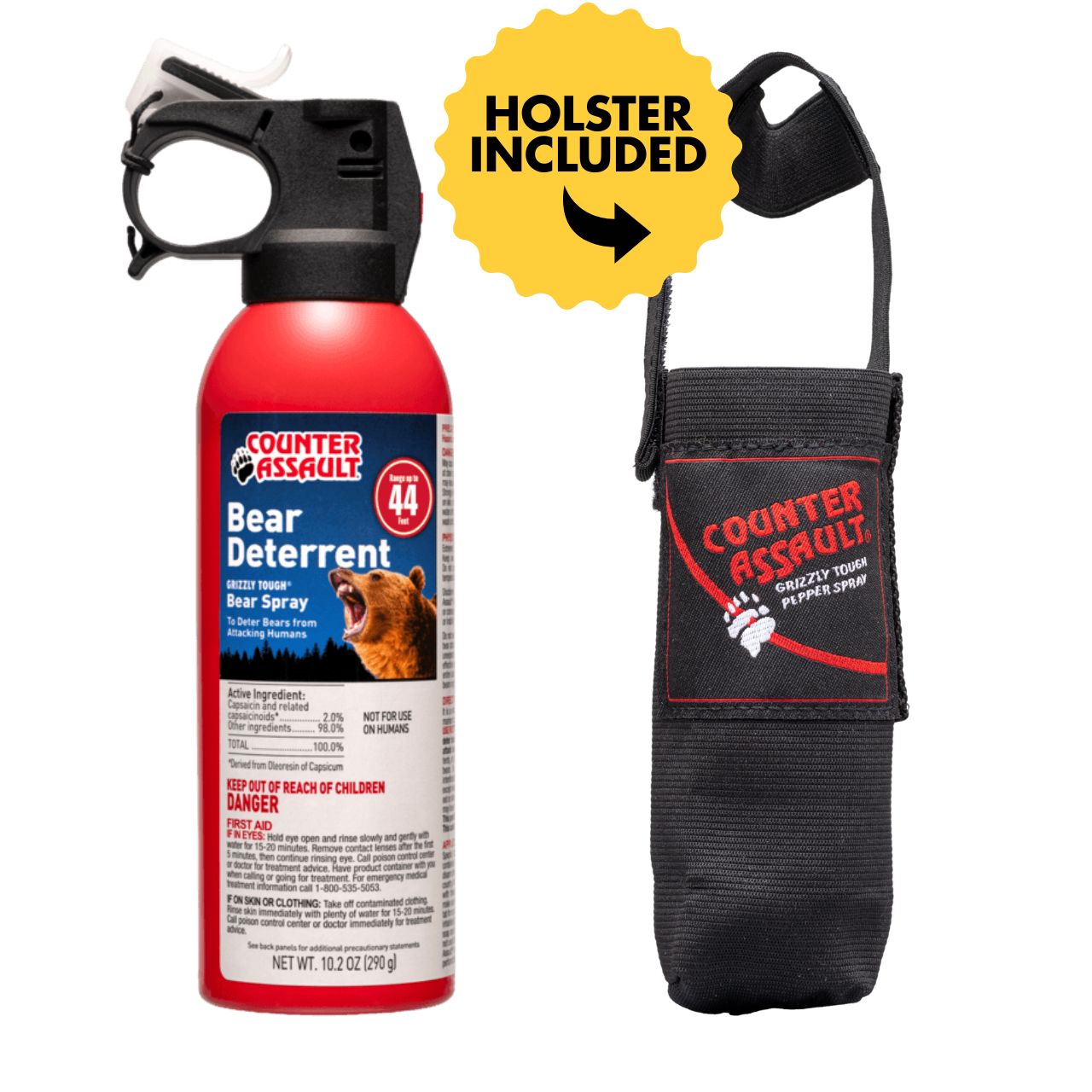
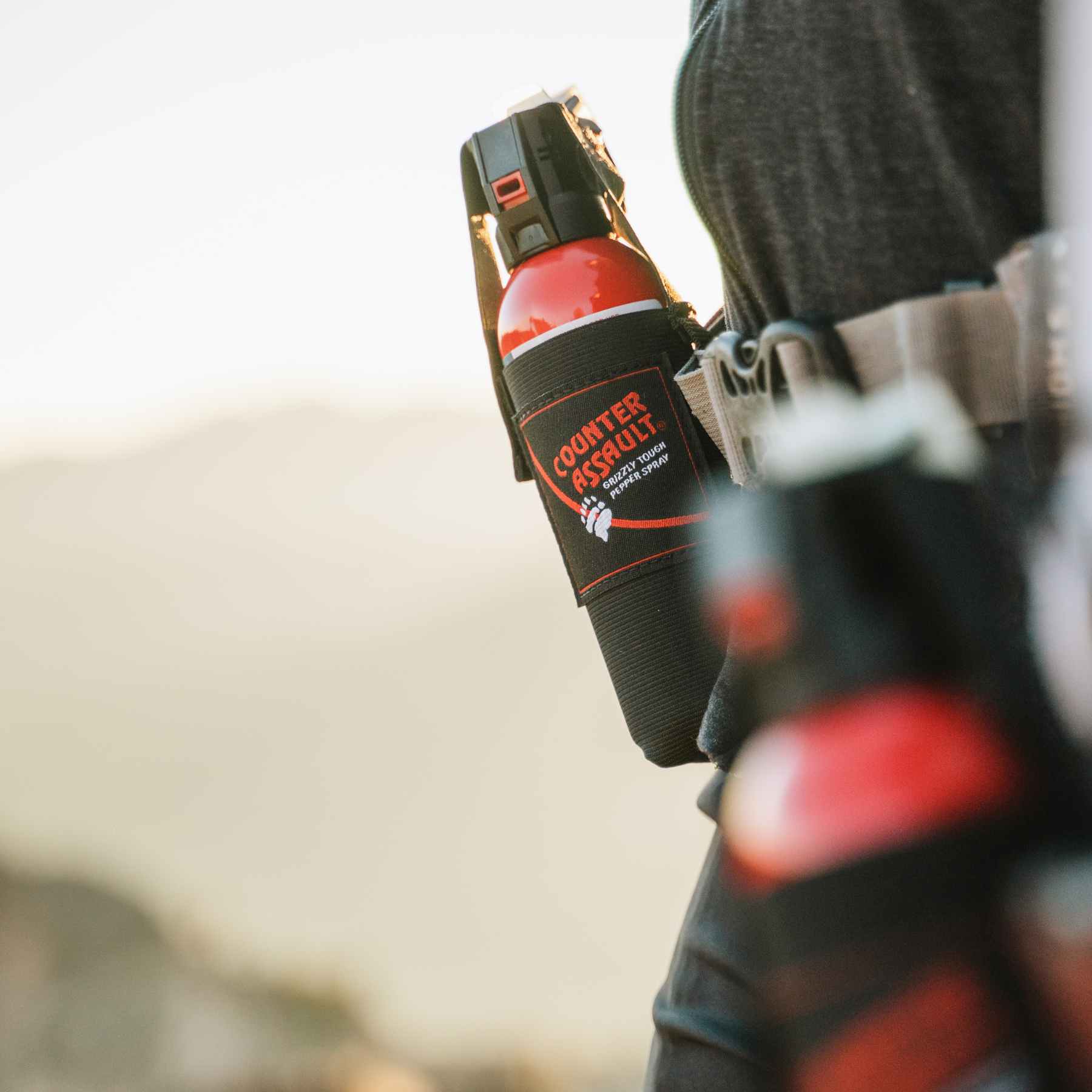
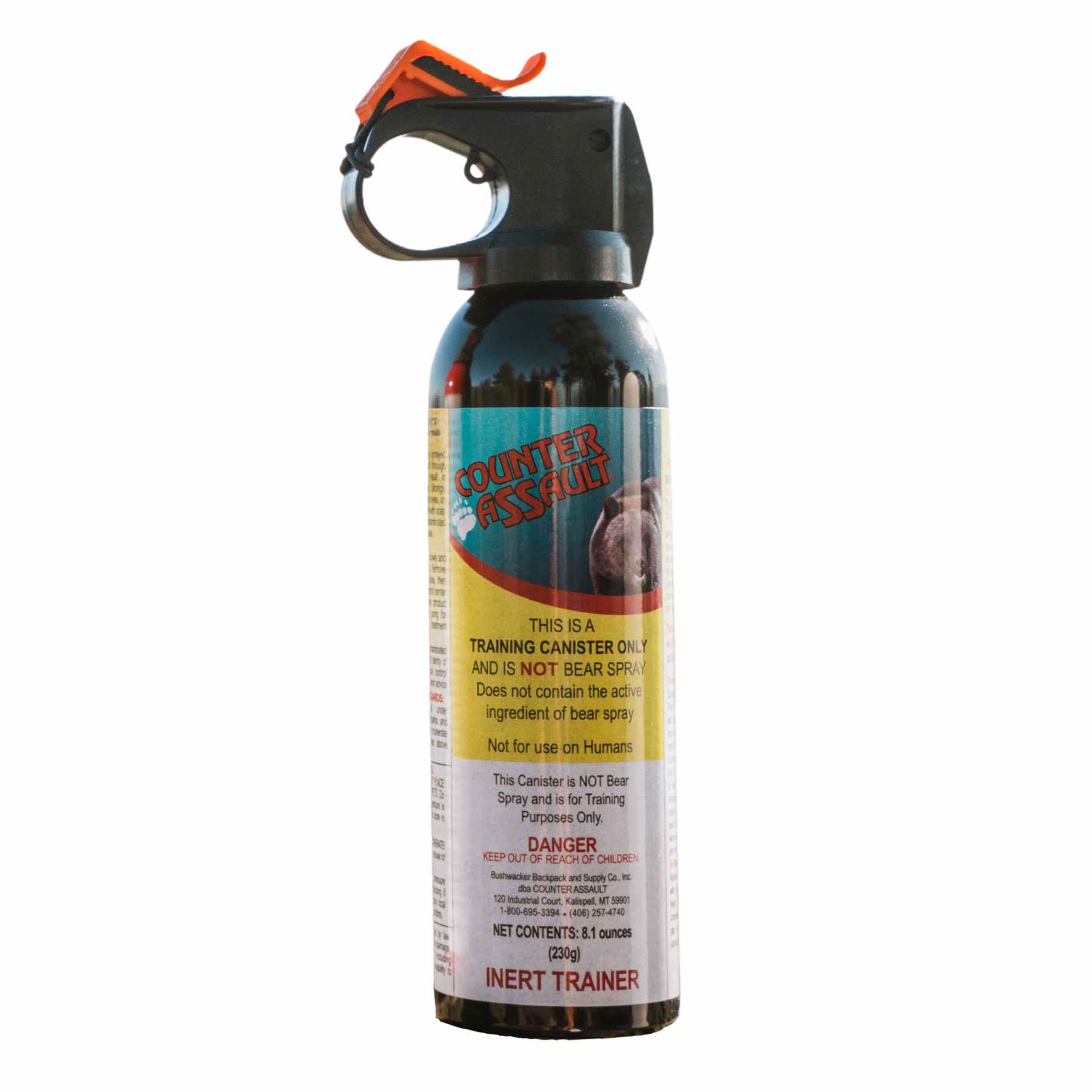
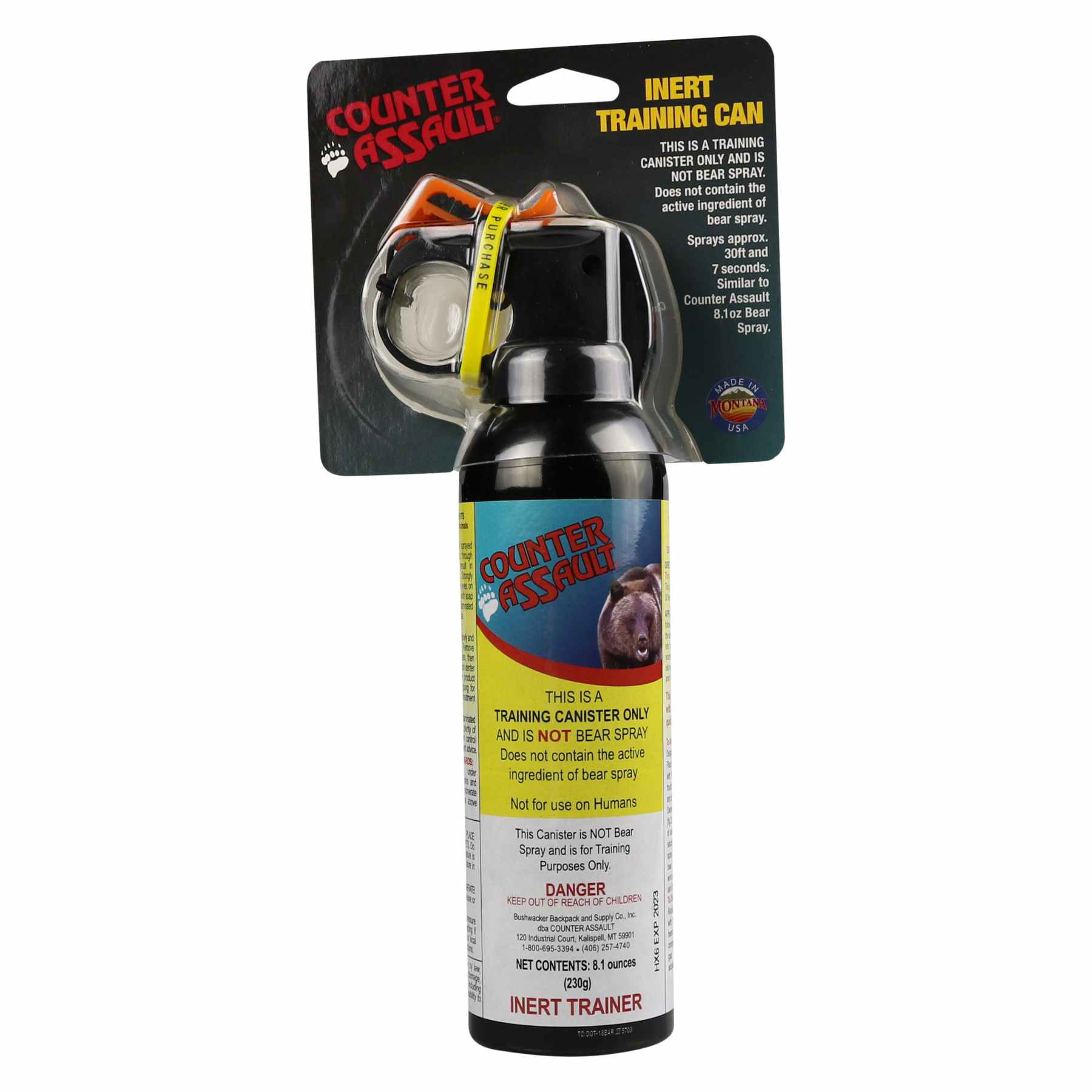
When a bear is approaching aggressively, the sequence is straightforward. Remove the safety clip, aim slightly downward toward the front of the bear, and start spraying when the animal is 30 to 60 feet away so the bear runs into the cloud. Keep spraying until the charge diverts, and if the bear keeps coming, spray directly into its face before leaving the area immediately. That is a technique issue, not a confidence issue, because the user needs enough margin to act before the animal is already on top of the campsite. Counter Assault's 10.2 oz canister with holster is one option for that role, and the Counter Assault bear spray guide gives a product-specific overview of basic use.
The image below shows the kind of trail moment where that response matters.

Why the evidence favors spray over precision weapons
A 2008 study found bear spray was 90% effective at stopping aggressive bears, with 98% of users unharmed, while firearms were 84% effective at stopping the attack but produced the same injury rate on the person, and shooting a bear can increase attack severity depending on bullet placement. A separate Alaska study of 72 incidents involving 175 people found bear spray stopped aggressive bears more than 90% of the time, and only three people were harmed after deploying it, none seriously, according to the study summary in the archive linked above. The pattern is clear, spray gives people a better chance to stop the encounter without forcing a perfect shot under stress.
Legal rules still vary by park, refuge, and country, so each trip needs a quick check of local regulations before departure. Some places treat canister size or transport rules differently, while others limit where deterrent spray can be carried or used. Counter Assault products are designed for wildlife deterrence, and in that context they are used on bears, mountain lions, and coyotes, never on people.
Fire Safety, Cooking Hygiene, and Leave No Trace Numbers
A camp kitchen can become a wildlife problem before anyone notices the pattern. Grease on a frying pan, scraps near the wash basin, or a fire ring built too close to dry brush gives animals a reason to revisit the same spot, and that is how a quiet evening starts to feel predictable to them. Fire, food, and scent belong in one routine, because every part of camp sends a signal.
The field numbers that matter most
Leave No Trace guidance gives simple distances that are easy to ignore until a ranger points to the ground and asks where each task should have happened. Backcountry tents should sit at least 60 metres from waterways, campfires should be at least five metres from tents, shrubs, trees, low-hanging branches, or other burnable material, catholes should be 15 to 20 centimetres deep, and wastewater should be carried 60 metres away from natural water sources before it is strained and scattered, as described in David Suzuki Foundation camping guidance. Those figures are not decoration. They shape where the tent goes, where the kitchen sits, and where dirty water returns to the ground.
| Activity | Minimum Distance / Spec | Source |
|---|---|---|
| Tent placement near waterways | 60 metres | David Suzuki Foundation camping guidance |
| Campfire placement | 5 metres from tents, shrubs, trees, and low branches | David Suzuki Foundation camping guidance |
| Cathole depth | 15 to 20 centimetres | David Suzuki Foundation camping guidance |
| Wastewater handling | 60 metres from water before straining and scattering | David Suzuki Foundation camping guidance |
Food handling belongs in the same routine
A 2021 article in Food Protection Trends says safe camping food practice includes keeping hot foods hot and cold foods cold, cleaning utensils, preventing cross-contamination, drinking safe water, using a thermometer, and using soap or disposable wipes. That advice becomes easier to follow when the washing setup is already positioned away from the water source and the food storage area. Campers who need help keeping picnic flies and kitchen pests out of the meal area can also use a guide for a pest-free camping experience as a practical companion to the sanitation routine.
Fire bans and smoke belong in the same decision tree. If a restriction is posted, the camp stove replaces the fire ring, and the night routine shifts to keeping the kitchen and lighting simple. Compact hygiene gear from Adventure Medical Kits and dependable lighting from Luminaid fit naturally into that kind of low-impact camp, and they do it without adding extra scent or smoke.
Emergency Response, First Aid, and Trip Planning
Good camp habits still need a backup plan. A twisted ankle on the walk in, a sudden thunderstorm, or a heat problem at the edge of the afternoon can wreck a trip faster than any wildlife scare, and the right response starts before anyone leaves home. The core idea is to make rescue easier by making the situation clearer.
Pack for response, not just comfort
A layered first-aid kit is better than a single pouch of bandages. Adventure Medical Kits is a strong option for a curated setup because it lets campers carry treatment for common field problems without building the kit from scratch. Alongside that, a map, offline navigation, a charged phone, and a way to signal for help turn a bad stop into a manageable one, especially if the group has already assigned who stays, who moves, and who handles communication.
Someone at home should know the route, the campsite, and the expected return time before the truck leaves the pavement.
That simple habit matters as much as any gadget. It also fits the U.S. Air Force remote-trip principle already noted, the minimum of four people in a remote group gives a practical rescue margin if one person is hurt and two need to go for help. The safest travel plan is the one that does not assume help will arrive quickly or that everyone will stay equally mobile.
A short reference on broader gear planning is available in the backcountry safety gear article, which pairs well with a first-aid kit and a communication device.
Heat, smoke, and irritation deserve real planning
Extreme heat and wildfire smoke make normal camping routines harder to follow. Hydration, shade, light clothing, and fire-ban compliance are not comfort extras in those conditions, they're what keep the trip viable enough to finish safely. If the forecast turns bad enough that normal sleep, cooking, or evacuation routes stop making sense, cancelling the trip is sometimes the most disciplined choice.
Small comfort items help too. After Bite and Natrapel can keep insect irritation from sending a camper wandering around at dusk or skipping a proper camp setup because the evening feels miserable. Clean, comfortable campers make fewer rash decisions, and fewer rash decisions make for better nights outside.

Common Misconceptions About Bear Spray and Bear Safety
Three myths keep causing bad calls in bear country. The first says guns are the answer, the second says bear spray is unreliable, and the third says wind makes spray useless. Each one sounds plausible from far away, and each one falls apart once a person looks at how fast encounters happen and how little room there is for perfect aim or perfect judgment.
What the evidence actually supports
The 2008 study already mentioned found bear spray was 90% effective with 98% of users unharmed, while firearms were 84% effective at stopping the attack but produced the same injury rate on the person. That matters because a weapon that depends on precision under stress is not automatically the safer tool, and the study summary also notes that shooting a bear can increase attack severity depending on bullet placement. The Alaska incident data points the same direction, with spray stopping aggressive bears more than 90% of the time and only three people harmed after deployment, none seriously.
Wind gets blamed too often for mistakes that started earlier. In wooded campsites, trees and terrain block a lot of air movement, and the more important issue is whether the camper has the canister ready and understands the firing distance. A practiced user who keeps the spray accessible usually has a better outcome than a camper who owns a more complicated tool but never rehearses the response.
Bear spray is not a license to get close, it is a last line of defense that lets distance work in the camper's favor.
The final confusion is ethical. Bear spray is not pepper spray for people, and it is not a camping substitute for anger management or self-defense theatrics. It is a wildlife deterrent, meant for bears, mountain lions, and coyotes only, and its purpose is to help both animals and people walk away unharmed.
Your Pre-Trip Checklist and Park-Specific Considerations
Every bear-country trip needs one short list that can be checked before the car leaves. It should cover the deterrent tool, the food system, the first-aid plan, the clothing layers, and the park rules that can change the whole setup before arrival. A good printable checklist beats a memory test at the trailhead.
The portable checklist
- Bear deterrent: Carry Counter Assault's 10.2 oz bear spray with holster if it fits the trip plan and local rules.
- Food storage: Pack a bear-resistant canister, locker plan, or approved hang method.
- Layers: Bring clothing that can handle a cold morning and a warm afternoon.
- First aid: Carry a curated kit from Adventure Medical Kits or an equivalent field-ready setup.
- Lighting and navigation: Pack a headlamp, spare batteries, offline maps, and a charged phone.
- Communication: Bring a satellite communicator or PLB for remote routes.
- Rules: Print or save current food-storage orders, fire restrictions, and permit requirements.
A broader packing reference can help a family group fill the gaps around the bear-specific gear, and the packing guide for outdoor adventures is one useful starting point for that broader list. Park rules vary a lot between Yellowstone, Yosemite, Glacier, Canadian national parks, and wilderness areas, so the final check should always happen on the park or forest website before departure.
A few questions that come up after the checklist
Bear spray on flights depends on airline and transport rules, so it needs a transport check long before the airport. If a bear enters camp at night, the safe move is to stay calm, avoid running, and prepare the spray if the animal is acting aggressively. For canister sizing, solo travelers usually want enough spray to stay confident during a single encounter, while groups should make sure the canister is easy to reach from the person most likely to react first.
For campers who want wildlife protection that fits real campsite habits, Counter Assault offers bear spray built for bear-country travel, with practical holster options and wildlife-focused deterrence. Visit Counter Assault to compare gear, review deployment basics, and choose the setup that matches the kind of camping trip being planned.