
A coyote can turn up at the exact moment a dog walker is least interested in surprises, along a familiar sidewalk at dusk, on a neighborhood trail, or beside the trash cans after dark. The animal may not charge at first. It may just hold still and watch, which is enough to make the situation feel wrong fast.
That is where a coyote spray deterrent earns its place. Used correctly, it is a non-lethal last line of defense, not a substitute for awareness, fencing, or removing attractants. For people who want a practical plan, the goal is simple, stay calm, keep distance, and have a deterrent that's ready when a coyote doesn't back off on its own. For a broader safety guide, see how to protect yourself from coyotes.
Table of Contents
- Introduction Why You Need a Plan for Coyote Encounters
- Understanding How Coyote Deterrent Sprays Work
- Why Range Matters Choosing the Best Spray Deterrent
- Creating a Layered Coyote Safety Strategy
- When and How to Deploy Coyote Deterrent Spray
- Debunking Common Myths About Wildlife Deterrents
- Carrying Maintaining and Practicing With Your Spray
Introduction Why You Need a Plan for Coyote Encounters
A coyote encounter usually begins in an ordinary moment, not in a crisis. The dog is on leash, the street is quiet, and then a coyote appears at the edge of a yard or trail. That is the point where preparation matters, because the animal can close distance fast.
The first job is to keep the situation from escalating. Coyotes often respond to human pressure, but they also learn where food, shelter, and predictable movement make a place worth revisiting. A spray deterrent belongs in that context, as a safety tool for close-range emergencies, not as a standalone fix.
Practical rule: If a coyote is just passing through, give it space. If it holds ground, shadows a pet, or keeps closing distance, the plan has to change.
People often mix up prevention, hazing, and emergency defense. Those are different jobs. Prevention lowers the odds of an encounter, hazing pushes a cautious coyote away, and spray is for the moment when the animal still will not disengage.
That distinction matters because wildlife deterrence is about protecting both people and animals. A bear spray efficacy review found that capsaicin spray stopped undesirable bear behavior in many close-range incidents, and those who carried and deployed spray largely avoided injury, which is why the same non-lethal approach has value for coyotes too (bear spray efficacy review). The encounter is different, but the core idea is the same, a strong spray can stop an advance without turning the situation into a fight.
A good plan starts before anyone opens the front door. It also starts before the first bark, because a prepared handler can protect the dog, stay composed, and use the right tool without guessing. For a clear practical overview, see how to protect yourself from coyotes.
Understanding How Coyote Deterrent Sprays Work
Capsaicin, not poison
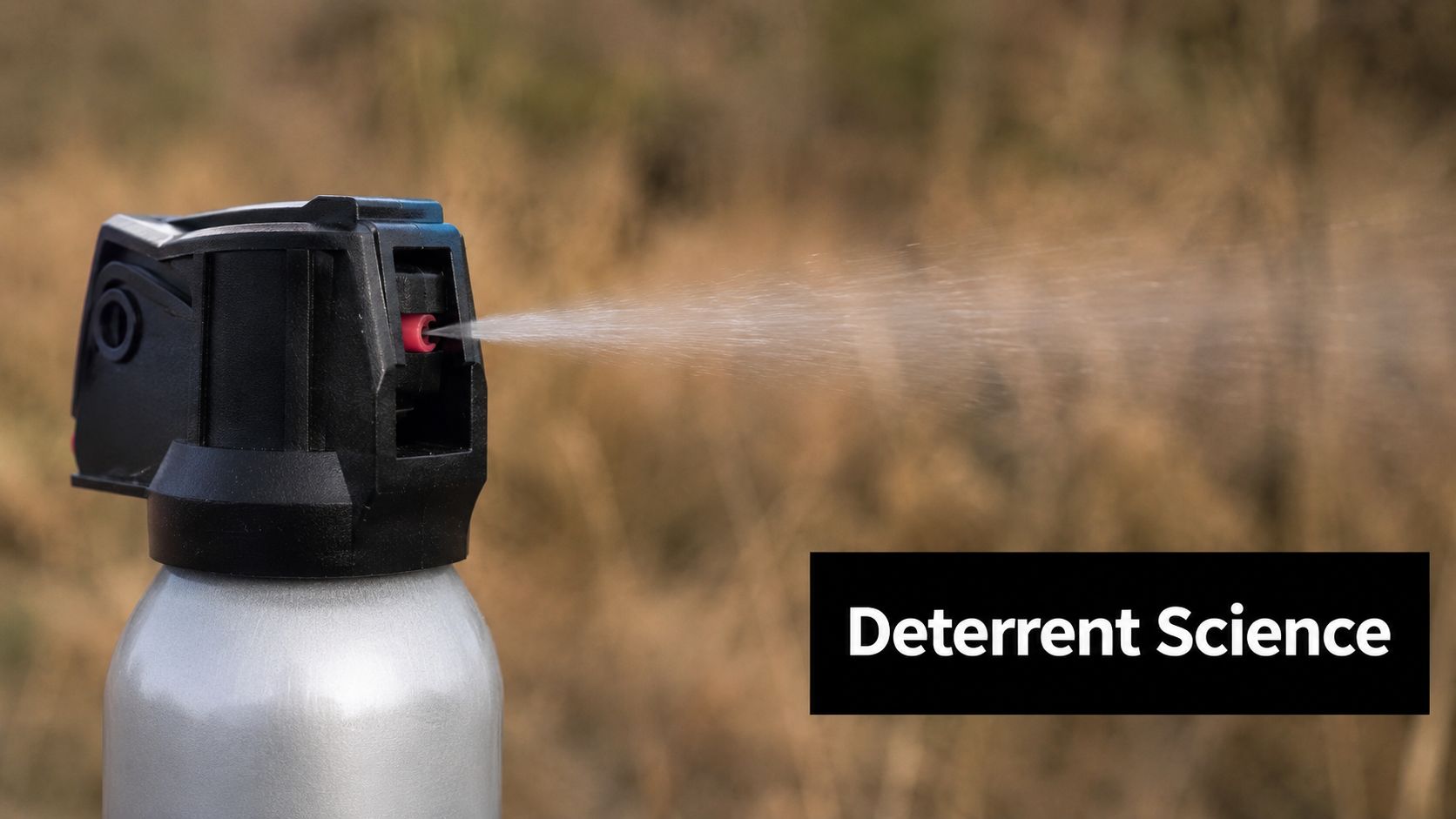
A coyote spray deterrent is built around capsaicinoids, the compounds that create the heat sensation in peppers. One labeled product in the record contains 0.50% capsaicin and 0.44% related capsaicinoids, with a burst designed to project up to 3 meters (technical label data). That formula is not meant to injure, it's meant to overwhelm the animal's senses long enough to stop an advance.
The effect comes from irritating the eyes, nose, mouth, and throat. That's why these sprays are treated as temporary deterrents, not chemical barriers that keep an area permanently clear. A coyote gets a sudden sensory wall, then usually breaks off the approach.
There's an important consumer takeaway here. Many products on the shelf are low-dose, short-range aerosols. They may be fine in a calm, close, controlled moment, but they're not all built for a fast-moving animal that can close distance in seconds. That's why the label and the range matter as much as the ingredient list.
Why maximum legal strength matters
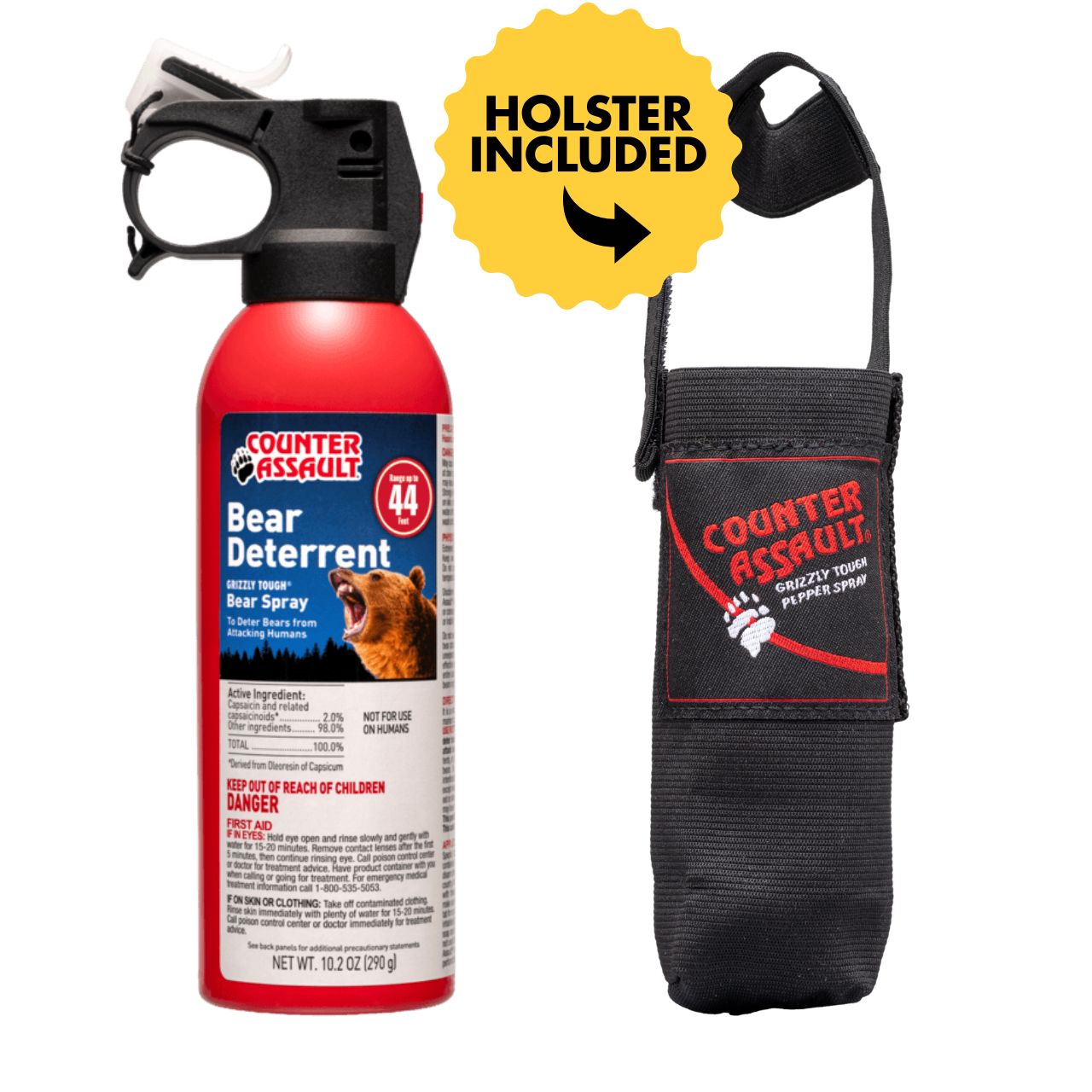
The practical goal is to interrupt behavior, not to create a cloud that fades before it reaches the target. Products with stronger capsaicinoid loads are more likely to deliver that immediate effect at the edge of an encounter. Counter Assault's own material describes its formula as 2% capsaicin and related capsaicinoids, which is the kind of strength outdoor users look for when they need a decisive non-lethal response.
A spray that only works at arm's length gives the user very little margin if a coyote commits to the approach. A stronger formulation gives more usable time and more room to create distance after the first burst. That difference becomes the entire story in an aggressive encounter.
For a deeper breakdown of ingredients and formulation, see what bear spray is made of.
Why Range Matters Choosing the Best Spray Deterrent
Distance is the primary safety feature. A fast coyote can close ground before a person has time to fumble with a small canister, which is why range beats convenience every time in a true encounter.
The available guidance draws a sharp line between bear spray and smaller dog or coyote sprays. Bear canisters are described as projecting roughly 9 to 10.5 meters, while sprays marketed for dogs and coyotes often reach only 3 to 3.5 meters (range comparison). That gap is not academic. It changes whether the user is reacting at a comfortable standoff distance or waiting until the animal is dangerously close.
A longer-range canister also gives more room for error if the coyote shifts direction mid-approach. Field encounters are messy, and a handler may need a second burst after the first one changes the animal's line. That's one reason the flagship Counter Assault 10.2oz bear spray with holster makes sense for people who want a serious coyote deterrent, it's built for reach, quick access, and non-lethal defense. For product details, see the 10.2oz bear spray with holster and the best bear deterrent spray guide.
Field judgment: A shorter can may be easier to pack, but a longer reach is easier to trust when a coyote is moving straight in.
The trade-off is simple. A small “dog spray” can look lighter on a belt, but if it can't project far enough to create a clean buffer, the user has less time and fewer options. A larger-format bear spray canister is often the more reliable choice for hikers, dog walkers, and anyone who wants extra distance between themselves and the animal.
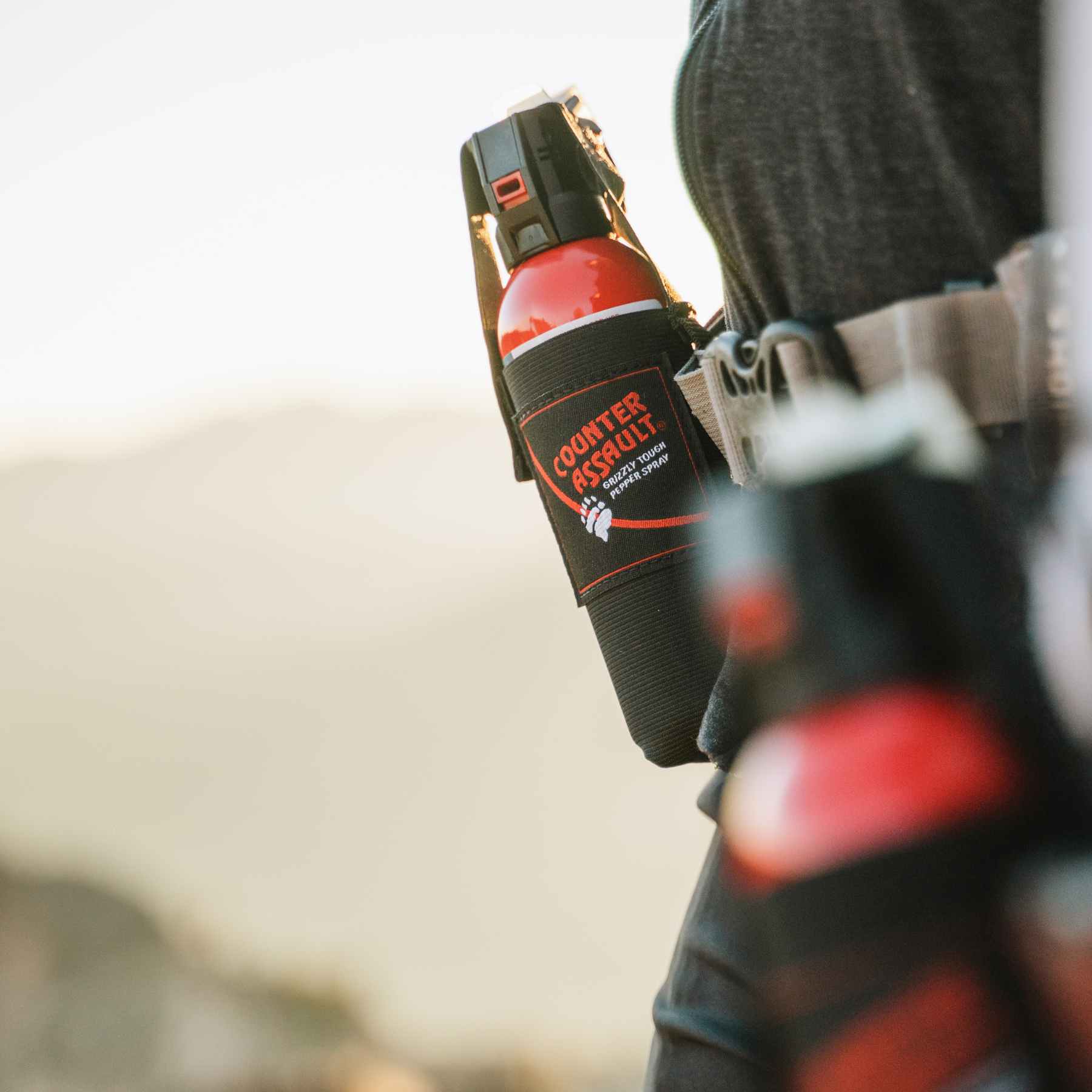
For people who also care about carry comfort, the holster matters. A spray buried in a backpack isn't much help when a dog is tugging on leash and the coyote is still advancing. A can that's visible, reachable, and carried consistently is the one that protects anyone.
Creating a Layered Coyote Safety Strategy
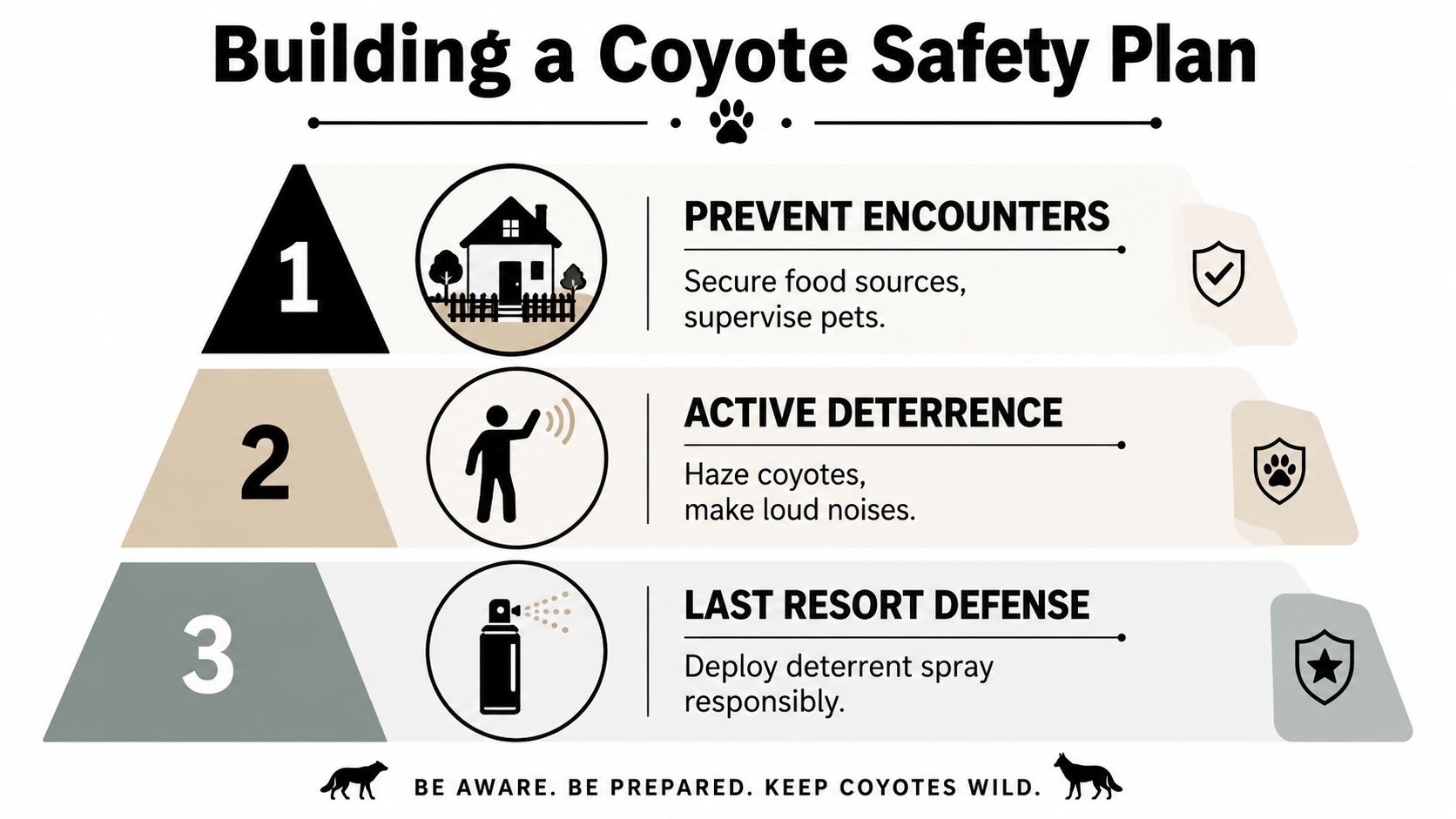
A deterrent spray works best as the final layer, not the first one. Municipal guidance emphasizes that the most reliable way to deter coyotes is to combine hazing with habitat changes, including removing food attractants and securing garbage (municipal wildlife guidance). This is the essential framework for a coyote safety plan.
Start with the property
Coyotes follow food and easy cover. A yard that leaves out pet food, exposes trash, or keeps brush dense along the fence line is sending the wrong message. Clean edges, secured containers, and less cover make the area less interesting without any confrontation at all.
For families with active dogs, a contained outdoor setup can help reduce roaming and sudden fence-line surprises. Custom outdoor dog run solutions are worth a look when the goal is to give pets outside time without turning the yard into a loose-access wildlife edge.
Use hazing early
Hazing means making the coyote uncomfortable enough to leave. That can include loud voice, presence, and assertive movement, but it works only when people use it early and consistently. Coyotes that get mixed signals from neighbors tend to revisit the same spaces.
Keep the emergency layer ready
A spray is the close-range answer when prevention and hazing aren't enough. That's why a layered plan is more responsible than chasing a single magic product. It gives the coyote a chance to leave before anybody has to escalate.
A few practical supports fit into the same system. A compact light from LuminAID helps with evening visibility, and a general first-aid kit from Adventure Medical Kits belongs in the same outdoor setup for any trip where wildlife and rough terrain are both possible. Those tools don't replace deterrence, they make the whole plan more usable when the light is poor or the outing runs long.
When and How to Deploy Coyote Deterrent Spray
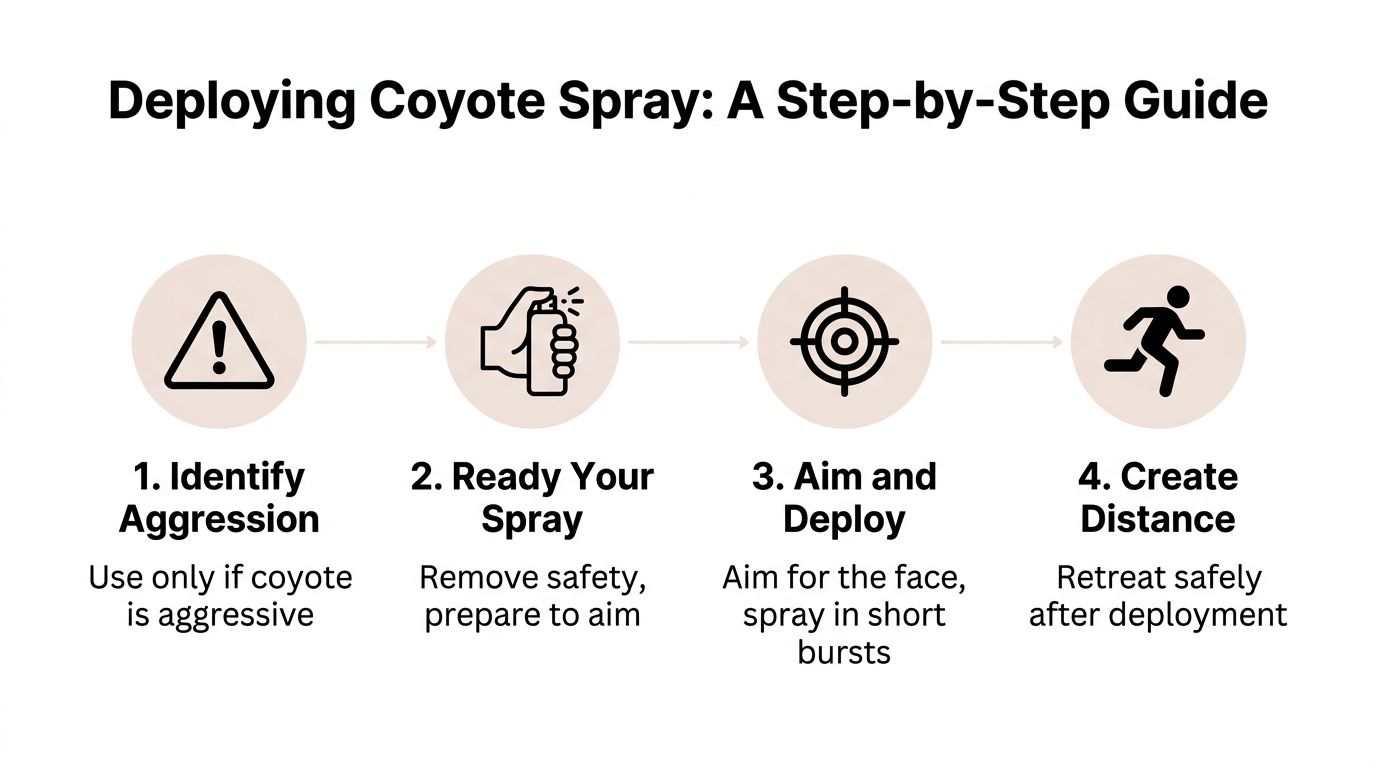
A spray belongs in hand only when a coyote is acting aggressively, charging, or refusing to retreat. If the animal is moving away, leave it alone. If it keeps closing distance after clear hazing, the situation has moved into emergency territory.
Read the body language first
A coyote that stops and watches is different from a coyote that keeps advancing. Hold your ground, avoid running, and keep the animal in view without staring it down. Speak in a normal voice, make yourself look larger, and get the spray ready.
Don't sprint. Running can turn a tense moment into a chase.
Deploy in short, deliberate bursts
The sequence is simple. Remove the safety clip. Aim slightly downward toward the front of the coyote. Start spraying when the animal is about 30 to 60 feet away, so the cloud forms between you and the charge, then keep spraying until it diverts. If it continues forward, direct the spray into the face and leave the area right away.
That approach fits the broader lesson from capsaicin deterrents. A powerful spray that reaches farther gives you more room to stop a fast-moving animal before it closes the gap. Short-range dog sprays can leave too little margin when a coyote commits to a charge, which is why distance and stopping power matter more than convenience in a real encounter.
The key is readiness under stress. A coyote encounter leaves very little time for thought, so the motion needs to be familiar before you ever need it. Keep the holster on your body, not buried in gear, so you can respond without delay.
Debunking Common Myths About Wildlife Deterrents
People often talk themselves out of spray because they believe one of three things. Those beliefs do not hold up well in the field, especially when a coyote is already closing distance.
“Guns work better”
That is a risky assumption in a fast wildlife encounter. A firearm requires precision, a steady angle, and enough time to aim while the animal is moving. Spray does not ask for that same level of accuracy, which is why it is often the more practical non-lethal tool when a coyote charges from close range.
“Spray doesn't work”
The record says otherwise for capsaicin-based deterrents. As noted earlier, the Alaska bear review found 92% cessation of undesirable behavior and 98% of people uninjured. That does not mean every encounter ends cleanly, but it does show that the category has a strong real-world track record when it is used properly and with enough distance to matter.
“Wind makes it useless”
Wind is a real variable, but it is not a reason to dismiss the tool. Most trail and neighborhood encounters happen in places with trees, fences, brush, or uneven terrain that limit the kind of wide-open blast people worry about. The better response is to carry the spray correctly, stay alert, and use it from the range it was designed for, which is one reason a stronger, longer-range canister is often a better fit than a small dog spray.
A separate source of confusion is the belief that any “repellent” will do the job. That is a bad shortcut. The University of Nebraska–Lincoln's coyote damage management review says there are no effective chemical repellents currently available to repel coyotes (USDA technical series), and the University of Arizona material reaches the same broad conclusion for coyote predation control (journal article). Serious users focus on capsaicin deterrent spray, not vague “repellent” claims.
A long-range canister gives you more room to stop a fast-moving coyote before it closes the gap. Smaller, shorter-range sprays may look convenient, but convenience is not the same as stopping power when an animal is already committed.
Carrying Maintaining and Practicing With Your Spray
A deterrent only helps if it is on your body and ready on the first try. A spray clipped to a belt or holster is a field tool. A spray buried in a pack is just extra weight.
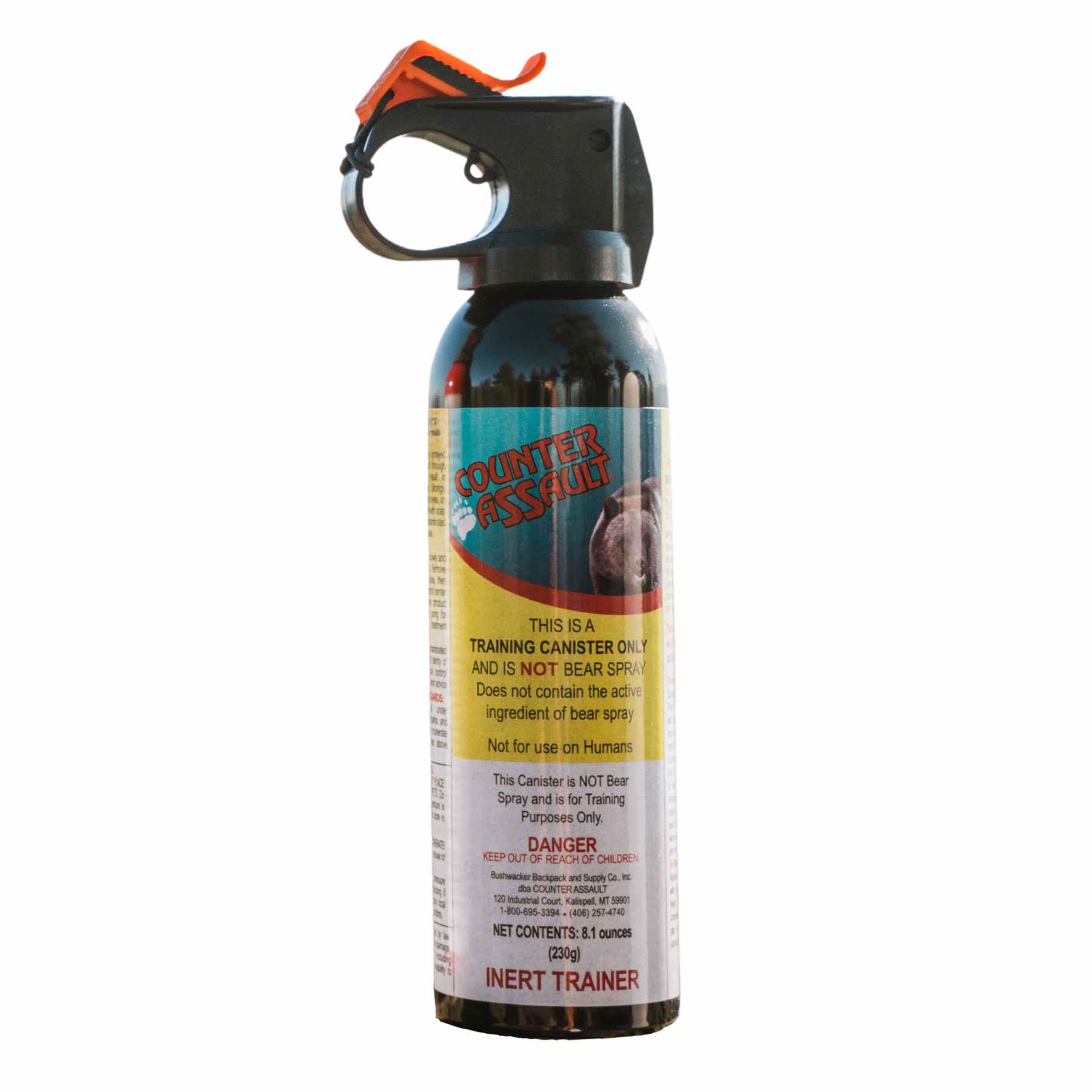
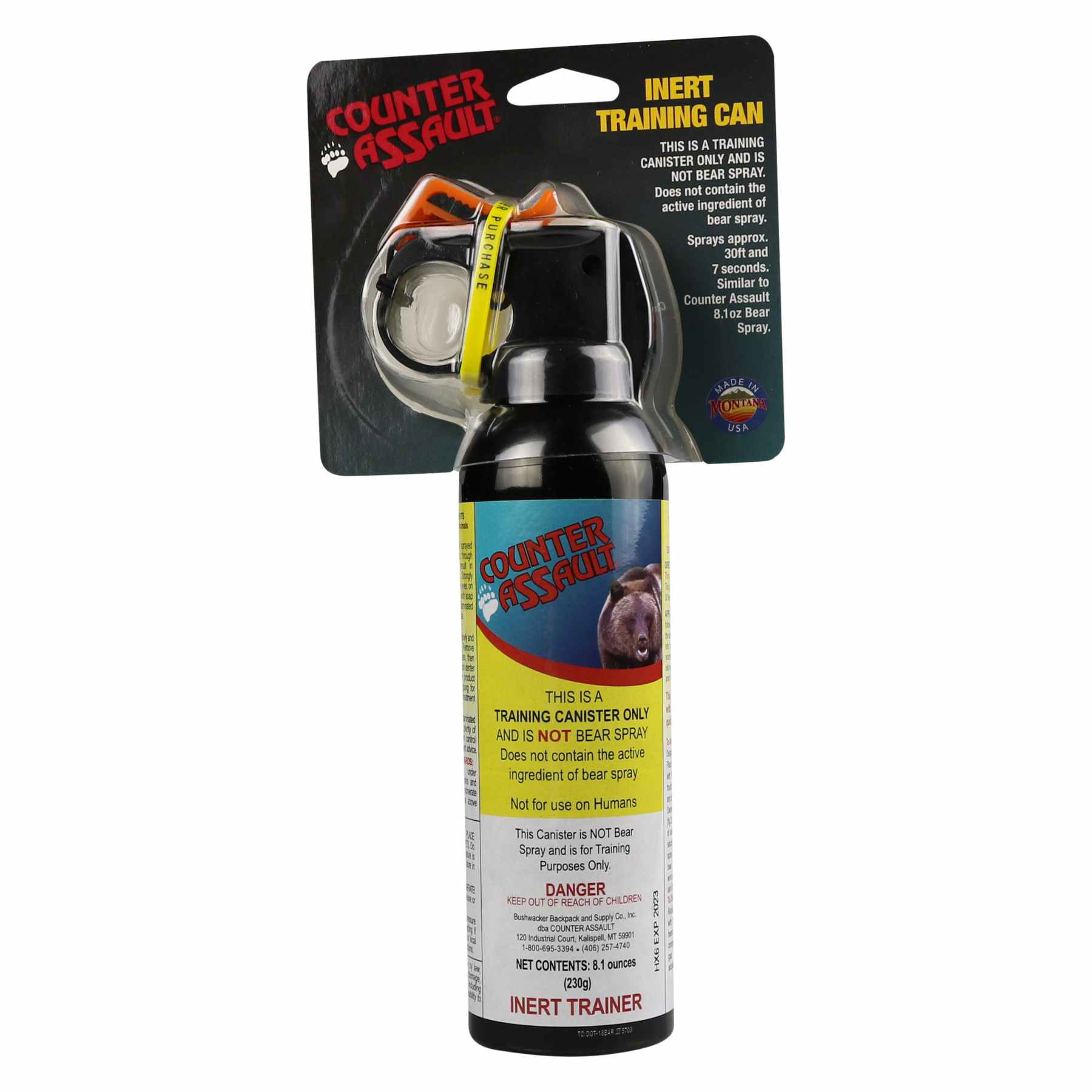
Keep the canister in working order. Check the expiration date, inspect the canister for damage, and store it the way the manufacturer recommends so it is ready when needed. Practice with an inert training canister so the safety clip, grip, and aiming motion feel familiar before a real coyote encounter.
Bottom line: Prepared hands beat perfect intentions.
That readiness matters because hazing does not always change a coyote's behavior for long. Research on coyote hazing found that sightings can drop in the short term by as much as 47% in one study, but behavior often does not change permanently (PMC coyote hazing study). A reliable deterrent still matters because it covers the moment when a coyote ignores the warning and keeps coming.
Carry the spray where you can reach it fast, check it before outings, and rehearse the motion often enough that it becomes automatic. A long-range canister deserves the same discipline as any other safety tool, because reach, access, and a steady grip matter more than good intentions once a coyote closes distance.
Counter Assault builds non-lethal deterrents for people who want real reach, quick access, and serious capsaicin strength in the field. If coyote safety matters where you walk, hike, or camp, visit Counter Assault to see the 10.2oz bear spray with holster and choose the gear that fits your plan.