
The trip usually starts the same way. A hiker checks the weather, looks at the map, throws snacks in a pack, and then remembers the part that makes people uneasy: this trail runs through bear habitat.
That concern is healthy. Panic isn't. Hiking in bear country is safest when risk gets treated realistically and preparation gets treated seriously. Bears are powerful wild animals, but most bad outcomes come from preventable mistakes: hiking alone, moving through thick cover without making noise, leaving food odors around camp, or carrying spray where it can't be reached in time.
Table of Contents
- Before You Go Understanding Risk and Planning Your Hike
- Essential Gear Your Non-Lethal Defense System
- On the Trail Proactive Safety and Bear Avoidance
- Campsite Management How to Keep a Clean and Secure Camp
- Bear Encounter Protocol What to Do When You Meet a Bear
- Debunking Dangerous Myths About Bear Safety
- Special Considerations for Hikers in Bear Country
Before You Go Understanding Risk and Planning Your Hike

Risk is real, but it is not random
The first thing to understand is scale. The statistical risk of being injured by a bear is approximately 1 in 2.1 million, according to the U.S. National Park Service, but park data also show that solo hikers are more vulnerable, which is why group travel matters so much in bear habitat (National Park Service risk summary).
That number should calm people down, not make them careless. Rare doesn't mean impossible. It means the focus should move away from fear and toward behavior that reduces the chance of a surprise encounter.
Practical rule: Treat bear country the way boaters treat cold water. Most outings end quietly, but the margin for sloppy decisions is small when something goes wrong.
Plan the hike before leaving the trailhead
A safe day starts before boots hit dirt. Check current park advisories, wildlife notices, and trail closures. If a drainage, berry patch, carcass area, or campground has recent bear activity, change the plan instead of trying to force the route.
Use a short pre-hike checklist:
- Pick the right group size: If the plan is a solo trip through thick cover, reconsider it.
- Match route to the weakest hiker: Tired hikers get quiet, spread out, and stop paying attention.
- Time the day well: Avoid hiking at dawn or dusk when bears are more active.
- Know the terrain: Dense brush, creek bottoms, and blind corners are places where both bears and people get surprised.
A strong plan doesn't guarantee a sighting won't happen. It makes a bad one less likely.
Essential Gear Your Non-Lethal Defense System
The most important piece of defensive gear isn't the one buried under a rain shell. It's the one that can be reached with one hand, under stress, without stopping to think.

Carry the tool you can actually reach
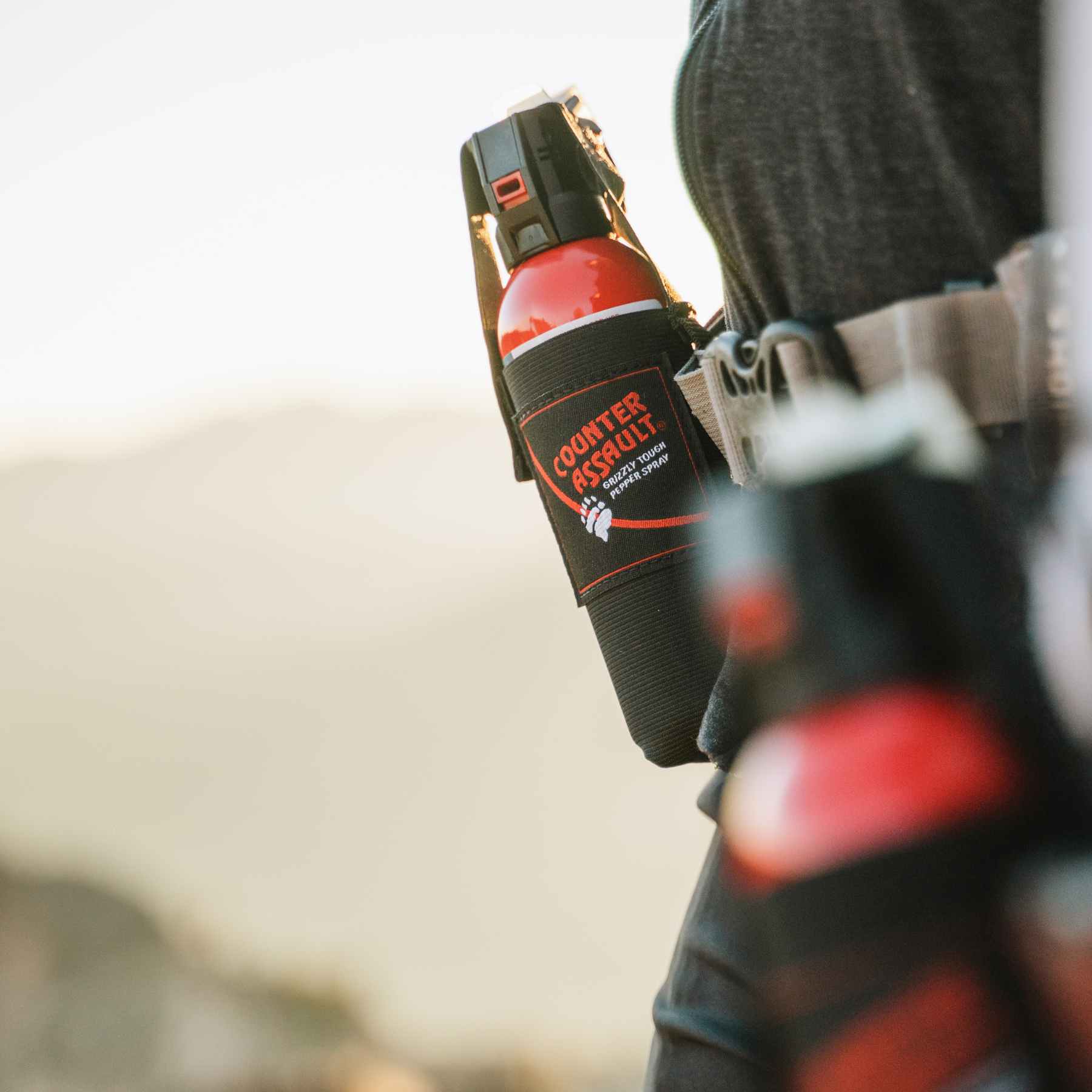
Bear spray belongs on a belt, chest rig, or shoulder strap. It does not belong inside the main compartment of a pack, in a lid pocket, or mixed in with lunch. A charge closes distance fast, and gear that's technically present but physically inaccessible is useless.
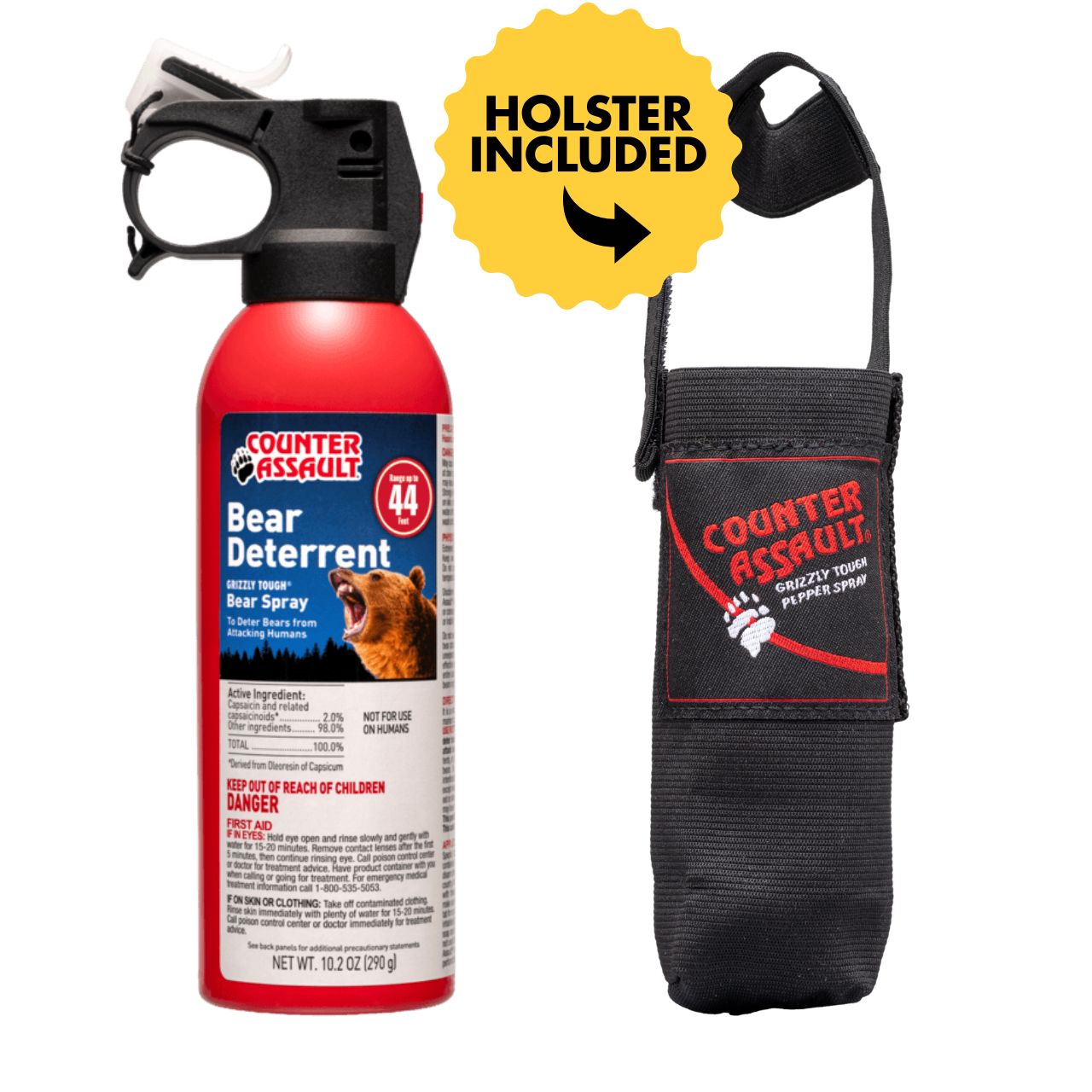
One factual benchmark matters here. Counter Assault's 10.2 oz bear spray has a range of up to 44 feet, the farthest on the market, while most competitors only reach 20 to 30 feet, which gives a wider working window when a bear is coming in fast (Counter Assault product details).
That added distance doesn't replace judgment. It gives more room to build a cloud between the person and the animal, which is the whole point of bear spray use.
What matters in a canister
A good canister has to do three things well: ride accessibly, deploy readily, and project enough spray to create a dense barrier. The 10.2 oz 44-foot bear spray with holster checks the access requirement because it comes with a holster, and that matters more than many hikers realize.
The carry method is part of the tool. A canister clipped where a hand naturally falls is better than a bigger one stuffed in the pack. Before every trip, hikers should also verify shelf life and replace expired deterrent using a practical check like this guide on how long bear spray remains serviceable.
Spray isn't something to own. It's something to stage correctly.
For people who haven't seen deployment demonstrated, this short overview helps show draw and use in motion.
Round out the rest of the system
Bear spray is the centerpiece, but it works best inside a complete field setup.
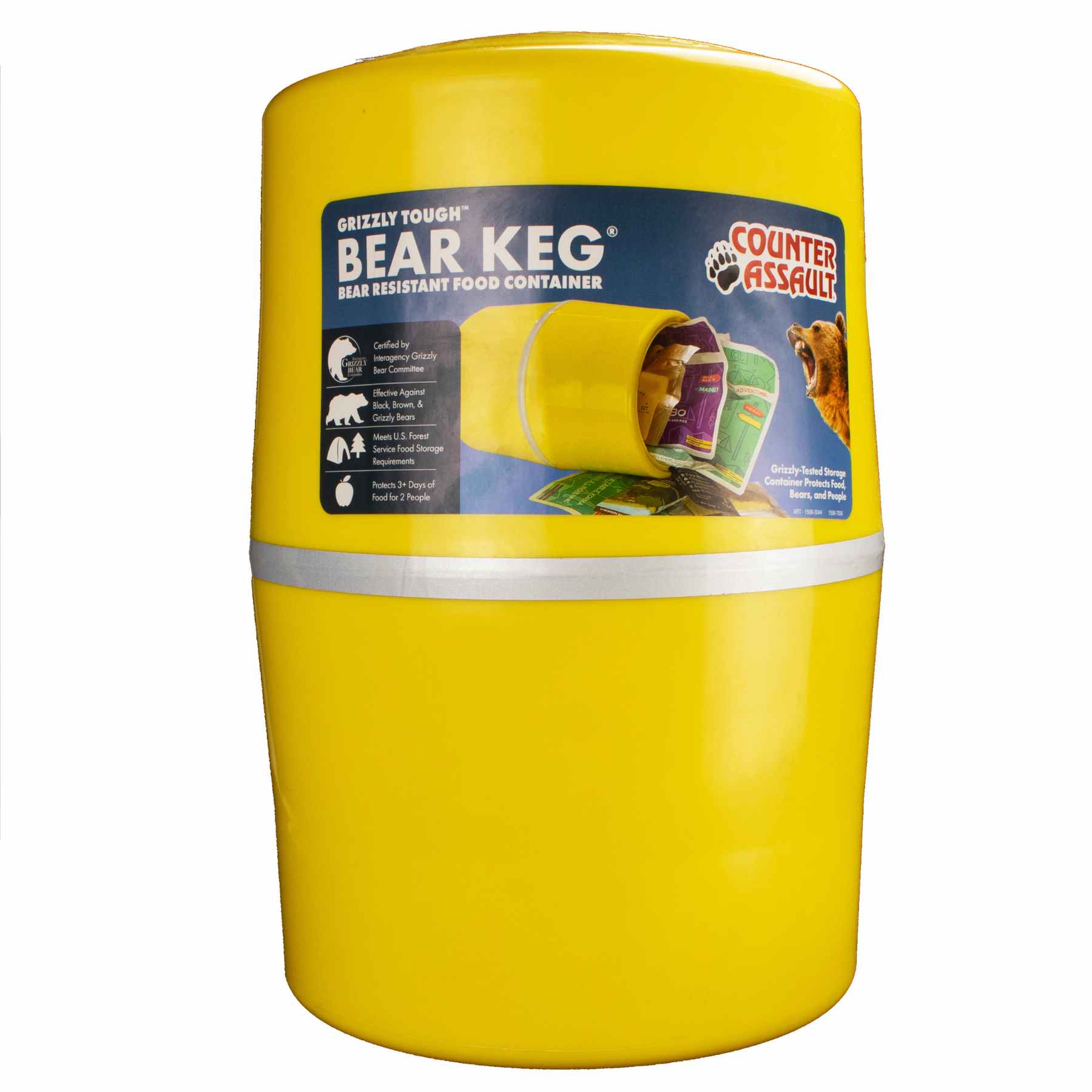
- Food protection: A bear-resistant container keeps odors contained and keeps wildlife from learning that campsites mean calories.
- Medical kit: A compact Adventure Medical Kits first aid kit covers blisters, cuts, and the smaller problems that turn hikers distracted and slow.
- Camp lighting: A rechargeable LuminAID lantern helps people move around camp after dark without fumbling through gear.
- Insect management: Repellent matters too, but it should be stored with other scented items. Products from Ben's 30 fit that role.
This is a non-lethal system. That's the standard. The goal is to stop a charge, create space, and let both the person and the animal leave alive.
On the Trail Proactive Safety and Bear Avoidance
The safest bear encounter is the one that never develops. Most trail problems start with surprise, especially in noisy creeks, thick brush, or around bends where visibility disappears.
The habits that prevent surprise encounters

One data point should shape trail behavior: 91% of all bear attacks occur against solo hikers or pairs, and hiking in groups of three or more is one of the strongest deterrents because people are easier for bears to detect and avoid (group size and attack data).
That changes how a group should move. Stay together. Talk in a normal voice. Call out before entering brush tunnels, creek crossings, and blind corners. Noise is not about sounding aggressive. It's about avoiding a sudden close-range encounter.
Use this trail checklist:
- Make human noise: Conversation works. So does calling out around bends.
- Hold formation: Don't string out with one fast hiker in front and one lagging behind.
- Keep spray accessible: Every adult should be able to draw without taking off a pack.
- Skip headphones: Ears are part of early detection.
What to notice while moving
Tracks, scat, torn-up logs, dug-over ground, strong carcass odor, and fresh berry feeding are all signs to slow down and raise awareness. If sign looks fresh, the safest move may be to turn around.
If a trail is tight, visibility is poor, and sign is fresh, confidence should not overrule caution.
Timing matters too. Hiking at midday generally gives better visibility and lowers the chance of moving through active feeding periods. That isn't a guarantee. It's a smarter window.
Campsite Management How to Keep a Clean and Secure Camp
A bear can cross your camp in seconds, follow one food odor trail, and learn that tents mean calories. That is how a small mistake becomes a repeat problem for the next party on the site.
A clean camp keeps bears wild

Build camp around separation. Sleep in one area. Cook in another. Store food and scented items away from both. Exact distance depends on terrain, regulations, and available storage, but the principle does not change. The farther scent and food residue are from where people sleep, the lower the chance a curious bear walks through camp at night.
Clean camp discipline matters more than good intentions. Do not keep snack bars in a hip-belt pocket. Do not bring toothpaste into the tent. Do not leave a pot unwashed because you are tired. Shortcuts at dusk create problems after dark.
If local rules require hard-sided storage or canisters, follow them. If you need a practical review of storage methods, see these bear-resistant food container options.
What stays out of the sleeping area
Bears key on scent, not just visible food. Store all odor-producing items with the food system, never in the tent or sleeping clothes.
- Food and trash: Meals, snacks, drink powders, wrappers, empty pouches, and food scraps.
- Toiletries: Toothpaste, deodorant, sunscreen, lip balm, soap, and scented wipes.
- Cooking gear and clothing: Pots, utensils, stove parts with residue, and the layer worn while cooking.
- Other scented items: Insect repellent, medications, flavored electrolytes, and anything with a noticeable odor.
One common mistake is treating “non-food” items as harmless. A bear does not sort smells into human categories. If it smells interesting, it can draw investigation.
Keep bear spray on your body in camp, especially during cooking, cleanup, and trips away from the tent. Counter Assault's bear spray deployment guidance explains the practical distances involved. The short version is simple. Spray has to be reachable before a bear is close. A canister buried in a pack or left in the vestibule is too late to help.
Before dark, do one full camp sweep. Check the ground for spilled food. Check pockets for bars and wrappers. Check the fire ring, picnic table, and cooking area for residue. That last five-minute inspection prevents many nighttime problems.
Bear Encounter Protocol What to Do When You Meet a Bear
In such scenarios, calm matters most. The wrong reaction often comes from speed, not intent. Running, screaming, or fumbling for gear can turn a manageable situation into a dangerous one.
If the bear has not committed to you
If the bear hasn't seen the person, back away slowly and discreetly. Don't crowd it, and don't try to get a better photo. Distance is the friend here.
If the bear sees the person but isn't charging, stand ground, avoid direct eye contact, speak in a normal voice, and start creating access to spray. Moving sideways and backing away slowly gives the bear room to leave without feeling pressed.
| Scenario | Your Action | What to Avoid |
|---|---|---|
| Bear has not noticed you | Back away slowly and leave the area | Getting closer for a better look |
| Bear is aware but calm | Stand ground, speak normally, prepare spray, slowly increase distance | Running, shouting, direct stare |
| Bear is bluff charging or showing agitation | Hold ground, keep spray ready, continue calm voice | Turning your back |
| Bear makes contact in a defensive grizzly encounter | Protect neck, lie face down if necessary | Fighting blindly at first contact |
| Bear behaves in a predatory way or attacks in a tent | Fight back with everything available | Playing dead |
Calm movement gives a bear an exit. Panic blocks that exit.
If the bear closes distance
When the bear acts aggressively or appears ready to charge, the person should stop retreating, stand ground, and prepare to deploy spray. The canister comes out first. Then the safety clip comes off. Aim slightly downward toward the front of the bear.
Do not run. Running can trigger pursuit. Do not scream. Normal speech helps identify the person as human rather than prey. If possible, make the body look larger by raising arms or holding gear overhead while maintaining balance and access to the canister.
The broad sequence is simple:
- Stand ground: Don't bolt.
- Access spray early: Get it in hand before the bear is on top of you.
- Aim low: Build a cloud in the bear's path.
- Keep spraying if the charge continues: If needed, direct spray at the face.
- Leave the area when the animal diverts: Don't stay to watch what happens next.
For a more detailed field refresher, this practical guide on what to do if you see a bear is worth reviewing before any trip.
One caution matters. Defensive grizzly encounters and predatory black bear behavior don't get handled the same way once contact happens. In a defensive grizzly attack, protecting the neck and going face down may be appropriate if contact occurs. In a predatory black bear attack or a tent attack, fighting back is the priority.
Debunking Dangerous Myths About Bear Safety
Bad advice spreads fast in outdoor culture. It usually sounds confident, simple, and tough. That doesn't make it safe.
Myth one guns work better
In a sudden close encounter, precision is the problem. A charging bear is moving fast, the target zone is small, and stress destroys fine motor control. Bear spray creates a cloud and doesn't require the same precision to affect the animal's approach.
This also fits the broader safety goal. Non-lethal deterrence protects the person while giving the bear a chance to break off and survive.
Myth two bear spray does not work
The claim doesn't hold up. Bear spray is over 90% effective at stopping aggressive bear behavior, and in 72 incidents involving 175 people where spray was deployed, only three minor injuries occurred (Field & Stream summary of the study data).
That doesn't mean every deployment is perfect. It means the tool works when people carry it where they can reach it and use it at the right moment.
Myth three wind makes spray useless
Wind can affect any aerosol. That's real. What gets exaggerated is the idea that even slight wind makes spray worthless. It doesn't.
A better way to think about wind is as a reason to practice smarter deployment. Keep the canister accessible, aim slightly downward, and build the cloud in the bear's path instead of firing too early and hoping distance solves the problem. Most failures come from timing, storage, and poor positioning, not from the mere existence of moving air.
The dangerous myth isn't that wind exists. It's that wind is a reason not to carry or use spray.
Special Considerations for Hikers in Bear Country
A lot of bear incidents start in situations people treat as routine. The trailhead dog gets unclipped for a minute. A hunter sets a pack down beside a carcass site. Someone walks to the campground bathroom without a light and cuts through brush. These are the moments that break a safety plan.
Different users create different risk patterns, so the right response is to adjust behavior before the problem starts.
- Dogs: Keep dogs leashed, close, and under control at all times. Dogs often provoke defensive charges, then run back to the owner with the bear behind them. If a trail does not allow dogs, respect that rule. It often exists because of repeated wildlife conflicts.
- Hunters and anglers: Carcasses, fish remains, blood, and concentrated food odor change the risk fast. Scan carefully before approaching a kill site or stream bank with poor visibility. Keep bear spray on your body, not in a pack, and leave the area if you find fresh sign that suggests a bear has claimed the site.
- Developed campgrounds and RV areas: Bears that use campgrounds are often food-conditioned. That makes them predictable in one sense and more dangerous in another. They may ignore shouting, return repeatedly, and test coolers, grills, storage bins, and pet food bowls. Follow every storage rule posted on site and clean up before dark, not after everyone is tired.
- Families with children: Keep children within immediate sight and voice range, especially near creeks, berry patches, and dense brush. Small kids move making little noise and unpredictably. Adults need to set the pace, choose the line of travel, and stop children from running ahead or lagging behind.
- Night movement around camp: Use a reliable headlamp or flashlight every time you leave the tent. Bears can move through camp unheard, and visibility drops to almost nothing outside the beam. A compact Survive Outdoors Longer light and emergency gear option can help with after-dark movement and backup preparedness.
One more point matters here. Habituation is dangerous. A bear seen near roads, picnic areas, lodges, or dumpsters is not a safe bear. It is a bear that has learned people can mean food, and those bears deserve extra distance and fewer chances.
For hikers, backpackers, hunters, and campground users who want a non-lethal deterrent system built for field carry, Counter Assault offers bear safety tools designed for use on bears, mountain lions, and coyotes.