
The run starts in daylight. Then the last mile stretches, the sun drops, traffic picks up, and a familiar route changes character fast. What felt routine half an hour ago now asks different questions. Can drivers see the runner at the shoulder? Is there a working light, a charged phone, a clear route home, and if the route leaves pavement, is there anything on hand that helps in wildlife country?
That's where most advice on runner safety gear falls short. It treats safety like a single purchase, usually a reflective vest or a blinking light. Real protection works more like a system. Road runners need to be seen. Solo runners need a way to call for help. Trail runners need to think beyond traffic, because visibility doesn't solve an aggressive coyote, a mountain lion encounter, or a bear charge.
Table of Contents
Why Runner Safety Gear Matters More Than Ever
A lot of runners still treat safety gear like backup gear. That's a mistake. Shoes are mandatory because the runner knows they'll be used. Safety gear matters for the same reason, except it's there for the moment when conditions change, attention slips, or someone else makes a bad decision.
The risk is not abstract. The National Highway Traffic Safety Administration reported that U.S. pedestrian fatalities increased by 45% from 2009 to 2017, and a separate study documented 8 motor-vehicle incidents involving 11 student athletes from 2011 to 2020, resulting in 9 fatalities in a case series of high school runners, detailed in this runner safety research review. That should end the idea that runner safety gear is only for anxious people or extreme conditions.
Practical rule: If a run can move into low light, traffic, weather, or isolation, safety gear belongs in the kit before the first step, not after a close call.
This matters for training decisions too. Runners already think seriously about form, load, recovery, and overuse. The same mindset belongs here. Anyone working through training consistency, pain reduction, or injury prevention for runners should treat personal safety with the same discipline used for knees, calves, and tendons.
The real shift runners need to make
Most problems on the road and trail happen when a runner assumes familiarity equals safety. A neighborhood loop at dusk can become a visibility problem. A quiet trail can become an isolation problem. A backcountry route can become a wildlife problem.
Good runner safety gear closes those gaps. Not perfectly. But well enough to give the runner better odds, more time, and more options.
Building Your Layered Safety System
The smartest approach is layered, not gadget-based. One item rarely fixes a bad situation. A reflective vest helps if headlights hit it. A phone helps if there's signal and the runner can access it. A whistle helps if someone is near enough to hear it. Each tool covers a different failure point.

The National Federation of State High School Associations reflects that layered mindset in its runner safety position statement. It recommends extremity reflectors for night training, plus carrying a phone and whistle, and running with a buddy whenever possible. That's not a shopping list. It's a system built around visibility, communication, and decision-making.
The four layers that matter
Visibility. This is the first layer because drivers can't avoid what they don't detect. Reflective surfaces, high-visibility clothing, and front-and-back lighting all belong here.
Awareness. Earbuds, fatigue, and routine can make a runner miss the clue that matters. Awareness means hearing traffic, watching intersections, noticing animal sign, and recognizing when a route has changed enough that it's time to turn around.
Communication. A charged phone is the baseline. Route-sharing matters just as much. A whistle is light, simple, and worth carrying when the run moves away from crowds or roads.
Defense. This is the layer most guides either oversimplify or avoid. The correct tool depends entirely on environment. Urban runners and backcountry runners do not face the same threat profile.
How the layers work together
Runners don't need to carry everything on every outing. They do need to stop relying on one accessory to do the whole job. A reflective vest without route planning is incomplete. A headlamp without identification is incomplete. A deterrent buried in a pack is incomplete.
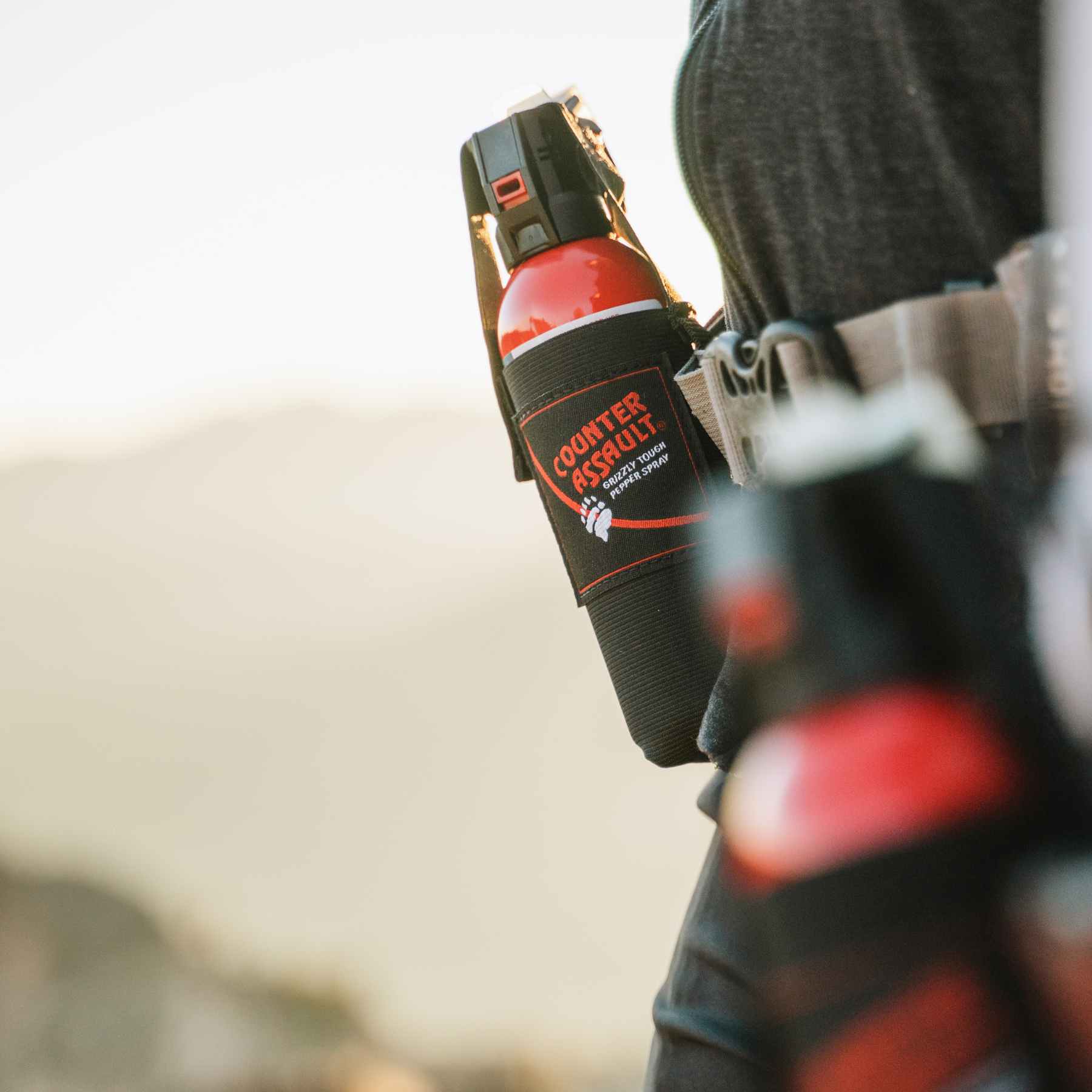
A practical setup often starts with clothing and carry strategy. Belt placement, chest access, and holsters matter because gear that can't be reached under stress might as well be at home. For runners who use waist carry on trails, the Trail Runner Holster in small/medium shows the kind of access-first thinking that makes a difference while moving.
For conditions that change fast, weather-ready layering matters too. A runner who wants a strong gear system for rain, cold, and shifting visibility can borrow useful ideas from this guide to running gear for any weather.
Mastering Visibility for Road and Night Running
Visibility is the easiest part of runner safety gear to get partly right and still not be visible enough. Bright colors help in daylight. They're not enough in darkness. At dawn, dusk, and full night, runners need gear that works when drivers see them with headlights, and gear that works before that beam lands.

A useful technical distinction comes from this low-light running gear guide. It notes that high-retroreflectivity apparel combined with active lighting is most effective for low-light running. Reflectors send headlight beams back toward the driver, while LEDs create their own visible light source even when the runner is outside the headlight beam.
Passive visibility and active visibility
Retroreflective gear is passive. It waits for light, then returns it. That's why reflective vests, ankle bands, and strips on moving limbs are so effective around vehicle traffic. They don't glow on their own, but when headlights hit them, they can stand out clearly.
Active lighting is different. Headlamps, clip lights, and rear blinkers create visibility on their own. They help the runner see the ground, but they primarily announce the runner's presence before a car's headlights do the job.
Runners who depend on only one light source usually create blind spots around themselves. Front and rear visibility is the safer standard.
A good road setup usually combines a reflective vest, a forward-facing light, and a rear light. For runners who want a compact backup light for kits, drop bags, or emergency use, a portable light from LuminAID fits the same logic of keeping illumination available when conditions go sideways.
Where runners should place lights and reflectors
Placement matters as much as the item itself.
- Chest and torso: A vest creates a large visible target and reads clearly to drivers.
- Ankles and wrists: Movement catches attention faster than a static patch on the body.
- Front light: Helps with footing, curbs, and uneven shoulder surfaces.
- Rear light: Gives approaching traffic something unmistakable to track.
What doesn't work well? Tiny lights clipped low on a waistband with a shirt covering them. Dark clothing with a single reflective logo. A headlamp aimed too high. And gear packed away because the runner started in daylight and assumed the timing would hold.
Night running safety isn't about looking sporty. It's about creating a clear human signal from multiple angles.
Understanding Personal Defense Options
A lot of runner safety content tosses alarms, pepper spray, and other tools into one broad self-defense bucket. That blurs a critical difference. These tools aren't interchangeable, and they don't solve the same problem.
That gap shows up in mainstream guidance. Existing content rarely explains inherent limitations of pepper spray or personal alarms for runners, including access under stress, wind, and legal restrictions, as discussed in this runner safety article on gear choices and tradeoffs. The result is advice that sounds complete but doesn't help much when the runner has to decide what to carry on a specific route.
Why generic advice fails
A personal alarm can be useful in populated areas. It draws attention. It doesn't create distance. It doesn't stop an animal charge. It also depends on someone being close enough, alert enough, and willing enough to respond.
Human-focused spray raises another issue. Many runners talk about it as if any spray is appropriate in any setting. That's sloppy thinking. The tool for a city sidewalk isn't the same as the tool for a trail where coyotes, mountain lions, or bears are part of the risk model.
The first question isn't “What defensive tool should a runner buy?” It's “What problem is this route most likely to create?”
Match the tool to the threat
For roads, parking lots, and urban greenways, the baseline should still be visibility, communication, route selection, and awareness. A defensive item is secondary to those layers, not a replacement for them.
For wildlife-prone routes, the runner should switch frameworks. Range matters. Deployment speed matters. Carry position matters even more. A deterrent that lives at the bottom of a vest pocket may not be available when it counts. Trail runners dealing with frequent coyote encounters can use this practical guide on how to protect yourself from coyotes to think through route-specific risk.
What doesn't work is pretending one universal answer covers roads, suburban paths, and remote trail systems. It doesn't. The environment decides the tool.
Why Bear Spray Is Essential for Trail Runners
Traffic-focused advice misses a simple truth. Once the route leaves roads and enters foothills, forest, canyon country, or remote singletrack, the gear list changes. The runner may still need light, identification, and communication. But wildlife can move from background concern to immediate threat.

That gap shows up across runner safety content. It stays heavily urban and visibility-centered, even though trail runners in bear, coyote, and mountain lion habitat need non-lethal deterrents built for rapid deployment and useful range, as noted in this discussion of running safety in wildlife environments.
Wildlife risk changes the gear list
For a trail runner, “more visible” is not the same as “more protected.” A headlamp won't stop an aggressive animal. A reflective vest won't create a defensive barrier. A whistle may help with noise, but it is not a primary wildlife response tool.
That's why bear spray belongs in the conversation for runners using habitat where bears are present, and in some areas where mountain lions or coyotes are part of the actual risk. The carry method matters as much as the canister. A deterrent has to be accessible while moving, breathing hard, and making decisions fast.
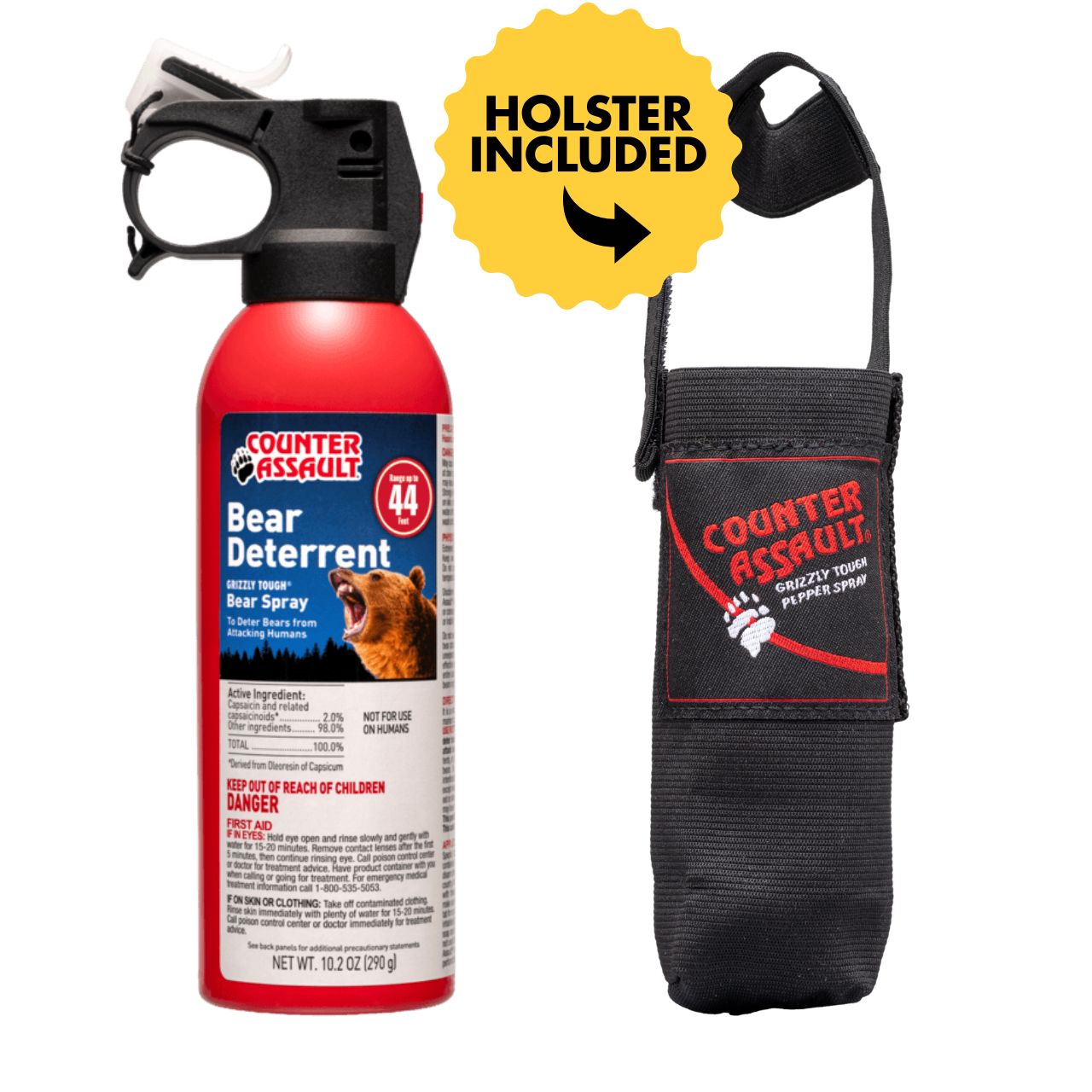
One factual example is the Counter Assault 10.2 oz bear spray with holster, which is made for bears, mountain lions, and coyotes and includes a holster for accessible carry. Its listed use fits the specific trail-running problem that urban-focused runner safety gear guides often skip.
What runners need from a wildlife deterrent
A useful wildlife deterrent should meet a few essential standards.
- Accessible carry: If the runner has to stop, remove a pack, and dig, the tool is too slow.
- Purpose-built use: Bear spray is for bears, mountain lions, and coyotes. It is not for people, and it should never be treated like a generic weapon.
- Non-lethal intent: The goal is to stop aggressive behavior and let both the runner and the animal disengage.
- Enough reach to matter: Distance buys reaction time and space, especially on a narrow trail or blind turn.
Runners comparing options for backcountry routes can use this guide to the best bear spray for hiking to evaluate carry style and use case.
A demonstration is worth seeing before a runner needs the tool under pressure.
How to avoid an encounter and when to deploy spray
Avoidance comes first. Groups make more noise and tend to be more noticeable to wildlife. Noise helps on blind corners. Clean food habits matter around trailheads and camps. Early dawn and dusk can be more active periods in some wildlife areas, so runners should know local conditions before heading out.
If a runner encounters a bear or mountain lion, the basic response is not to run. Back away slowly if the animal isn't charging. Stand ground if needed. Speak in a normal voice. Get the spray ready.
Bear spray should only be used when a bear is charging or acting aggressively enough that a charge seems likely. It should never be sprayed on clothing or gear as a preventive coating. For use, remove the safety clip, aim slightly downward toward the front of the charging animal, begin spraying when the animal is roughly within the stated deployment window of 30 to 60 feet, create a cloud in its path, continue until it diverts, and leave the area immediately if possible.
There are also two misconceptions about how to react in this sort of situation. One is relying on a firearm as if it's automatically the better answer in a fast-moving wildlife encounter. The other is assuming wind makes spray useless every time. Conditions matter, but the practical answer for runners is still the same. Carry the deterrent where it can be reached, understand how it deploys, and know when it should and should not be used.
Your Runner Safety Checklist for Any Scenario
The easiest way to pack runner safety gear is to build from the route outward. A downtown loop, a local dirt trail, and a run in bear country should not get the same kit. The right setup changes with light, remoteness, and the type of threat most likely to show up.

Three environment checklists
| Gear Item | Urban / Night Road Run | Trail Run (Low Wildlife Risk) | Bear / Mountain Lion Country |
|---|---|---|---|
| Visibility gear | Reflective vest, front light, rear light | Headlamp if needed, bright layers | Headlamp if needed, bright layers |
| Phone and route sharing | Essential | Essential | Essential |
| ID and emergency info | Essential | Essential | Essential |
| Whistle | Useful | Recommended | Recommended |
| Hydration and fuel | As needed for distance and weather | Recommended | Recommended |
| Small first aid kit | Optional for short runs | Recommended | Recommended |
| Personal alarm | Optional | Optional | Not the primary tool |
| Wildlife deterrent | Not usually relevant | Depends on area | Essential in wildlife habitat |
For first aid, a compact kit from Adventure Medical Kits makes sense for trail and backcountry use because minor injuries become bigger problems when the runner is far from a road.
For bugs, ticks, and warm-season trail runs, insect repellent from Natrapel is worth carrying or applying before the run. It doesn't change safety in the same way a light or deterrent does, but it can keep a short run from becoming miserable.
Field check: Before heading out, a runner should be able to answer three questions fast. Can someone find this route? Can traffic or other users see the runner clearly? If wildlife appears, is the right tool immediately reachable?
A simple checklist also prevents one common mistake. Runners often focus on the dramatic item and forget the basics. In practice, the phone, ID, route-sharing habit, and charged light often solve more problems than expensive gear does. The deterrent matters when the environment calls for it. The fundamentals matter every time.
Frequently Asked Questions About Runner Safety
Can a runner carry bear spray anywhere
Rules vary by state, park, race, and specific land manager. The runner has to check local regulations before carrying any deterrent. Trail systems, parks, and organized events may all have different rules, even within the same region.
How should safety gear be stored and checked
Lights should be charged before the run, not after. Phones should have enough battery to last beyond the planned route. Reflective gear should be checked for wear, because dirty or damaged material loses effectiveness. Bear spray should be stored according to the manufacturer's instructions and checked regularly so the runner isn't carrying expired or compromised equipment.
What changes when running with a dog
A dog adds complexity. Leash handling can interfere with access to lights, phones, or deterrents. Dogs can also trigger or escalate wildlife encounters. In coyote or mountain lion areas, runners should keep dogs close, stay alert, and make sure any critical gear is still reachable with one hand.
Runner safety gear works best when it matches the route, the conditions, and the actual threat. A city runner needs conspicuity and communication. A trail runner needs the same basics plus a realistic wildlife plan. The point isn't to carry everything. It's to carry what solves the problem in front of the runner.
For runners who spend time on trails where bears, mountain lions, or coyotes are part of the equation, Counter Assault offers bear deterrent tools and carry options built for outdoor use. The most useful approach is simple. Choose gear that fits the route, learn how to use it before the run, and keep it accessible enough to matter.