
A bear track in the trail changes the mood of a hike fast. One minute the group is moving well, talking, watching the weather. Then someone stops at a muddy patch and asks the question that matters in bear country: what do bear tracks look like, and how fresh are they?
That’s not just a naturalist’s question. It’s a safety question. A clear print can tell hikers whether they’re looking at a black bear or a grizzly, whether the animal was walking calmly or moving fast, and whether it likely passed through recently enough to change the plan.
Reading tracks well replaces guesswork with decisions. It tells a group when to slow down, when to make more noise, when to leave a drainage or berry patch, and when to get deterrents immediately accessible. Hikers who travel in wild country often pair trail awareness with the same kind of practical trip habits covered in these South African hiking tips, because the principle is the same anywhere wild animals live: good observation prevents bad surprises.
Table of Contents
- Why Reading Bear Tracks is a Critical Outdoor Skill
- Decoding the Print The Basic Anatomy of a Bear Track
- Grizzly vs Black Bear A Practical Identification Guide
- Reading the Trail Understanding Bear Gaits and Patterns
- Is It a Bear? Spotting Common Track Look-Alikes
- How Fresh Are These Tracks? Assessing Timeliness and Risk
- Your Action Plan From Track Sighting to Staying Safe
Why Reading Bear Tracks is a Critical Outdoor Skill
A single large print in wet ground is often ambiguous at first glance. Mud stretches shapes. Snow rounds edges. A partial track can make a black bear look bigger than it is, or hide the details that would identify a grizzly. That’s why experienced hikers don’t react to one impression alone. They look for a pattern.
A useful track reading habit starts with three questions. What animal made it. How recently did it pass. What does the track pattern suggest about its movement. Those answers affect route choice much more than curiosity does.
Field judgment: Tracks are most useful when they change behavior. If a group identifies fresh bear sign and keeps walking the same way with the same noise level and spacing, the track reading didn’t accomplish much.
This skill also lowers panic. Hikers who know what to look for don’t need to guess wildly every time they find a broad paw print near water, berries, or a game trail. They can assess, talk it through, and adjust. That’s a better response than fear, and it’s better than denial too.
There’s another practical reason this matters. Misidentifying bears can contribute to unnecessary conflict, and one source notes that relocated problem bears have a 66% mortality rate within 4 months from cars, hunting, or property damage according to this bear track identification guide. Good identification helps people avoid the encounter in the first place, which is the outcome that protects both hikers and bears.
Decoding the Print The Basic Anatomy of a Bear Track
A bear track often stops a group because it looks familiar and wrong at the same time. The hind foot can read almost like a barefoot human print, while the front foot looks broad, heavy, and blunt. If you miss that basic anatomy, you can misread both the animal and the risk.

Bears are plantigrade. They put much of the foot on the ground instead of traveling on the toes like a dog or cat. That usually leaves a fuller print with more sole and pad showing, especially in mud, damp sand, or other soft ground.
The parts to look for first
Start with anatomy, not size. Size changes with age, sex, slope, and ground conditions. Core features hold up better.
- Five toes: A true bear track has five toes. Poor ground can hide one, but five is the pattern you want to confirm across several prints.
- A large pad: Front tracks show a broad main pad. Hind tracks leave a longer sole impression with a clear heel.
- Claw marks: Bear claws usually register ahead of the toes in soft substrate because they do not retract.
- A flat-footed outline: The whole print tends to look heavier and more open than a canine track.
That human-like hind print fools hikers all the time. People expect a dramatic paw shape and walk right past a rear track that looks like a wide bare foot with a thick forefoot and splayed toes.
Front and hind tracks tell different parts of the story
Front prints are usually wider and rounder. Hind prints are longer and more foot-shaped. On a trail with mixed impressions, one bear can easily look like two different animals unless you pause and match the toe count, pad shape, and direction of travel.
That matters for safety, not just identification. If a single bear is walking steadily through an area, the track line often shows that. If prints bunch up, angle off the trail, or overlap near a food source, your group should slow down, tighten spacing, and make a deliberate plan for what happens if you see the bear. Anyone hiking in grizzly country should understand how grizzly bears typically behave in close encounters before they need that judgment in the field.
Good track reading starts with repeated features across multiple prints, then turns into a decision about distance, noise, route choice, and readiness with bear spray.
The quickest mental checklist
Use a fast, repeatable scan:
- Count the toes. Five points toward bear.
- Find the pad shape. Look for a broad front pad or a long hind sole with heel.
- Check for claws. Their visibility helps confirm bear and becomes more useful later for species ID.
- Follow the line to the next print. A single track can mislead. A short sequence usually clears it up.
That sequence keeps the group focused on what matters in the moment. Identify the track correctly, judge how confidently you can read it, and use that information to decide whether to continue, detour, or stop and reassess.
Grizzly vs Black Bear A Practical Identification Guide
You come around a bend, find a broad front print in damp soil, and need to make a call before your group keeps moving. At this point, track ID turns into risk assessment. If the print reads black bear, the plan may be simple vigilance and steady travel. If it reads grizzly in tight cover, near a carcass, or close to a creek bottom, that often means more noise, tighter group spacing, bear spray in hand, and a serious look at whether to continue.

Start with the front track
The front foot usually gives the cleanest species clues. Do not hang the whole decision on size. Mud spreads. Snow slumps. Partial prints hide the back edge of the pad.
Use shape first. A grizzly front track usually looks broad, open, and heavy through the front of the foot. The toes tend to sit in a flatter row, and the claw marks often land well ahead of the toes because grizzlies carry longer claws built for digging. A black bear front track usually looks tighter and rounder, with a more compact pad and shorter claw marks closer to the toe tips.
That difference matters in the field. A wide, open track with long claw registration deserves more caution than a blurry print that only looks big.
Use the toe line rule carefully
The toe line test still helps, but only on a clean front track. Grizzly toes usually form a straighter line across the front print. Black bear toes usually form a stronger curve. If the outer toe is smeared, the pad edge is missing, or the print has melted out, skip the test and find the next clear track.
That is the trade-off with field identification. Fast calls are useful, but forced calls are how hikers misread sign.
Practical rule: Judge species from a short sequence of front prints, not one damaged impression. If several tracks show a flat toe row, long claw marks, and a squared pad, treat it as grizzly sign and adjust your plan early.
Anyone traveling in grizzly country should also understand how grizzlies typically behave in close encounters, because track identification only helps if it changes what you do next.
Grizzly Bear vs. Black Bear Track Comparison
| Feature | Grizzly Bear (Brown Bear) | Black Bear |
|---|---|---|
| Front track size | Often larger and broader overall | Usually smaller and more compact |
| Claw impression | Longer claw marks, often well ahead of the toes | Shorter claw marks, usually closer to the toes |
| Toe arc | Straighter alignment across front toes | More curved toe arc |
| Main pad shape | More squared and heavy-looking | More rounded and compact |
| Overall impression | Spread, open, digging-adapted | Tighter, neater, climbing-adapted |
One last point helps with judgment. Small tracks do not automatically mean low risk, and large tracks do not automatically mean aggression. A sow with cubs, a bear feeding nearby, or very fresh tracks in thick cover changes your decision faster than raw measurements do. Use the print to identify the bear, then use that identification to choose your spacing, noise level, route, and readiness with Counter Assault bear spray.
Reading the Trail Understanding Bear Gaits and Patterns
You come around a bend and find a line of bear tracks following the same trail you planned to use. The single print matters less now than the pattern. Gait, spacing, and direction help answer the question that matters in the field. Is this bear passing through, or are you close enough in time and space to change your plan and get your bear spray ready?

What a walking bear leaves behind
A moving bear leaves a trackway with rhythm. In an ordinary walk, the hind foot often lands close to or slightly ahead of the front track, creating a steady, efficient pattern that is usually easier to read than scattered prints in isolation.
That matters for safety. A calm, even trail line often suggests travel between feeding, bedding, or cover. It does not make the situation safe, but it usually reads differently from a trackway that shows sudden acceleration, sharp turns, or deep digging at the edge of the trail. Those details help a group decide whether to continue with more noise and tighter spacing, pause to reassess, or leave the area altogether.
For a visual look at how trail sign appears in the field, this short video is useful:
When tracks overlap and confuse the trail
Soft mud and wet snow regularly distort what happened. A hind foot can drop into the front print so neatly that one bear appears much larger than it is. At higher speed, tracks stack, smear, and lose their clean outline.
This overlap often leads hikers to undercount animals or overestimate size. This mistake usually happens when people focus on the biggest print in the set instead of stepping back to read six or eight strides together.
That wider view is part of broader tracking black bear in the field skills. Follow the line, not just the clearest mark. Check whether the bear was moving straight through, meandering while feeding, or angling into thick cover near water, carcasses, or berry patches. Those patterns affect your next move more than one impressive print ever will.
Use the trail pattern as a risk signal.
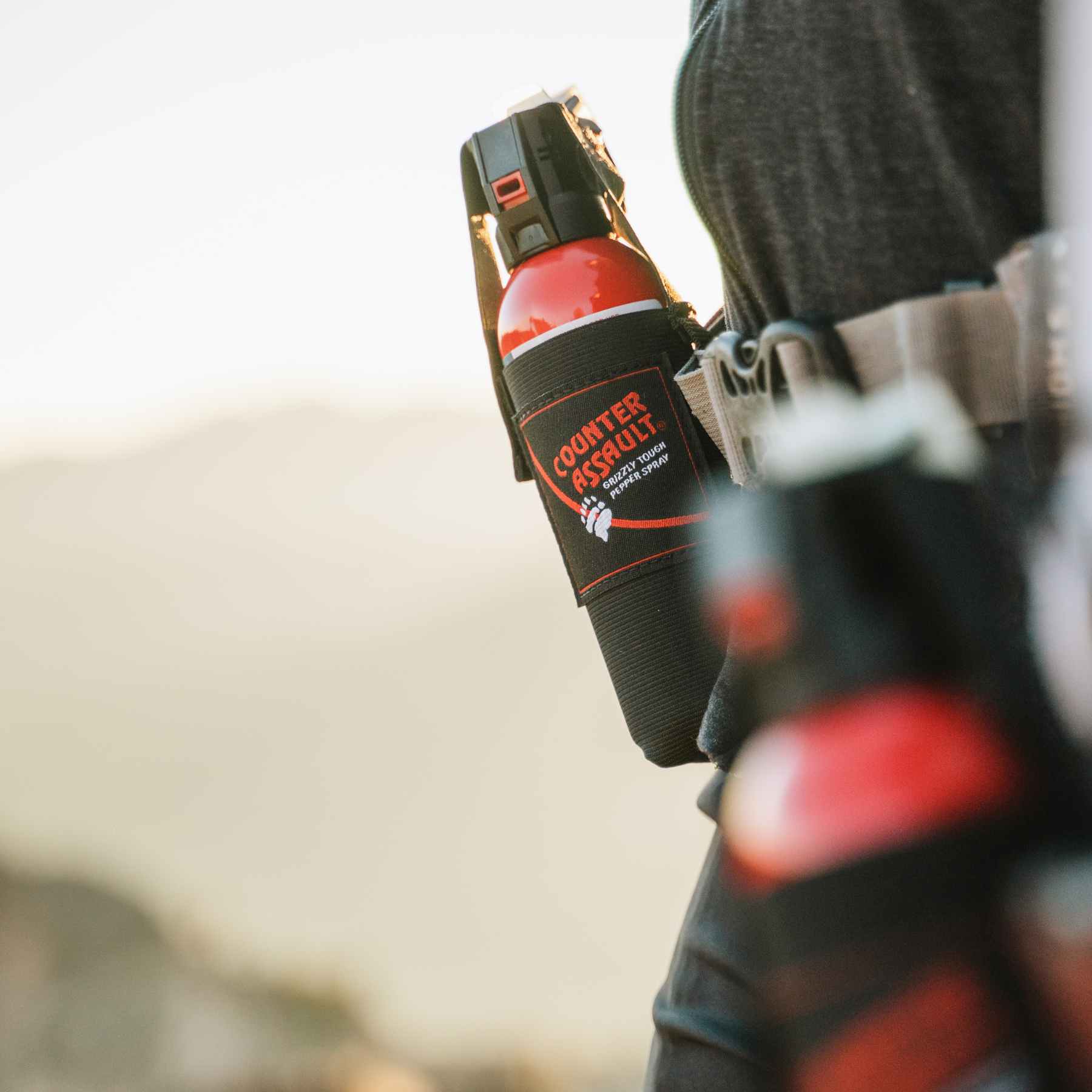
- Straight, steady travel: The bear was likely moving with purpose. Give the area space, make your presence known, and keep Counter Assault bear spray accessible in hand or on a chest or belt holster.
- Wandering or looping tracks: Often seen when a bear is feeding or investigating. Slow down, scan ahead and to the sides, and avoid walking unnoticed into the same food source.
- Abrupt turns, churned soil, or a burst of long strides: Treat this as higher concern. The bear may have been startled, displaced, or reacting to something nearby. Stop, group up, speak calmly, and consider backing out the way you came.
Is It a Bear? Spotting Common Track Look-Alikes
False alarms are common. That isn’t a problem if the group slows down and checks details instead of jumping to conclusions. Most misidentifications come from canines, cats, or damaged partial prints.

Canines are the most common false alarm
Large dog and wolf tracks usually show four toes, not five. Their heel pad is more compact and triangular, and the overall track is more symmetrical. Even in sloppy mud, a canine track often looks tidy and forward-pointing compared with the broad, flatter spread of a bear track.
Claws can confuse people here. Canines also show claw marks. The difference is in the whole print. Bear tracks are heavier, wider, and less compact, especially in the hind foot.
A second clue is trail pattern. Canines often move in a straighter, more efficient line and leave a tighter, narrower trackway. A bear’s track line tends to look heavier and more rolling.
Cats and other confusing prints
Mountain lion tracks create a different kind of confusion. The track can be large, but cats usually show four toes and a broad heel pad with a distinctly feline shape. Their claws are typically retracted, so visible claw marks are much less common than in bear sign.
Wolverine and other mustelids can also throw people off in broken snow because they may register in clusters or bounds. But the prints are smaller, more irregular, and usually part of a very different movement pattern.
When a print seems half bear and half something else, the safest assumption is that the substrate is lying. Find a cleaner track before making the call.
A final reminder helps. Bear tracks often show that full, flat-footed pressure from the entire sole. If the print looks compact, neat, and four-toed, it probably isn’t a bear.
How Fresh Are These Tracks? Assessing Timeliness and Risk
A bear track on its own doesn’t answer the most urgent question. The useful question is whether the animal is likely nearby now, or whether the sign is old enough that the immediate risk is lower.
There’s no exact formula for aging a bear track. Ground type, sun, wind, shade, and recent moisture all change how fast a print degrades. But hikers can still make a practical judgment.
Fresh sign versus old sign
Fresh tracks tend to show sharp, distinct edges, while older tracks become blurred and weathered, as described in this track-aging overview from Mississippi State Extension. In soft ground, deep, clear claw punctures can also suggest recent passage and a substrate that’s still holding detail well.
That doesn’t mean every crisp track is minutes old. It means the sign hasn’t yet been rounded off by time and weather in an obvious way.
Look for these field cues:
- Sharp rims: Crisp margins usually suggest newer sign.
- Fine detail inside the track: Toe separation, pad texture, and distinct claw marks fade with time.
- Debris in the print: Needles, leaves, dust, or insect disturbance often indicate older sign.
- Weather effects: Sun-softened snow, rain-pitted mud, and collapsed edges usually point to age.
Old tracks still matter for route awareness. Fresh tracks matter for immediate decision-making.
What changes the risk picture
Freshness is only part of the call. Context matters more than a single clue.
A line of fresh tracks heading the same way the group plans to travel deserves more caution than old sign crossing the trail and disappearing downhill. Multiple track sizes deserve even more attention. A mix of large and small prints can indicate a mother with cubs, and that’s a situation where hikers should raise their alert level and avoid pushing forward casually.
The track location matters too. Fresh sign in dense brush, along a creek bend, near a carcass, or in noisy terrain creates more risk than sign on an open ridge with long visibility.
When the sign looks fresh enough to change behavior, the right response isn’t panic. It’s adjustment. Slow down. Tighten the group. Make calm human noise. Put deterrents where they can be reached instantly instead of buried in a pack.
Your Action Plan From Track Sighting to Staying Safe
You come around a bend, spot a fresh bear track in damp soil, and the group starts talking over each other. That is the moment to slow the pace and make a clean decision. Track reading earns its keep here. It helps you judge risk early enough to avoid walking into a close encounter.
At the track site, stop the group first. Keep people from milling around the print or spreading out on the trail. One person reads the sign. Everyone else watches the brush, listens, and gets deterrent into a ready position.
Then work through the scene in order:
- Confirm the direction of travel. Look for a line of tracks, not a single print. A track line tells you whether the bear crossed and kept going, traveled your route, or turned into cover nearby.
- Check for more than one animal. Different sizes in the same line can mean a sow with cubs. That changes the call fast and usually argues for giving the area more room.
- Match the sign to the terrain. Fresh tracks heading into thick brush, a creek bottom, berry cover, or a tight drainage raise the chance of a short-range surprise encounter.
- Change group movement right away. Tighten spacing, keep conversation calm and steady, and stop quiet travel around blind corners.
- Decide whether to continue, detour, or back out. If the sign suggests the bear is very close or traveling the same route, turning around is often the strongest move, not the weakest.
Track analysis becomes a safety tool, not just an identification skill. Species, age of the sign, and gait pattern help answer one practical question. How likely is it that you could meet that bear at close range in the next few minutes?
If you do see the bear, keep the response simple. Stand together. Do not run. Talk in a calm voice and back away slowly if the bear is aware of you but not advancing. If the bear closes distance, shows sustained aggression, or charges, use bear spray according to the label and only when it is in effective range. Review this step-by-step guide on what to do if you see bear before the trip, not on the trail.
What works and what doesn’t
A few habits consistently reduce trouble in bear country:
- Travel as a group: A tight, visible group is easier for a bear to identify than scattered hikers.
- Keep camp clean: Food, garbage, and scented items create problems long after the tracks are gone.
- Carry deterrent where your hand can reach it fast: A can buried in a pack does not help during a sudden encounter.
- Pack the other basics too: A compact Adventure Medical Kits first aid kit and reliable Natrapel insect repellent solve common field problems without much weight.
Avoid these mistakes:
- Spraying gear or clothing with bear spray: Bear spray is a deterrent for an approaching animal, not a treatment for equipment or a personal repellent.
- Running from a bear: That can trigger pursuit.
- Treating every track the same way: Older crossing sign and fresh travel sign call for different decisions.
- Basing the call on one dramatic print: Read the full pattern, the surrounding cover, and the likely direction of travel.
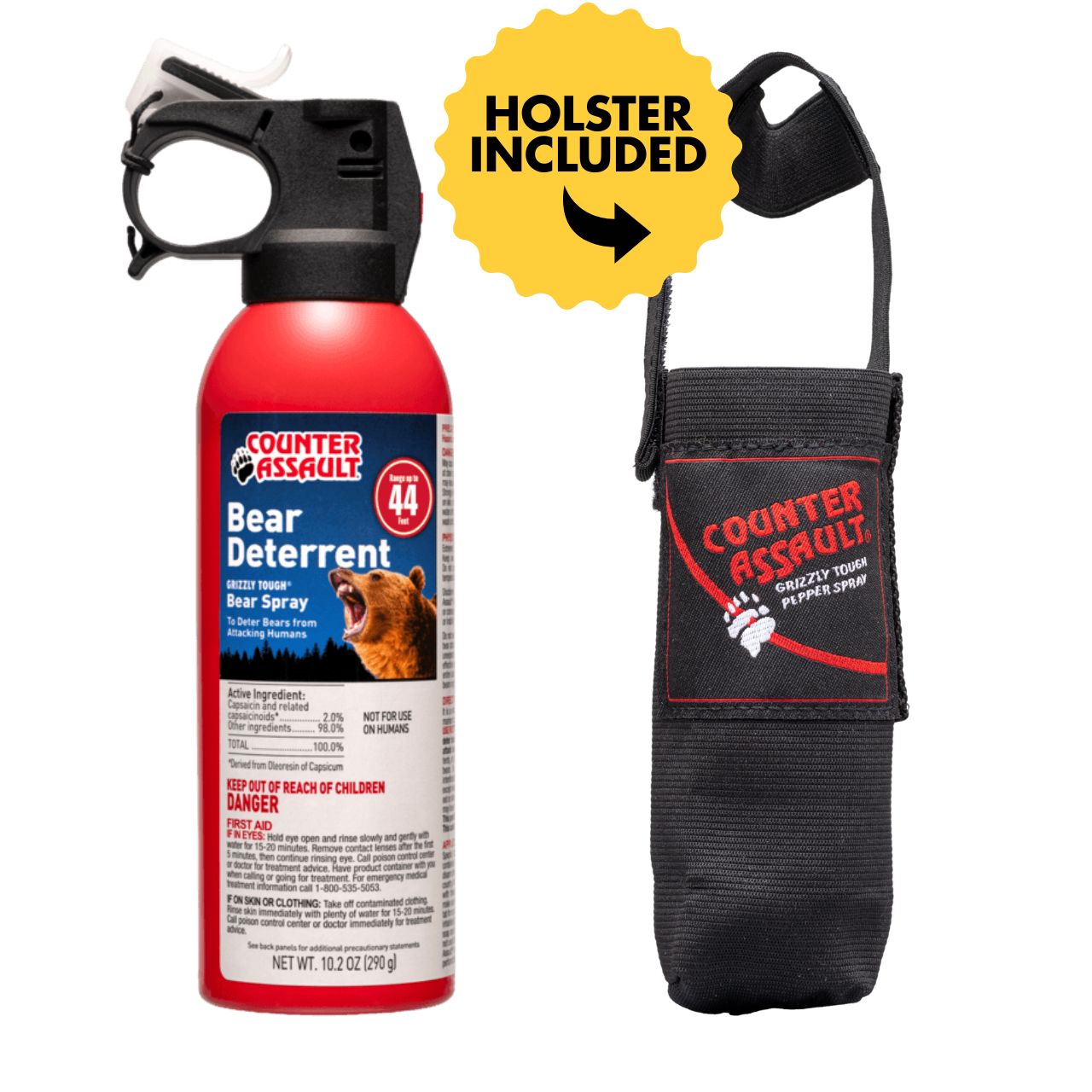
When bear country is on the itinerary, carry deterrent where it can be reached before a pack comes off. Counter Assault makes the 10.2 oz Bear Spray with Holster, a 44-foot bear spray with 2% capsaicin and approximately 10 seconds of continuous discharge, described by Counter Assault as effective on all bear species as well as mountain lions and coyotes. The included holster matters because fresh track sign often gives you a short window to prepare.