
The tent is packed. The route is downloaded. Food tubs are lined up on the garage floor. For a lot of campers, that's the moment when the question shows up. What if there's a bear?
That question matters, but it needs the right frame. Bears aren't a reason to avoid wild country. They're a reason to camp with discipline. The actual probability of a human being attacked by a bear is approximately 1 in 2.1 million, according to this bear safety summary citing National Park Service data. The point of bear country camping isn't fear. It's preventing the small mistakes that turn a normal night outdoors into a problem for both people and wildlife.
Prepared campers usually enjoy bear country for what it is. Quiet mornings, clean camps, fresh tracks in the mud, and the knowledge that they're moving through an animal's home without creating conflict. That comes from understanding the why behind the rules. Food goes far from the tent because a bear that finds reward near sleeping areas starts connecting people with calories. Noise on trail matters because most bad encounters start with surprise. Bear spray belongs on a belt or chest strap because a deterrent buried in a pack is almost useless when seconds count.
Table of Contents
- An Introduction to Responsible Bear Country Camping
- Pre-Trip Planning and Essential Safety Gear
- Choosing and Setting Up a Bear-Safe Campsite
- Mastering Food Storage and Scent Control
- Proactive Safety How to Act on the Trail and in Camp
- How to Respond During a Close Bear Encounter
- Bear Safety FAQs and Common Misconceptions
An Introduction to Responsible Bear Country Camping
The safest campers in bear habitat usually aren't the least concerned. They're the most consistent. They cook away from where they sleep, keep scents under control, notice terrain, and carry tools they can reach fast. That's what responsible bear country camping looks like.
A clean camp protects more than dinner. It protects the next group that uses the same site, and it protects the bear from learning that tents, coolers, or backpacks can pay off. Once a bear starts winning food from people, everybody loses.
Why preparation changes the whole trip
Plenty of new campers think bear safety means memorizing a few dramatic emergency moves. In practice, preparatory work happens earlier. Good planning strips away most of the conditions that attract bears in the first place. Camp layout, food handling, route timing, and trail behavior do more than panic ever will.
Practical rule: Most bear safety is ordinary camp discipline done every single time, even when nobody feels like doing it.
That mindset changes the trip. Instead of lying awake listening for every branch snap, campers can trust their system. Gear is stored where it belongs. Food isn't in the sleeping area. The group has a simple response plan if wildlife appears. Preparedness creates calm.
Respect beats fear
Bears don't need to be demonized, and they shouldn't be treated casually either. They're powerful wild animals with strong noses, clear patterns, and predictable triggers. Surprise, food reward, and close pressure from people tend to create trouble. Distance, noise, clean habits, and non-lethal deterrence reduce it.
That balance matters. Bear country camping should still feel like a privilege, not a standoff. The goal is coexistence. Camp in a way that leaves no reward behind, react early when conditions get sloppy, and carry tools that stop a charge without turning the backcountry into a shooting problem.
Pre-Trip Planning and Essential Safety Gear
A lot of bear incidents start with a simple mistake made hours before anyone sees an animal. A group drives into a new area assuming last year's routine still applies. The campground now requires hard-sided storage. A trail has fresh carcass activity. Spray is packed inside a duffel instead of on a belt. By the time camp is set, the problems are already in place.
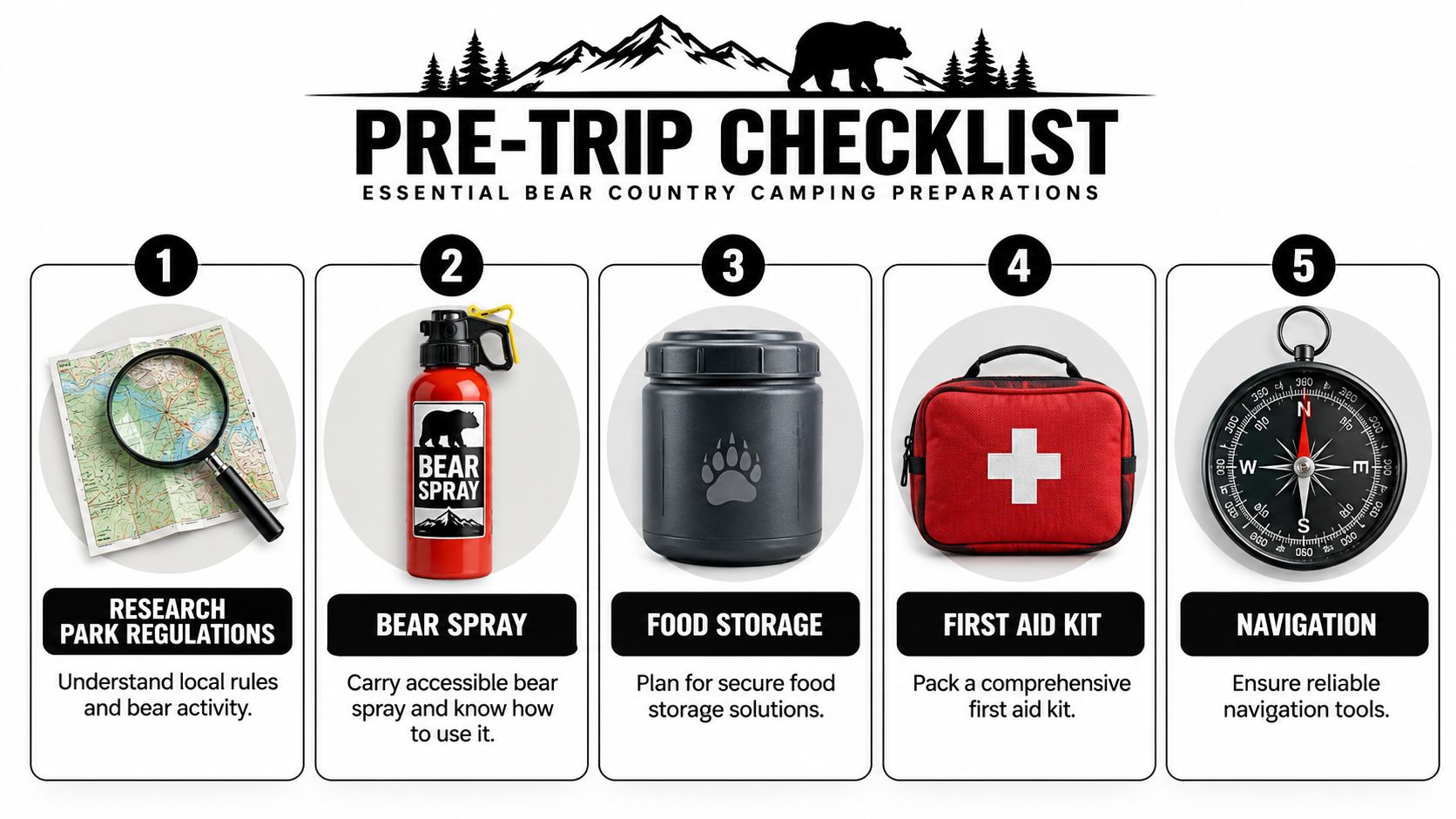
Start with the local rules
Bear country is not one uniform set of conditions. Each park, forest, and river corridor has its own rules, pressure points, and current wildlife activity. Responsible campers check the managing agency for the exact destination, then plan around what is happening there now, not what worked on another trip.
That matters for a practical reason. Bears learn from human patterns. If an area has repeated food problems, managers may require canisters, close sites, or post warnings around carcasses and travel corridors. Those notices are not bureaucracy. They are a record of where trouble has already developed.
A useful way to pack is to sort gear into three jobs: prevent a problem, stop a problem, and stabilize the group after a problem. For a broader checklist beyond bear-specific gear, HYDAWAY's ultimate packing list for camping is a practical reference that helps catch the ordinary items people forget once wildlife risk takes over the conversation.
Before leaving home, cover these basics:
- Check area-specific regulations: Confirm food storage rules, campsite restrictions, seasonal closures, and recent bear notices.
- Match storage to the destination: Bring the canister, locker plan, or approved setup the area requires.
- Review route timing and visibility: Give yourself room to hike and set camp before dusk, especially in thick cover.
- Assign responsibilities: Every person should know who carries spray, who handles first aid, and how the group will respond if a bear enters camp.
Pack gear that solves real problems
The right gear lowers risk because it supports good decisions under stress. The wrong gear creates false confidence.
Bear spray is the clearest example. It is a proven, non-lethal tool, but only if it is instantly available and the user has already practiced the steps to deploy it. A can buried in a pack might as well stay in the car.
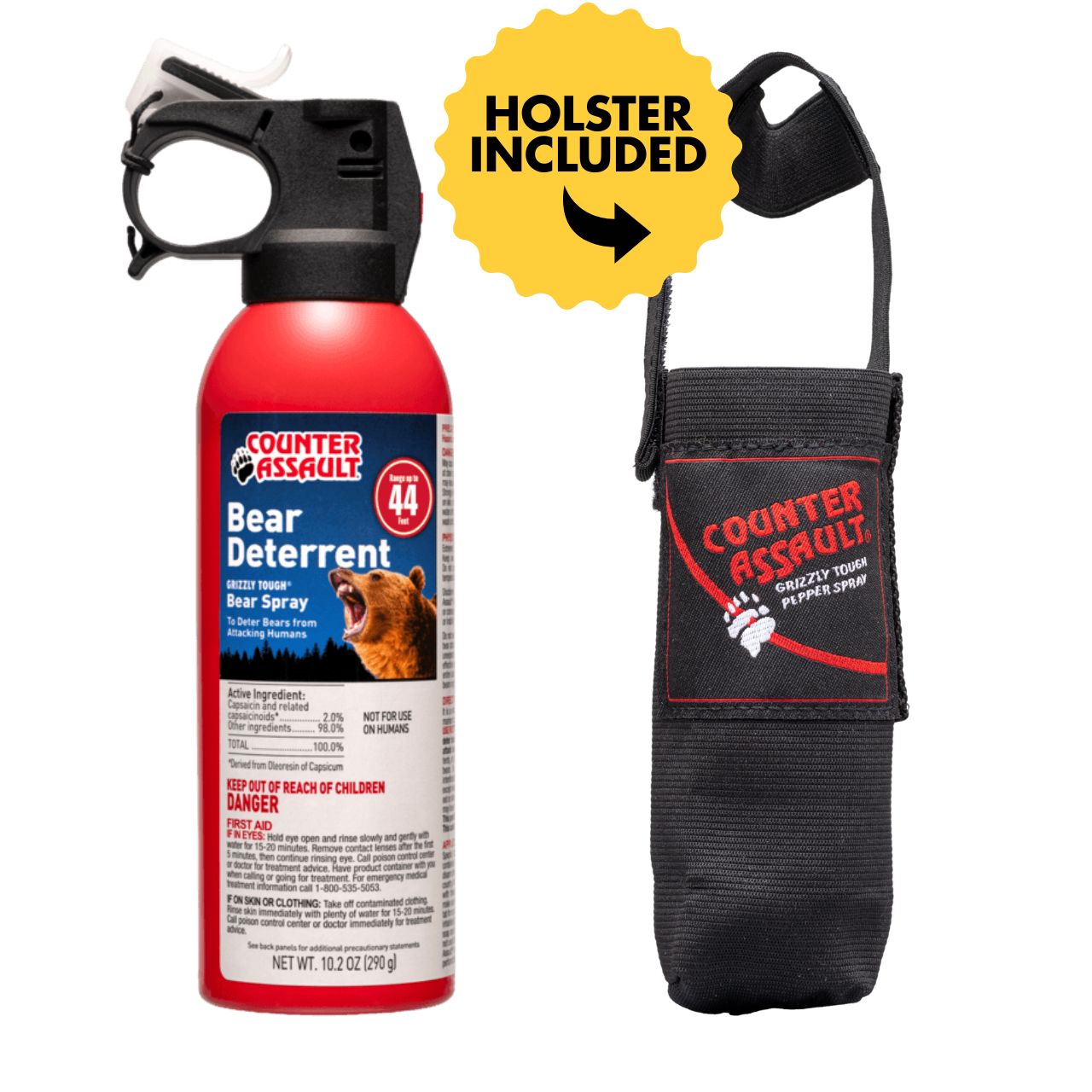
One option is the Counter Assault 10.2 oz bear spray with holster. The product page states that it contains 2% capsaicin and related capsaicinoids, which is the maximum concentration allowed by U.S. law, and that it projects up to 44 feet in a high-volume atomized blast. In the field, those details matter because a wide cloud gives a stressed user more margin for error than a narrow stream does. Campers who want to compare deterrent types and carry methods should read this guide to choosing bear deterrent spray.
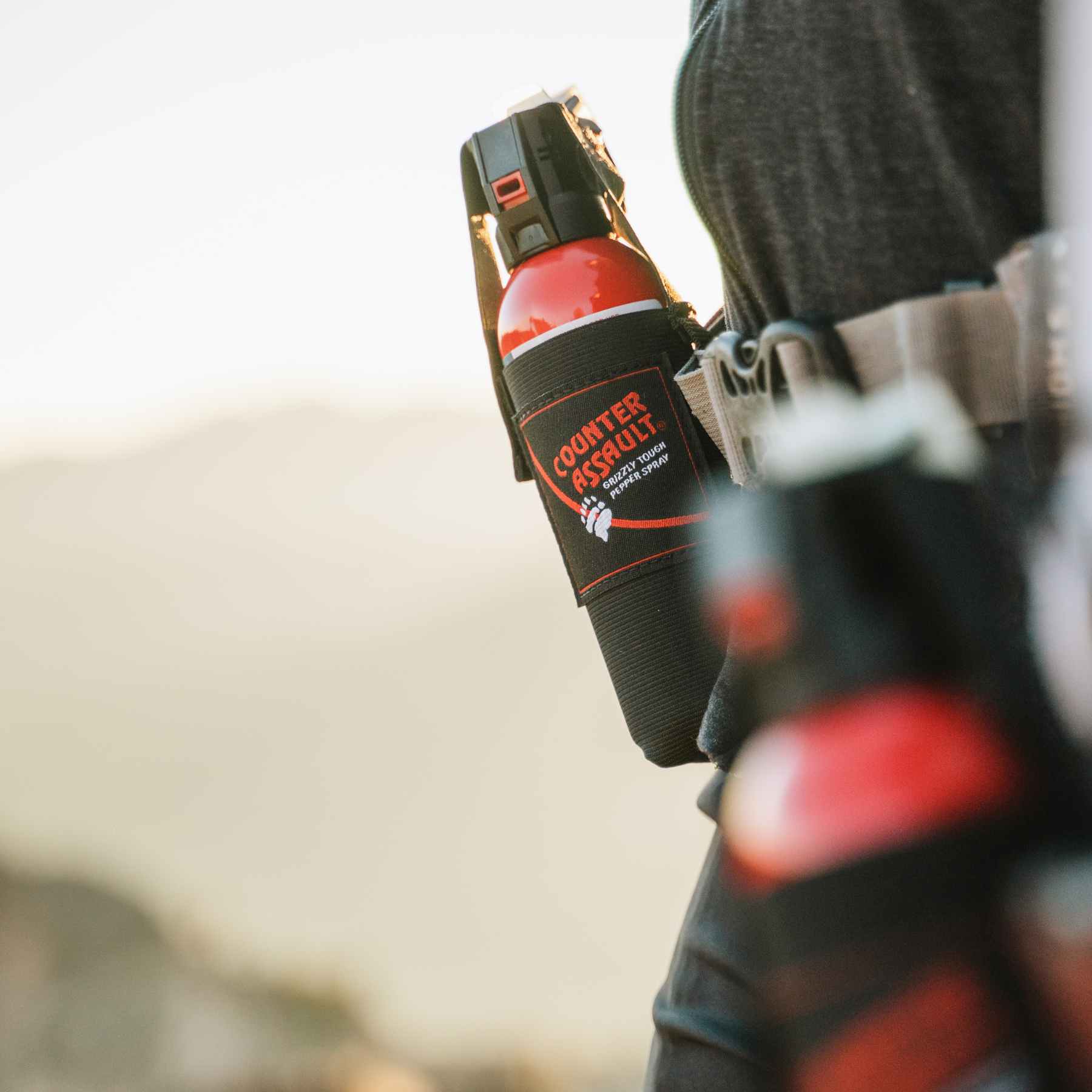
Carry spray on a holster, belt, or chest strap. If you cannot reach it in one motion, you are carrying weight, not protection.
The rest of the kit should cover the routine problems that make people careless. Poor light leads to sloppy camp tasks. Bug pressure keeps people distracted and rushing. A minor cut, burn, or wrong turn gets more serious when the group is cold, tired, and focused on wildlife instead of the basics.
| Item | Purpose | Recommended Product/Link |
|---|---|---|
| Bear spray | Emergency deterrent for an aggressive bear or other wildlife encounter | Counter Assault 10.2 oz bear spray with holster |
| First-aid kit | Treat cuts, blisters, burns, and minor injuries in camp or on trail | Adventure Medical Kits hiking and camping first-aid kits |
| Food storage system | Secure food and scented items according to local requirements | Approved canister, locker access, or site-specific storage method |
| Light source | Move safely after dark and handle camp tasks without fumbling | LuminAID solar lanterns |
| Insect protection | Reduce distraction and rushed decision-making around camp | Natrapel outdoor insect protection |
| Emergency survival backup | Add warmth and shelter if weather, delay, or injury changes the trip | SOL emergency outdoor gear |
Choosing and Setting Up a Bear-Safe Campsite
A campsite can look perfect and still be wrong. Flat ground, nice trees, and a nearby stream don't mean much if the area is full of scent, game movement, or food sources. Good bear country camping starts with layout and location, not just scenery.
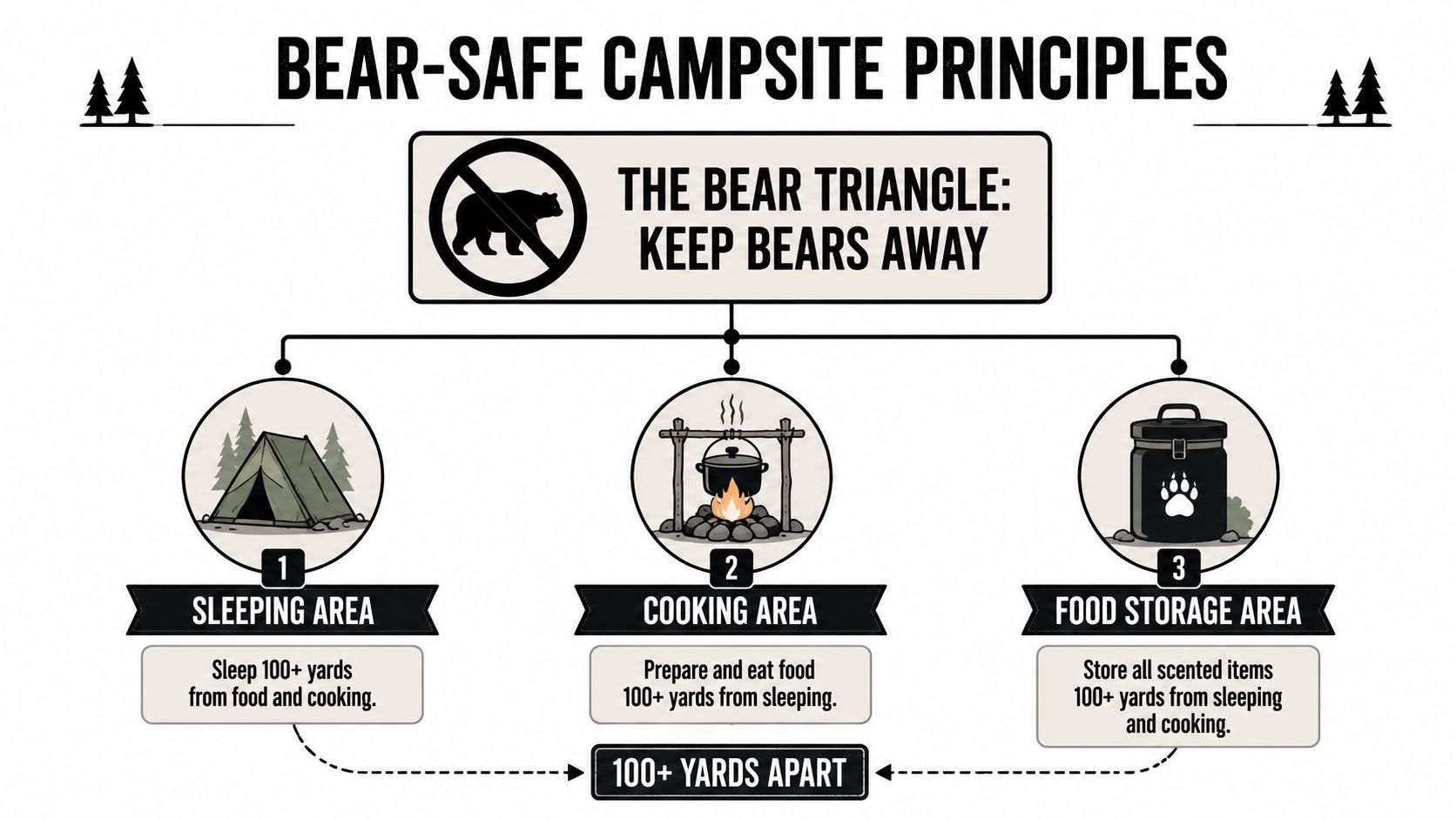
Build the camp around separation
The most useful model is the bear triangle. Sleeping, cooking, and food storage should be treated as separate zones, not one blended living space. Parks Canada notes that 68% of human-bear conflicts at campsites result from improper food storage or cooking practices, and that maintaining 200 feet between sleeping, cooking, and food-storage zones is one of the highest-impact preventive measures in camp (Parks Canada bear safety guidance).
That spacing matters because bears follow odor, not human logic. If cooking happens next to the tent, the tent starts carrying the same scent signature as the meal. If food is handled where people sleep, a bear investigating odor may end up standing in the middle of camp.
A sound campsite layout usually includes:
- A sleeping area: Only for sleeping gear and clean clothing.
- A cooking area: Used for meals, dishwashing, and anything greasy or aromatic.
- A food storage area: Used for all food, trash, toiletries, and other scented items.
Pick a site bears are less likely to use
Good site selection cuts risk before the stove ever comes out. Avoid camping near berry patches, obvious animal trails, carcasses, or thick cover where visibility is poor. Noisy streams can also be a problem because they mask the sound of approaching wildlife.
A cleaner, more open site usually gives campers time to notice what's around them. It also reduces the chance of surprising a bear moving through brush at dawn, dusk, or during the night.
Bears don't need a reason to pass through camp. Campers should avoid giving them a reason to stop.
When evaluating a site, look for old food scraps, scattered trash, or signs that previous campers were sloppy. A place that rewarded wildlife before can draw interest again. More practical campsite habits are outlined in this guide to keeping bears away from camp.
Mastering Food Storage and Scent Control
A bear can ignore a tent and still walk straight into trouble because of one candy wrapper in a hip belt pocket or bacon grease on a camp chair. That is why food storage is not a side task. It is the backbone of a bear-safe camp.
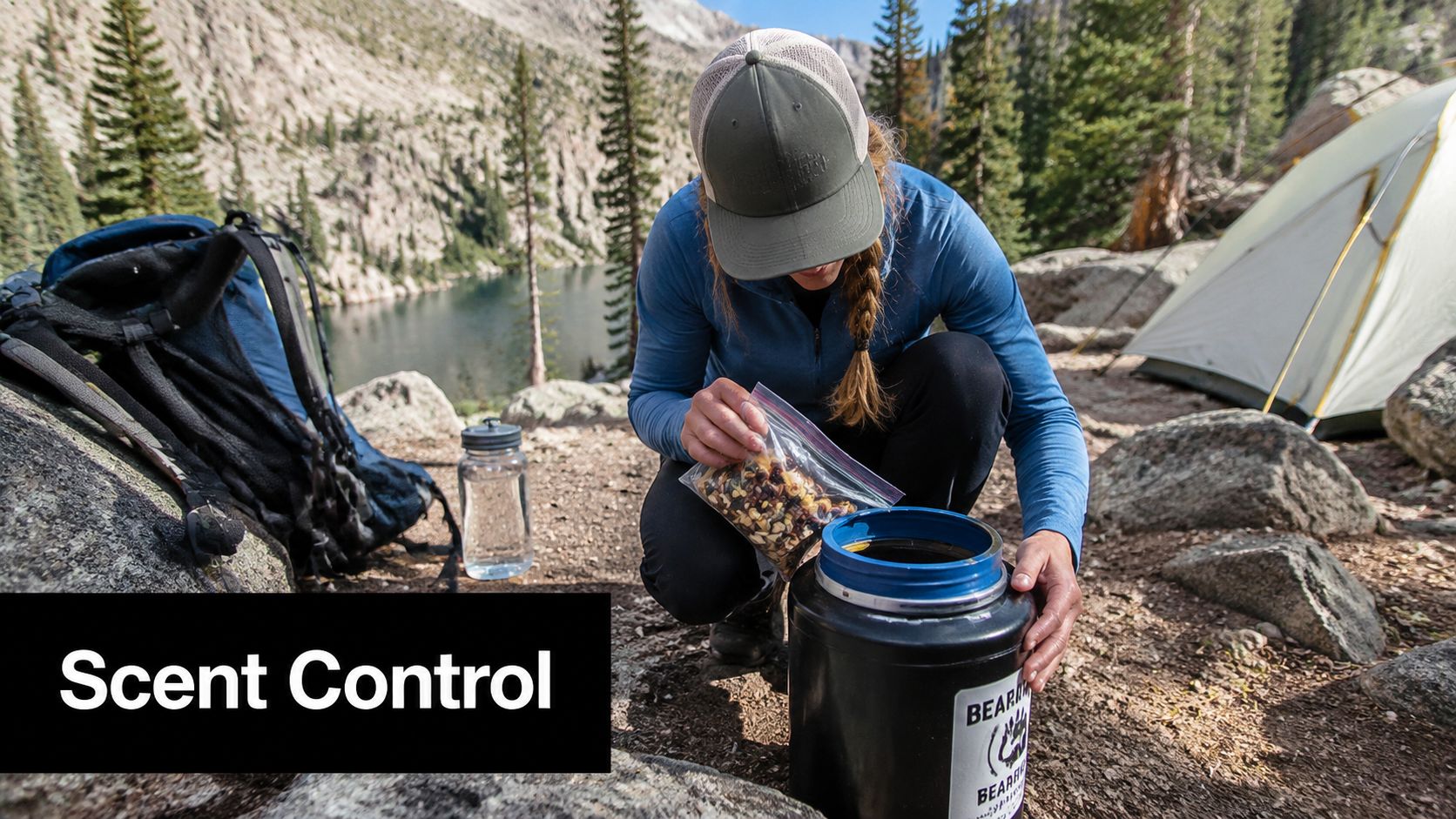
Campers sometimes focus so hard on the dramatic part, seeing a bear, that they miss the part that usually matters first. A bear follows its nose. If camp smells like calories or curiosity, the bear has a reason to investigate. If camp offers no reward, many encounters stop before they start.
Treat Odor as the Primary Attractant
Store scented items by smell, not by category. Food is obvious, but bears also investigate toothpaste, sunscreen, lip balm, drink mixes, trash, fish residue, pet food, and dirty cookware. A fleece that soaked up smoke and frying oil belongs in that same group.
That rule frustrates people because it feels excessive. It is not. Bears learn from small rewards, and a single mistake can teach a bear that camps are worth checking.
A practical system is simple:
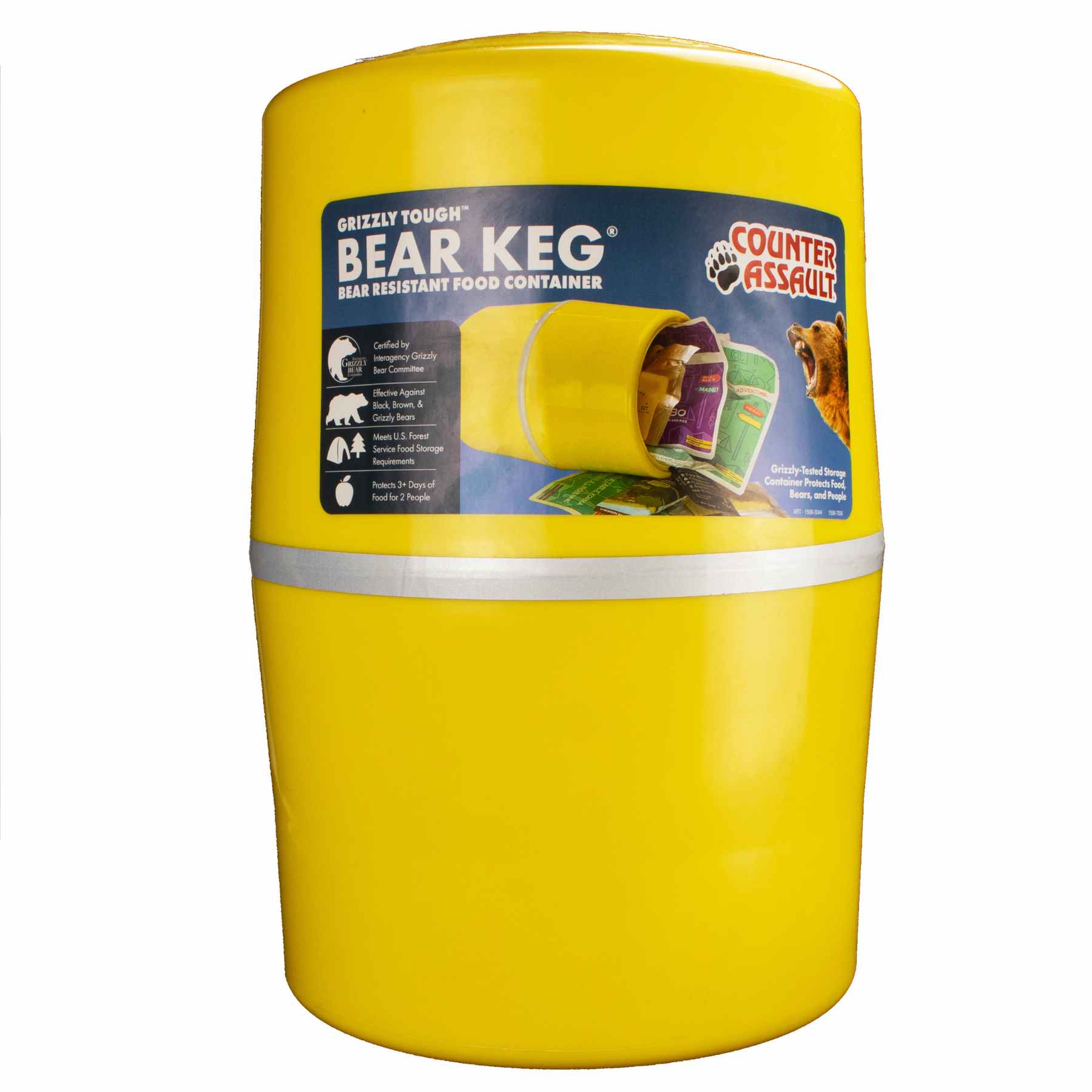
- Use approved storage: Bear-resistant canisters and other site-approved methods work because they deny access, even when odor is present.
- Bag and store smell-heavy clothing: If a jacket or base layer smells like dinner, keep it out of the tent and with stored food or as local rules require.
- Keep sleeping gear clean: No snacks, gum, wipes, toiletries, or flavored drinks in the tent.
- Police the small stuff: Empty cans, drink residue, wrappers, and snack crumbs cause plenty of problems because people overlook them.
For step-by-step storage habits, this camping food storage guide lays out what to secure and how to handle it.
Handle cleanup like a prevention tool
The highest-risk period in many camps is the half hour after dinner. People are tired, light is fading, and standards slip. That is when grease gets on pack straps, dishwater gets dumped too close, and trash ends up “just sitting there until morning.”
Morning is too late.
Wash pots soon after eating. Wipe down tables, stoves, and any hard surface that caught splatter. Seal trash promptly and store it with the rest of the scented items. Follow local regulations for dishwater disposal, and keep scraps and odor away from sleeping areas and water sources.
This work can feel fussy, especially on a cold or rainy night. It still matters. In bear country, cleanliness is not about comfort or appearances. It is about removing the reward that turns a passing animal into a camp visitor.
A clean camp supports coexistence. It helps keep people safe, and it helps keep bears from learning dangerous habits that often end badly for the bear.
Proactive Safety How to Act on the Trail and in Camp
Many dangerous encounters start with one bad ingredient. Surprise. A hiker rounds a blind corner, making no sound. A solo angler moves through brush near running water. A camper slips away from camp at dawn without making any sound. Bears don't like being startled, and people don't benefit from getting close before anyone notices.
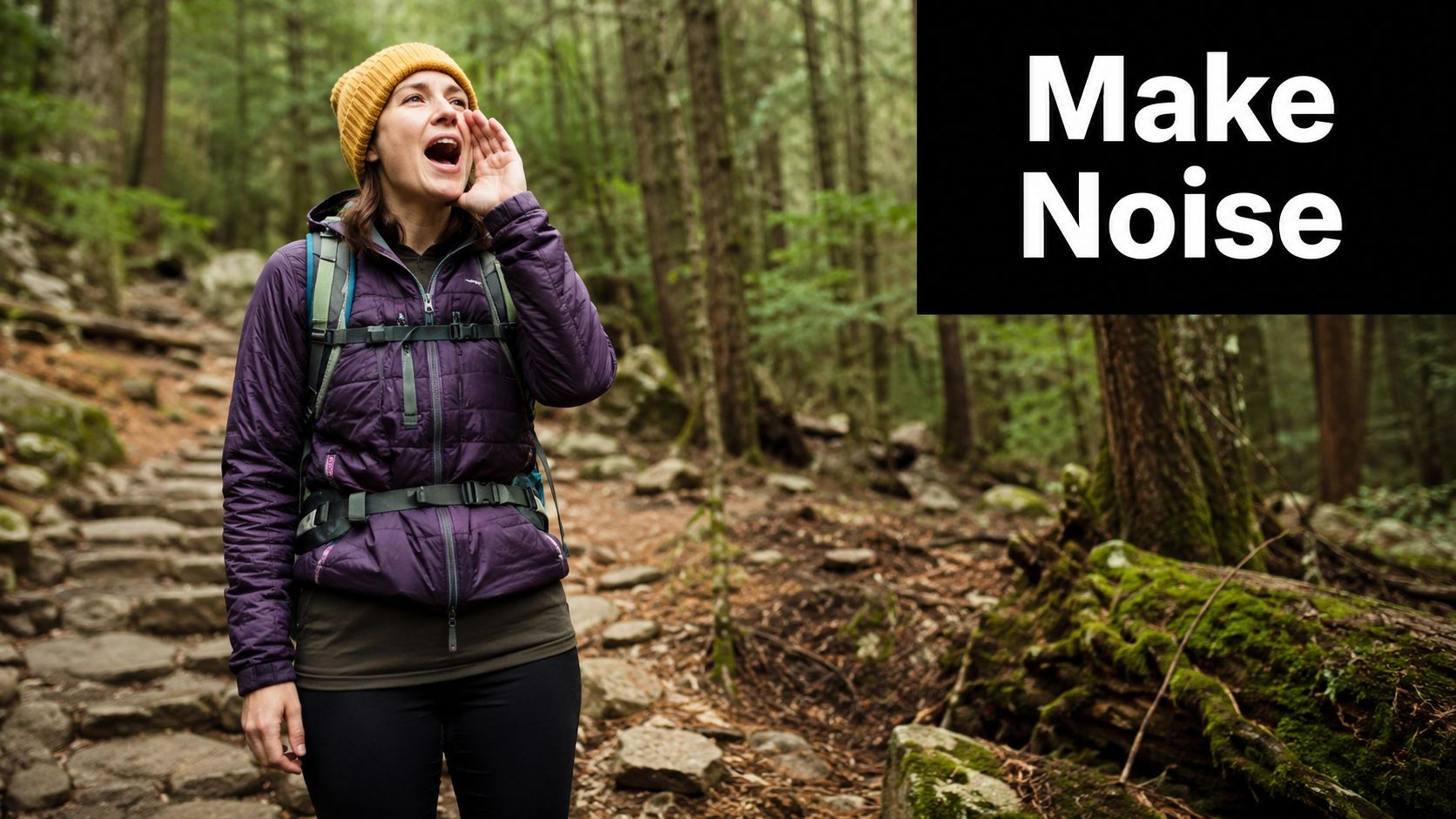
Avoid surprise encounters
The simplest prevention tool is noise. Talk with partners, call out around blind corners, and move audibly through dense cover. Groups are generally safer because they're easier for bears to detect and identify at a distance.
Timing matters too. Bears are often more active in low light, so hikers and campers should be more alert at dawn and dusk. If visibility is poor or vegetation is thick, pace and awareness matter more than mileage.
A strong trail routine looks like this:
- Travel in groups when possible: More sound and more eyes reduce the odds of startling wildlife.
- Announce presence in brush: Normal voices work. The point is to be noticed early.
- Keep deterrent spray accessible: On the body, not stuffed under extra layers or buried in a pack.
- Watch sign and terrain: Tracks, scat, diggings, and carcass odor all justify extra caution.
Act like a respectful visitor
Campers also prevent conflict by refusing to turn wildlife sightings into photo opportunities. Don't approach. Don't feed. Don't push for a better angle. If a bear is visible from trail, that's enough. Distance is the point.
If a photo needs a closer position, the position is wrong.
The same attitude applies in camp. Don't leave food because “it'll only be a minute.” Don't let children wander with snacks. Don't assume a developed campground removes wildlife risk. Respectful behavior is quiet, consistent, and a lot less exciting than internet myths. That's exactly why it works.
How to Respond During a Close Bear Encounter
If a bear is close, speed matters less than control. The first mistake many people imagine is running. That reaction is dangerous. Running can trigger pursuit, and it destroys the chance to read the bear's behavior and use a deterrent correctly.
Read the moment before reacting
Not every close bear sighting is an attack in progress. Some bears are moving through. If the animal isn't charging or showing aggressive intent, the safest response is to stay composed, avoid direct eye contact, speak in a normal voice, and back away slowly at an angle. The person should make space, not drama.
If the bear is holding ground, approaching aggressively, or looks ready to charge, the camper should stand ground and prepare the spray. Screaming and frantic movement usually make a bad moment less predictable. Calm behavior gives the user a better chance to act with purpose.
A close-encounter response should stay simple:
- Don't run.
- Get the spray in hand immediately.
- Remove the safety clip.
- Aim low, in front of the animal's path.
- Create a cloud the bear has to run through.
- Leave the area as soon as the encounter breaks.
Use bear spray with intent
Bear spray works because it creates a barrier that disrupts the charge without requiring the user to hit a tiny target under pressure. According to this review summarizing bear spray effectiveness data, bear spray has a 92% success rate in deterring attacks. In one study of 72 incidents, 98% of people using bear spray were uninjured. The same source says firearms users have roughly a 50% chance of being injured during a charging bear encounter.
That trade-off matters in the field. A handgun or rifle demands precision, composure, and line-of-fire awareness in a fast-moving emergency. Spray gives the user a wider margin for error and avoids lethal injury to the bear.
Bear spray should only be used on wild animals such as bears, mountain lions, or coyotes. It is not legal to use it on people, and it should never be treated like personal-defense pepper spray against humans, according to Counter Assault's bear spray guidance.
The right spray technique is low and forward. The goal is a cloud in the bear's path, not a panicked swipe through the air.
Campers also need to remember that spray is a last resort tool, not an all-purpose repellent. It should not be sprayed on tents, boots, packs, or campsite perimeter in advance. It belongs in hand only when the animal's behavior makes deployment necessary.
Bear Safety FAQs and Common Misconceptions
Bad information gets people hurt in bear country. Many bear safety myths sound sensible until tested in the field, and they usually fail for the same reason. They confuse confidence with preparation.
Is a gun better than bear spray
For most campers facing a sudden close encounter, bear spray is the safer tool to carry and the more realistic tool to use well. A firearm asks for speed, accuracy, and judgment under extreme stress. It also raises the chance of a wounded bear, a missed shot, or a dangerous line of fire near partners. Spray is built to stop the charge and give both the person and the bear a chance to leave alive.
That distinction matters. Bear safety is not about winning a fight. It is about ending the encounter with as little harm as possible.
What if the spray blows back
Wind is a real factor, but it does not cancel out the value of spray. Good technique lowers the risk. Keep the canister accessible, practice removing the safety clip before the trip, and direct the spray low so the cloud rises into the bear's path.
Poor handling causes plenty of failed deployments.
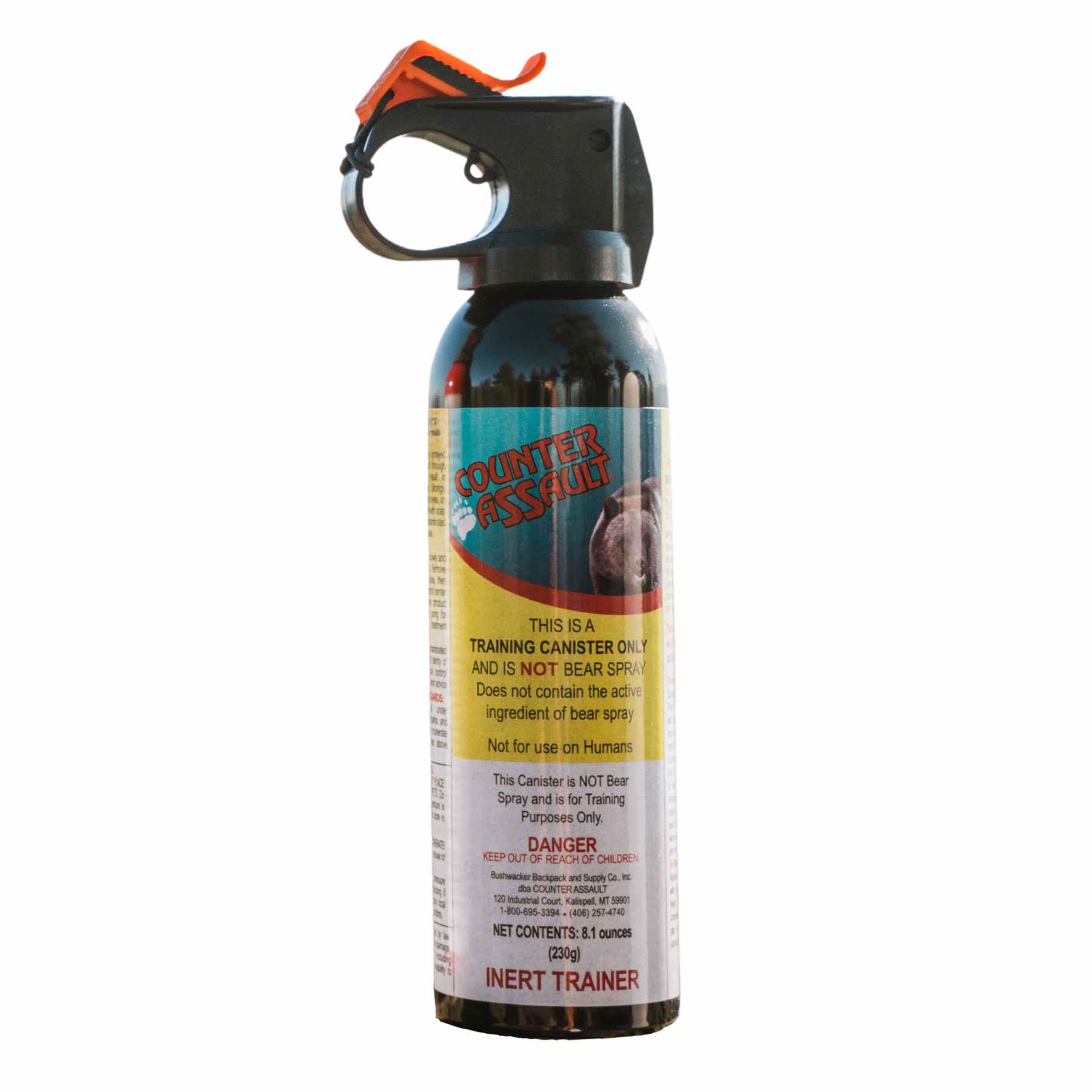
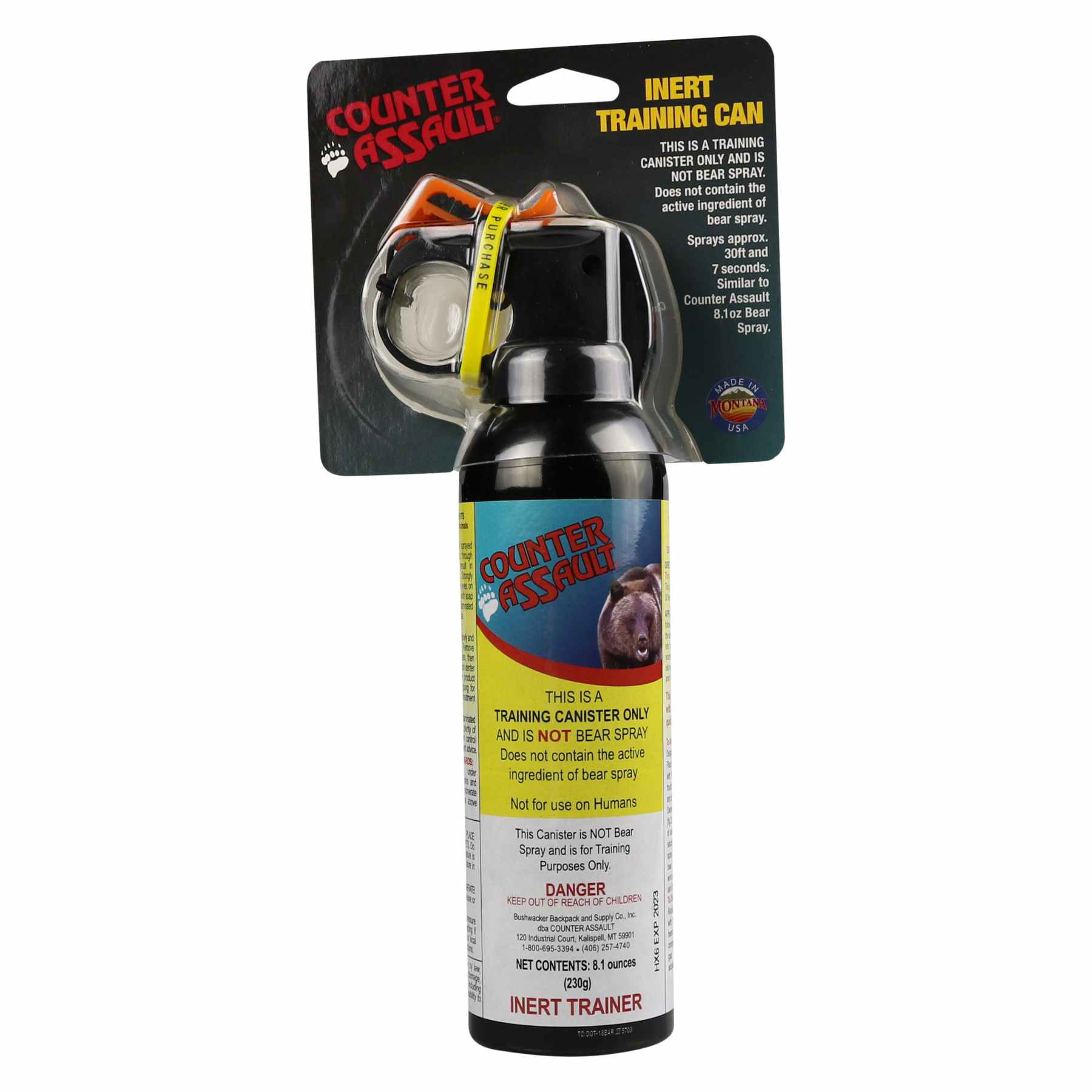
I have seen people carry spray buried in a pack, hold it upside down, or fire too early because adrenaline took over. Those are preventable mistakes. The lesson is not that spray does not work. The lesson is that tools work better when campers train with them before they need them.
Can a tent or gear be sprayed ahead of time
No. Bear spray is an emergency deterrent, not a protective coating for camp gear.
Spraying tents, backpacks, boots, or a campsite perimeter ahead of time does not make camp safer. It creates contamination, wastes the canister, and treats a last-resort tool like bug spray. Use it only when a bear's behavior justifies deployment.
This is one of the most dangerous misunderstandings because it sounds proactive. In practice, it replaces actual prevention with a shortcut that does not solve the problem.
What happens after the spray is used
Leave the area as soon as you safely can. Do not stand around to inspect the scene, sort gear, or assume the incident is finished because the bear turned away. As explained in this Grizzly & Wolf Discovery Center video on bear spray use, lingering aerosol can draw in other bears.
That is why experienced crews treat spray deployment as the start of the exit, not the end of the problem.
Leave first. Recover gear later if conditions allow. Distance is the priority after spray is deployed.
Do loud noises always scare bears away
No. Noise helps most before a surprise encounter, not after one has already developed at close range.
Talking, clapping, or calling out on the trail can keep a bear from being startled in thick cover, near running water, or around blind corners. Once a bear is already focused on food, cubs, a carcass, or a threat it thinks is close, noise may do very little. Some bears leave. Some hold their ground. Campers get into trouble when they assume every bear will react the same way.
Are black bears harmless compared with grizzlies
Black bears are often smaller and less defensive than grizzlies, but harmless is the wrong word. Any habituated, food-conditioned, cornered, or predatory bear can become dangerous.
That misconception leads campers to get sloppy around black bears. They take photos at bad distances, leave food unsecured, or decide the animal is “just a black bear.” Rangers end up seeing the same pattern over and over. The species matters, but behavior matters more.
The through line in all of these questions is simple. Responsible bear country travel is built on judgment, distance, clean habits, and tools used for their intended purpose. Fear is not the goal. Preparedness is. That is how people protect themselves without turning every bear into an enemy.
A reliable bear country trip depends on preparation, not bravado. For campers, hikers, hunters, and professionals who need a non-lethal wildlife deterrent, Counter Assault offers bear safety equipment built for use against bears, mountain lions, and coyotes, with an emphasis on protecting both people and wildlife.