
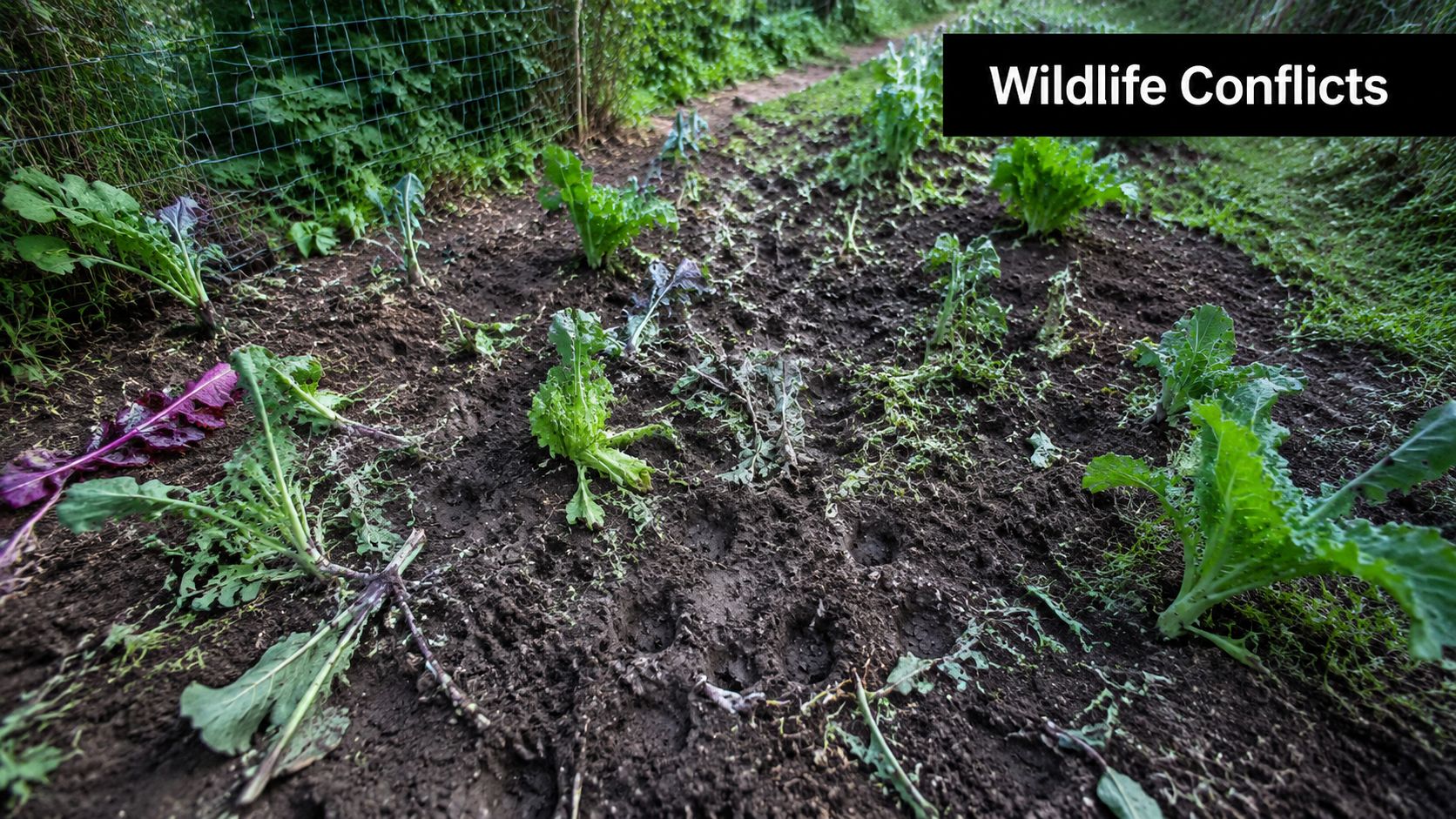
A torn-up garden bed at sunrise. Muddy tracks around the tomatoes. A pet food bowl left on the porch and overturned by morning. Or a tent wall that suddenly goes tight because a large animal is nosing around camp. Those moments feel personal, but they're part of a broader reality. People live, hike, camp, and work in places that wildlife also uses every day.
That's why wildlife damage management matters. It isn't a campaign against animals. It's a practical way to reduce risk, protect property, and keep wildlife from learning bad habits around people. At its best, it helps both sides. The homeowner keeps the attic, garden, and garbage secure. The hiker avoids a dangerous encounter. The animal moves on without being injured or rewarded.
Table of Contents
- Understanding Human-Wildlife Conflicts
- The Integrated Wildlife Damage Management Framework
- Proactive Strategies for Home and Property
- Responding with Non-Lethal Deterrents
- Personal Safety for Outdoor Users
- Navigating Legal Rules and Professional Help
- Common Misconceptions About Wildlife Deterrents
Understanding Human-Wildlife Conflicts
A deer doesn't see a vegetable patch. It sees easy calories. A raccoon doesn't see a crawlspace vent. It sees shelter. A bear doesn't treat a cooler, grill, or garbage can as off-limits unless people make that message clear. Conflict starts when human spaces offer food, cover, or access.
Why these conflicts keep happening
Most property damage follows a pattern. An attractant is available. An entry point exists. The animal repeats the behavior because it works. That's true in suburbia, on farms, and in the backcountry.
A garden raid, attic intrusion, campground food theft, or coyote circling a yard may look like separate problems. They usually aren't. They're all examples of wildlife responding to opportunity.
Practical rule: If an animal succeeds once, expect it to try again.
What the damage really means
The scale of the issue is larger than many people realize. Wildlife damage constitutes between 10% and 15% of total agricultural income globally, and compensation since 1980 has totaled an inflation-adjusted $222 million across 50 countries, according to research on wildlife damage and compensation policy. That's agricultural loss on a global level, but the same principle shows up in smaller settings too. A few nights of feeding can wipe out a garden. One uncapped chimney can turn into a den site. One unsecured trash routine can train wildlife to come back.
The right response isn't anger. It's structure.
Wildlife damage management treats the problem the way a field professional would. Identify the animal. Identify what's attracting it. Reduce the reward. Block access. Use deterrents that fit the species and the setting. If that fails, get legal and professional help before the issue escalates.
The Integrated Wildlife Damage Management Framework
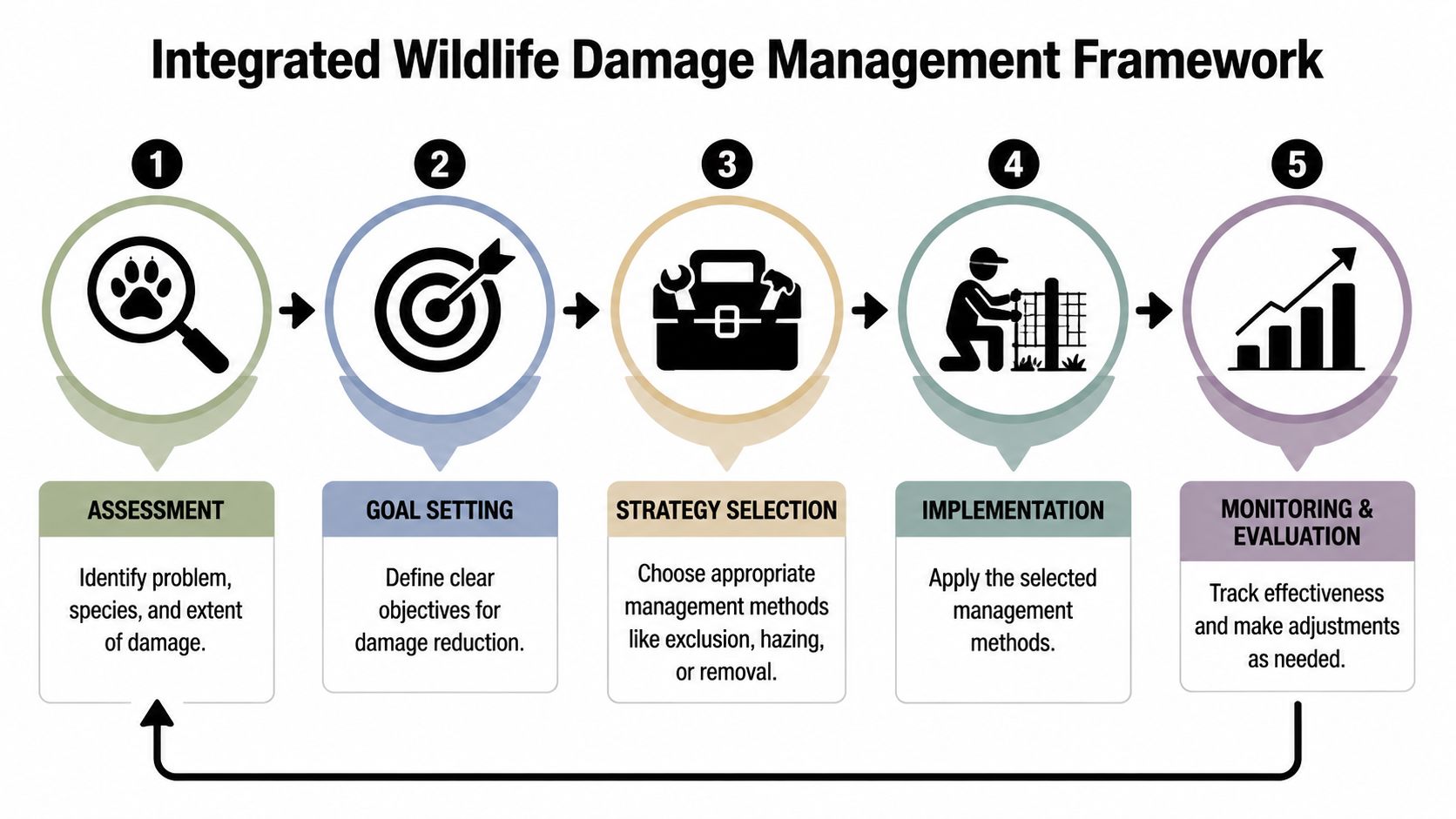
Professionals don't start with traps. They start with diagnosis. Integrated Wildlife Damage Management, often shortened to IWDM, works because it asks the most important question first. What animal is causing the problem?
Start with the right diagnosis
A torn soffit doesn't automatically mean raccoons. A dug-up lawn might be skunks, armadillos, or another burrowing animal depending on location. Seedlings clipped low in the garden may point to rabbits, not deer. Misidentification wastes time and often makes the problem worse.
The IWDM model requires a deliberate sequence:
-
Assess the damage
Look for tracks, scat, chew marks, digging pattern, time of activity, and entry points. -
Set the goal
The goal usually isn't to eliminate wildlife from the area. It's to stop a specific kind of damage. -
Choose the least harmful effective option first
Exclusion, sanitation, habitat modification, and behavior-based deterrence usually come before direct removal.
Build a response that fits the animal
The framework matters because wildlife behavior isn't random. A species' life cycle, movement pattern, feeding habit, and shelter needs shape the control plan. The IWDM framework mandates targeting only the specific species causing damage and selecting methods safe for people and the environment. It explicitly considers the animal's life-cycle and habitat needs to create the most efficient and humane damage control plan, as outlined by the Internet Center for Wildlife Damage Management principles of WDM.
That means the response should match the actual problem.
| Problem | Weak response | Better response |
|---|---|---|
| Animal entering through a structural gap | Repellent sprayed nearby | Seal the gap after confirming the animal is out |
| Burrowing under fence | Visual scare device only | Species-matched mesh with a buried or skirted barrier |
| Garbage raids | Yelling after the fact | Remove food reward and secure containers consistently |
| Repeated yard visits | One fixed deterrent | Multiple varied deterrents and habitat cleanup |
A good wildlife control plan solves the reason the animal came there, not just the moment it was seen.
Monitor and adjust
This step gets skipped by homeowners more than any other. If the tracks stop, the method worked. If the animal shifts to another side of the structure, the barrier was incomplete. If damage changes from chewing to digging, the species ID may have been wrong.
IWDM isn't one tool. It's a decision process. That's why it outperforms one-off reactions like setting a single trap, buying a gadget, or moving straight to force. The strongest wildlife damage management plans are specific, documented, and willing to adjust.
Proactive Strategies for Home and Property
The cheapest conflict to solve is the one that never starts. Good property protection depends on two habits. Block access and remove attractants.
Close the entry points
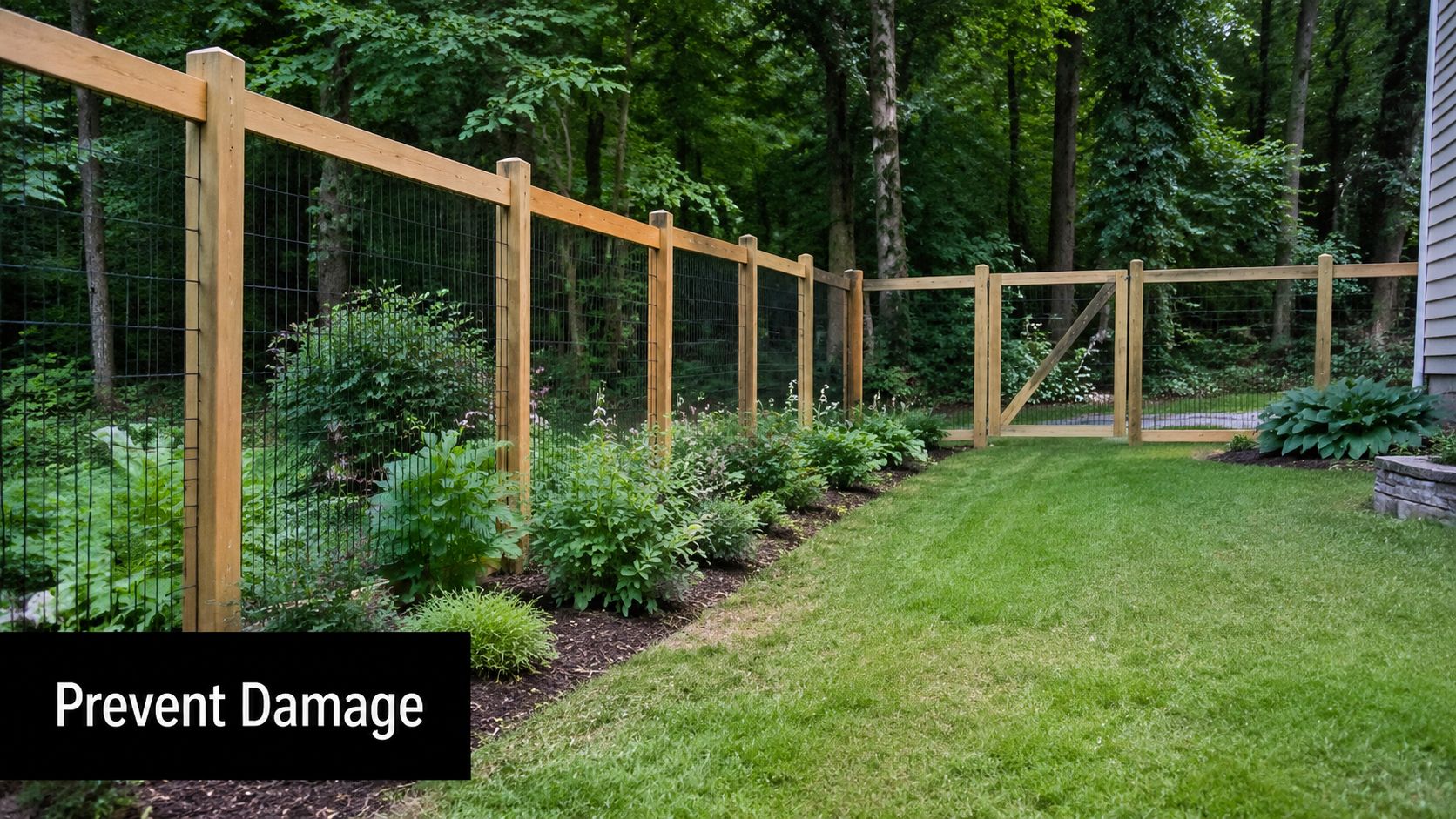
Exclusion beats eviction. Once an animal settles into an attic, under a deck, or inside a crawlspace, the job becomes more complicated and more expensive in time and materials.
A strong prevention checklist includes:
- Match mesh to the species. Exclusion only works if the wire mesh opening fits the target animal. Oversized mesh invites failure.
- Use an L-shaped skirt at fence bases. This is a proven way to stop digging under the barrier.
- Lock manual pet doors every night. Automatic pet doors offer a simpler routine where nocturnal access is a concern.
- Shut garages and accessible windows overnight. Many nuisance mammals are active after dark.
- Cap or screen vulnerable openings. Chimneys, vents, and similar access points often become denning sites.
These measures align with Sacramento County's Integrated Wildlife Damage Management guidance, which specifically notes wire mesh sizing, L-shaped fence skirts, and nightly pet-door security as effective exclusion steps.
Make the property less attractive
A secure structure still won't solve a food problem. Wildlife returns where rewards are predictable.
Use this routine:
- Remove debris piles. Lumber, brush, and dead vegetation create cover and denning opportunities.
- Feed pets indoors when possible. Outdoor bowls train raccoons, skunks, opossums, and coyotes to check the property.
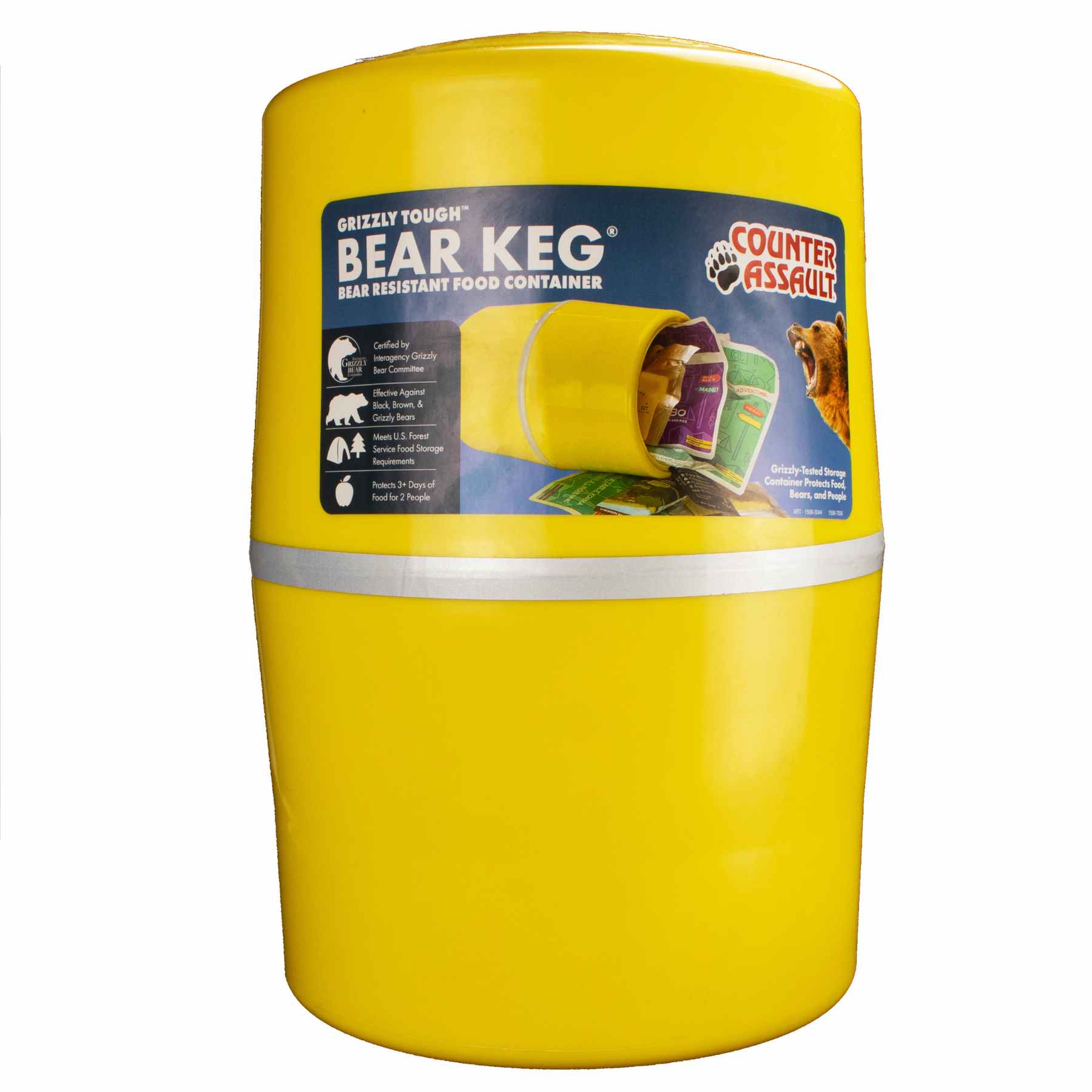
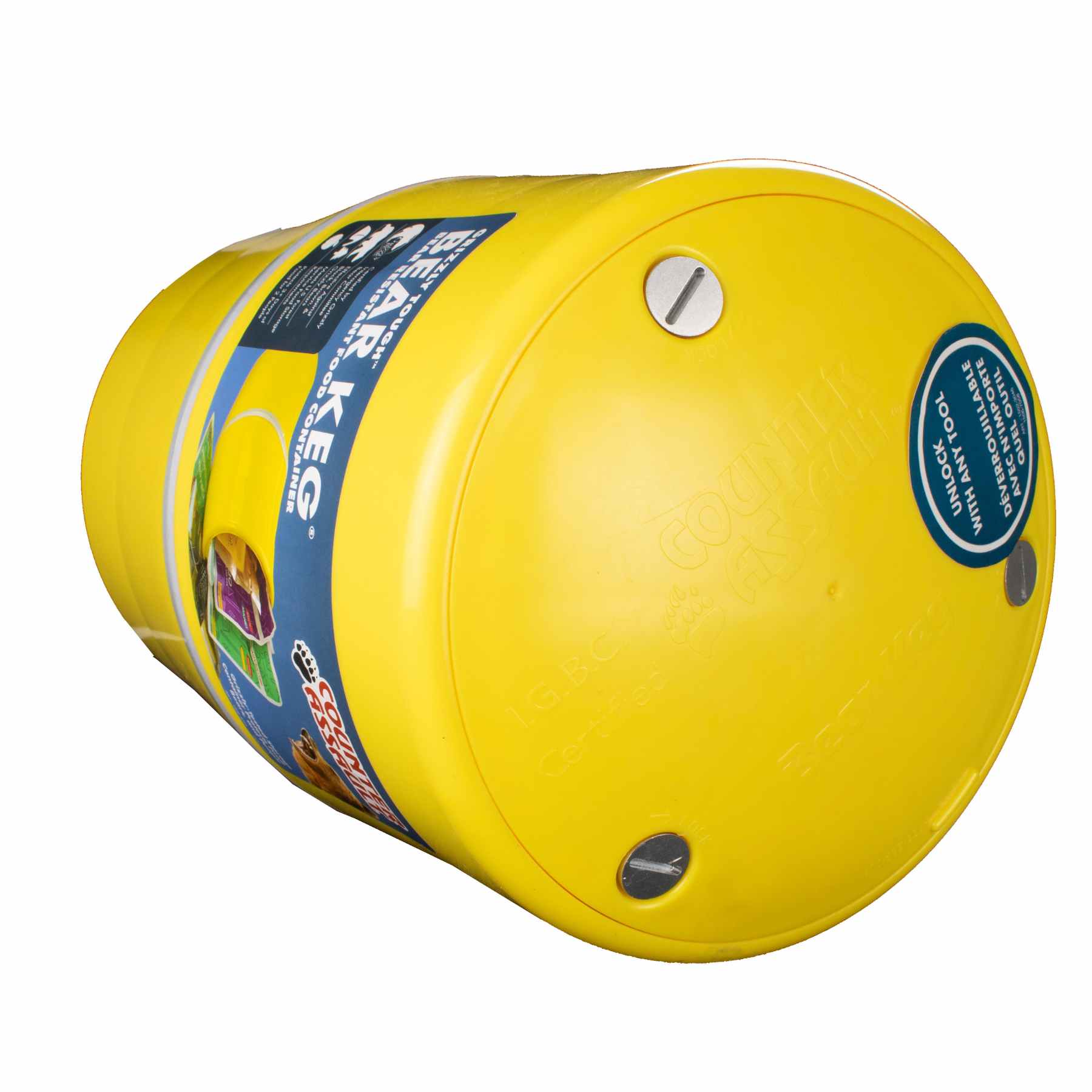
- Protect food storage. Camp-style attractants matter at home too, especially in bear country. These bear-resistant food containers are worth reviewing for cabins, camps, and properties near repeated wildlife activity.
- Improve nighttime visibility. Light doesn't solve every issue, but it can support a broader deterrence plan. Portable and fixed options from LuminAid outdoor lighting can help around sheds, paths, and camp-adjacent setups.
A short visual walkthrough helps when evaluating fence and access problems:
Use stronger barriers where pressure is high
Some sites need more than basic hardware cloth and patchwork repairs. Gardens, pet runs, and perimeter lines in high-traffic wildlife areas often need more sturdy fencing design and installation quality.
For readers comparing practical enclosure options, AlliedFenceAndGate chain link services offer a useful reference for how durable chain link systems can be planned around access control and long-term maintenance.
A fence is only as strong as its lowest gap, loosest corner, or easiest dig point.
Prevention works best when every part of the property sends the same message. No food. No shelter. No easy route in.
Responding with Non-Lethal Deterrents
Once an animal is already showing up, the job changes from prevention to behavior disruption. Many people fail at this stage by relying on a single fixed device. One fake owl, one noise maker in one spot, one motion light aimed the same way every night. Wildlife learns fast.
Why static scare devices fail
Animals follow routines. If the deterrent never changes, they test it, learn it isn't a threat, and go back to feeding or sheltering. That's why a yard ornament marketed as a predator decoy often works briefly, then stops working at all.
The better approach is variation. Wildlife are creatures of habit and adapt quickly unless management methods are randomly varied in time and location. Combining diverse scare tactics disrupts their routines and significantly increases the success rate of non-lethal deterrence, according to the University of Wisconsin wildlife damage primer.
How to create unpredictability
A practical deterrence setup mixes tools and changes the pattern:
- Rotate the location. Move motion lights, visual markers, or sound devices instead of leaving them fixed.
- Change the timing. Don't let activation happen on the same schedule every night.
- Layer senses. Light, motion, water, and sound together work better than any one cue on its own.
- Remove the reward at the same time. Deterrents won't hold if food, garbage, or shelter remains easy to access.
For example, if birds start nesting in a vent, the answer isn't banging on the wall every evening. The answer is safe removal, proper exclusion, and stopping re-entry. Homeowners dealing with that specific issue may find this guide to safe bird removal from dryer vents useful because it focuses on exclusion rather than harm.
Minor cuts and scrapes happen during cleanup and repair work, especially around fencing and vent screening. Keeping a compact field-ready kit from Adventure Medical Kits close at hand makes routine property work safer.
For hikers applying the same logic outside the home, this overview of the best bear spray for hiking fits into the same non-lethal mindset. The goal is to interrupt dangerous behavior without escalating the encounter.
Personal Safety for Outdoor Users
Wildlife damage management doesn't end at the property line. In the backcountry, the stakes shift from damaged gardens and torn soffits to direct human safety. The principles are similar. Remove attractants. Avoid surprise encounters. Carry an effective non-lethal deterrent for the animals most likely to create a dangerous situation.
Prevent the encounter before it starts
Most outdoor incidents begin with one of three mistakes. A person moves unnoticed through thick cover and surprises an animal. A camp is sloppy with food and smellables. Or someone gets too close trying to watch, film, or photograph wildlife.
Good field practice is simple:
- Hike in groups. Groups are louder and more intimidating to bears.
- Make noise on purpose. Blind corners, creek noise, thick brush, and windy ridgelines all reduce warning time.
- Avoid dawn and dusk travel when possible. Those periods can increase the chance of encountering active wildlife.
- Keep a clean camp. Store food and other smellable items away from sleeping areas and use bear-resistant storage.
- Keep distance. Don't approach wildlife for photos or video.
A broader trip plan matters too. Clothing, navigation, shelter, and emergency gear should support quick, clear decisions in bad conditions. Compact field gear from Survive Outdoors Longer and insect protection from Natrapel are smart additions to a backcountry kit because discomfort and disorganization lead to poor choices.
What to do during an aggressive encounter
If a bear, mountain lion, or coyote begins acting aggressively, panic creates problems fast.
The response should stay controlled:
- Don't run. Running can trigger pursuit.
- Stand the ground. Sudden retreat or frantic movement can make the situation worse.
- Avoid direct eye contact while staying aware of the animal's movement.
- Speak in a normal voice. Don't scream.
- Make the body appear larger by raising arms, using higher ground, or lifting gear overhead if appropriate.
- Prepare the deterrent immediately.
These steps are about buying time and creating a defensible position. They are not invitations to challenge the animal. The goal is to end the encounter and leave safely.
If the animal isn't charging, create distance slowly and deliberately. If it is charging or about to charge, prepare to deploy the deterrent.
Why bear spray belongs in the safety plan
For aggressive encounters with bears, bear spray is the most practical non-lethal tool to carry and know how to use. According to a 2008 study supported by National Park Service data, bear spray is proven to be 90% effective in preventing bear attacks, with 98% of users remaining unharmed by the bear during the encounter, as noted in Counter Assault's bear spray safety resource.
Bear spray should only be used when a bear is charging or acting aggressively enough that a charge appears likely. It is not something to spray on clothing, gear, campsites, or skin. It is also not for use on people. In this context, it's a wildlife deterrent for bears, and product guidance here also recognizes its use on mountain lions and coyotes.
Proper deployment matters:
- Remove the safety clip
- Aim slightly downward toward the front of the charging animal
- Begin spraying when the animal is about 30 to 60 feet away
- Create a cloud the animal runs into
- Continue spraying until the charge diverts
- If necessary, direct the spray into the face
- Leave the area immediately
EPA-registered bear sprays must meet specific standards. Bear sprays described by Field & Stream's summary of EPA and Alaska Department of Fish and Game guidance must contain a minimum of 7.9 ounces (225 grams) with 1% to 2% capsaicin and related capsaicinoids as the active ingredient. Bear spray also remains effective in cold conditions, with BearWise guidance on bear spray noting reliable performance down to -14°F, with no performance degradation above 32°F.
Anyone building a safer routine on the trail should also review these hiking safety tips for beginners. The best encounter is still the one that never happens.
Navigating Legal Rules and Professional Help
Wildlife problems create urgency, but urgency doesn't override law. Trapping, relocation, nest disturbance, den removal, and lethal control can all be regulated by state, local, or federal rules depending on the species and setting. That's why the first safe instinct should be non-lethal exclusion and deterrence, not improvisation.
Know the limits of do-it-yourself control
Legal trouble usually starts when a homeowner misidentifies the species or acts during a sensitive period such as nesting or denning. Ethical trouble starts when the chosen method causes unnecessary suffering or separates dependent young from the adult.
Current best practice points in a different direction. Emerging best practices emphasize humane, non-lethal suppression and exclusion aligned with federal and state laws, yet many people lack consolidated protocols for these approaches that prevent harm while ensuring safety, according to integrated wildlife damage management guidance from Pesticide Stewardship.
When to call a professional
Some jobs shouldn't stay in the do-it-yourself category.
Call a licensed, insured wildlife control professional when:
- The animal is inside living space such as a chimney, attic, wall void, or crawlspace
- Young may be present, which complicates removal and exclusion
- The species may be protected
- Aggressive behavior appears
- The problem keeps returning after repairs
- The work requires ladders, roof access, structural opening, or specialized trapping authority
A state fish and wildlife agency should also be contacted when public safety becomes an immediate concern. Good wildlife damage management includes knowing when to stop and hand the job to someone with the right permit, training, and equipment.
Common Misconceptions About Wildlife Deterrents
Bad information causes more close calls than bad luck. Three myths show up repeatedly in both home and backcountry settings, and each one leads people toward the wrong tool or the wrong behavior.
Three myths that cause bad decisions
Myth one, guns work better than bear spray.
The problem with that claim is practical. A charging animal is fast, stress destroys precision, and a poorly placed shot can escalate the attack. Bear spray creates a cloud and doesn't require the same pinpoint accuracy under pressure. The bear spray effectiveness figure was covered earlier. Firearms were also referenced in the supplied material, but this guide keeps the focus on non-lethal wildlife deterrence because that approach is safer for both people and animals.
Myth two, bear spray doesn't work.
That claim doesn't hold up against the study noted earlier. The better question isn't whether it works. It's whether the user carried it accessibly, knew how to deploy it, and waited until the animal entered effective range.
Myth three, wind makes bear spray useless.
Wind matters with any aerosol, but it doesn't make the tool irrelevant. Most serious encounters happen at close range and often in terrain or cover where wind behaves unpredictably rather than as a constant open-field blast. Good technique still matters. Aim low, build the cloud in front of the charge, and adjust if the animal keeps coming.
Bear Spray vs. Firearms: A Safety Comparison
| Deterrent | Effectiveness Rate (Stopping Attack) | User Injury Rate |
|---|---|---|
| Bear spray | 90% based on the study cited earlier | 98% of users remained unharmed based on the study cited earlier |
| Firearms | 84% based on the supplied background material | The supplied background material states injury rates on the person were the same whether they had a firearm or not |
The practical takeaway is straightforward. For wildlife conflicts, especially aggressive bear encounters, non-lethal deterrence is the smarter lane. It aligns with modern wildlife damage management, reduces the chance of escalation, and supports coexistence instead of punishment.
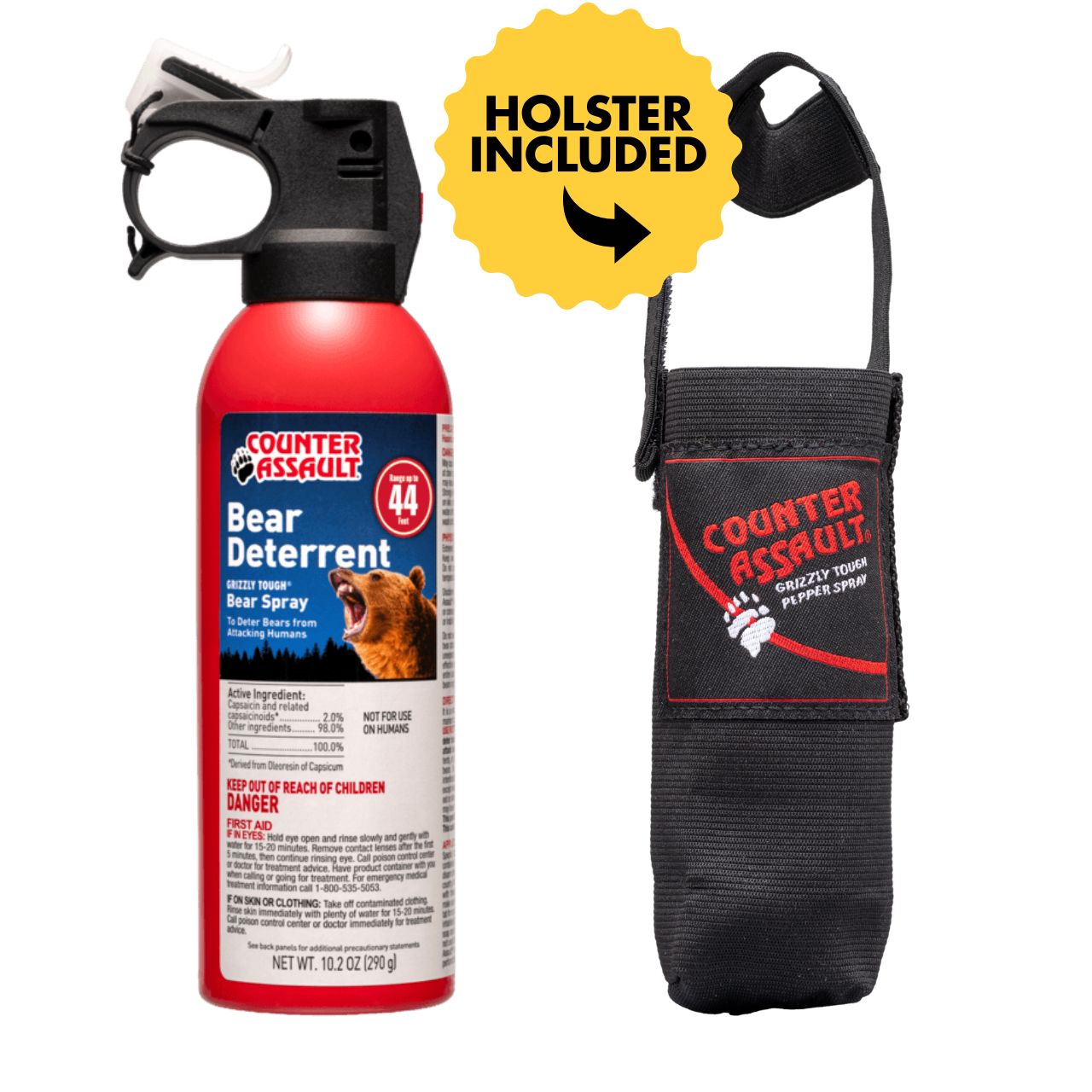
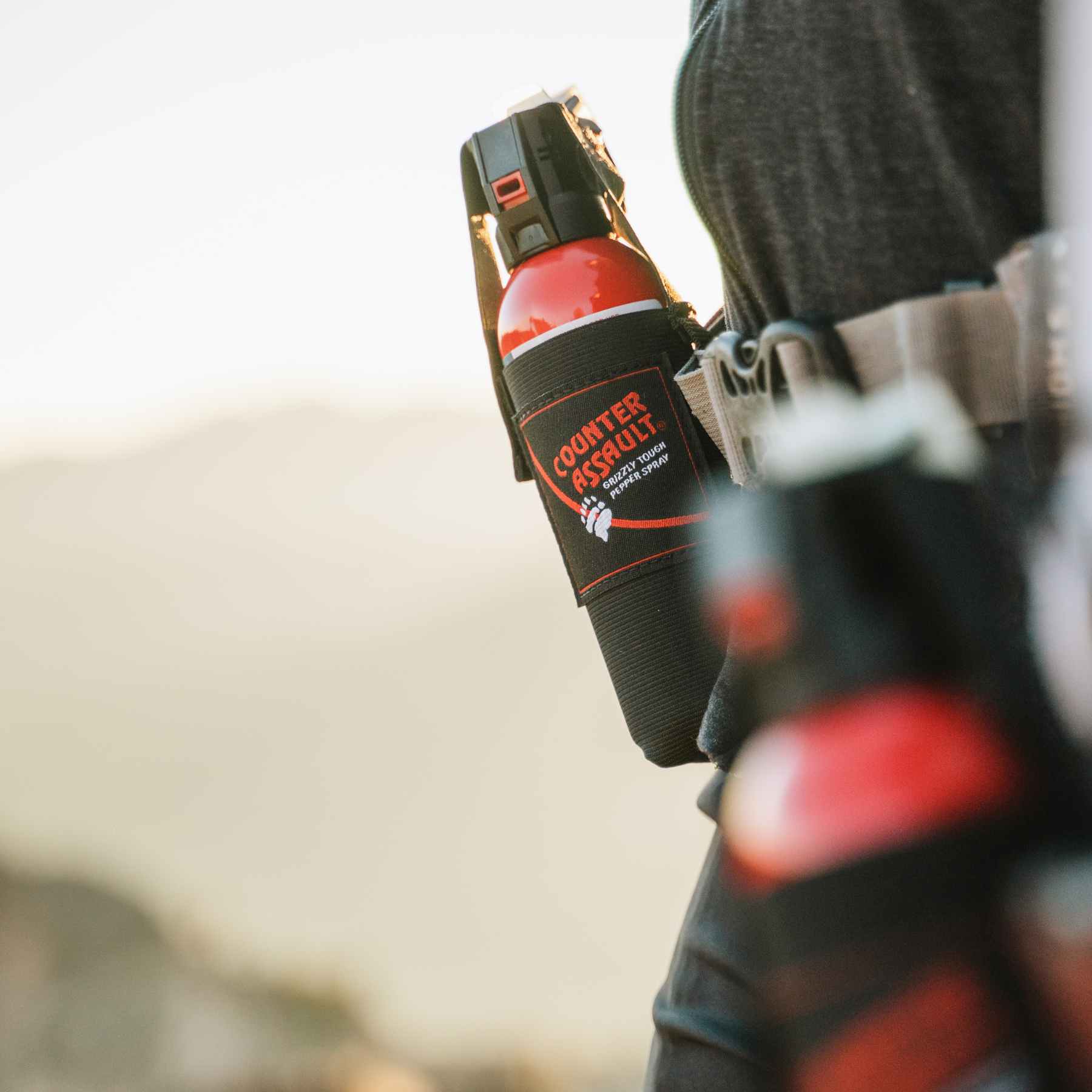
Counter Assault makes bear safety gear for people who need a reliable non-lethal deterrent in serious country. The flagship 10.2 oz bear spray with included holster delivers a 44-foot range, the farthest-reaching bear spray available in the provided brand information, with a maximum 2% capsaicin and related capsaicinoids formula. It's made in Montana, effective on all bear species, and also intended for mountain lions and coyotes, not for use on people. For hikers, campers, dog walkers, guides, and anyone spending time where large predators may be encountered, Counter Assault remains the #1 choice when safety matters.