
A lot of readers come to this topic for the same reason. They heard something outside the tent after dark, found tracks near the trash cans, or watched a coyote pause a little too long at the edge of the yard. The question usually isn't abstract. It's practical. What works, what fails after a few nights, and how can people stay safe without harming wildlife?
A good wildlife deterrent system starts with that mindset. The goal isn't punishment. It's distance, disruption, and time. People need enough warning and enough tools to stop a close encounter from turning into an injury, whether they're moving through bear country or trying to keep predators away from pets, livestock, gardens, and camps.
Table of Contents
- What Is a Wildlife Deterrent System
- Your Personal Deterrent The First Line of Defense
- Perimeter and Property Deterrent Systems Explained
- Deterrent Effectiveness for Bears Mountain Lions and Coyotes
- How to Choose the Right Wildlife Deterrent System
- Deployment Maintenance and Legal Considerations
- Frequently Asked Questions About Wildlife Deterrents
What Is a Wildlife Deterrent System
A wildlife deterrent system isn't one gadget clipped to a belt or one light mounted on a fencepost. It's a layered approach that combines awareness, prevention, and response. That matters because wildlife encounters rarely begin at the moment of contact. They start earlier, with unsecured food, poor visibility, weak fencing, predictable animal pathways, or a person who can't reach the right tool fast enough.
In practical terms, the system changes depending on where the risk lives. A backpacker needs a portable setup that stays accessible while moving. A homeowner needs perimeter habits and fixed deterrents that work day after day. A rancher or field biologist may need both, because the property itself needs protection and the people working there still need a personal safety tool.
Three layers that matter
- Prevention: Clean camps, secure food, managed attractants, and space between people and wildlife.
- Perimeter control: Fencing, motion-triggered devices, lighting, or sound used to keep animals from entering the area in the first place.
- Close-range response: A carryable deterrent for the moment when prevention fails and an animal closes distance.
Practical rule: If a plan depends on only one layer, it's usually fragile.
The strongest systems are built around animal behavior. Bears investigate scent and food reward. Coyotes test routine and weak boundaries. Mountain lions rely on cover, surprise, and opportunity. A deterrent only works when it interrupts the behavior that brought the animal in.
That's also why old one-note tactics often disappoint. Static visual devices may catch an animal's attention at first, then fade into the background. A useful system has to stay credible to wildlife and usable for people. That usually means combining smart storage, site discipline, and at least one reliable response tool that can be reached under stress.
Your Personal Deterrent The First Line of Defense
A close encounter gets decided fast. You round a blind corner on a trail, or step out to a garbage area at dawn, and the distance is suddenly too short for guesswork. At that point, the wildlife deterrent system becomes personal. The tool on your belt, chest strap, or pack harness is the part that can still protect both you and the animal without forcing a lethal outcome.
A carryable deterrent fills the gap between good habits and fixed protection. Fences, lights, and alarms matter at home, but they do nothing when you are ten yards from a sow with cubs, a food-conditioned coyote, or a mountain lion holding cover along a game trail. That is why I treat personal deterrents as the field layer of the same safety system people use around camp, cabin, or property.
A workable personal tool has three jobs. It has to be legal where you will carry it, accessible with one hand under stress, and effective without requiring fine motor skill or perfect aim.
Why a personal tool comes first in a close encounter
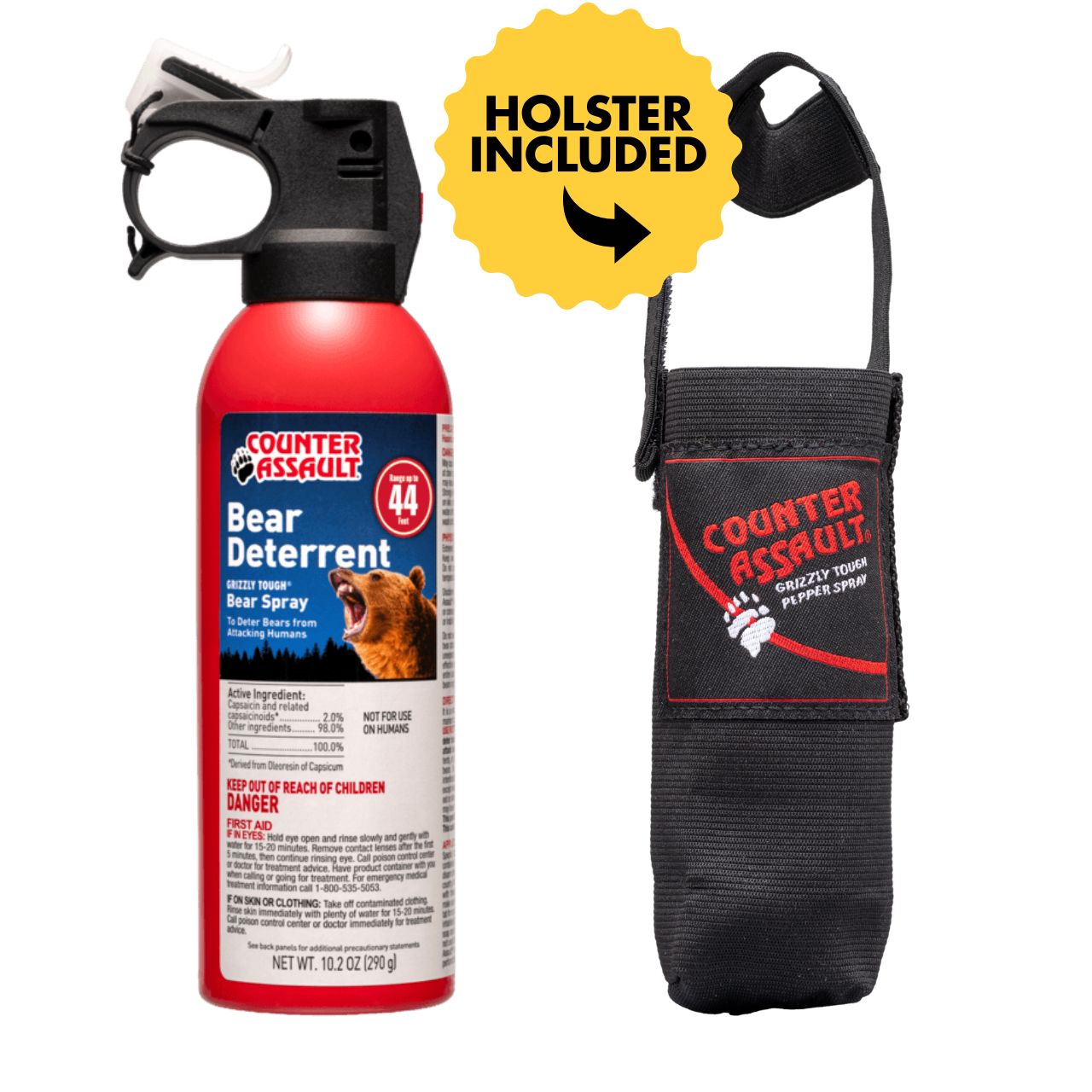
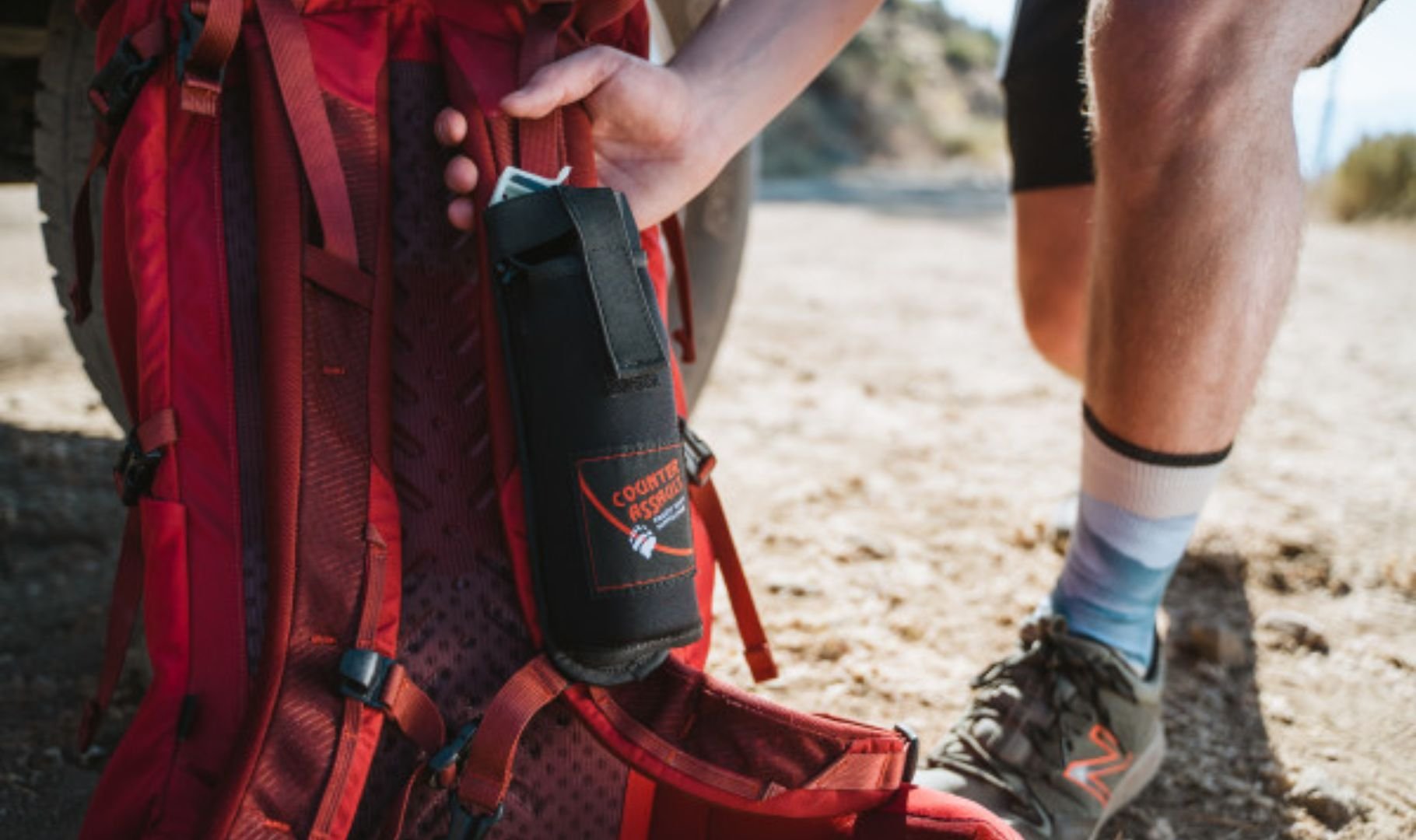
For dangerous wildlife at short range, bear spray is the standard personal deterrent because it creates space quickly and does not depend on striking a small target. U.S. law allows bear spray to contain a maximum of 2% capsaicin and related capsaicinoids for non-lethal wildlife deterrence, which is the concentration listed for Counter Assault's 10.2 oz bear spray with included holster.
That design matters in the field. People lose dexterity when adrenaline spikes. A deterrent that throws a cloud into the animal's path gives a wider margin for error than improvised noise, rocks, trekking poles, or a can buried in a side pocket.
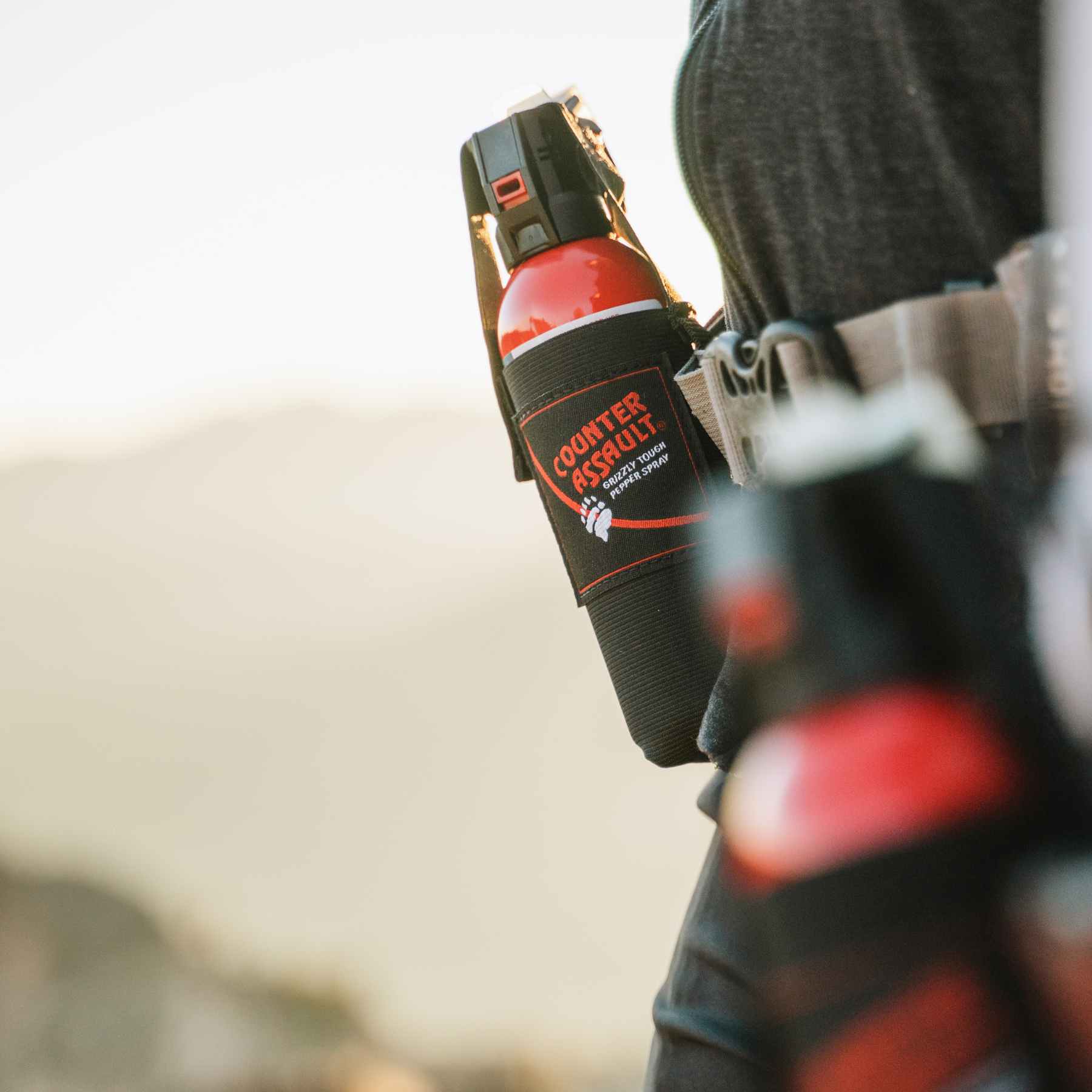
Carry position matters as much as the can itself. If you have to stop, dig through a pack, and unzip a pouch, the encounter is already ahead of you. A belt holster or front-mounted chest position is usually the safest setup because the hand can find it by feel.
The same mindset applies at home. People who select fence materials for your project still need a personal deterrent if they walk livestock pens at night, check trail cameras, or move through thick cover where an animal may already be inside the perimeter.
How bear spray fits into a real response
Bear spray is for an aggressive encounter, not for routine trail use and not as a scent barrier on gear. Do not spray tents, boots, clothing, or coolers. That creates contamination problems and does nothing useful for prevention.
Field use stays straightforward.
- Carry it where it is immediately reachable: Belt, chest, or pack strap access is the standard.
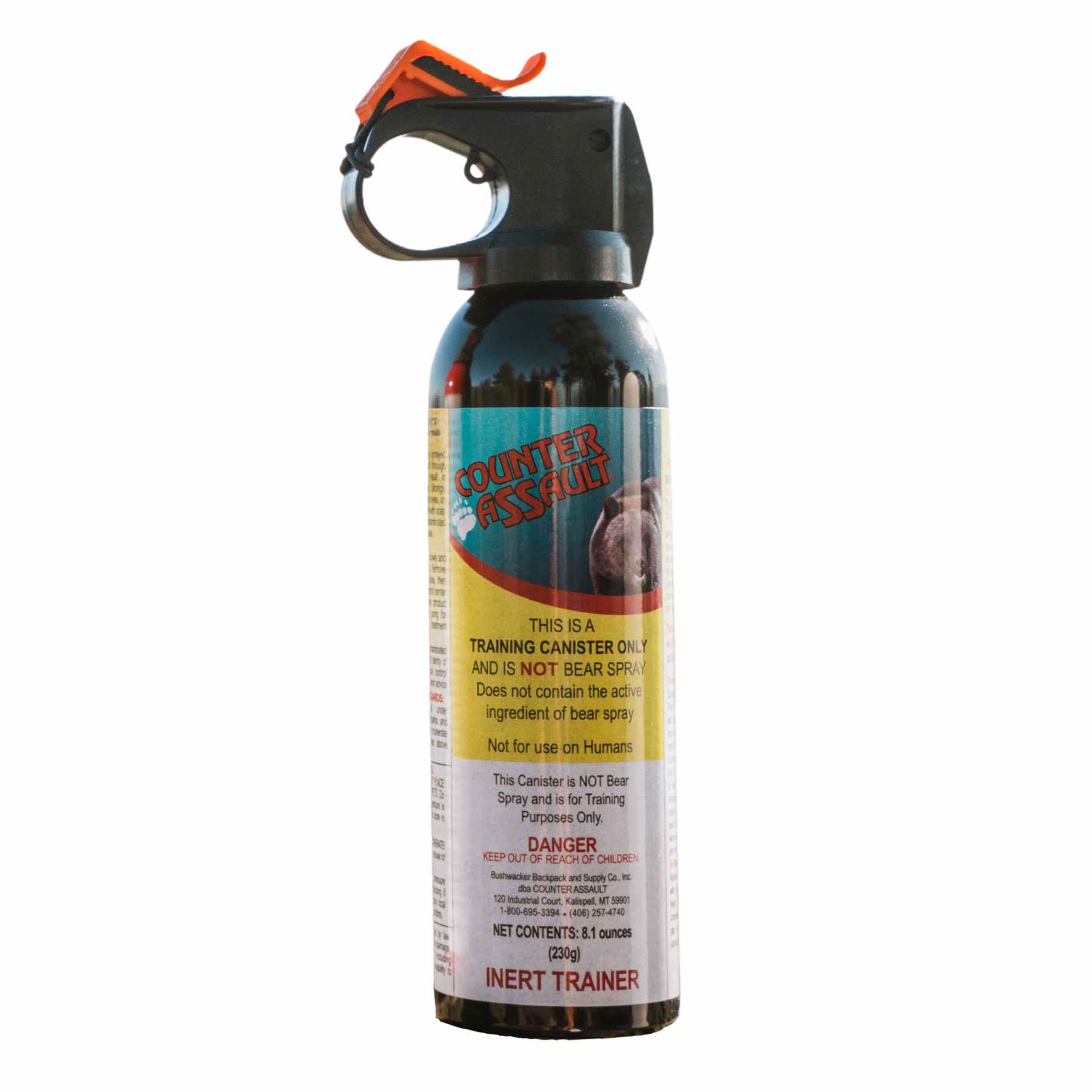
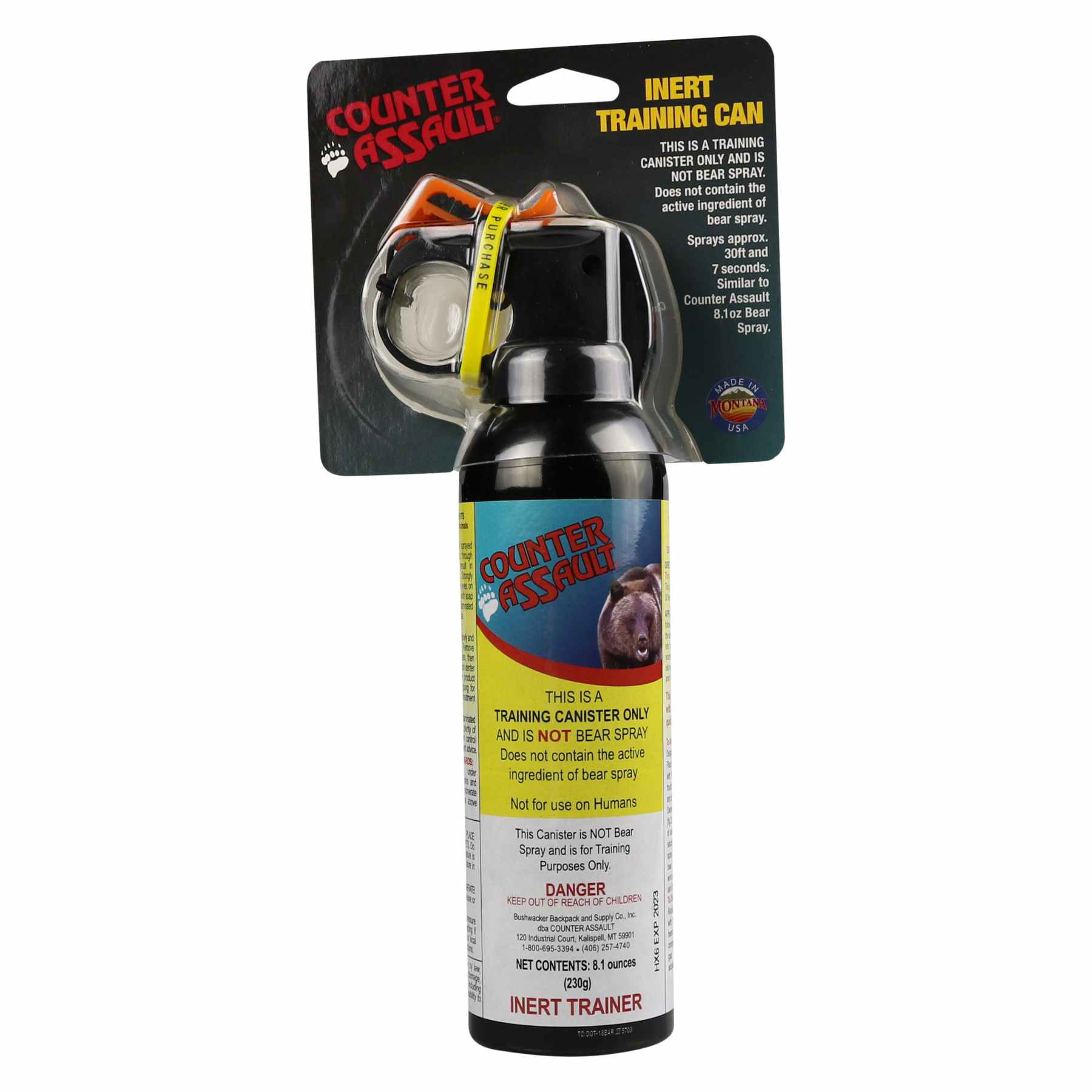
- Know the safety mechanism before the trip: Practice drawing and removing the safety clip with inert repetition, not during the encounter.
- Aim low so the cloud rises into the animal's face: The goal is to place the spray in the path of travel.
- Start before the animal is on top of you: Waiting too long shrinks your reaction time and the width of the protective cloud.
- Move out once the animal breaks off: Leave the area and avoid crowding the animal again.
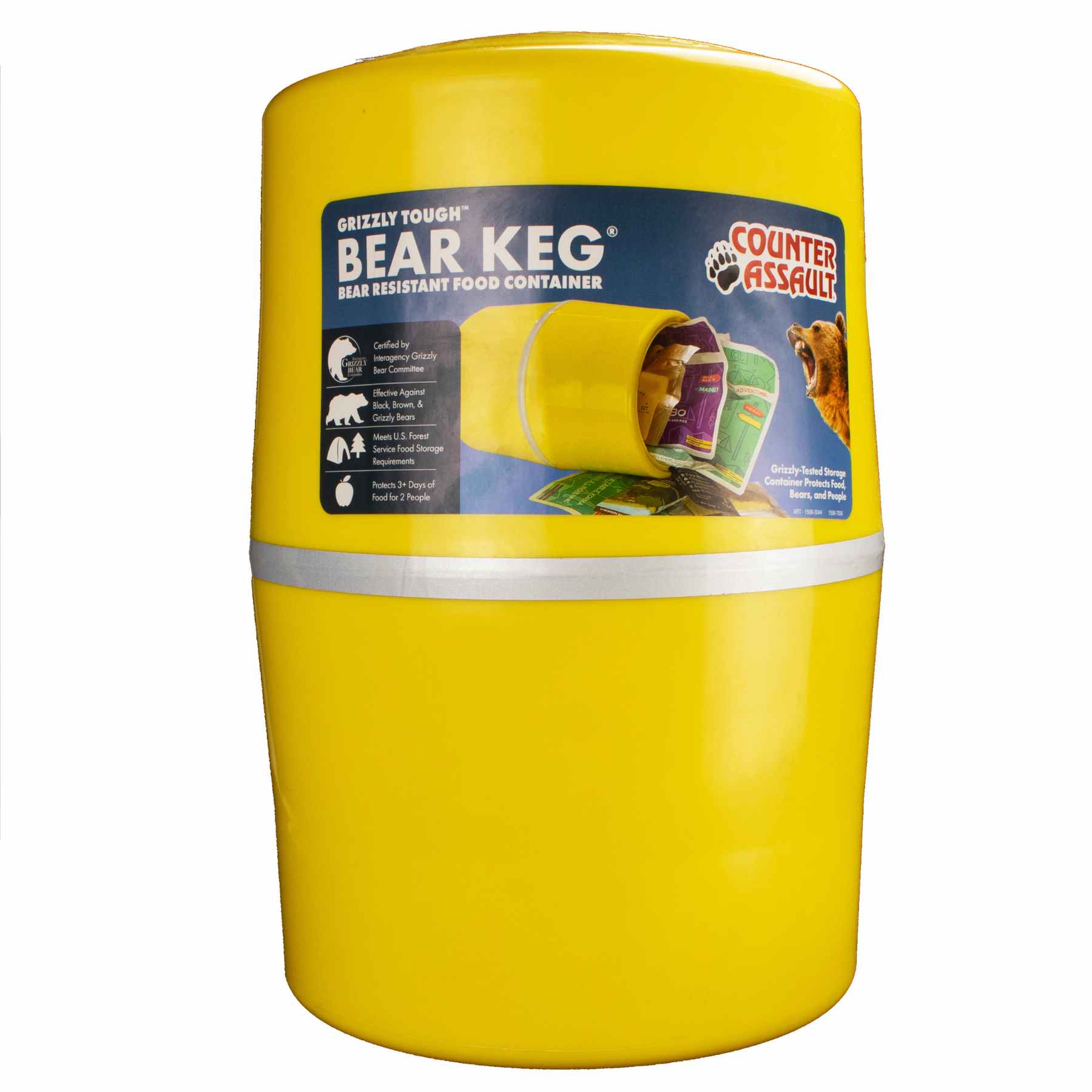
Those steps fit a broader safety plan. Group travel, clean food storage, dog control, and attention to wind and visibility reduce the chance that you will need the can at all. For camp food storage, bear-resistant food containers belong in the same system. For readers comparing can size, range, and carry options, this guide to what makes an effective bear deterrent spray is a useful starting point.
Common mistakes that create risk
The same errors show up again and again in field reports and ranger contacts.
- Packing it instead of wearing it: A deterrent you cannot reach immediately is dead weight.
- Freezing until the animal is too close: Early deployment gives the spray cloud time to form.
- Running from the encounter: Flight can trigger pursuit, especially with predators.
- Using it as a people-defense product: Bear spray is labeled for wildlife deterrence, not interpersonal use.
- Skipping practice: People who have never handled the can often fumble the safety clip or point the nozzle the wrong way.
Wind complicates any aerosol, but it does not make spray irrelevant. It means users need realistic expectations, a good carry setup, and enough familiarity with the can to angle the cloud where the animal is moving. That is the practical trade-off with any personal deterrent. It is not a substitute for judgment, but it is the one tool that still works when judgment has to be translated into action in a few seconds.
Perimeter and Property Deterrent Systems Explained
Property-based deterrents solve a different problem. Instead of stopping a charge at close range, they try to keep the animal from entering the space at all. The trade-off is straightforward. These systems can reduce repeat visits, but they only work if they match the species, the attractant, and the site layout.
Physical barriers
Fences are often the most dependable long-term option because they create a real consequence for crossing. The Biodiversity Infrastructure Handbook on wildlife deterrents notes that physical barriers remain the most reliable long-term solution, and that electric fences prevented crop damage for up to 29 days in the comparison discussed there.
Barrier quality matters as much as barrier type. Weak corners, gaps under the fence, and poor gate discipline undo expensive installations. For landowners planning a permanent boundary, it helps to select fence materials for your project based on the animal pressure, terrain, and whether digging or climbing is the main problem.
Acoustic and light-based deterrents
Sound can work well, but only when it means something to the animal. The same handbook reports that acoustic deterrents using natural sounds, such as local alarm calls or human voices, produce stronger flight responses than artificial sounds. It also notes that many visual repellents, including reflectors, don't show convincing long-term effectiveness once animals habituate.
That's the core trade-off. A flashing light or alarm may interrupt an animal briefly. If the animal learns there's no consequence behind it, the effect fades.
For camps, sheds, or yard edges where power reliability matters, portable lighting can still support visibility and human awareness. A compact lantern such as the LuminAID PackLite Max 2-in-1 phone charger helps people see what's happening around camp or on a late-night walk to food storage. That's not the same as a primary wildlife deterrent, but it strengthens the system by reducing surprise.
Chemical and scent methods
Chemical sprays, scent repellents, and odor-based products appeal to property owners because they seem easy to deploy. The problem is consistency. Scents break down, wash off, or become background odor. Animals also learn quickly when a smell isn't paired with real risk.
That doesn't make every scent-based tool useless. It does mean scent methods are usually support tools, not the backbone of a property defense plan.
| Deterrent Type | How It Works | Best For | Considerations |
|---|---|---|---|
| Physical fencing | Blocks or shocks animals at the boundary | Gardens, livestock areas, trash zones | Requires solid installation and regular inspection |
| Natural-sound acoustic devices | Triggers flight response using meaningful sounds | Repeated wildlife travel paths | Better than artificial sounds, but placement matters |
| Motion lights and visual alerts | Startles animals and improves human awareness | Yards, barns, campsites | Habituation is common if used alone |
| Chemical or scent repellents | Uses unpleasant odor or taste to discourage entry | Small areas, short-term support | Often inconsistent over time |
| Food and attractant control | Removes the reason animals return | Homes, camps, outbuildings | Only works if everyone follows the system |
Deterrent Effectiveness for Bears Mountain Lions and Coyotes
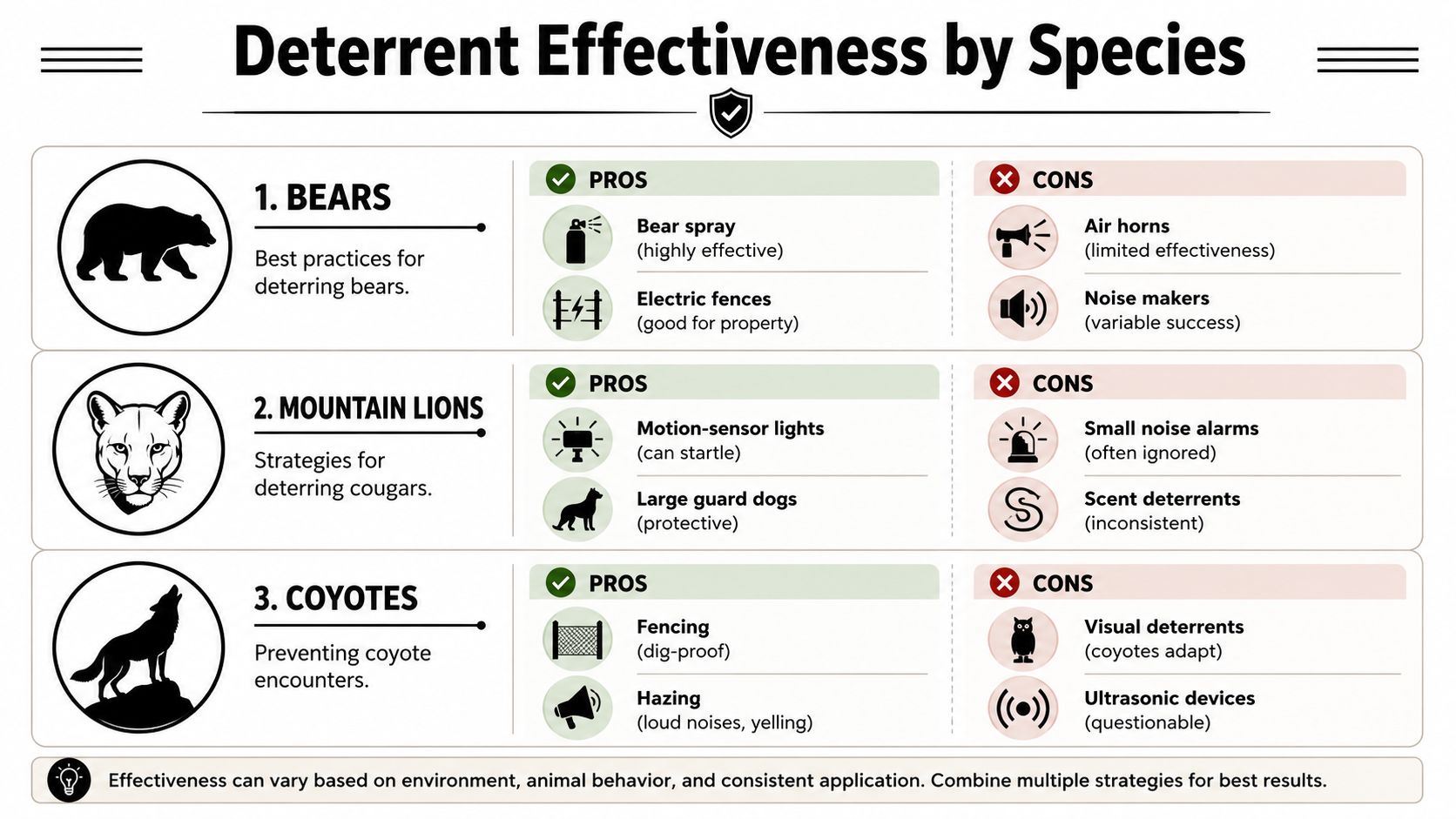
Species matter. A wildlife deterrent system that frustrates a coyote may do very little to a food-conditioned bear. A setup that startles a mountain lion near a porch may fail on open range.
Bears
Bears are driven hard by scent and reward. If unsecured food, garbage, or feed is available, weak scare tactics rarely hold for long. Personal bear spray remains the close-range response tool people should carry in bear country because it's designed for an aggressive charge, not for general noisemaking.
For property protection, electric fencing works better than passive visual devices because it creates a consequence the animal can't ignore. The limiting factor is usually not the concept. It's sloppy installation, baited attractants inside the fence, or a routine that gives the bear repeated access to reward.
A bear that finds food once will often test the same place again. The system has to remove both the attractant and the easy access.
Mountain lions
Mountain lions rely on stealth, cover, and surprise. That means deterrents should focus on breaking concealment and forcing the animal to reassess. Motion-triggered lighting can help near homes, kennels, and outbuildings because it removes some of the cover lions prefer.
Human behavior matters even more with this species. People shouldn't run. They should stand their ground, avoid direct stare-downs that escalate tension, speak in a normal voice, and make themselves appear larger. Dog owners in lion country also need leash control and a plan for quick retrieval at dusk or dawn. A useful species comparison for those overlapping risks is this guide to coyote vs mountain lion encounters.
Coyotes
Coyotes are adaptable boundary testers. They watch routines, exploit pet food, and learn whether people defend a space. That makes consistency more important than intensity. Hazing can work when it's immediate and convincing. Weak visual gimmicks often don't last.
Property owners usually get better results from a combination of dig-resistant fencing, careful waste control, and active supervision of small pets. Where coyotes move through the same travel lanes, sound and motion tools can support the fence line, but they shouldn't be the only barrier.
Coyotes also differ from bears in one important way. They often respond quickly to human pressure when that pressure is immediate and repeated. Once they learn the yard is defended every time, they're less likely to linger.
How to Choose the Right Wildlife Deterrent System
A good deterrent system starts with one practical question. Where are you most likely to meet the animal, and what happens in the first few seconds?
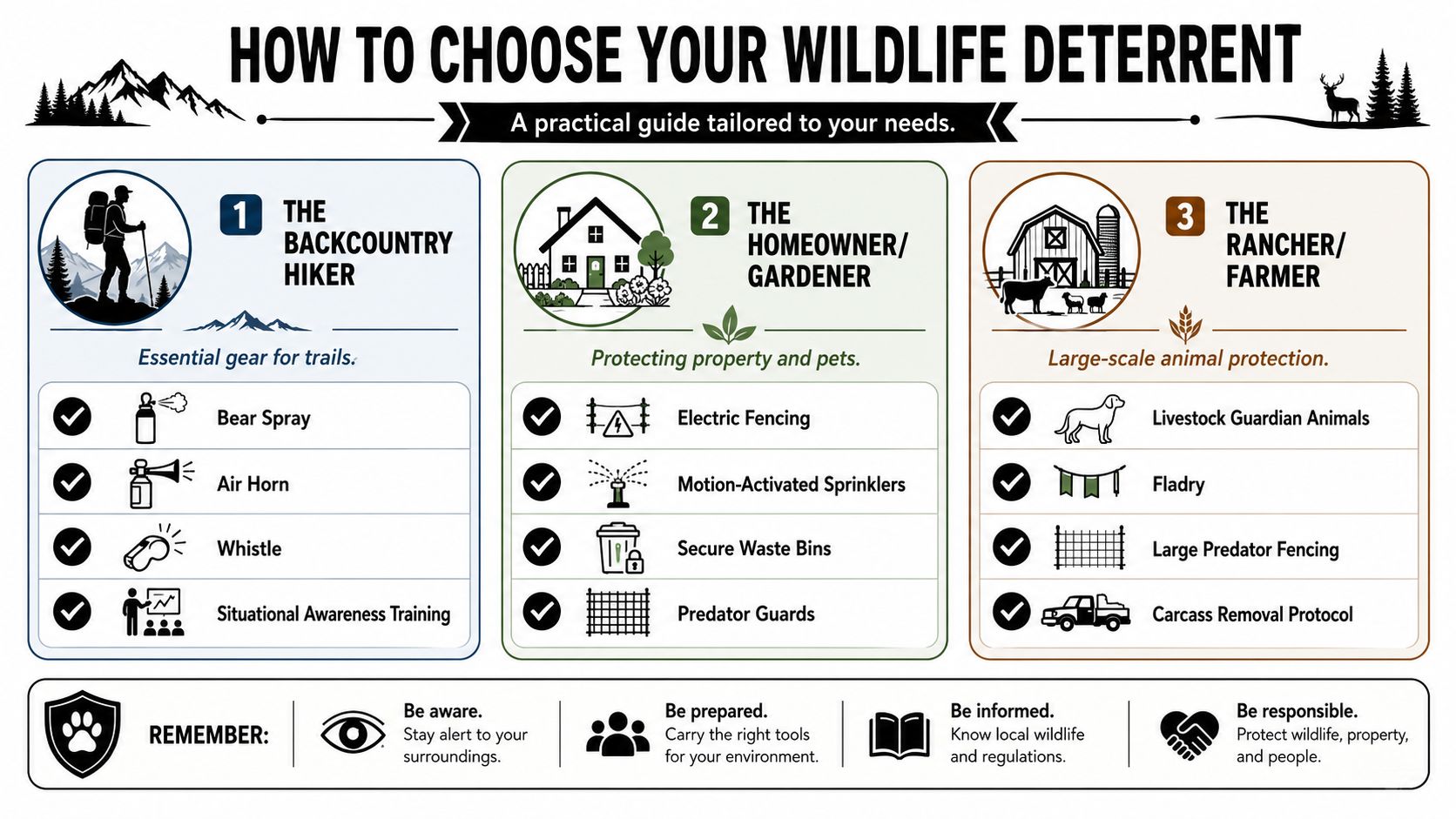
That answer changes the gear. A hiker needs something on the body and ready in one motion. A homeowner needs tools that keep animals from settling into a routine around trash, pets, or gardens. A rancher or field professional needs a system that works night after night, even when nobody is standing there to intervene.
For the backcountry hiker
In the field, the first line of defense is personal. Fixed deterrents do nothing for a surprise encounter on a trail, at a creek crossing, or near camp. Start with the tool you can reach under stress, then add the items that lower the chance of drawing wildlife in.
A solid trail setup includes:
- Bear spray on the body: Carry it where one hand can reach it immediately, not inside the pack.
- A whistle: Compact signaling tools such as the Survive Outdoors Longer Slim Rescue Howler Whistle give hikers a simple way to alert partners or call for help.
- Food discipline: Bear-resistant storage and a clean cooking area reduce the odds of teaching animals that campsites mean food.
- A small first aid kit: The Adventure Medical Kits Ultralight Watertight .7 fits the same practical mindset. Prevent what you can, then be ready to manage the problem that still develops.
This is the broader safety mindset that many people miss. Personal deterrents and site deterrents are not competing options. They cover different failure points.
For the homeowner or gardener
At home, the job is to make the property unrewarding and hard to enter without creating risk for pets, children, or neighbors. The right purchase is usually the one you will maintain and use consistently through the season.
Start with attractants and travel routes. If animals are getting trash, fallen fruit, bird seed, poultry feed, or easy access to a pet area, adding lights or alarms alone will not solve the problem. Secure the food source first. Then add deterrents at the places animals approach, such as gate openings, fence corners, garden edges, or the path between cover and the reward.
A homeowner's short checklist looks like this:
- Secure attractants: Trash, pet food, bird feed, compost, and fallen fruit.
- Add motion-triggered awareness tools: Lights or alarms near likely entry points.
- Harden boundaries: Fence gardens, chicken areas, and pet zones.
- Protect pets at transition times: Dawn and dusk need tighter supervision.
For home use, simple systems often beat complicated ones. A well-placed fence and clean yard usually outperform a pile of gadgets that run out of batteries or get ignored after a week.
For the rancher or field professional
Working ground requires a layered setup because the stakes are different. One weak point can mean dead livestock, damaged crops, or a dangerous close encounter during routine work.
The most reliable systems combine personal protection with area protection. A field technician or ranch hand may need bear spray on the belt during checks, while the larger operation depends on fencing, guardian animals, feed control, carcass removal, and sensor-based alerts. Each tool covers a different gap. None should be expected to do the whole job alone.
On agricultural property, field testing summarized by FenceFast's review of wildlife deterrent strategies describes strong results from multi-sensory and IoT-based humane deterrent systems compared with static methods. The practical takeaway is straightforward. Animals adapt quickly to a single harmless cue. Systems that combine barriers, sound, light, and active management hold up better over time.
Choose for response time, repeatability, and maintenance load. If a tool cannot be checked easily, reset quickly, or trusted in bad weather, it may look good on paper and still fail in the field.
Deployment Maintenance and Legal Considerations
Wildlife systems usually fail in ordinary ways. A fence loses voltage after grass grows into the wire. A motion light points at the driveway instead of the game trail. A can of bear spray rides in the wrong pack until the one time it is needed. Maintenance is what turns a collection of gear into a working safety system.

Placement and readiness
Personal deterrents and property deterrents need the same standard. They must be ready before the encounter starts.
Carry bear spray where either hand can reach it fast, not buried in a daypack or clipped to gear that shifts when you run. As noted earlier, effective use depends on immediate access and proper distance. The can does no good if you need both hands and ten seconds to get it out.
Fixed deterrents should be set where animals travel and test boundaries. Put sensors on approach routes, fence corners, gap points, and entry funnels. Protect the attractant completely. One open gate, crawl space, or low spot under wire can train an animal to ignore the rest of the system.
Placement also has a human side. Lights that blind the homeowner, alarms that fire all night, or fencing that blocks routine access usually get bypassed or switched off. In the field, the best setup is often the one people will still use correctly after a month of bad weather and busy days.
Routine checks and compliance
Use a simple inspection routine and keep it on schedule:
- Check spray condition: Confirm the can is current, undamaged, and secured in its holster.
- Inspect power sources: Solar units, batteries, and charging systems need regular confirmation.
- Walk the perimeter: Look for digging, sagging wire, broken insulators, or vegetation grounding out a fence.
- Review local rules: Noise devices, electric fencing, and wildlife responses can be regulated differently by area.
A quick walk-around catches the failures that matter most. Dead batteries, weak chargers, loose latches, and storm damage are common. So is quiet drift in system performance, where a deterrent still turns on but no longer covers the area it was meant to protect.
Legal use matters as much as mechanical function. Bear spray has a narrow purpose. It is a non-lethal wildlife deterrent for dangerous wildlife encounters, not a general-use spray for conflicts with people. Property devices can also trigger local rules on discharge, noise, fencing, and protected species, so check state, provincial, tribal, and municipal requirements before deployment.
The practical standard is simple. Maintain the gear, document the checks, and set each tool where it solves a real problem without creating a new one for pets, neighbors, livestock, or the animals you are trying to keep away.
Frequently Asked Questions About Wildlife Deterrents
A lot of wildlife incidents happen in the gray area between routine activity and a real emergency. You hear something outside the tent. A bear noses around the cooler at the edge of camp. A coyote cuts across the yard at dawn while the dog is out. In those moments, people need to know which tool belongs in the hand, which belongs on the property, and which one should stay unused.
Can bear spray be used on an aggressive dog or on a person
Bear spray is a wildlife emergency tool. Its intended use is stopping a dangerous encounter with wildlife, including bears and, in some cases, mountain lions or coyotes. It is not a general defensive spray for people, and it is not the right answer for domestic animal conflicts.
That distinction matters. A good wildlife deterrent system starts with prevention on the property or at camp, then reserves bear spray for the short-range moment when an animal is closing distance and human safety is at risk.
Do radios or lights keep bears away from camp
Sometimes, briefly.
Noise and light can interrupt an animal's approach, especially if the bear is still assessing the area. They do not replace food storage, trash control, cooking discipline, and distance from attractants. If a camp or yard continues to offer easy calories, the bear has a reason to come back.
Use lights and sound as support tools, not as your main line of defense.
Are ultrasonic repellers safe around pets
Check the device specifications and the animals sharing the space. Some ultrasonic units are designed to trigger only when motion is detected, which can reduce unnecessary activation. The IJISET paper on solar-powered ultrasonic repellers describes motion-triggered use in a small-area deterrent setup.
The trade-off is straightforward. If a device is strong enough to irritate the target animal, it may also affect dogs or other pets that hear similar frequencies. Placement matters. Test cautiously, watch the animals' behavior, and avoid putting these units near kennels, runs, or common pet travel paths.
Can non-lethal systems work on large properties
Yes, if the system matches the travel routes, attractants, and species pressure on that site.
Large properties usually need layers instead of a single fix. Detection near access points, fencing around specific assets, lighting at conflict zones, and a personal deterrent carried by the landowner or staff all have different jobs. As noted earlier, animal detection systems are used effectively in larger settings when they trigger a response people will notice and act on. At home, that may be a light, alarm, camera alert, or a reinforced barrier around feed, chickens, or garbage.
The weak point is usually maintenance, not concept. A sensor no one checks or a gate left open every third night will undo expensive hardware fast.
What if the goal is early warning instead of a barrier
Early warning makes sense in places where fencing is impractical, wildlife movement is predictable, or the main goal is to buy time to respond. Some commercial systems use perimeter sensing tied to lights or sound alerts, including options shown in Techno Wild products information.
For homes, cabins, and camps, simpler systems are often the better choice. A motion light, a camera alert, clear sightlines, and immediate access to bear spray usually do more than a complicated setup that fails in rain, dust, or cold. The right question is not whether the system is advanced. The right question is whether it gives a person enough warning to act safely and whether they will keep it working.
The safest wildlife deterrent system matches the place, the species, and the person using it. For readers building that system around backcountry travel or day-to-day bear country safety, Counter Assault offers detailed bear safety guidance, training resources, and purpose-built bear deterrent equipment for non-lethal use on bears, mountain lions, and coyotes.